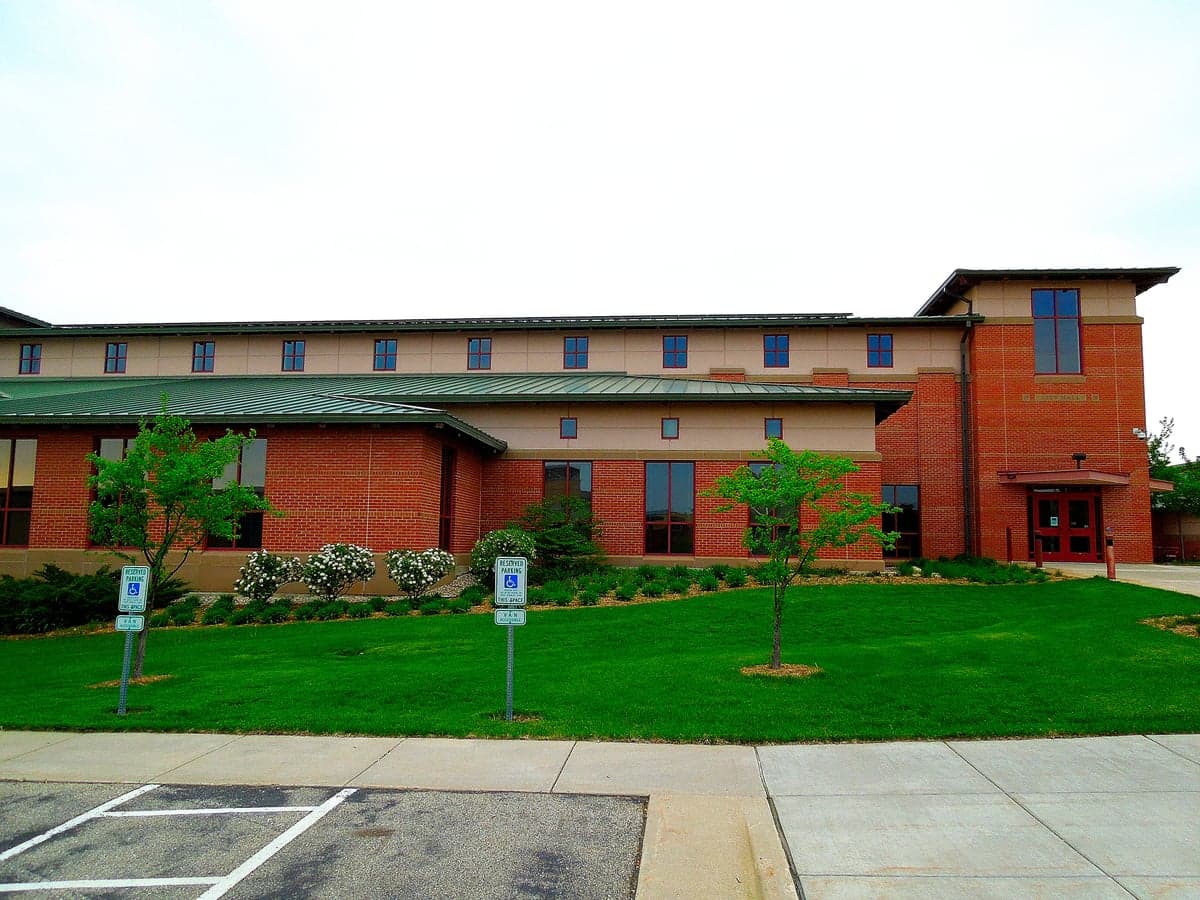
Photo: Wikipedia
Strategic Assessment of Fitchburg, WI
Multiple tactical vulnerabilities. Population density, target proximity, or disaster risk are likely compounding. A retreat property and exit planning is required.
What does the Strategic Assessment tell us?
Our Strategic Assessment grades tactical survivability of an area. Major population centers, military targets, fallout zones, natural disasters, and border exposure all drive risk — lower exposure means a more defensible position in a crisis.
This is heavily inspired by Joel Skousen's Strategic Relocation book. Highly recommended you checkout the book ($)What does this tell us?
Our Strategic Assessment grades tactical survivability of an area. Major population centers, military targets, fallout zones, natural disasters, and border exposure all drive risk — lower exposure means a more defensible position in a crisis.
This is heavily inspired by Joel Skousen's Strategic Relocation book. Highly recommended you checkout the book ($)Strategic Pillars

Key Distances
Regional Safe Places
Below is our recommended "safe zones" in Wisconsin and the surrounding area based on our strategic heuristics. For most people, it's unrealistic to live in a “safe zone” full-time due to work, family or other personal reasons. They tend to be more rural. However, many of these areas are perfect for second homes and retreat properties that double as a vacation home or even a short-term rental.
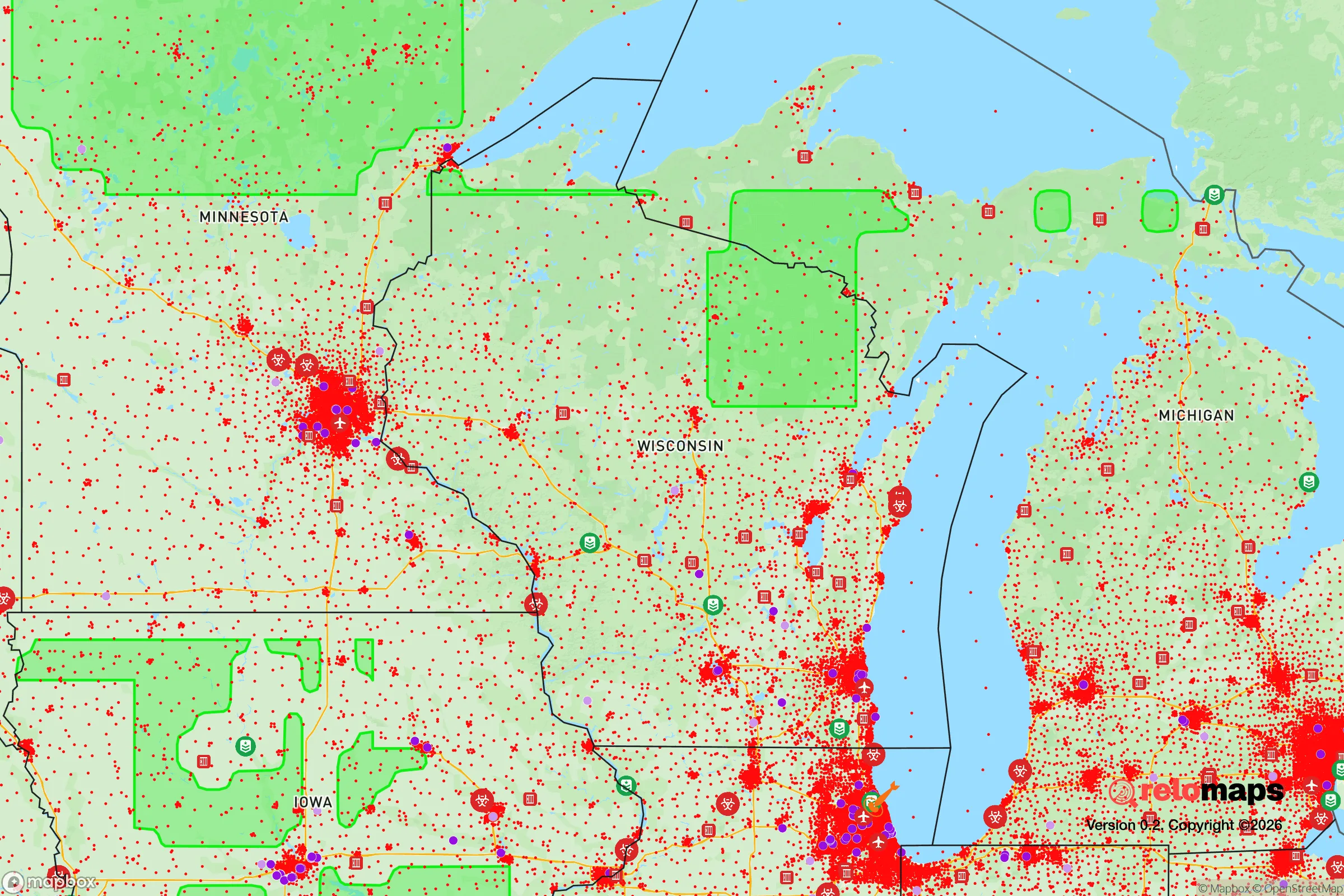
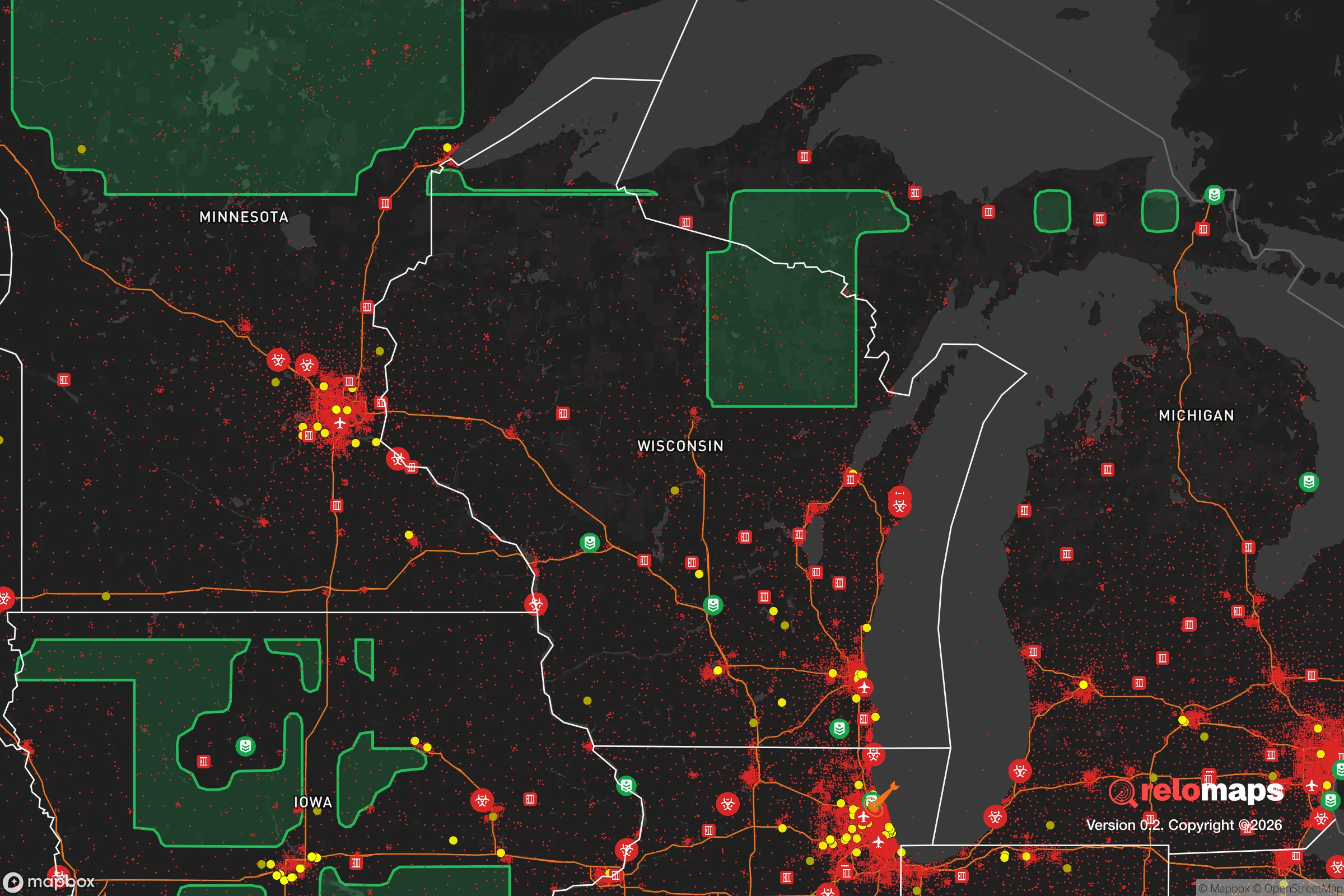


Important Note: For informational purposes only. This does not mean nothing bad ever happens in the green zones. Please use common sense. This is based on public data and modeled with AI. We tried to take a conservative approach but mistakes happen. We update this regularly as new information becomes available.
Solar Generator Recommendations
Backup power matters more here than in safer locations. We've picked three solar generators across budgets and capacity tiers — start with the budget unit if you only need a few essentials, or step up if you want to run a fridge and HVAC for days at a time.

Jackery Portable Power Station Explorer 300
Budget OptionPower on the Go: Weighing only 11 lbs, it's convenient to set up and store with book-sized foldable solar panels

BLUETTI Portable Power Station AC180
Designed for both indoor and outdoor scenarios, AC180 is highly capable as it has a robost capacity and continuous output power.

EF ECOFLOW DELTA Pro Ultra Power Station
Upgraded PickEcoFlow DELTA Pro Ultra is a whole-home energy system designed to grow with your family. Integrated with the Smart Home Panel 2, it scales to meet your evolving energy needs — keeping your home powered, intelligent, and secure through every stage of life.
We earn a commission, at no additional cost to you.
Strategic Assessment Analysis
Fitchburg, Wisconsin, offers a surprisingly resilient strategic position for those prioritizing preparedness, sitting just south of Madison but far enough from the urban core to avoid the worst of a collapse scenario. Its location along the Interstate 39/90 corridor provides rapid evacuation routes north toward the sparsely populated Northwoods or south toward Illinois, while the surrounding Dane County farmland ensures local food production remains viable. For a relocator with a prepper mindset, Fitchburg’s blend of suburban infrastructure and rural adjacency creates a buffer zone—close enough to access resources, far enough to maintain distance from the chaos that would follow a major event.
Geographic position and natural advantages for long-term survival
Fitchburg sits on the edge of the Wisconsin Driftless Area, a region that escaped glaciation, meaning its topography includes rolling hills, valleys, and natural springs that offer both defensibility and reliable water sources. The area’s elevation—roughly 950 feet above sea level—keeps it above floodplains, while the nearby Yahara River chain of lakes (Lake Mendota, Lake Monona, Lake Waubesa) provides a freshwater network that could sustain a community post-collapse. The surrounding agricultural land is some of the most productive in the Midwest, with corn, soybeans, and dairy operations within a 10-mile radius. For a relocator, this means local food production is not a hypothetical—it’s an existing reality, with farms like those in the Town of Dunn and Oregon Township already supplying regional markets. The region’s temperate climate, with cold winters that naturally limit disease vectors and pest populations, also reduces long-term survival risks compared to warmer, more humid areas.
Risks, exposures, and proximity to fallout-relevant landmarks
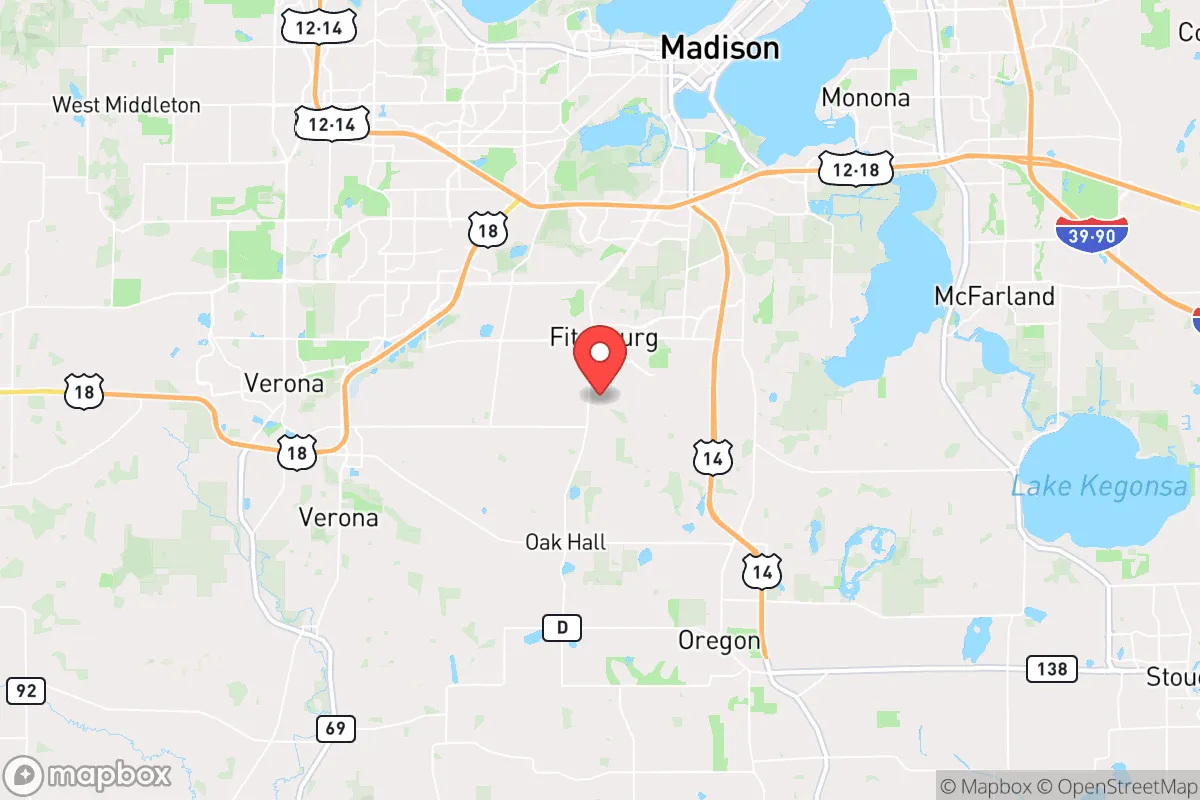
The primary strategic weakness of Fitchburg is its proximity to Madison—just 5 miles from the state capitol, the University of Wisconsin-Madison campus, and the Dane County Regional Airport. In a mass casualty event or civil unrest scenario, Madison would become a focal point for looting, refugee flows, and potential government overreach, given its dense population of 270,000 and its role as a political and logistical hub. The city’s liberal-leaning governance and history of protest activity (e.g., the 2020 Kenosha unrest spillover) suggest it could be a flashpoint. Fitchburg itself is not immune: the city’s population has grown 30% since 2010 to roughly 30,000, and its suburban sprawl means many residents are dependent on the Madison job market and supply chains. The Interstate 39/90 corridor, while an evacuation route, also funnels traffic from Chicago and Milwaukee—both high-risk urban centers for fallout or civil breakdown. Additionally, the nearby Columbia Generating Station (a natural gas plant) and the Madison Metropolitan Sewerage District’s treatment facilities are potential targets for sabotage or failure. For a prepper, the key risk is being caught in the “blast radius” of Madison’s collapse, whether from social unrest, infrastructure failure, or a coordinated attack on government targets.
Practical resilience for a relocator: food, water, energy, and defensibility
Fitchburg’s practical resilience hinges on its access to decentralized resources. The city’s water supply comes from a mix of municipal wells and the Madison Water Utility, but private wells are common in the surrounding unincorporated areas—a critical advantage if the grid fails. Property owners with land in the Town of Dunn or rural Fitchburg can drill a well for under $10,000, ensuring independent water access. For food, the local farmers’ markets (e.g., the Fitchburg Farmers Market at McKee Farms Park) and CSAs from nearby farms like Harmony Valley Farm provide immediate sources, but long-term storage requires building relationships with local producers. The area’s energy grid is tied to the Midcontinent Independent System Operator (MISO), which has faced reliability warnings during extreme weather (e.g., the 2021 Texas-style winter storms that hit Wisconsin in 2022). Solar panels are viable here—Wisconsin averages 180 sunny days per year—but battery storage is essential for winter months. Defensibility is mixed: Fitchburg’s suburban layout with cul-de-sacs and green spaces offers some natural chokepoints, but the lack of natural barriers (mountains, rivers) means a determined group could approach from multiple directions. The best defensive strategy is to locate on the city’s southern or western edges, where rural roads and farmland provide early warning and limited access points. The Dane County Sheriff’s Office has a strong presence, but in a collapse, law enforcement would be stretched thin—self-reliance is non-negotiable.
Overall, Fitchburg presents a calculated trade-off for the strategic relocator. It offers the infrastructure and resources of a mid-sized metro area without the immediate dangers of a major city, but its proximity to Madison and the I-39/90 corridor introduces significant exposure to fallout from urban collapse. For a single individual or family willing to invest in off-grid capabilities—well water, solar, food storage, and a rural property on the outskirts—Fitchburg can serve as a viable base of operations. However, it is not a bug-out location; it is a “stand your ground” position that requires constant situational awareness and a plan for rapid evacuation north if Madison implodes. The area’s agricultural base and water access are genuine advantages, but the risks from political instability and population density mean this is a choice for those who want to stay engaged with the system, not those seeking complete isolation. In a world where the unthinkable becomes routine, Fitchburg is a place to hold the line—if you’re prepared to fight for it.

* Values derived from national, state, county, city and local statistics and may differ in a specific area. Last updated: 2026-04-21T10:26:35.000Z
Narrative content on this page is AI-generated and may contain mistakes. Verify any details that matter before acting on them.
ReloMaps may earn a commission from affiliate links at no extra cost to you.

