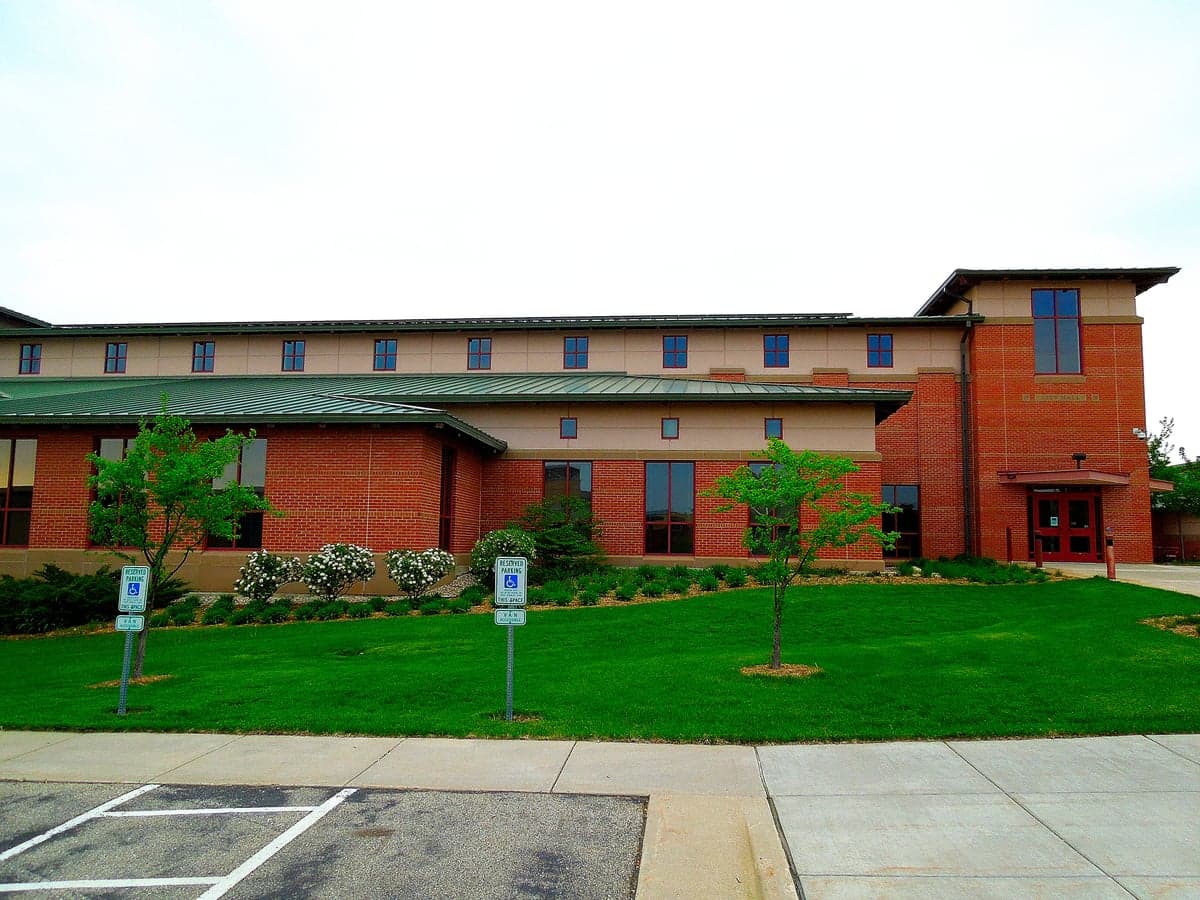
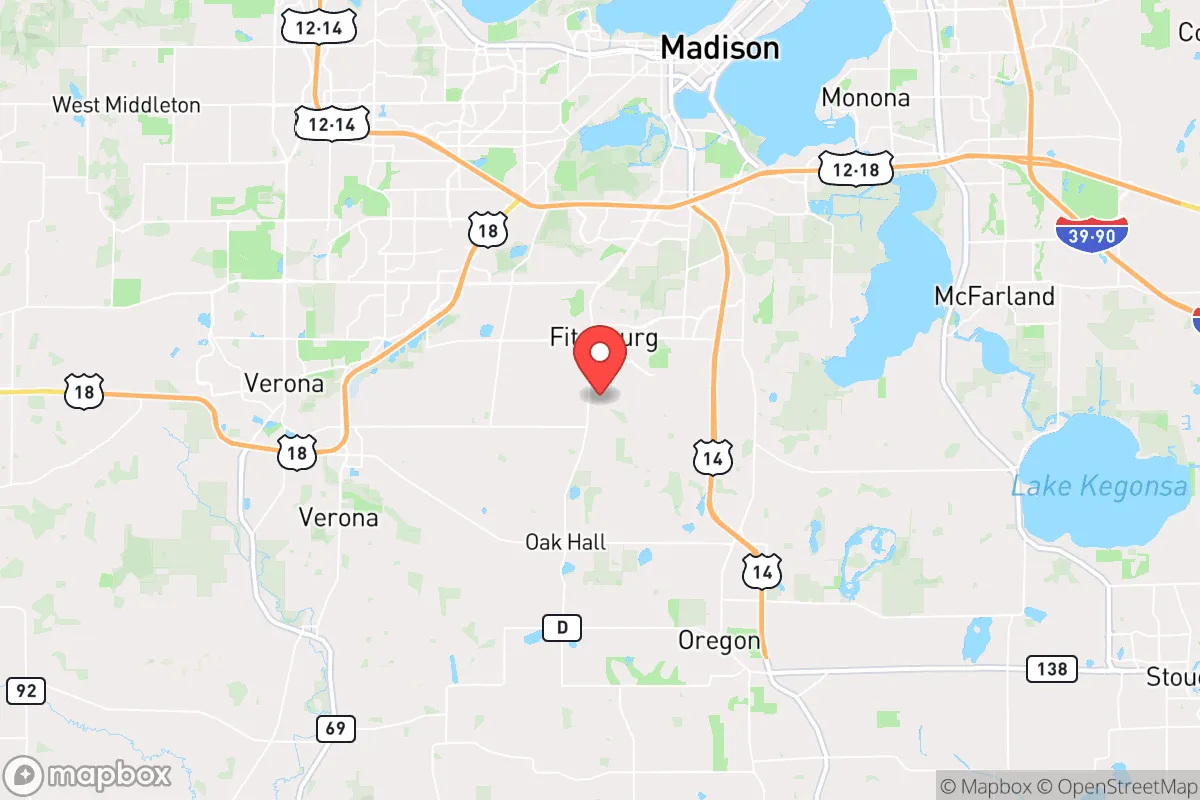
Photo: Wikipedia
Demographics of Fitchburg, WI
Affluence Level in Fitchburg, WI
A middle-class area roughly in line with national averages across income, home values, education, and employment.
People of Fitchburg, WI
Fitchburg, Wisconsin, today is a rapidly diversifying suburban city of 31,566 residents, characterized by a high concentration of college-educated professionals (57.0%) and a notably young, family-oriented demographic. Its population is a mosaic of white (59.9%), Hispanic (16.3%), Black (9.8%), East/Southeast Asian (6.9%), and Indian-subcontinent (2.9%) communities, with 10.8% foreign-born. The city’s identity is shaped by its blend of established single-family neighborhoods, newer apartment complexes, and a strong local economy tied to Epic Systems and the University of Wisconsin–Madison, making it a distinct, more affordable alternative to neighboring Madison.
How the city was settled and grew
Fitchburg’s human history begins not with a traditional downtown settlement but as a collection of rural farmsteads and crossroads hamlets. Originally part of the Town of Madison, the area was settled in the 1840s and 1850s by Yankee and German farmers drawn by the fertile glacial soils of the Sugar River valley. These early families—names like Fish, Syene, and Oak Hall—built the first churches and one-room schoolhouses in what are now the Fish Hatchery Road corridor and the Oak Hall neighborhood (near the intersection of Fish Hatchery and Verona Road). The village of Fitchburg was not incorporated until 1983, a deliberate act to avoid annexation by Madison, meaning the city’s early growth was slow and agricultural. Through the mid-20th century, the population remained under 2,000, with the Syene area (south of the Beltline) serving as a quiet rural enclave for German-descended families. No major immigrant wave arrived during this period; the population was overwhelmingly white, native-born, and tied to dairy farming and local feed mills.
Modern era (post-1965)
The post-1965 transformation of Fitchburg was driven not by the Hart-Cellar Act but by two forces: the explosive growth of Epic Systems (founded 1979, headquartered in Verona) and the expansion of the University of Wisconsin–Madison. As Madison’s housing prices rose, Fitchburg became a landing pad for young professionals and families seeking newer, larger homes on larger lots. The Stone Mill neighborhood (off Lacy Road) and the McKee Farms Park area were developed in the 1990s and 2000s, attracting white and Asian tech workers from Epic and UW. The city’s Hispanic population began growing in the 2000s, concentrated in the Lacy Road corridor and the Fitchburg Center area, drawn by construction, landscaping, and service jobs. The Black population, while smaller, has grown steadily since 2010, with families settling in the Verona Road corridor near the city’s southern edge. The East/Southeast Asian community (6.9%) is heavily tied to Epic and UW, with many Chinese, Korean, and Vietnamese families living in the Stone Mill and McKee Farms neighborhoods. The Indian-subcontinent population (2.9%) is similarly professional, concentrated in newer subdivisions like Stone Mill and the Highlands at Fitchburg. The foreign-born share (10.8%) reflects this dual pattern: high-skilled immigrants in tech and medicine, plus a smaller but growing Hispanic service-sector population.
The future
Fitchburg’s population is heading toward greater diversity and continued growth, projected to exceed 40,000 by 2040. The city is not homogenizing but rather tribalizing into distinct enclaves by income and ethnicity. The Stone Mill and McKee Farms areas will likely remain majority-white and Asian, with high home values and excellent schools. The Lacy Road corridor and Fitchburg Center will see further Hispanic and Black growth, driven by affordable apartment construction and family reunification. The Indian-subcontinent community is plateauing as Epic’s hiring stabilizes, while East/Southeast Asian numbers may grow slightly as UW continues recruiting. The white share (59.9%) is declining gradually, but the city remains majority-white and politically moderate. The next 10-20 years will likely see Fitchburg become a more stratified suburb—economically diverse but residentially sorted by neighborhood, with little mixing across the Beltline. For a conservative-leaning family, this means choosing a neighborhood carefully: the Stone Mill area offers stability and high property values, while the Lacy Road area offers more affordable entry points but less established community infrastructure.
Fitchburg is becoming a classic American suburban mosaic: a city of distinct, self-contained neighborhoods where demographic change is real but gradual, and where the biggest dividing line is not race but housing price. For someone moving in now, the key decision is which corridor—and which school attendance zone—fits their priorities, as the city’s character varies sharply from block to block.

* Values derived from national, state, county, city and local statistics and may differ in a specific area. Last updated: 2026-04-21T10:26:35.000Z
Narrative content on this page is AI-generated and may contain mistakes. Verify any details that matter before acting on them.
ReloMaps may earn a commission from affiliate links at no extra cost to you.

