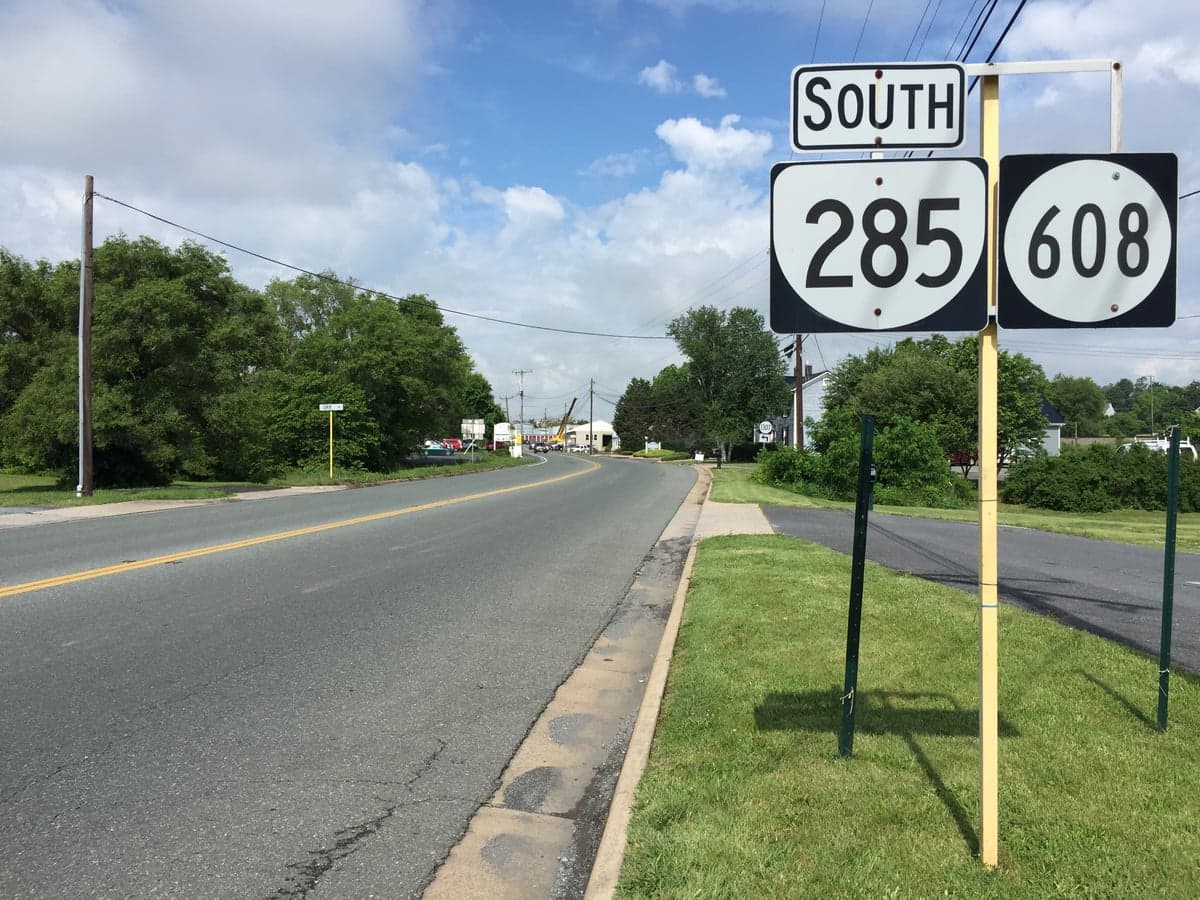
Photo: Wikipedia
Political ClimatePolitical Climate in Fishersville, VA
District shown is the primary district for this city’s centroid. Cities may span multiple districts.
Inherited from parent state — no local data available.
Local Political AnalysisPolitical Analysis of Fishersville, VA
Fishersville sits in Augusta County, which is one of the most reliably Republican corners of Virginia — the Cook PVI here is R+12, a solid 16-point swing to the right compared to the state’s overall D+4 rating. That gap isn’t just a statistic; it’s the difference between living in a place where the GOP routinely sweeps local offices and a state where Democrats control the governor’s mansion and both chambers of the General Assembly. If you’re new to the area, the quickest way to understand the politics is to look at the 2024 presidential results: Augusta County went for Trump by roughly 40 points, while Virginia as a whole backed Harris by about 5.5. The trajectory has been remarkably stable — this was a Republican stronghold long before the parties realigned, and it shows no signs of flipping in the near term.
How it compares
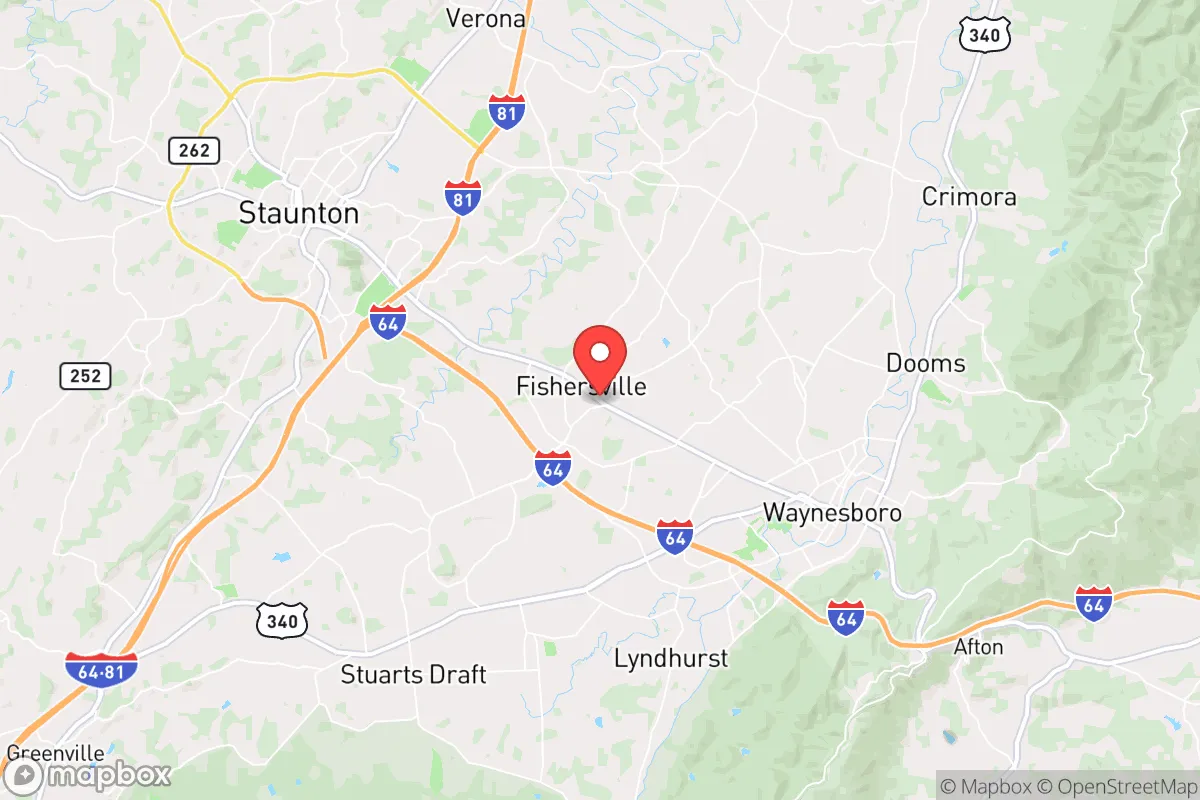
Drive 20 minutes east to Charlottesville and you’re in a completely different political universe — Albemarle County and the city proper are D+20 or better, with progressive candidates winning by landslides. The contrast is stark: Fishersville’s board of supervisors and school board are dominated by conservatives, while Charlottesville’s city council is all Democrats. Staunton, just 10 miles west, is a purple-to-blue island in the Shenandoah Valley, with a Democratic mayor and a city council that leans left. Waynesboro, right next door, is more competitive but still tilts Republican. So Fishersville isn’t just red — it’s the anchor of a conservative corridor that runs from Harrisonburg down to Roanoke, surrounded by small cities that vote differently. The state-level D+4 rating reflects the urban and suburban vote in Northern Virginia, Richmond, and Hampton Roads, which completely overwhelms the rural and exurban vote in places like Augusta County.
What this means for residents
For conservatives, living in Fishersville means your vote carries real weight locally — the county’s five supervisors are all Republicans, and the sheriff, commonwealth’s attorney, and clerk of court are all GOP. You’ll see conservative policy priorities reflected in school board decisions, land-use regulations, and the county budget, which tends to favor low taxes and limited government. For liberals, the reality is that you’re in the minority, but not isolated — there are active Democratic committees in both Augusta County and Staunton, and the proximity to Charlottesville means progressive resources are within a 30-minute drive. The practical effect is that local elections are decided in the Republican primary, not the general, so if you’re a conservative, that’s where your influence matters most. If you’re a liberal, you’ll likely find more traction in regional issues like healthcare access or broadband expansion, where there’s bipartisan agreement.
Culturally, Fishersville is a place where gun rights, faith, and rural self-reliance are the default values — you’ll see more Trump flags than Pride flags, and the local churches are more likely to host a candidates’ forum than a social justice workshop. But the area isn’t a monolith: the influx of remote workers and retirees from Northern Virginia has brought a slow demographic shift, and the county’s growing Latino population is beginning to change the political conversation. The long-term outlook is that Augusta County will stay red for the foreseeable future, but the margin may narrow slightly as the exurban spillover from Charlottesville and the broader Valley continues. For now, though, if you want to know how Fishersville votes, just look at the state’s rural-urban divide — this is the rural side, and it’s not budging.

State Political ClimatePolitical Climate in Virginia
State Political AnalysisPolitical Environment in the State
Virginia is a D+4 state by Cook PVI, but that single number hides one of the most politically split and rapidly shifting landscapes on the East Coast. The state has moved from a reliably Republican stronghold in the 2000s to a solidly Democratic-leaning state in presidential years, driven almost entirely by the explosive growth of the Washington, D.C. suburbs in Northern Virginia. For a relocator, the practical reality is that you are moving into a state where your vote and your values will depend almost entirely on which of the state’s distinct regions you choose to call home.
Urban vs. rural divide
The political map of Virginia is a tale of three distinct Virginias. The first is the urban crescent, anchored by Arlington, Alexandria, and Fairfax County in Northern Virginia, along with the state capital of Richmond and the coastal port city of Norfolk. These areas are overwhelmingly Democratic, with Fairfax County alone casting more votes than many entire states. The second Virginia is the rural and exurban expanse west of the Blue Ridge and south of the James River—places like Roanoke, Lynchburg, and the Shenandoah Valley—which have become deeply Republican, often voting 65-70% for the GOP. The third Virginia is the rapidly growing suburban ring in between, places like Loudoun County and Prince William County, which have flipped hard to the Democrats over the last two decades. Loudoun County, once a GOP stronghold, now votes about 60% Democratic, and its explosive population growth is the single biggest reason the state has shifted blue. The 2021 gubernatorial race showed the razor-thin margin: Republican Glenn Youngkin won the state by about 2 points, but only because he ran up massive margins in the rural west and the exurban south, while losing the D.C. suburbs by historic margins.
Policy environment
Virginia’s policy environment is a study in contrasts, and it has shifted dramatically depending on which party controls the governor’s mansion and the General Assembly. On taxes, Virginia is a moderate-tax state: the income tax rate is a flat 5.75% for most earners, and the sales tax is 5.3% (higher in some localities). Property taxes are set locally and are generally moderate, though they are notably higher in Northern Virginia to fund schools. The regulatory posture is business-friendly compared to neighboring Maryland, which is why companies like Amazon chose Arlington for its HQ2. On education, the state has seen a fierce tug-of-war: Governor Youngkin’s 2022 executive orders banned the teaching of "inherently divisive concepts" and established a tip line for parents to report "critical race theory" in schools, while the Democratic-controlled Senate blocked much of his legislative agenda. Healthcare is a mixed bag—Virginia expanded Medicaid under the Affordable Care Act in 2019, but it remains a state with strong private healthcare options and a robust network of hospitals, particularly in the Richmond and Northern Virginia metros.
Recent policy direction
The last five years have been a whiplash of policy direction. In 2020, Democrats took full control of state government and passed a wave of progressive legislation: they abolished the death penalty, legalized marijuana possession (with retail sales starting in 2024), and passed the Virginia Clean Economy Act, which mandates a carbon-free grid by 2050. They also passed the Virginia Voting Rights Act, which expanded ballot access, and banned "conversion therapy" for minors. When Youngkin took office in 2022, he shifted the executive branch sharply right: he signed a 15-week abortion ban (with exceptions) that was later blocked by the courts, rolled back COVID-era mandates, and pushed for a 1% cut to the state income tax rate, which was partially enacted. On guns, Virginia is a "shall-issue" state for concealed carry permits, but it does not allow permitless carry, and it bans assault weapons in certain localities like Arlington and Alexandria under local ordinances. The state also has a "red flag" law that allows courts to temporarily seize firearms from individuals deemed a threat. On parental rights, Youngkin’s administration has pushed for more transparency in school curricula, but the Democratic Senate has blocked most of it, leaving school boards in places like Loudoun County as the real battlegrounds for these fights.
Civil unrest & political movements
Virginia has been a flashpoint for political movements on both sides. The most infamous moment was the 2017 "Unite the Right" rally in Charlottesville, which turned deadly and became a national symbol of far-right extremism. That event galvanized the state’s progressive movement and led to the removal of Confederate statues across the state, including the massive Lee statue in Richmond. On the left, the state has seen strong organized movements around gun control (Moms Demand Action is very active in Northern Virginia) and abortion rights, particularly after the 2022 Dobbs decision. On the right, the "parents’ rights" movement is highly organized, especially in the suburbs of Loudoun County and Virginia Beach, where school board meetings have become contentious arenas. Immigration politics are also a live issue: Virginia is not a sanctuary state, but several localities, including Alexandria and Richmond, have adopted "welcoming city" policies that limit cooperation with federal immigration enforcement. Election integrity has been a recurring controversy—Youngkin’s 2021 victory was followed by his creation of an election integrity task force, which Democrats criticized as voter suppression, though no widespread fraud was ever found.
Projection
Looking ahead five to ten years, the trajectory is clear: Virginia will continue to trend Democratic at the statewide level, but the margins will remain close enough that a strong Republican candidate can still win, as Youngkin proved. The demographic engine is Northern Virginia, which is growing at a pace that will only increase its political weight. The rural west and south will continue to shrink and become more Republican, but they cannot offset the D.C. suburbs. The wildcard is the exurban counties like Stafford and Spotsylvania, which are growing fast and are politically competitive. A relocator moving to Virginia in 2026 should expect that in a decade, the state will likely be a D+6 or D+7 state, with Democrats holding the governor’s mansion more often than not, but with Republicans retaining a strong minority that can win in good years. The practical effect is that state policy will oscillate between progressive and moderate-conservative depending on the election cycle, and local government will matter more than ever.
For a new resident, the bottom line is that Virginia offers a genuinely bifurcated experience. If you are a conservative, you can find a welcoming, politically aligned community in the Shenandoah Valley, around Lynchburg, or in the rural counties south of Richmond, where your vote will be in the majority and your values will be reflected in local policy. If you are a liberal, the Northern Virginia suburbs and Richmond will feel like home, with progressive policies on everything from transit to housing. The state’s tax burden is moderate, its schools are generally strong (especially in the suburbs), and its economy is one of the most resilient in the nation, anchored by the federal government, defense contracting, and tech. But you should also be prepared for a state that is perpetually in a political tug-of-war—where the governor’s mansion and the legislature are often controlled by different parties, and where the culture wars of the nation play out in your local school board and county supervisors’ meetings. Choose your county carefully, because in Virginia, the locality is where the political rubber meets the road.
* Values derived from national, state, county, city and local statistics and may differ in a specific area. Last updated: 2026-10-12T03:12:28.000Z
Narrative content on this page is AI-generated and may contain mistakes. Verify any details that matter before acting on them.
ReloMaps may earn a commission from affiliate links at no extra cost to you.

