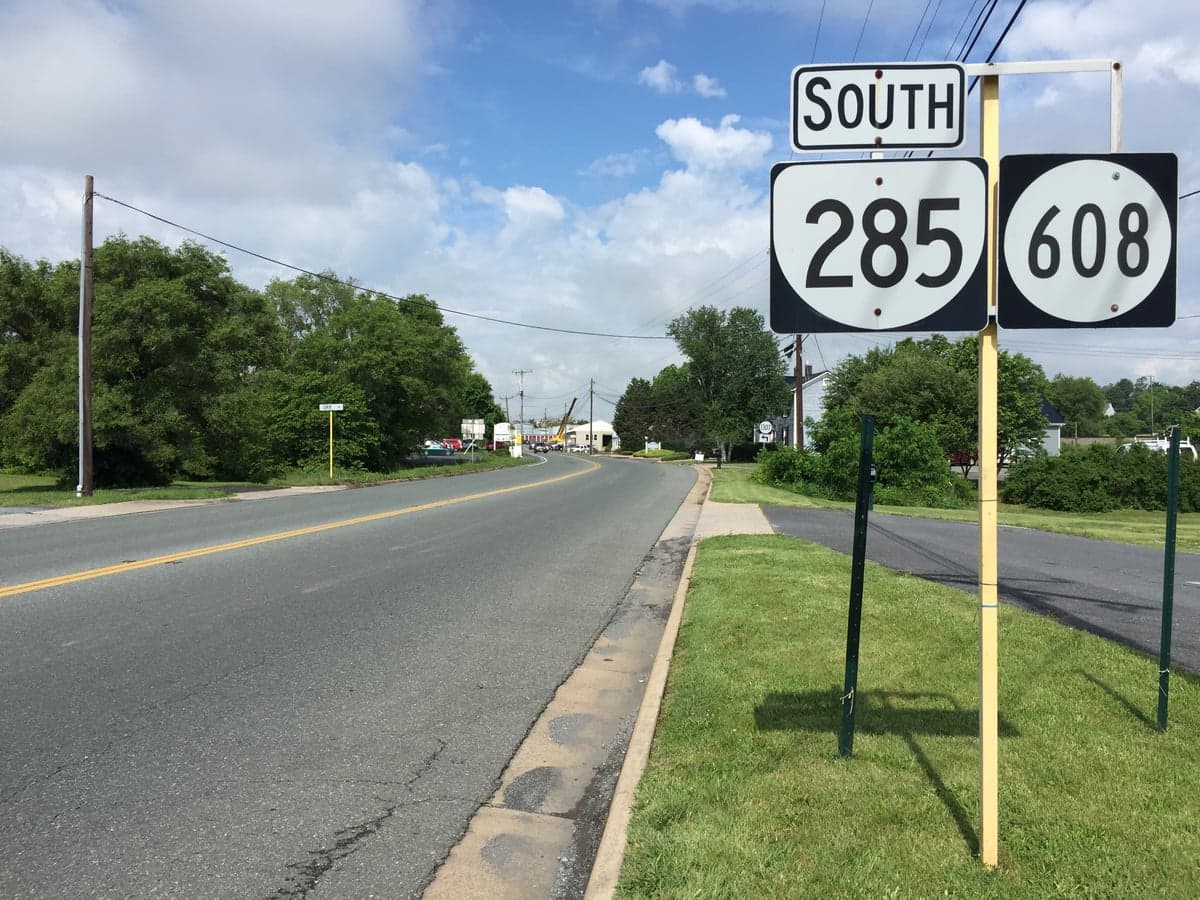
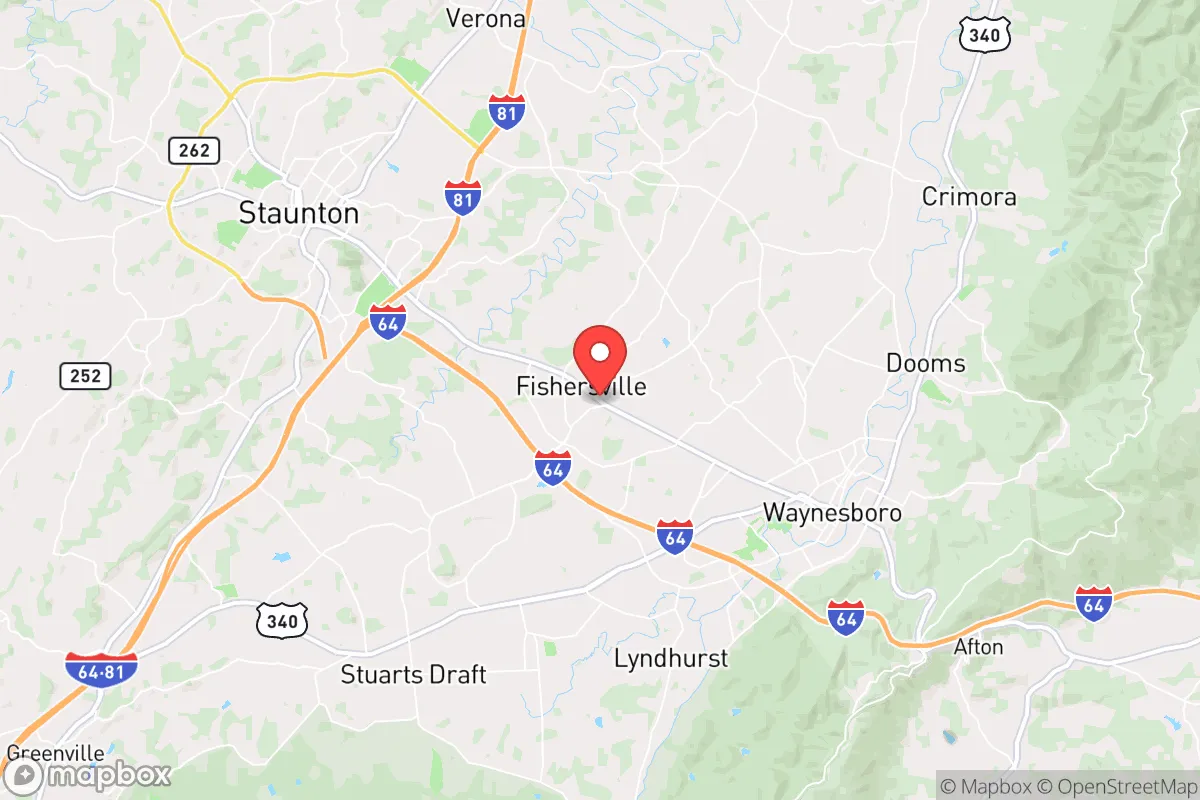
Photo: Wikipedia
Demographics of Fishersville, VA
Affluence Level in Fishersville, VA
A middle-class area roughly in line with national averages across income, home values, education, and employment.
People of Fishersville, VA
Fishersville, Virginia, is a small unincorporated community of 9,546 residents in Augusta County, anchored by the intersection of US-250 and I-64. The population is predominantly white (82.1%), with a notable Black community (9.3%) and a growing Hispanic population (6.6%), while foreign-born residents make up just 1.9% of the total. With 33.8% of adults holding college degrees, the community skews educated and leans conservative, reflecting its Shenandoah Valley heritage. For families and individuals considering relocation, Fishersville offers a stable, rooted population with a distinct Appalachian-Southern cultural character.
How the city was settled and grew
Unlike many Virginia communities, Fishersville was never a colonial-era town. It emerged in the mid-19th century as a railroad stop along the Virginia Central Railroad, named after a local farming family. The original settlers were Scots-Irish and German farmers who pushed into the Shenandoah Valley in the 1740s, drawn by fertile limestone soils and land grants from Lord Fairfax. These early families established small homesteads across what is now the Fishersville Historic District, a cluster of late-19th-century farmhouses and churches that still anchors the community's identity. The railroad brought a second wave of merchants and tradesmen, who built homes along the corridor now known as Old Fishersville Road, where several Victorian-era structures remain occupied today.
The community's growth accelerated in the 1930s with the construction of the Western State Hospital, a psychiatric facility that became the area's largest employer and drew a wave of nurses, orderlies, and support staff. Many of these workers settled in the Hospital Heights neighborhood, a modest grid of bungalows and ranch homes built between 1935 and 1955 that still houses many healthcare workers and their descendants. The post-World War II era brought a third wave of veterans and factory workers, who built homes in the Green Hills Addition, a working-class subdivision developed in the late 1940s that remains a stronghold of multi-generational local families.
Modern era (post-1965)
The 1965 Hart-Cellar Act had minimal direct impact on Fishersville, as the community's foreign-born population remains just 1.9% today — far below the national average. Instead, the modern era has been defined by domestic in-migration and suburbanization. The completion of I-64 in the 1970s transformed Fishersville from a quiet crossroads into a bedroom community for Staunton and Waynesboro, drawing white-collar professionals and retirees seeking affordable land. These newcomers concentrated in the Sherando Hills subdivision, a planned development of large-lot homes built from the 1980s through the 2000s that now represents the community's most affluent enclave. The Black population, which has deep roots in the area dating to the Reconstruction era, remains concentrated in the Lincoln Heights neighborhood, a historically Black district near the old railroad tracks that has maintained its identity despite broader demographic shifts.
The most significant modern change has been the growth of the Hispanic population, which now stands at 6.6%. This wave began in the 1990s, driven by agricultural work in Augusta County's apple orchards and poultry processing plants. Hispanic families have dispersed across Fishersville rather than forming a single ethnic enclave, though a visible cluster of Hispanic-owned businesses has emerged along Commerce Street, the community's primary commercial strip. East and Southeast Asian residents make up just 0.2% of the population, and the Indian-subcontinent community is effectively nonexistent at 0.0%, making Fishersville one of the least diverse communities in the region by Asian and Indian metrics.
The future
Fishersville's population is aging slowly but steadily, with the 65-and-over cohort growing as retirees from Northern Virginia and the Washington, D.C. metro area discover the area's low property taxes and proximity to Augusta Health, the region's largest hospital. The Hispanic population is projected to grow modestly over the next decade, likely reaching 8-9% by 2035, driven by second-generation families remaining in the area rather than new immigration. The white population will continue to dominate but will see gradual decline as a share of the total, mirroring statewide trends. New residential development is concentrating in the Fishersville Crossing area, a mixed-use district planned along I-64 that is expected to add roughly 800 housing units by 2030, most of them targeting empty-nesters and remote workers rather than young families.
Culturally, Fishersville is becoming more suburban but not more cosmopolitan. The community's identity remains firmly rooted in its Appalachian-Southern heritage, with church attendance, hunting, and high school football at Wilson Memorial High School serving as central social institutions. The influx of remote workers is gradually shifting the political and cultural character toward a moderate-conservative posture, though Augusta County still votes Republican by wide margins in most elections.
For someone moving to Fishersville today, the community offers a stable, safe, and increasingly comfortable suburban lifestyle with a strong sense of local identity. The population is not diversifying rapidly, and those seeking a truly multicultural environment will find limited options here. But for families and individuals who value rootedness, low crime, and a slower pace of life, Fishersville represents a community that knows exactly what it is — and shows no signs of changing that character anytime soon.

* Values derived from national, state, county, city and local statistics and may differ in a specific area. Last updated: 2026-10-12T03:12:28.000Z
Narrative content on this page is AI-generated and may contain mistakes. Verify any details that matter before acting on them.
ReloMaps may earn a commission from affiliate links at no extra cost to you.

