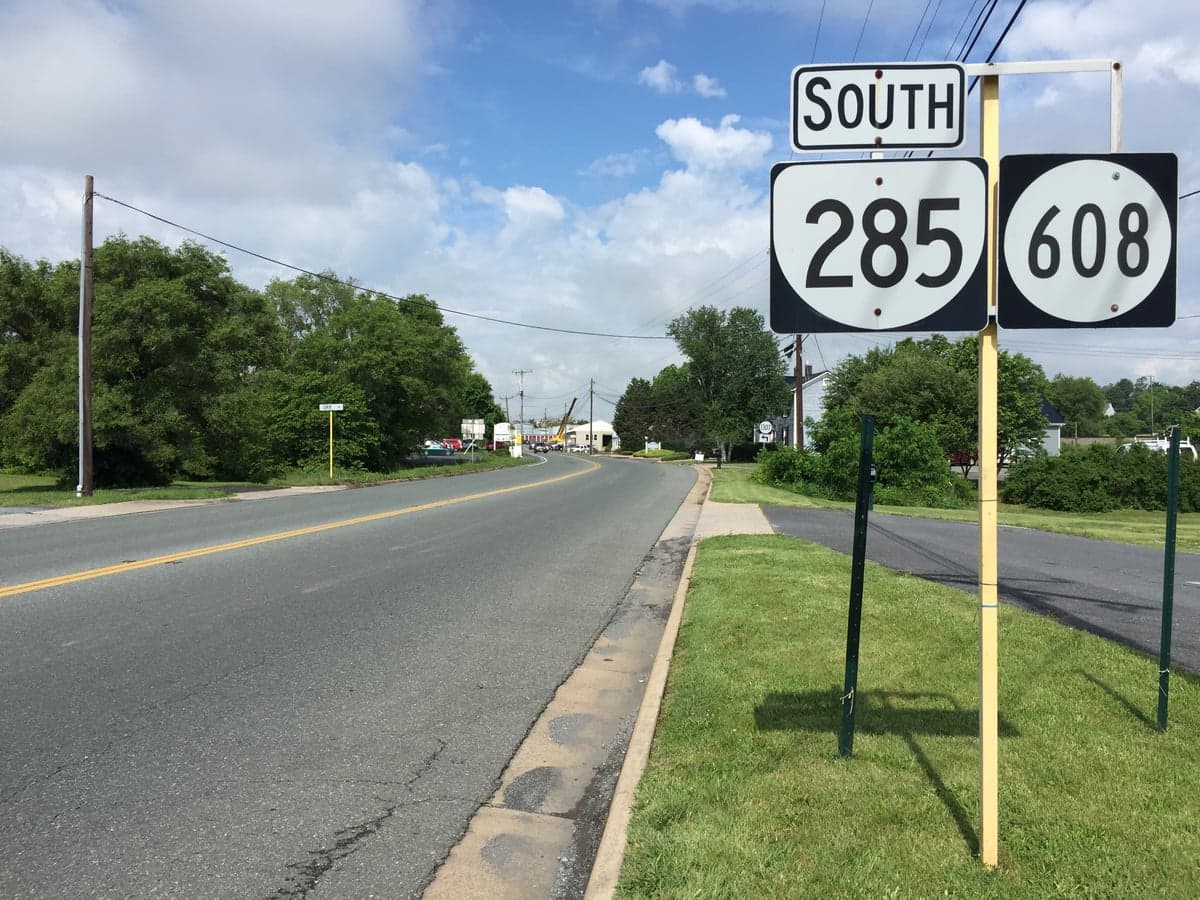
Photo: Wikipedia
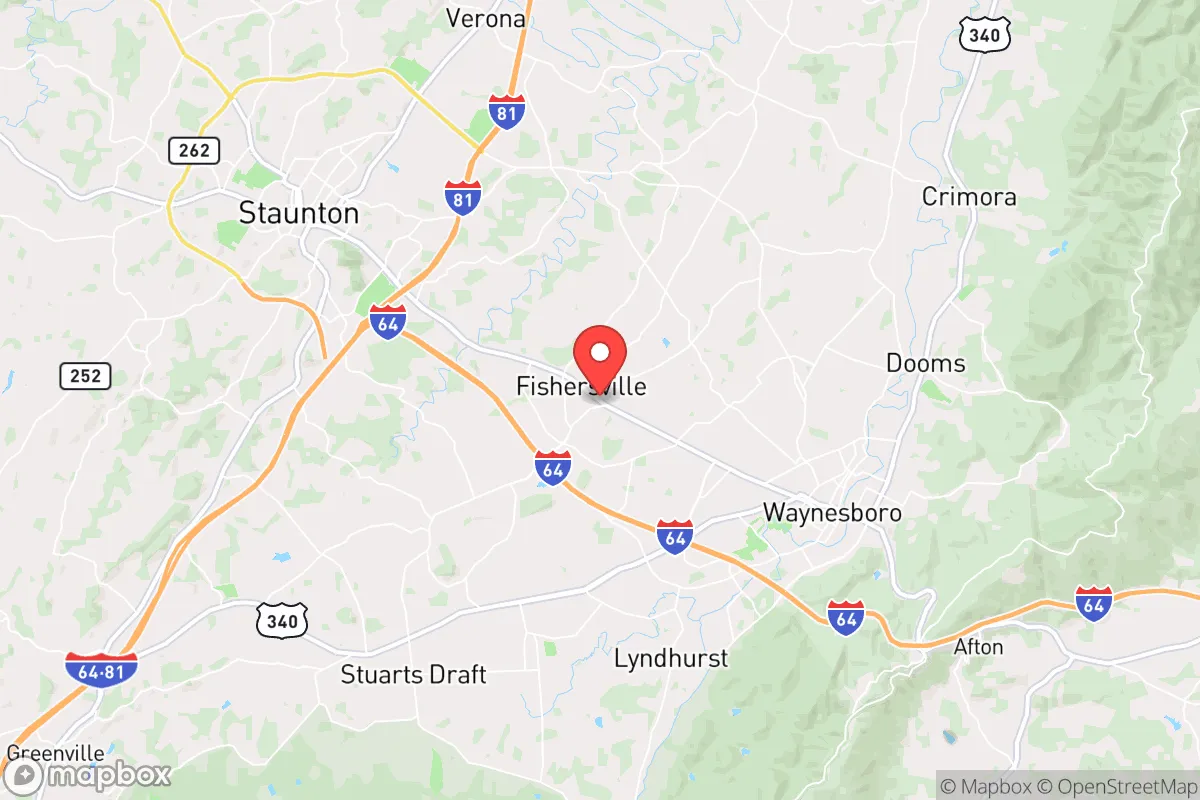
Personal Sovereignty in Fishersville, VA
Viable for self-reliance. Generally workable, though some barriers may limit total independence.
What does Personal Sovereignty tell us?
Personal Sovereignty measures your capacity for self-reliance and independence with minimal government friction. Higher scores mean fewer barriers between you and the way you want to live... but it assumes you have the space you need and good neighbors.
What does this tell us?
Personal Sovereignty measures your capacity for self-reliance and independence with minimal government friction. Higher scores mean fewer barriers between you and the way you want to live... but it assumes you have the space you need and good neighbors.
State Policy
Energy independence: Importer (20% of energy produced in-state)
Personal Liberty
Homesteading

Personal Liberty Analysis
Fishersville, Virginia, sits in Augusta County, a part of the Shenandoah Valley where the regulatory climate is notably lighter than in Northern Virginia or the Tidewater region. For a resident prioritizing personal sovereignty, the area offers a meaningful blend of rural property access, a conservative county government, and Virginia’s statewide legal framework, which is itself a mixed bag of permissive and restrictive statutes. The practical autonomy you experience here depends less on the town itself and more on how you navigate the Commonwealth’s preemption laws and Augusta County’s zoning ordinances.
Tax burden and regulatory posture in Augusta County
Virginia’s tax structure is moderate overall, but Augusta County keeps the local burden low. The county’s real estate tax rate is around $0.52 per $100 of assessed value, which is well below the state average for counties and significantly cheaper than nearby Albemarle County (Charlottesville area), which hovers near $0.85. Personal property tax on vehicles is assessed at 100% of value, but the rate is a modest $2.50 per $100, and Augusta County does not levy a local income tax — a distinct advantage over localities in states with county-level income taxes. The state income tax is a flat 5.75%, which is mid-pack nationally, but there is no tax on Social Security benefits and a $12,000 standard deduction for individuals, making retirement income relatively tax-friendly.
Regulatory posture in Augusta County leans toward the permissive side for a Virginia locality. The county has no county-wide zoning for agricultural land, meaning that if you buy a parcel in the Agricultural (A-1) district, you can generally keep livestock, build a primary residence, and operate a farm stand without a special use permit. However, the county does enforce the Virginia Uniform Statewide Building Code, so any new dwelling requires a permit and inspection. The Board of Supervisors has historically resisted state mandates on renewable energy siting and data centers, and the county’s comprehensive plan explicitly prioritizes preserving agricultural and rural character over commercial development. For a homeowner, this translates to fewer HOAs and less county interference in property use than you would find in the more densely regulated counties east of the Blue Ridge.
Self-defense law and gun rights specifics
Virginia is a shall-issue state for concealed carry, and Augusta County’s circuit court issues permits with minimal friction. The state does require a background check and a completed firearms safety course for a Concealed Handgun Permit (CHP), but there is no discretionary denial — if you meet the statutory criteria, the permit is issued. Virginia also has a “permitless” open carry law, so carrying a firearm openly without a permit is legal for anyone 18 or older who can legally possess a firearm. The state does not require registration of firearms, and there is no state-level ban on assault weapons, though a 2020 state law did institute universal background checks for private sales, which is a notable departure from the more permissive norms in states like West Virginia or Tennessee.
Use of force law in Virginia is a “stand your ground” state, meaning there is no duty to retreat in any place where you have a legal right to be. The Castle Doctrine is codified in § 8.01-926.1, which presumes that a person who uses defensive force in their dwelling or vehicle had a reasonable fear of imminent death or great bodily harm. Augusta County’s sheriff’s office is publicly supportive of Second Amendment rights, and the county has formally declared itself a “Second Amendment Sanctuary” — a symbolic but meaningful signal that local law enforcement will not prioritize enforcement of any future state-level firearm restrictions. For a self-reliant individual, the practical takeaway is that Fishersville offers a legal environment where defensive firearm ownership is straightforward, but you must account for the state’s universal background check requirement on private transfers.
Self-reliance and homesteading viability: lot sizes, zoning, and off-grid feasibility
Homesteading in Fishersville is genuinely viable, but the specifics matter. Augusta County’s zoning ordinance requires a minimum lot size of 2 acres for a single-family dwelling in the A-1 Agricultural district, and 25 acres for a full-scale farm operation with livestock as a primary use. However, the county allows “hobby farms” on parcels as small as 2 acres, provided the animal density stays below one animal unit per acre. This means a family on a 3-acre lot can keep chickens, a couple of goats, and a large garden without a special permit. The county does not require a minimum square footage for a primary residence, and there is no county-wide ban on manufactured homes, though they must meet HUD standards and be placed on a permanent foundation.
Off-grid feasibility is a mixed picture. Virginia law does not require connection to a public utility, and Augusta County allows private wells and septic systems on any parcel with adequate soil percolation. The county’s health department requires a percolation test and a permit for a septic system, which typically costs $400–$800, and a well permit runs about $300. Solar panels are permitted as an accessory use without a special permit, and Virginia has a net metering law that requires utilities to credit you for excess generation. However, the county does enforce the state building code on electrical work, so a fully off-grid system must be inspected and meet the National Electrical Code. The bigger constraint is that Augusta County does not allow permanent “tiny houses” on wheels as a primary dwelling — they are classified as recreational vehicles and cannot be used as year-round residences. A stick-built or modular home on a permanent foundation is the only legal path for a primary residence.
Personal liberties: parental rights, medical autonomy, speech, and property
Virginia’s legal framework for parental rights is strong but not absolute. The state has a Parental Rights in Education statute that requires schools to notify parents of any changes in a student’s physical or mental health, and Augusta County Public Schools has adopted a conservative interpretation of this law, including a policy that requires parental consent for any student participation in surveys or health screenings. Medical autonomy is more constrained: Virginia mandates the MMR and hepatitis B vaccines for school attendance, though medical and religious exemptions are available with a notarized form. The state does not have a parental consent requirement for a minor’s abortion, which is a point of tension for conservative families, but the county’s only abortion provider is located in Charlottesville, 40 minutes away, and no such facility operates within Augusta County.
Free speech protections in Fishersville are robust in practice. Augusta County does not have a noise ordinance that restricts amplified speech in public spaces, and the county’s parks are open to public gatherings without a permit for groups under 50. Property rights are the strongest pillar of personal sovereignty here. Virginia is a “Dillon’s Rule” state, meaning localities only have powers explicitly granted by the state, and Augusta County has not enacted any rent control, inclusionary zoning, or short-term rental bans. You can operate a home-based business without a county business license if it is “incidental to the residential use” and does not generate more than 10 vehicle trips per day. The county’s land use ordinance also explicitly protects the right to farm, and the Right to Farm Act shields agricultural operations from nuisance lawsuits if they predate a neighboring residential development.
Overall, Fishersville’s sovereignty profile is strong for a Virginia location, but it is not a libertarian enclave like Grafton, New Hampshire, or a low-tax haven like Texas. The combination of a low property tax rate, permissive agricultural zoning, a sanctuary county stance on firearms, and a school board that respects parental authority makes it one of the more autonomy-friendly spots in the Mid-Atlantic. The trade-offs are the state’s universal background checks, mandatory school vaccinations, and the building code requirements for any new construction. For a family that wants rural self-reliance without leaving the state, Augusta County delivers a solid B+ — better than most of Virginia, but with clear state-level limits on full sovereignty.

* Values derived from national, state, county, city and local statistics and may differ in a specific area. Last updated: 2026-10-12T03:12:28.000Z
Narrative content on this page is AI-generated and may contain mistakes. Verify any details that matter before acting on them.
ReloMaps may earn a commission from affiliate links at no extra cost to you.

