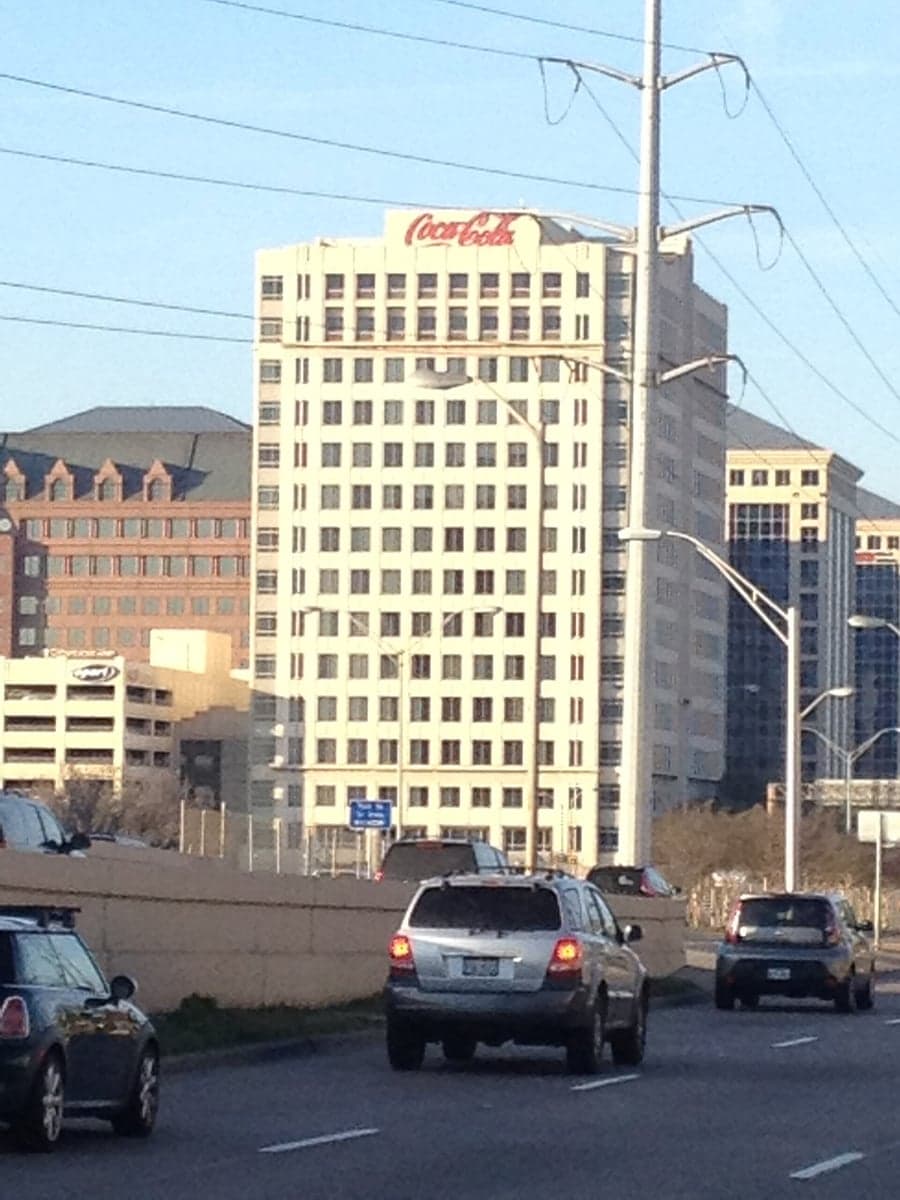
Photo: Wikipedia
Political ClimatePolitical Climate in Farmers Branch, TX
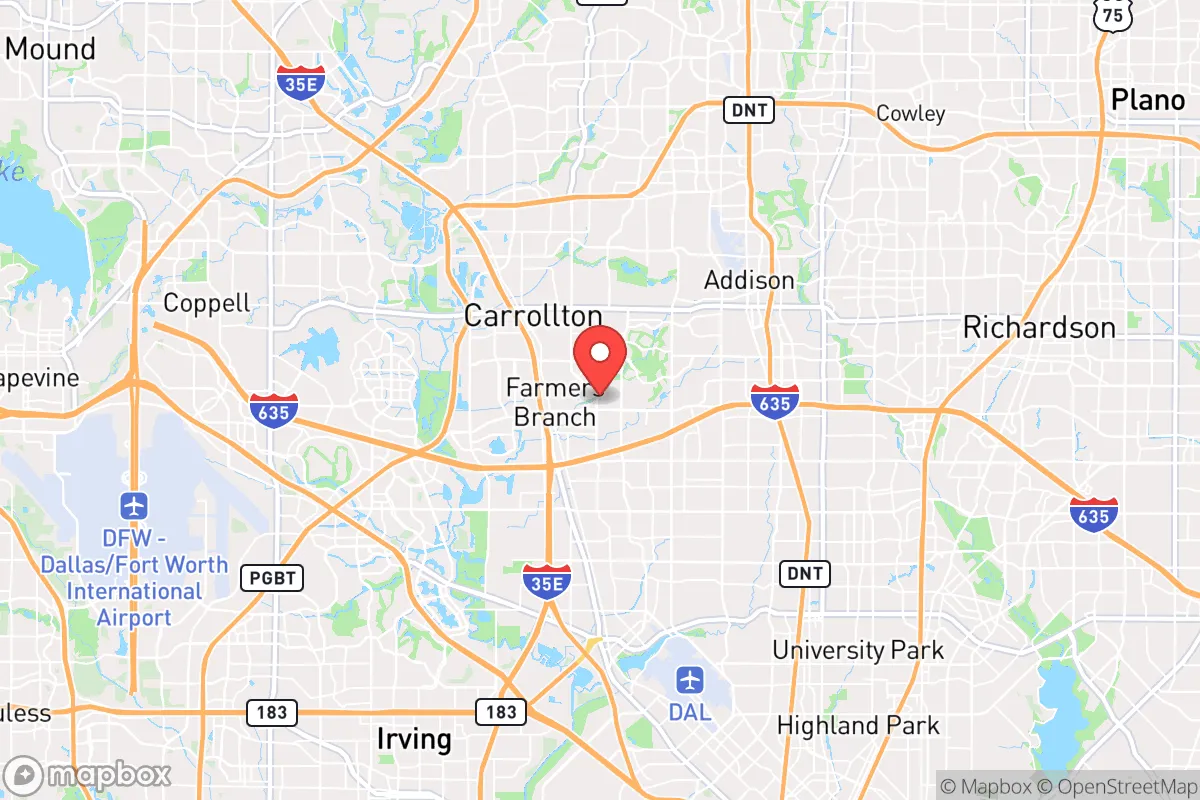
District shown is the primary district for this city’s centroid. Cities may span multiple districts.
Local Political AnalysisPolitical Analysis of Farmers Branch, TX
Farmers Branch has long been a reliably conservative suburb in the Dallas-Fort Worth metroplex, and that hasn’t changed much. The city sits in a Cook PVI of R+7, meaning it votes about seven points more Republican than the national average in presidential elections. That’s a solid red lean, but it’s not as deep red as some of the outer-ring exurbs like Celina or Prosper, which can run R+20 or more. Over the past decade, the shift here has been subtle—Farmers Branch has gotten a little more diverse and a little more purple at the local level, but the overall trajectory is still comfortably Republican. The 2024 presidential results in Dallas County (which includes Farmers Branch) showed a slight rightward drift compared to 2020, but the city itself has been a bit of a bellwether: it’s not flipping blue anytime soon, but it’s not getting dramatically redder either.
How it compares
Compared to Texas as a whole, Farmers Branch is a bit more Republican than the state average. Texas statewide races often land around R+5 to R+8, so Farmers Branch’s R+7 puts it right in the middle of the pack for suburban Texas. But the real contrast is with nearby cities. Just a few miles east, Dallas proper is a deep blue stronghold (Cook PVI around D+28), while to the north, Carrollton and Addison are more competitive—Carrollton leans slightly Democratic in recent cycles, and Addison is a toss-up. To the west, Irving has trended blue over the last decade, driven by a growing Hispanic population. So Farmers Branch is a conservative island in a sea of shifting politics: it’s surrounded by places that are either solidly Democratic or moving that way, which makes its R+7 stand out more than it would in, say, rural East Texas. The state of Texas itself has no official Cook PVI for its entire population (it’s a state, not a district), but statewide elections since 2020 have hovered around R+5 to R+6, so Farmers Branch is a touch redder than the state average.
What this means for residents
For conservative residents, this is a comfortable place to live. Local elections tend to favor Republicans, and the city council and school board have a center-right majority. You’ll find plenty of churches, gun-friendly policies, and a general “live and let live” attitude that aligns with traditional Texas values. For liberal residents, it’s not hostile, but it can feel like you’re in the minority. There’s a visible Democratic presence—especially among younger families and newer arrivals—but they rarely win citywide races. That said, the city’s diversity (about 40% Hispanic, 30% white, 15% Asian) means you’ll hear a range of political views at the grocery store or PTA meeting. The practical impact: property taxes are moderate for Dallas County, and the city has a reputation for efficient services, which both sides appreciate. The biggest friction point is usually development policy—conservatives want to keep things low-density, while liberals push for more transit-oriented projects near the DART light rail stations.
Culturally, Farmers Branch is a bit of an outlier in the metroplex. It’s one of the few cities in Dallas County that still has a strong “small-town” feel, with its own police department, a historic downtown area, and an annual “Farmers Branch Historical Park” festival. That’s a contrast to the hyper-growth of Frisco or McKinney to the north. Policy-wise, the city has been a battleground over immigration—back in 2006, it passed an ordinance targeting undocumented renters, which drew national attention and lawsuits. That’s mostly faded now, but it left a lingering reputation. Today, the city is more focused on economic development and keeping its tax base stable. If you’re moving here, expect a place where politics matter less in daily life than in the headlines—people are friendly, the schools are solid, and the commute to downtown Dallas is about 20 minutes. Just don’t expect to see many “Biden 2024” yard signs next to the “Trump 2024” ones.

State Political ClimatePolitical Climate in Texas
State Political AnalysisPolitical Environment in the State
Texas has been a reliably Republican state for the past three decades, but the margin has been shrinking. In 2024, Donald Trump won the state by roughly 9 points, down from 11 points in 2020 and 16 points in 2012. The dominant coalition remains a mix of rural conservatives, suburban moderates, and evangelical voters, but explosive growth in the urban crescent—from Dallas-Fort Worth down through Austin to San Antonio and Houston—is steadily shifting the ground. The state’s political trajectory is a slow, uneven drift toward competitiveness, with the old GOP stronghold showing real cracks in the suburbs while rural and exurban areas dig in deeper.
Urban vs. rural divide
The political map of Texas is a study in contrasts. The big metros—Houston, Dallas, San Antonio, and Austin—are the Democratic engine rooms. Harris County (Houston) alone delivers nearly a million Democratic votes, while Travis County (Austin) is the bluest urban core in the state, routinely voting 70%+ Democratic. Meanwhile, the rural Panhandle, East Texas piney woods, and the Hill Country west of I-35 are deeply red. Lubbock and Amarillo in the Panhandle vote 75-80% Republican, and counties like Loving and King routinely post 90%+ GOP margins. The real battleground is the suburbs: Collin County (north of Dallas) flipped from +25 R in 2012 to +9 R in 2024, while Fort Bend County (southwest of Houston) went from +12 R in 2012 to +6 D in 2020 before settling back to a toss-up in 2024. The I-35 corridor from San Antonio to Dallas is the state’s political fault line, where exurban growth is pulling one way and inner-ring suburbs the other.
Policy environment
Texas operates with a low-tax, low-service model. There is no state income tax, but property taxes are among the highest in the nation—averaging roughly 1.6% of home value. The state relies heavily on sales tax (6.25% state rate, plus local add-ons) and oil-and-gas severance taxes. Regulatory posture is business-friendly: no state-level minimum wage above the federal $7.25, no state-level paid leave mandate, and a right-to-work law that limits union power. Education policy is decentralized, with school districts controlling most decisions, but the state has pushed school choice—including a 2023 voucher-like program (HB 3) that creates education savings accounts for special-needs students, with expansion likely. Healthcare is a perennial flashpoint: Texas has the highest uninsured rate in the nation (roughly 17%), having refused Medicaid expansion under the ACA. Election laws tightened after 2020 with SB 1 (2021), which added ID requirements for mail ballots, limited drive-through voting, and restricted early voting hours. Abortion is effectively banned after a 2021 trigger law (SB 8) and a near-total ban (HB 1280) that took effect after Dobbs, with no exceptions for rape or incest.
Recent policy direction
The last five years have seen Texas lurch rightward on social and cultural issues while maintaining its business-friendly posture. On gun and self-defense law, Texas became a permitless carry state in 2021 (HB 1927), allowing anyone 21 or older who can legally possess a firearm to carry it openly or concealed without a license. On parental and education rights, the state passed HB 3979 (2021) and SB 3 (2023), which restrict how race and gender can be taught in public schools, and require schools to notify parents if a child requests a name or pronoun change. Speech and privacy saw HB 20 (2023), which prohibits social media platforms from moderating content based on viewpoint—a law currently tied up in court. On medical and bodily autonomy, the abortion bans are the headline, but the state also restricted gender-affirming care for minors (SB 14, 2023) and banned transgender athletes from school sports (HB 25, 2021). Property rights remain strong, with no state-level rent control and limited eminent domain authority. Taxation saw a major property tax cut in 2023 (SB 2), which increased the homestead exemption from $40,000 to $100,000 and compressed school tax rates. Voting and ballot access tightened with SB 1, but turnout has actually risen—Texas saw record turnout in 2020 and 2024, driven by both sides.
Civil unrest & political movements
Texas has a long history of political activism from both ends. The 2020 protests after George Floyd’s murder in Minneapolis were largest in Austin and Houston, with Austin seeing sustained demonstrations that led to the city council defunding the police by $150 million (later partially restored). On the right, the “constitutional sheriff” movement is strong in rural counties, and groups like the Texas Nationalist Movement advocate for secession—though this remains fringe, with no serious legislative traction. Immigration politics are the most visible flashpoint. Governor Greg Abbott’s Operation Lone Star (2021) deployed state troopers and National Guard to the border, bused migrants to New York, Chicago, and Denver, and led to a standoff with the Biden administration over razor wire and buoys in the Rio Grande. Sanctuary city policies are banned statewide (SB 4, 2017), but El Paso and Austin have declared themselves welcoming cities, creating tension with the state. Election integrity remains a live issue: the 2022 primary saw a few counties (like Gillespie) run out of paper ballots, fueling conspiracy theories, but no widespread fraud has been proven. A new resident would notice the constant political signage along highways, the frequency of “Keep Texas Red” vs. “Texas Blue” bumper stickers, and the fact that local news leads with state politics more than national.
Projection
Over the next 5-10 years, Texas will continue to trend purple, but the shift is slower than many predicted. In-migration from California and the Northeast is real—roughly 300,000 new residents per year—but many of those movers are conservatives or libertarians fleeing high taxes and regulation, not Democrats. The suburbs of Dallas and Houston are the key: if Collin County and Fort Bend County continue their leftward drift, the state could be competitive at the presidential level by 2032. But the rural vote is hardening, and the state’s gerrymandered congressional map (drawn by the GOP in 2021) will keep the legislature red for at least another decade. The biggest wildcard is the Hispanic vote: Texas Hispanics have trended rightward, with Trump winning roughly 40-45% of the Hispanic vote in 2024, which could offset Democratic gains in the suburbs. Expect continued fights over school vouchers, property tax reform, and water rights as the state grows. A new resident moving in now should expect a state that remains Republican-controlled but increasingly divided, with policy battles that feel national in scope.
For a new resident, the bottom line is this: Texas is a state where your political experience depends heavily on where you live. If you’re conservative, you’ll find a state government that largely shares your values—low taxes, gun rights, school choice, and a tough line on immigration. If you’re liberal, you’ll find blue cities like Austin and Houston that function as progressive islands, but you’ll be living under state laws you likely oppose on abortion, voting, and education. The practical takeaway is to choose your county carefully—your local school board, property tax rate, and even your access to certain medical services will vary dramatically between, say, Travis County and Collin County. Texas is not a monolith, and the state’s political future will be written in its fast-growing suburbs, not its rural counties or urban cores.
* Values derived from national, state, county, city and local statistics and may differ in a specific area. Last updated: 2026-10-06T01:31:17.000Z
Narrative content on this page is AI-generated and may contain mistakes. Verify any details that matter before acting on them.
ReloMaps may earn a commission from affiliate links at no extra cost to you.

