Photo: Wikipedia
Strategic Assessment of Farmers Branch, TX
Multiple tactical vulnerabilities. Population density, target proximity, or disaster risk are likely compounding. A retreat property and exit planning is required.
What does the Strategic Assessment tell us?
Our Strategic Assessment grades tactical survivability of an area. Major population centers, military targets, fallout zones, natural disasters, and border exposure all drive risk — lower exposure means a more defensible position in a crisis.
This is heavily inspired by Joel Skousen's Strategic Relocation book. Highly recommended you checkout the book ($)What does this tell us?
Our Strategic Assessment grades tactical survivability of an area. Major population centers, military targets, fallout zones, natural disasters, and border exposure all drive risk — lower exposure means a more defensible position in a crisis.
This is heavily inspired by Joel Skousen's Strategic Relocation book. Highly recommended you checkout the book ($)Strategic Pillars

Key Distances
Regional Safe Places
Below is our recommended "safe zones" in Texas and the surrounding area based on our strategic heuristics. For most people, it's unrealistic to live in a “safe zone” full-time due to work, family or other personal reasons. They tend to be more rural. However, many of these areas are perfect for second homes and retreat properties that double as a vacation home or even a short-term rental.

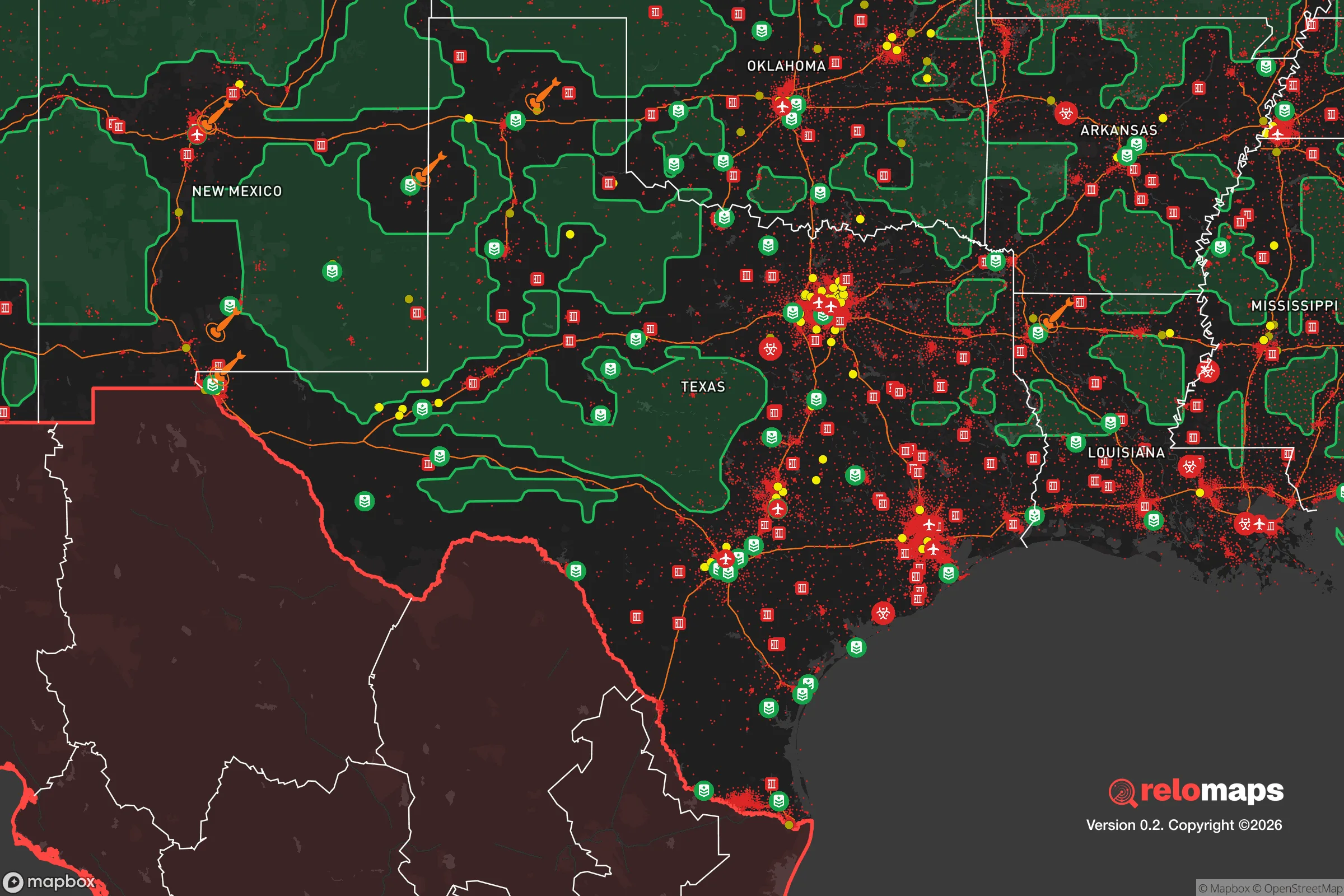


Important Note: For informational purposes only. This does not mean nothing bad ever happens in the green zones. Please use common sense. This is based on public data and modeled with AI. We tried to take a conservative approach but mistakes happen. We update this regularly as new information becomes available.
Solar Generator Recommendations
Backup power matters more here than in safer locations. We've picked three solar generators across budgets and capacity tiers — start with the budget unit if you only need a few essentials, or step up if you want to run a fridge and HVAC for days at a time.

Jackery Portable Power Station Explorer 300
Budget OptionPower on the Go: Weighing only 11 lbs, it's convenient to set up and store with book-sized foldable solar panels

BLUETTI Portable Power Station AC180
Designed for both indoor and outdoor scenarios, AC180 is highly capable as it has a robost capacity and continuous output power.

EF ECOFLOW DELTA Pro Ultra Power Station
Upgraded PickEcoFlow DELTA Pro Ultra is a whole-home energy system designed to grow with your family. Integrated with the Smart Home Panel 2, it scales to meet your evolving energy needs — keeping your home powered, intelligent, and secure through every stage of life.
We earn a commission, at no additional cost to you.
Strategic Assessment Analysis
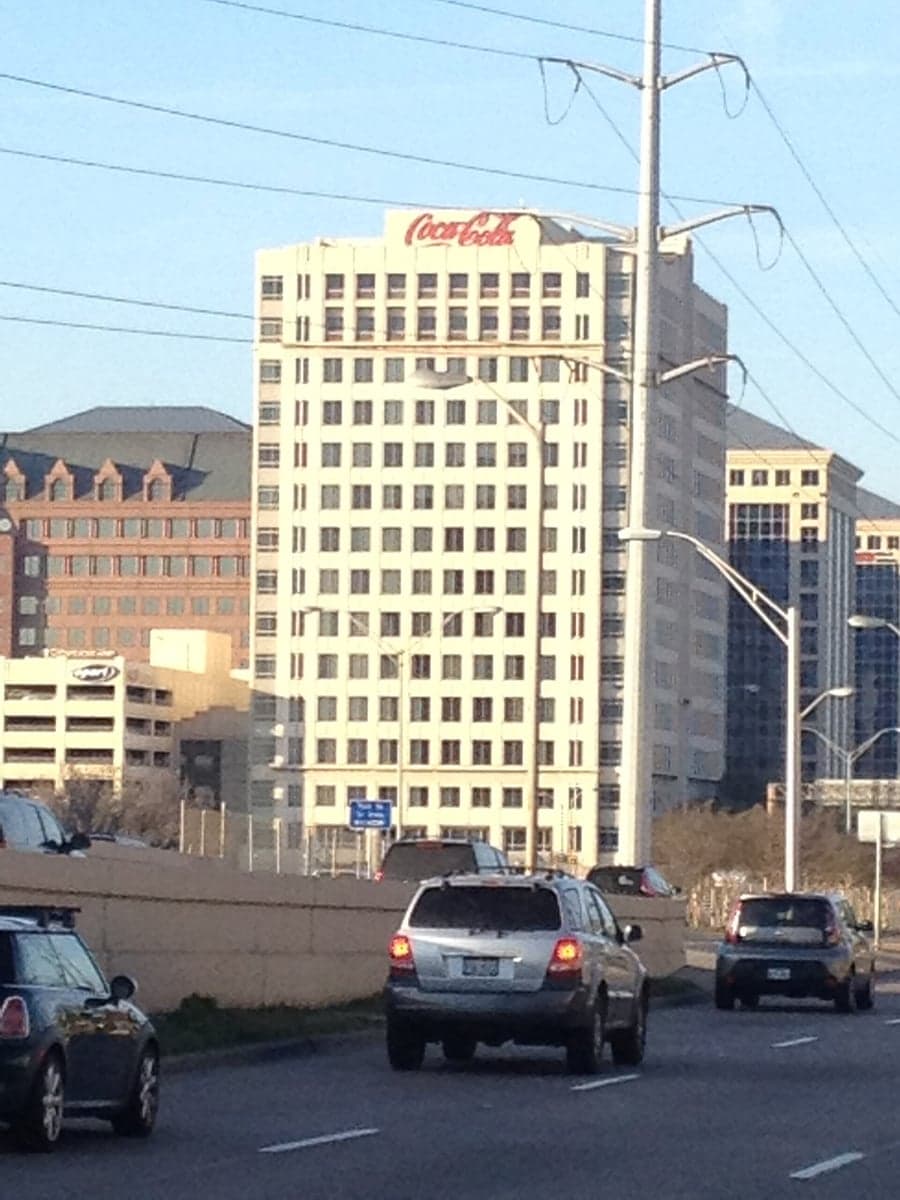
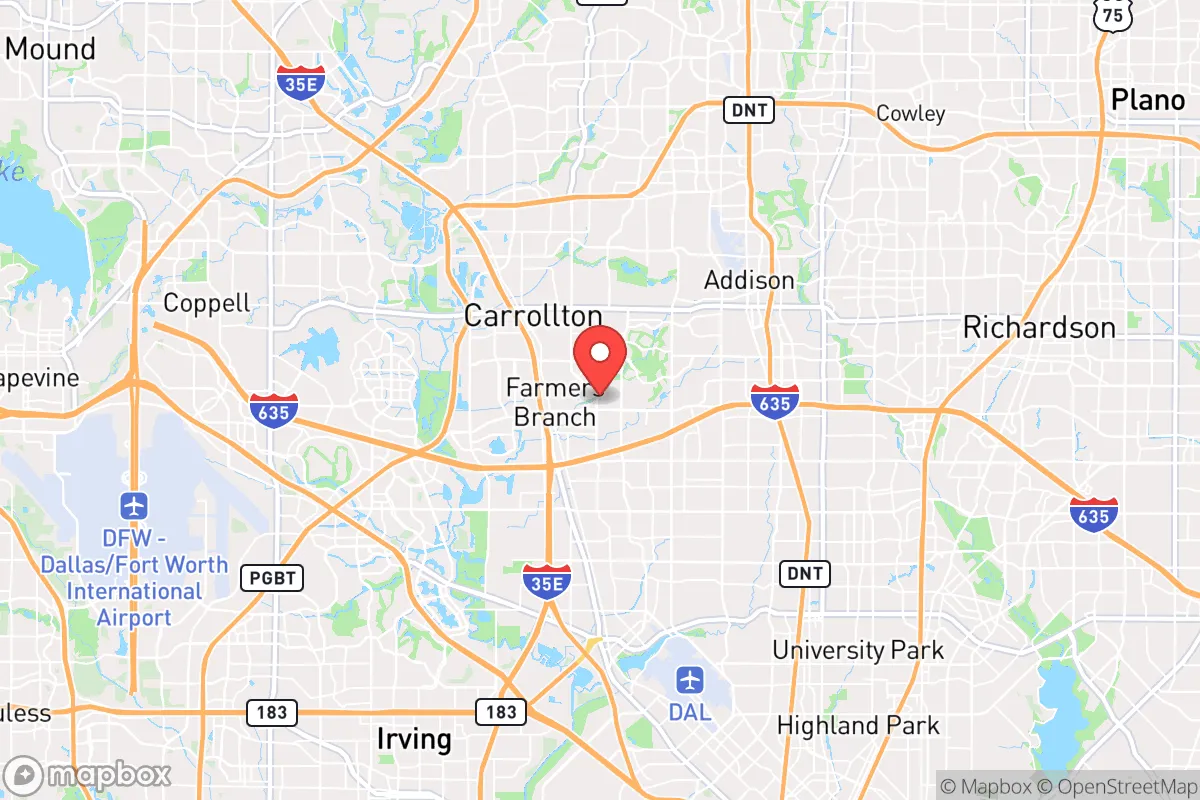
Farmers Branch, Texas, occupies a strategic position that is both its greatest asset and its most significant liability for a relocator focused on resilience and self-sufficiency. Located just north of downtown Dallas and bisected by Interstate 35E and the Dallas North Tollway, the city offers immediate access to the economic and logistical resources of the DFW metroplex, but this proximity comes with the inherent risks of being within a high-density, high-value target zone. For a family or individual weighing disaster readiness, Farmers Branch presents a complex calculus: strong local infrastructure and water access are offset by extreme exposure to man-made threats and the challenges of defending a suburban grid.
Geographic position and natural advantages for long-term stability
Farmers Branch sits on the Blackland Prairie, a region of relatively flat, fertile terrain that is not prone to the seismic activity, hurricanes, or wildfires that plague other parts of Texas. The city’s elevation, roughly 500 feet above sea level, places it well above the floodplains of the Trinity River, though localized flash flooding from heavy rain events is a periodic concern. The area’s natural advantages are modest but real: a temperate climate with four distinct seasons, a deep aquifer (the Trinity Aquifer) that supplies municipal water, and a soil composition that supports small-scale agriculture. The city itself is crisscrossed by several creeks—including Farmers Branch Creek and Rawhide Creek—which drain into the Elm Fork of the Trinity River. These waterways provide a potential surface water source for filtration, though they are heavily urbanized and carry runoff from roads and lawns. For a relocator, the land is not defensible in a tactical sense—it is flat, open, and subdivided—but it is arable, which is a long-term advantage for anyone planning to grow food. The lack of natural barriers (mountains, forests, large bodies of water) means that any disruption to the power grid or supply chain will be felt immediately, with no geographic buffer to soften the blow.
Risks, exposures, and proximity to fallout-relevant landmarks
The most serious risk for a Farmers Branch resident is man-made, not natural. The city lies within a 15-mile radius of Dallas Love Field Airport, a major commercial and general aviation hub, and within 25 miles of Dallas/Fort Worth International Airport, one of the busiest in the world. Both are obvious targets for any kinetic or electromagnetic attack. Additionally, the city is adjacent to the Dallas–Fort Worth metroplex’s critical infrastructure: major rail yards, interstate highway interchanges, and the region’s primary electrical substations. A single EMP event or coordinated cyberattack on the Texas Interconnection grid would leave Farmers Branch without power for weeks or months, and its dense suburban layout would make post-event movement difficult. The city is also within 30 miles of the Pantex nuclear weapons plant near Amarillo? No, that is 350 miles away—correction: the relevant proximity is to the Comanche Peak Nuclear Power Plant, located about 70 miles southwest in Glen Rose. While not a direct fallout zone, any major release from that facility could affect the DFW region depending on wind patterns. More immediately concerning is the concentration of chemical manufacturing and storage facilities along the Trinity River corridor, including the Valero and ExxonMobil refineries in nearby Irving and Dallas. A major industrial accident or sabotage at these sites could release toxic plumes that would drift directly over Farmers Branch. For a relocator, the takeaway is clear: this is not a remote or hardened location. It is a suburb in the bullseye of a major American city, and any large-scale conflict or disaster will bring cascading failures to its doorstep.
Practical resilience for a relocator: food, water, energy, and defensibility
On the practical side, Farmers Branch offers a mixed picture. The city’s water supply comes from the Dallas Water Utilities system, which draws from a series of reservoirs (Lewisville, Grapevine, Ray Hubbard) that are vulnerable to contamination, drought, and infrastructure failure. A private well is not a realistic option for most lots in the city, as the suburban density and HOA restrictions limit drilling. Rainwater catchment is legal in Texas, and a 1,000-square-foot roof can collect roughly 600 gallons per inch of rain, but the city’s average annual rainfall of 37 inches means a household would need significant storage to be self-sufficient. Food resilience is more feasible: the city has a year-round growing season (zone 8a), and many lots have space for raised beds or a small greenhouse. The nearby Dallas Farmers Market and local CSAs provide supply-chain redundancy, but in a collapse scenario, those sources would dry up quickly. Energy is the weakest link. Farmers Branch is served by Oncor, whose grid is above-ground and vulnerable to weather and sabotage. Solar panels with battery storage are a viable investment, but the city’s HOA covenants may restrict panel placement, and net metering policies are subject to change. For defensibility, the city’s layout is a disadvantage: it is a grid of cul-de-sacs and arterial roads, with no natural chokepoints. A determined group would have difficulty securing a single block, let alone a neighborhood. The police department is well-funded (about 1.5 officers per 1,000 residents), but in a widespread emergency, response times would stretch to hours or days. The best practical strategy for a relocator is to treat Farmers Branch as a base of operations rather than a final redoubt—a place with good access to supplies and medical care during normal times, but with a pre-planned bug-out location in a more rural county (e.g., Wise or Jack County) for when things go sideways.
The overall strategic picture for Farmers Branch is one of calculated trade-offs. It is not a survivalist’s paradise, nor is it a death trap. For a family that wants to maintain a professional career in Dallas while building a moderate level of self-sufficiency—raising chickens, storing water, installing solar—the city is workable. The local government is competent and responsive, the tax base is solid, and the community is engaged. But anyone moving here with the expectation of riding out a major disaster in place is misreading the map. The city’s resilience is entirely dependent on the stability of the larger DFW system. If that system holds, Farmers Branch is a comfortable, convenient place to live. If it fractures, the city will become a liability rather than an asset. The wise relocator will use Farmers Branch as a stepping stone: a place to build skills, stockpile supplies, and network with like-minded neighbors, while keeping one eye on the exit route north or west. For the reader who values both career opportunity and strategic depth, this suburb offers a reasonable middle ground—but only if they treat it as a base camp, not a fortress.

* Values derived from national, state, county, city and local statistics and may differ in a specific area. Last updated: 2026-10-06T01:31:17.000Z
Narrative content on this page is AI-generated and may contain mistakes. Verify any details that matter before acting on them.
ReloMaps may earn a commission from affiliate links at no extra cost to you.

