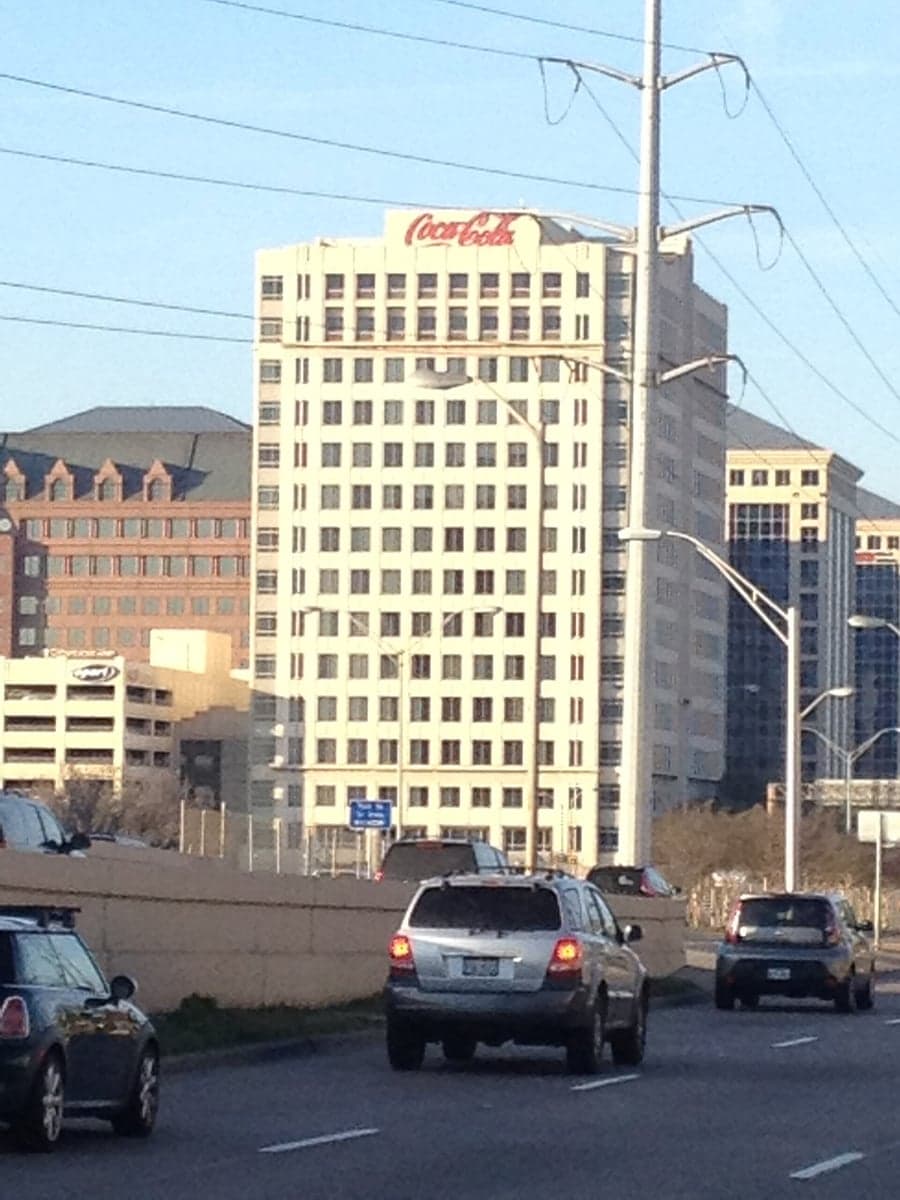
Photo: Wikipedia
Personal Sovereignty in Farmers Branch, TX
Strong independent fundamentals that actively favor personal liberty and low regulation.
What does Personal Sovereignty tell us?
Personal Sovereignty measures your capacity for self-reliance and independence with minimal government friction. Higher scores mean fewer barriers between you and the way you want to live... but it assumes you have the space you need and good neighbors.
What does this tell us?
Personal Sovereignty measures your capacity for self-reliance and independence with minimal government friction. Higher scores mean fewer barriers between you and the way you want to live... but it assumes you have the space you need and good neighbors.
State Policy
Energy independence: Net exporter (220% of energy produced in-state)
Personal Liberty
Homesteading

Personal Liberty Analysis
Farmers Branch offers a notably high degree of personal sovereignty within the broader context of Texas’s famously light-touch governance, but with important municipal-level nuances that a freedom-minded individual or family must weigh. The city operates under the Texas Constitution’s strong protections for property rights, self-defense, and limited government, yet its suburban Dallas location means local ordinances on zoning, noise, and land use are more restrictive than in unincorporated rural counties. For a relocation researcher prioritizing autonomy, Farmers Branch represents a pragmatic middle ground: you get the state-level shield of Texas law—no state income tax, robust castle doctrine, and minimal business regulation—while accepting a moderate layer of city-level rules that prioritize orderly development over maximal individual latitude.
Tax burden and regulatory posture: how light is the local touch?
Texas’s lack of a state income tax is the headline advantage, and Farmers Branch residents benefit directly from that. The city’s property tax rate for fiscal year 2025 is approximately $0.63 per $100 of assessed value, which is competitive for Dallas County but slightly above the state median. When combined with Dallas County and Dallas College district levies, the total effective property tax rate lands around 2.2% of assessed value—a meaningful burden, but one that funds local services without a state income tax. There is no city-level sales tax surcharge beyond the state’s 6.25% and the county’s 2% (for a total of 8.25% in Farmers Branch). Regulatory posture at the city level is moderate: building permits are required for most structural changes, and the city enforces a standard suburban zoning code that separates residential, commercial, and industrial uses. Home-based businesses are permitted with a conditional use permit, but restrictions on signage, customer traffic, and noise are tighter than in rural areas. For a reader who values minimal bureaucratic friction, Farmers Branch is not a low-regulation paradise—but it is far lighter than any major coastal city, and the absence of state income tax alone can save a family thousands annually compared to states like California or New York.
Self-defense and gun law specifics: what the Second Amendment looks like here
Texas law provides some of the strongest self-defense protections in the nation, and Farmers Branch is fully subject to those state preemptions. The state’s “stand your ground” statute (Texas Penal Code §9.32) eliminates any duty to retreat before using deadly force in any place where a person has a legal right to be. The castle doctrine extends that presumption to one’s home, vehicle, and workplace. Permitless carry (also called constitutional carry) has been law since September 2021, meaning any adult who can legally possess a firearm may carry it openly or concealed without a license. Farmers Branch does not have any local ordinances that restrict firearm possession beyond state law—no city-level magazine bans, no additional waiting periods, and no local registration requirements. However, the city does prohibit the discharge of firearms within city limits except at approved shooting ranges (of which there are none within the city itself, though several exist in nearby Carrollton and Dallas). For a gun owner, the practical reality is that you can carry legally almost everywhere in Farmers Branch, but you cannot target practice on your own property unless you own a large enough lot to meet the city’s safety setback requirements—which effectively means no backyard shooting. The nearest public range is Elm Fork Shooting Sports, about 15 minutes south in Dallas. For a family that prioritizes self-defense, the legal framework is excellent; for a homesteader who wants to shoot on their own land, the city’s density makes that impractical.
Self-reliance and homesteading viability: lot sizes, zoning, and off-grid feasibility
Farmers Branch is a fully developed inner-ring suburb, and its zoning code reflects that. The minimum lot size in single-family residential zones is typically 7,500 square feet, which is standard for the Dallas metro but leaves little room for serious homesteading. Raising chickens is permitted—hens only, no roosters—with a limit of six birds per property, and they must be kept in a covered enclosure. Goats, pigs, and larger livestock are prohibited in all residential zones. Gardening is unrestricted, but front-yard vegetable gardens are subject to the city’s general landscaping standards (no overgrowth, no uncontained compost piles). Off-grid living is effectively impossible within city limits: the city requires connection to municipal water and sewer for any habitable structure, and solar panels are permitted only as an auxiliary power source, not as a primary system. Rainwater collection is allowed under state law (Texas HB 3391), but the city’s building code requires a permanent connection to the grid for all new construction. For a reader seeking true self-reliance—growing your own food, generating your own power, and minimizing municipal dependency—Farmers Branch is not the right fit. That lifestyle is better pursued in unincorporated areas of Denton or Wise County, 30–45 minutes north, where lot sizes of 1–5 acres are common and county regulations are far looser. Within the city, the best you can do is a large suburban lot with a robust vegetable garden and a few hens.
Personal liberties: parental rights, medical autonomy, speech, and property
Texas law provides strong protections for parental rights, and Farmers Branch does not add any local restrictions. The Texas Parental Rights statute (Texas Family Code §151.001) affirms that parents have the fundamental right to direct their children’s education, healthcare, and moral upbringing. The city has no local ordinances that override this—no vaccine mandates for school attendance beyond state requirements, and no local health orders that restrict parental choice in medical decisions. Medical autonomy for adults is similarly protected under state law; Texas does not have a state-level right-to-try law for terminally ill patients (though federal law covers that), but it does have strong protections for conscientious objection to medical procedures. Speech and assembly are fully protected under the First Amendment and Texas’s own free speech protections; Farmers Branch has no local ordinances that restrict political speech, leafleting, or public assembly beyond standard time-place-manner rules for parks and public spaces. Property rights are robust under Texas law, but the city’s zoning code does impose use restrictions that a libertarian-leaning reader might find intrusive—for example, you cannot operate a home-based auto repair shop or run a daycare for more than six children without a special permit. The city also enforces a standard nuisance ordinance that prohibits “offensive odors” and “excessive noise” after 10 p.m., which could theoretically be used against a neighbor running a late-night workshop. Overall, personal liberties in Farmers Branch are strong by national standards, but the city’s suburban character means more rules about what you can do on your own property than you would find in a rural county.
In the broader context of the Dallas-Fort Worth metroplex, Farmers Branch offers a solid baseline of personal sovereignty—state-level protections for guns, taxes, and parental rights are intact, and the city does not add onerous local restrictions. It is not a haven for off-grid homesteaders or those seeking maximum regulatory freedom, but for a family or individual who wants the security of a well-maintained suburb with good schools and low crime, while retaining the ability to carry a firearm, keep a few chickens, and avoid state income tax, it is a pragmatic choice. Compared to cities like Austin or Houston, where local ordinances on short-term rentals, noise, and firearms are more restrictive, Farmers Branch is notably more freedom-friendly. Compared to rural Texas counties, it is more regulated. For the freedom-prioritizing reader, the key takeaway is that Farmers Branch delivers the Texas constitutional framework without the friction of a heavily progressive city council—but it is still a suburb, with all the zoning and nuisance rules that entails.

* Values derived from national, state, county, city and local statistics and may differ in a specific area. Last updated: 2026-10-06T01:31:17.000Z
Narrative content on this page is AI-generated and may contain mistakes. Verify any details that matter before acting on them.
ReloMaps may earn a commission from affiliate links at no extra cost to you.

