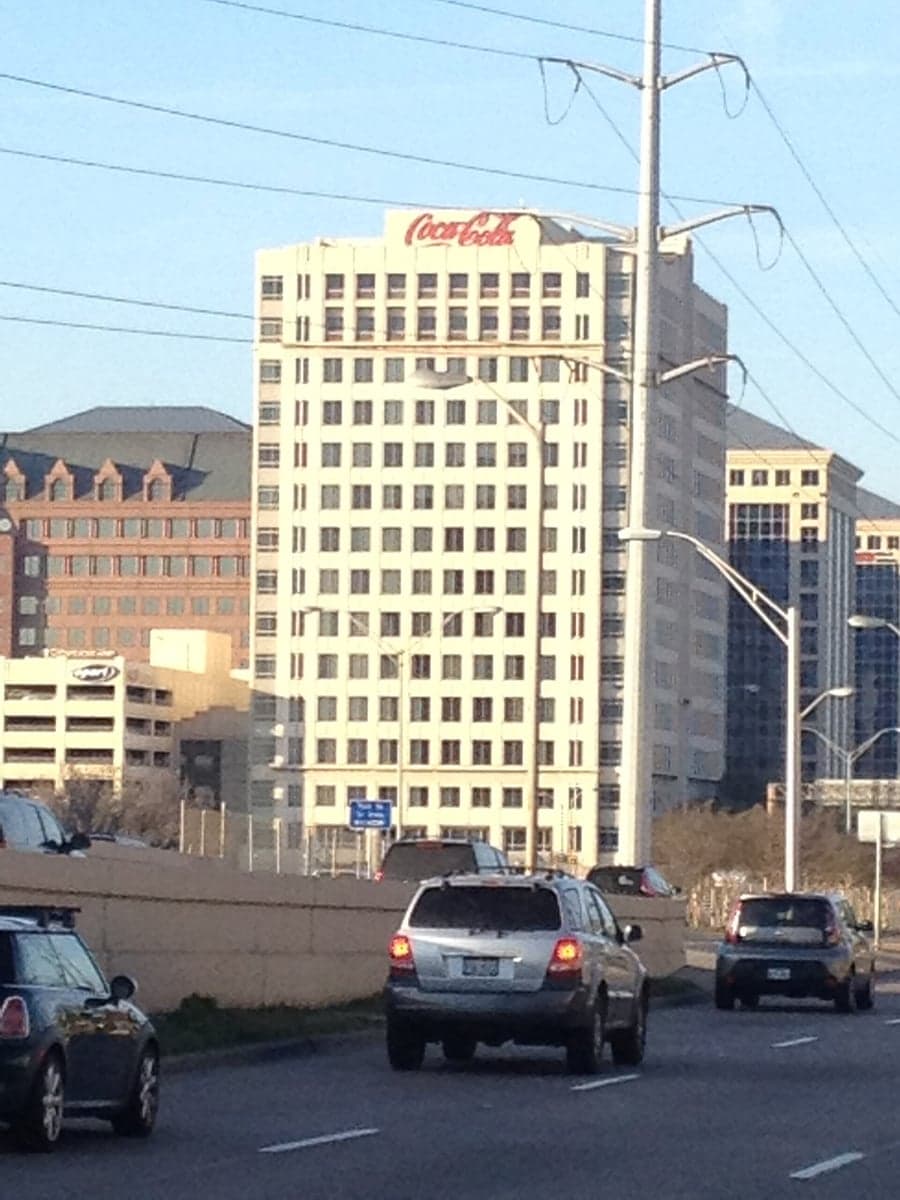
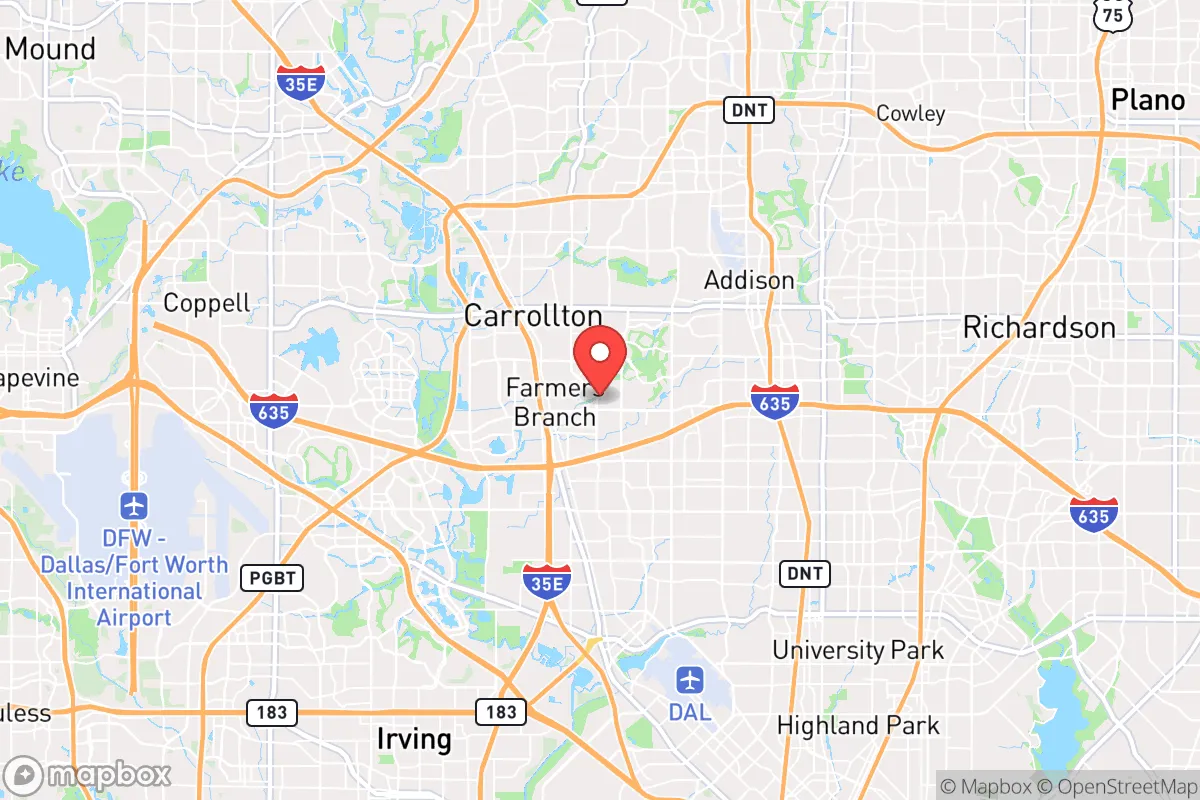
Photo: Wikipedia
Demographics of Farmers Branch, TX
Affluence Level in Farmers Branch, TX
A middle-class area roughly in line with national averages across income, home values, education, and employment.
People of Farmers Branch, TX
Farmers Branch, Texas, is a city of 36,254 residents defined by its striking ethnic diversity and a strong sense of suburban community. With a population that is 42.6% Hispanic, 35.3% White, 8.0% Black, 7.4% Indian (subcontinent), and 3.9% East/Southeast Asian, it is one of the most demographically varied cities in the Dallas-Fort Worth metroplex. The city’s identity is shaped by a high foreign-born share of 20.6% and a well-educated workforce, with 48.2% of adults holding a college degree, creating a blend of established families and newer immigrant communities.
How the city was settled and grew
Farmers Branch was not a colonial-era settlement but a post-Civil War farming community, officially incorporated in 1946. Its early population was overwhelmingly White and rural, drawn by the fertile Blackland Prairie soil and the arrival of the Dallas and Wichita Railroad in the 1880s. The original settlers were primarily Anglo-American farmers and merchants who built homesteads in what is now the Old Town Farmers Branch historic district, centered around the intersection of Denton Drive and Valley View Lane. This area retains several 19th-century structures, including the 1856 Rawhide House, and served as the commercial and social hub for the early community. A second wave of White families arrived during the post-World War II housing boom, settling in the Greenwood Hills and Northaven neighborhoods, which were developed as affordable suburban subdivisions for veterans and young families seeking space away from central Dallas.
Modern era (post-1965)
The 1965 Hart-Cellar Immigration Act fundamentally reshaped Farmers Branch, as it did many American suburbs. The city’s proximity to Dallas employment centers and its affordable housing stock attracted a wave of Hispanic families, primarily of Mexican and Central American origin, beginning in the 1970s. These families concentrated in the Valley View Estates and Briarwood neighborhoods, areas with older, smaller homes that offered entry points for first-time homebuyers. By the 1990s, the Hispanic share of the population had risen sharply, and today it is the largest single ethnic group at 42.6%. The 2000s and 2010s brought a second major demographic shift: the arrival of Indian (subcontinent) professionals, drawn by the region’s booming technology and healthcare sectors. These families settled predominantly in the Willow Creek and Chalford Place subdivisions, which feature newer, larger homes and are zoned to the highly rated Carrollton-Farmers Branch Independent School District. The East/Southeast Asian community, at 3.9%, is smaller but visible, with many families living in the Bent Tree area near the city’s eastern border with Addison. The Black population, at 8.0%, is more dispersed but has a notable presence in the Greenwood Hills and Northaven neighborhoods, reflecting a pattern of gradual suburban integration since the 1980s.
The future
Farmers Branch is becoming more diverse, not less. The White population share has declined from over 60% in 1990 to 35.3% today, while the Hispanic and Indian (subcontinent) shares continue to grow. The city’s population is projected to increase modestly, reaching roughly 40,000 by 2035, driven by infill development and the redevelopment of aging apartment complexes into mixed-use communities. New construction is concentrated in the Farmers Branch Station area, a transit-oriented district around the DART light rail station, which is attracting younger, more educated residents—both White and Asian—who work in Dallas. The Indian (subcontinent) community is likely to expand further, as the region’s tech economy continues to draw skilled immigrants, while the Hispanic population is expected to remain the largest group, with a growing share of U.S.-born second-generation families. The city’s cultural identity is evolving from a quiet, predominantly White suburb into a polyglot, middle-class community where no single group holds a majority.
For someone moving in now, Farmers Branch offers a genuinely multicultural environment with strong schools, convenient transit access, and a housing market that still provides relative affordability compared to Dallas or Plano. The city is not a melting pot in the traditional sense—neighborhoods remain somewhat clustered by ethnicity—but the overall trend is toward greater integration and a shared civic identity. The bottom line: Farmers Branch is a stable, upwardly mobile suburb where diversity is a fact of daily life, not a talking point, and where the next decade will likely see its demographic mosaic become even more complex.

* Values derived from national, state, county, city and local statistics and may differ in a specific area. Last updated: 2026-10-06T01:31:17.000Z
Narrative content on this page is AI-generated and may contain mistakes. Verify any details that matter before acting on them.
ReloMaps may earn a commission from affiliate links at no extra cost to you.

