Photo: Wikipedia
Political ClimatePolitical Climate in Fairplay, CO
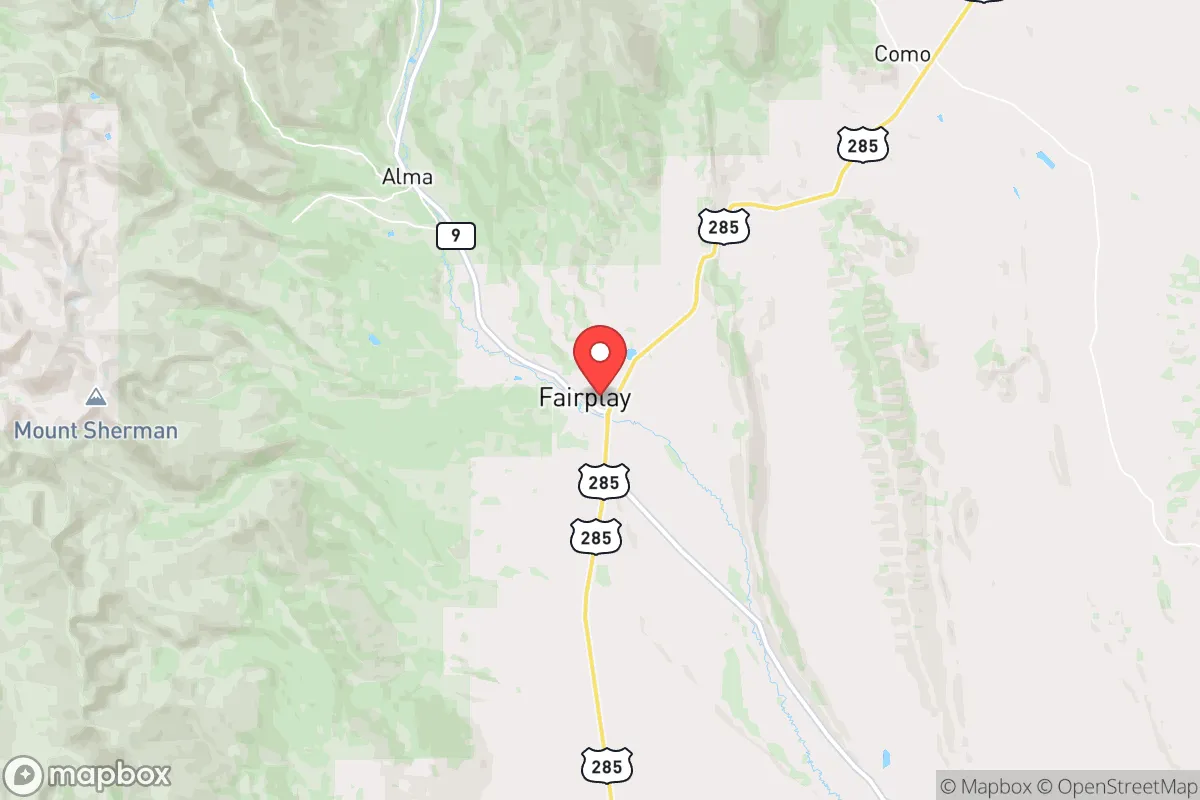
District shown is the primary district for this city’s centroid. Cities may span multiple districts.
Local Political AnalysisPolitical Analysis of Fairplay, CO
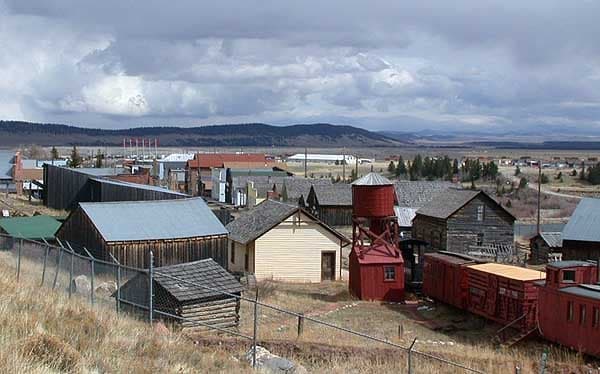
Fairplay, Colorado, sits in Park County, and if you’ve spent any time here, you know it’s a different animal than the rest of the state. While Colorado as a whole has a Cook PVI of D+6, Fairplay and its surrounding area lean more conservative than that number suggests, with a local PVI of D+8 that masks a deep rural-libertarian streak. The real story is that the county itself has voted Republican in every presidential election since 2004, often by double digits, while the town of Fairplay has been dragged leftward by an influx of remote workers and second-home owners from places like Denver and Boulder. That shift is real, and it’s something a lot of us who’ve been here for decades watch with a wary eye.
How it compares
Compared to the rest of Colorado, Fairplay is a conservative island in a sea of blue. Drive 90 minutes east to Colorado Springs and you’ll find a reliably red stronghold, but head west to Breckenridge or Summit County, and you’re in deep-blue territory where progressive policies on land use, taxes, and personal freedoms are the norm. The contrast is stark: in Fairplay, you can still shoot on your own property, build a shed without a dozen permits, and generally be left alone. In places like Boulder or Denver, government overreach into everything from energy choices to property rights has become suffocating. The D+8 PVI for Fairplay is misleading because it averages in the liberal votes from the newer transplants who live in gated subdivisions near town, but the rural precincts—like those around Como or Hartsel—vote 70-30 Republican. That’s where the real Fairplay is.
What this means for residents
For those of us who value personal freedom, the political climate here is still a refuge, but it’s under pressure. The county commission has held the line on zoning and property taxes, but every election cycle brings more candidates who want to “modernize” things—code for more regulations, more fees, and less liberty. The biggest concern is the long-term trajectory: as more people flee the Front Range’s high costs and overreach, they bring their voting habits with them. If you’re considering a move here, understand that the local culture is still one of self-reliance and low government interference, but that’s eroding. The school board, for instance, has stayed conservative, but there’s been a push for DEI programs and critical race theory materials that would have been unthinkable a decade ago. It’s a slow creep, but it’s there.
On the policy front, Fairplay remains distinct from the state at large. Colorado’s state government has pushed aggressive climate mandates, gun control laws, and housing regulations that many here see as a direct attack on rural life. Fairplay’s local leaders have fought back, refusing to enforce certain state mandates on energy efficiency and maintaining a strong Second Amendment culture. The town’s small police force focuses on actual crime, not acting as social workers. That said, the state’s grip is tightening—new laws on short-term rentals and water rights are already hitting local property owners hard. If you’re looking for a place where you can still live free from the nanny state, Fairplay is one of the last holdouts in Colorado, but don’t expect it to stay that way forever. Keep an eye on the next few elections; they’ll decide whether this town stays true to its roots or becomes another mountain suburb of Denver.

State Political ClimatePolitical Climate in Colorado
State Political AnalysisPolitical Environment in the State
Colorado has shifted from a quintessential purple swing state to a solidly blue one, carrying a Cook PVI of D+6 and delivering its nine electoral votes to Democrats in every presidential election since 2008. The dominant coalition is a mix of Denver-Boulder metro progressives, suburban swing voters who have moved left on social issues, and a growing Hispanic population in the Front Range. Over the last 20 years, the state has undergone a dramatic transformation — once home to conservative icons like Senator Wayne Allard and Governor Bill Owens, it now sends a Democratic trifecta to the statehouse and has enacted some of the nation’s most aggressive progressive policies on energy, gun control, and voting access.
Urban vs. rural divide
The political map of Colorado is a textbook case of geographic polarization. The Denver-Boulder-Aurora corridor, home to roughly 60% of the state’s population, is the engine of Democratic dominance — Denver County alone gave Biden 80% of the vote in 2020. Boulder County is even more progressive, while Jefferson County, once a bellwether, has trended blue since 2016. The I-25 corridor from Fort Collins down to Colorado Springs is a mixed bag: Larimer County (Fort Collins) is reliably blue, while El Paso County (Colorado Springs) remains a conservative stronghold, home to Focus on the Family and a heavy military presence. Rural Colorado — the Eastern Plains, the Western Slope, and the San Luis Valley — votes overwhelmingly Republican, but these areas lack the population to counterbalance the Front Range. Arapahoe County, a Denver suburb, flipped from red to blue in the 2010s and now anchors the Democratic majority. The divide is stark: you can drive 30 minutes east of Denver and find yourself in deep-red Weld County, where Trump won by 30 points, but that vote is swamped by the urban core.
Policy environment
Colorado’s policy environment is increasingly progressive and interventionist. The state income tax is a flat 4.4%, but voters have repeatedly approved tax increases for education and transportation, and a 2022 ballot measure raised the corporate tax rate. Property taxes are relatively low compared to Texas, but the state’s regulatory posture is heavy — especially on energy, where Colorado has some of the strictest oil and gas regulations in the nation, including a 2019 law that gives local governments veto power over drilling. Education policy is dominated by the teachers’ union, with per-pupil spending above the national average, but school choice is limited compared to states like Florida or Arizona. Healthcare is heavily regulated, with a state-run reinsurance program that has stabilized premiums but kept costs high. Election laws have been dramatically expanded: Colorado was one of the first states to adopt universal mail-in voting, automatic voter registration, and same-day registration — all of which have boosted Democratic turnout. The state also has a "red flag" gun law, a 15-week abortion ban that was later overturned by voters in 2024 in favor of a constitutional amendment protecting abortion access, and a strict ban on assault weapons passed in 2023.
Trajectory & freedom
Colorado is becoming less free by almost any measure of personal liberty, particularly for conservatives. The 2023 assault weapons ban and the 2024 "safe storage" law — which requires guns to be locked up or face criminal penalties — represent a major expansion of government control over the Second Amendment. Parental rights have been eroded: a 2023 law removed the requirement that schools notify parents if a child changes their gender identity or pronouns, and the state has aggressively enforced LGBTQ+ inclusive curriculum mandates. Medical autonomy has been curtailed by vaccine mandates for healthcare workers and schoolchildren, though a 2024 ballot measure did enshrine abortion rights. Property rights are under pressure from a 2022 "right to repair" law for farm equipment and a 2023 law that limits homeowners’ ability to build accessory dwelling units in single-family zones. On the positive side for conservatives, Colorado has a strong TABOR (Taxpayer Bill of Rights) amendment that limits tax increases and requires voter approval for new taxes — but Democrats have found ways around it, including a 2023 law that classified a fee as a "fee" rather than a tax to avoid a vote. The trend is clear: the state is moving toward a European-style social democracy, with higher taxes, more regulation, and less individual autonomy.
Civil unrest & political movements
Colorado has seen its share of political flashpoints. The 2020 George Floyd protests in Denver turned violent, with looting and fires in the Capitol Hill neighborhood, and the city later faced a lawsuit over its aggressive police response. The state has a strong sanctuary policy — the 2019 "Colorado Immigrant Rights Act" limits local law enforcement cooperation with ICE, and Denver has been a "welcoming city" for years. Immigration politics are a live wire: in 2023, the state saw a surge of migrants bused from Texas, straining Denver’s shelter system and sparking backlash from both parties. Election integrity has been a persistent controversy — Colorado’s universal mail-in system has been praised by Democrats but criticized by conservatives for lax signature verification and the potential for ballot harvesting, though no major fraud has been proven. The "Colorado Project" — a left-wing activist network — has been effective at organizing progressive candidates and policies, while the conservative movement is fragmented, with the Colorado GOP struggling to raise funds and win statewide races. Secession talk is mostly rhetorical, though a few rural counties have floated the idea of joining Wyoming or forming a "51st state" — but it’s not a serious movement.
Projection
Over the next 5-10 years, Colorado will likely become more Democratic and more progressive. In-migration is driving the shift: the state is gaining roughly 100,000 new residents per year, and they are disproportionately young, college-educated, and left-leaning — many from California, Texas, and the Midwest. The Hispanic population, which is growing fast, leans Democratic but is not monolithic; a significant minority votes Republican on economic issues. The rural vote will continue to shrink as a share of the electorate, and the Front Range will keep expanding. Expect more gun control, more environmental regulation, and higher taxes — possibly a progressive income tax or a wealth tax. The TABOR amendment will face increasing attacks, and a repeal or major overhaul is possible within a decade. The state’s housing crisis — driven by progressive land-use policies that limit construction — will likely worsen, pushing more people to the exurbs and potentially creating new swing areas. A conservative moving to Colorado now should expect to live in a state where their vote is increasingly irrelevant at the state level, but where local control in counties like El Paso or Weld can still provide a buffer.
Bottom line for a new resident: If you’re a conservative considering Colorado, you’re moving into a state where the political and cultural winds are blowing hard left. Your vote for president or U.S. Senate will be a protest vote, not a deciding one. Your best bet is to settle in a conservative enclave like Colorado Springs, Douglas County, or Weld County, where local government is still friendly to gun rights, low taxes, and parental control. But be prepared for state-level policies that will affect your daily life — from higher taxes to stricter gun laws to a school system that may not align with your values. Colorado is beautiful, but it’s no longer a free state in the classical liberal sense.
* Values derived from national, state, county, city and local statistics and may differ in a specific area. Last updated: 2026-05-11T22:14:19.000Z
Narrative content on this page is AI-generated and may contain mistakes. Verify any details that matter before acting on them.
ReloMaps may earn a commission from affiliate links at no extra cost to you.

