Photo: Wikipedia
Strategic Assessment of Fairplay, CO
Workable tactical position. Some exposure to population density or targets, but generally defensible in a crisis.
What does the Strategic Assessment tell us?
Our Strategic Assessment grades tactical survivability of an area. Major population centers, military targets, fallout zones, natural disasters, and border exposure all drive risk — lower exposure means a more defensible position in a crisis.
This is heavily inspired by Joel Skousen's Strategic Relocation book. Highly recommended you checkout the book ($)What does this tell us?
Our Strategic Assessment grades tactical survivability of an area. Major population centers, military targets, fallout zones, natural disasters, and border exposure all drive risk — lower exposure means a more defensible position in a crisis.
This is heavily inspired by Joel Skousen's Strategic Relocation book. Highly recommended you checkout the book ($)Strategic Pillars

Key Distances
Regional Safe Places
Below is our recommended "safe zones" in Colorado and the surrounding area based on our strategic heuristics. For most people, it's unrealistic to live in a “safe zone” full-time due to work, family or other personal reasons. They tend to be more rural. However, many of these areas are perfect for second homes and retreat properties that double as a vacation home or even a short-term rental.
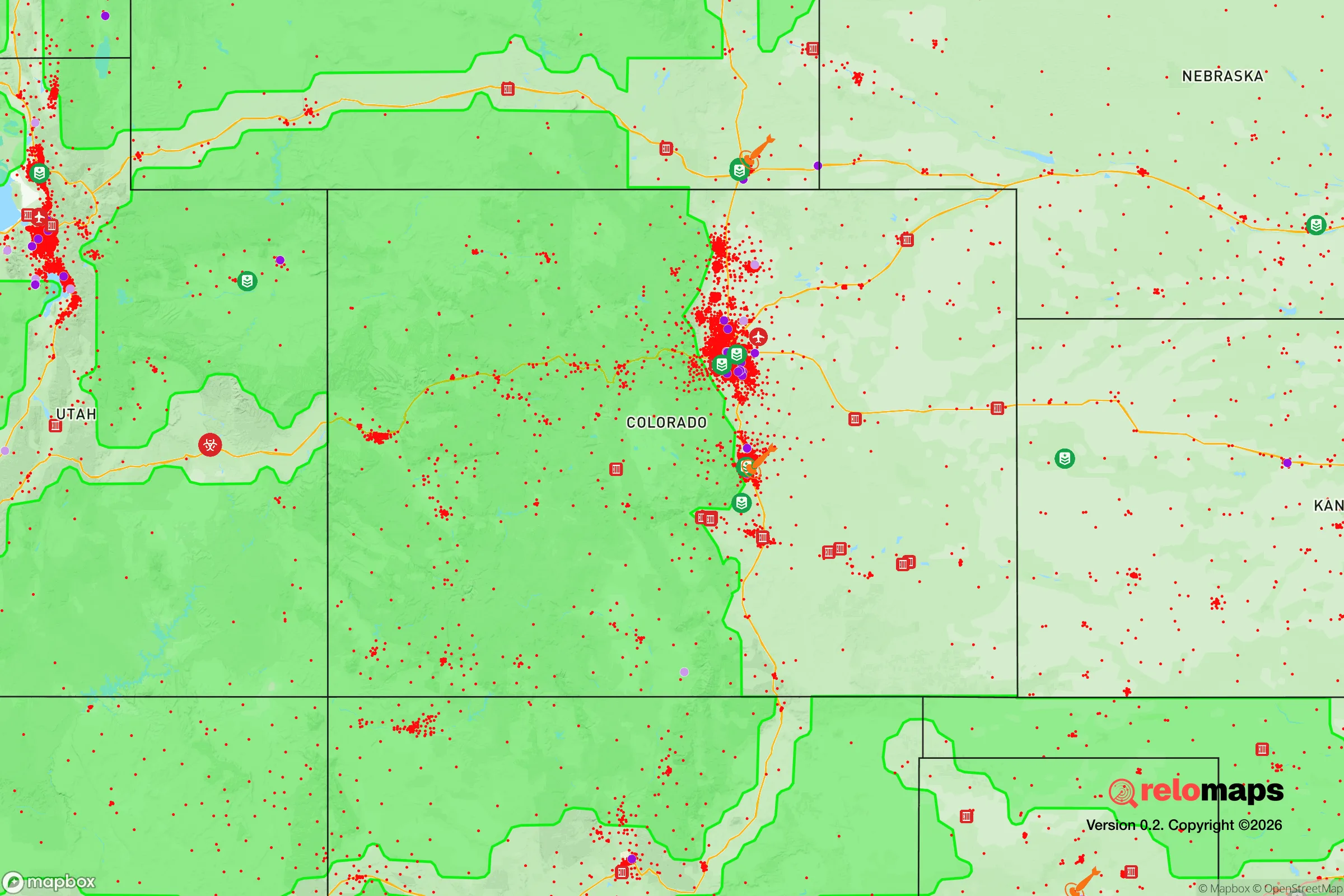
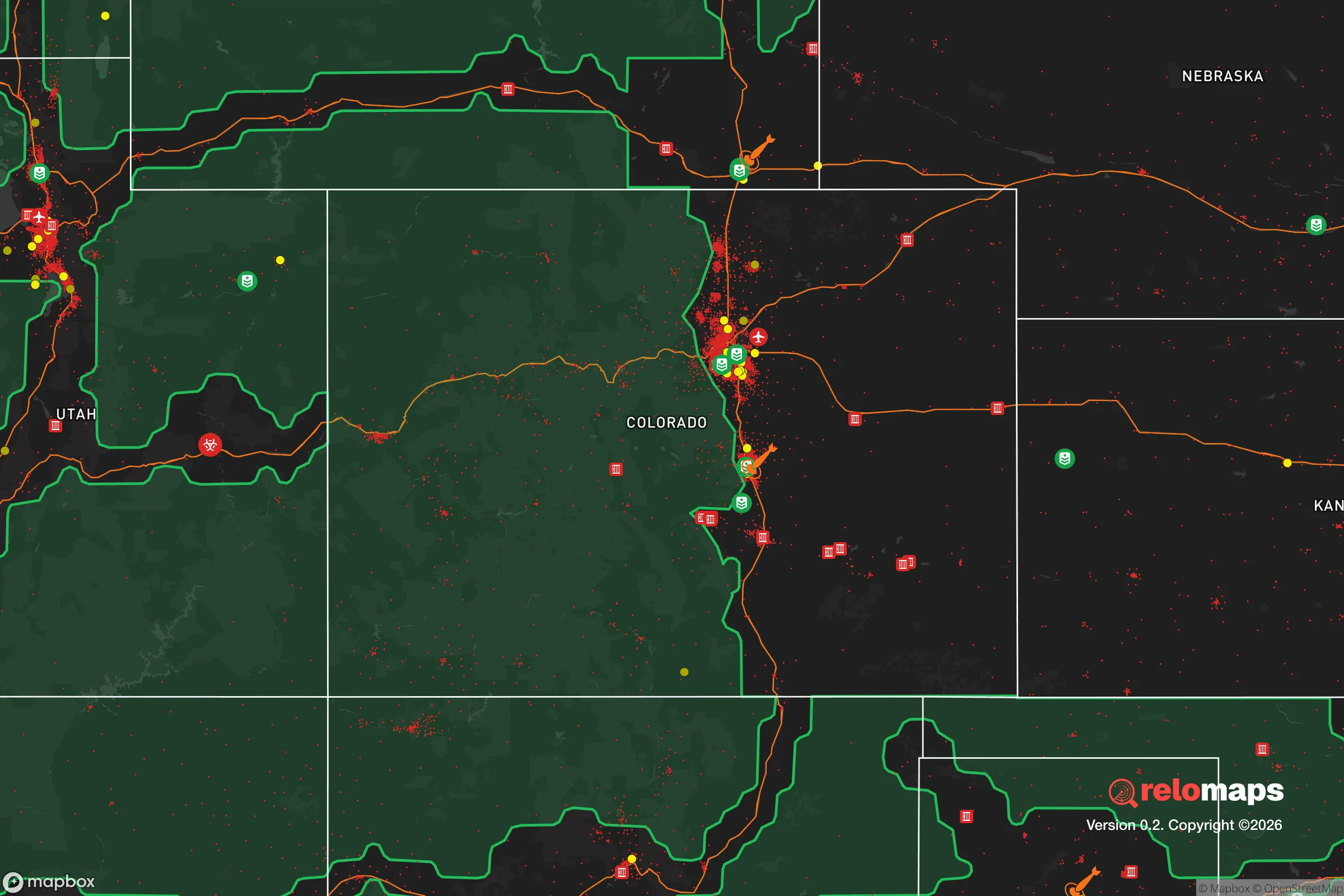


Important Note: For informational purposes only. This does not mean nothing bad ever happens in the green zones. Please use common sense. This is based on public data and modeled with AI. We tried to take a conservative approach but mistakes happen. We update this regularly as new information becomes available.
Solar Generator Recommendations
Backup power matters more here than in safer locations. We've picked three solar generators across budgets and capacity tiers — start with the budget unit if you only need a few essentials, or step up if you want to run a fridge and HVAC for days at a time.

Jackery Portable Power Station Explorer 300
Budget OptionPower on the Go: Weighing only 11 lbs, it's convenient to set up and store with book-sized foldable solar panels

BLUETTI Portable Power Station AC180
Designed for both indoor and outdoor scenarios, AC180 is highly capable as it has a robost capacity and continuous output power.

EF ECOFLOW DELTA Pro Ultra Power Station
Upgraded PickEcoFlow DELTA Pro Ultra is a whole-home energy system designed to grow with your family. Integrated with the Smart Home Panel 2, it scales to meet your evolving energy needs — keeping your home powered, intelligent, and secure through every stage of life.
We earn a commission, at no additional cost to you.
Strategic Assessment Analysis
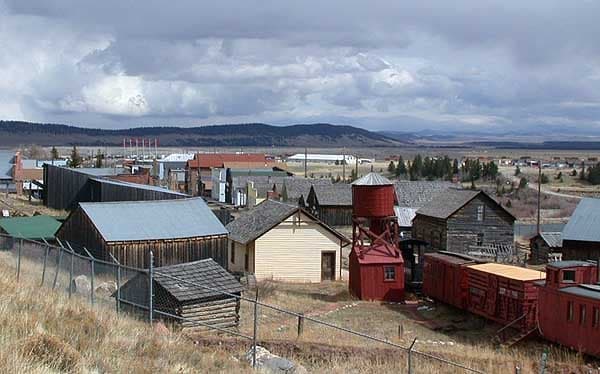
Fairplay, Colorado, sits at 9,900 feet in South Park—a high, broad valley that offers a rare combination of isolation and strategic access. For a relocator thinking in terms of resilience, this isn’t just a pretty mountain town; it’s a position that forces you to think about supply lines, natural barriers, and the simple math of distance from chaos. The town’s small permanent population (under 800) and limited through-traffic mean that in a crisis, you’re not competing with masses of people for the same resources, but you’re also not completely cut off from resupply or medical evacuation if needed.
Geographic position and natural advantages for long-term security
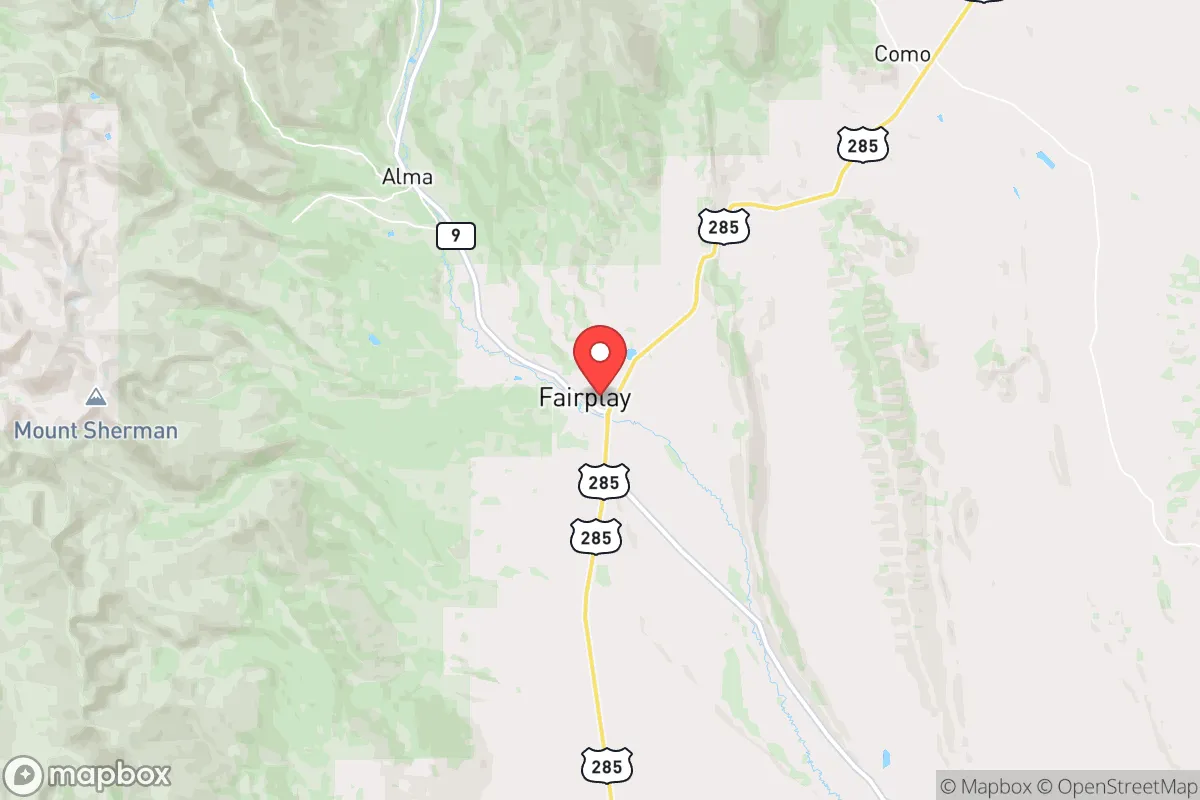
Fairplay’s location is its primary strategic asset. It sits roughly 90 miles southwest of Denver, but the drive over Hoosier Pass or Wilkerson Pass is a natural chokepoint that would slow or stop most casual movement in a grid-down scenario. The South Park valley itself is a 1,000-square-mile grassland ringed by the Mosquito Range to the west and the Front Range to the east—meaning you have clear sightlines for miles and limited approaches for anyone trying to enter the area unannounced. The Arkansas River headwaters run through the valley, providing a reliable surface water source that doesn’t depend on municipal infrastructure. For a prepper, that’s the difference between a defensible position and a trap. The elevation also means cooler summers and less wildfire risk than lower-elevation Colorado towns like Woodland Park or Conifer, though the trade-off is brutal winter conditions that require serious preparation. The surrounding national forest land (Pike and San Isabel) offers hunting, foraging, and timber, but it’s also public land—meaning you can’t control who else might be using it in a crisis.
Risks, exposures, and proximity to fallout-relevant landmarks
No location is perfect, and Fairplay has specific vulnerabilities that a strategic relocator must weigh. The most obvious is proximity to the Denver metro area—roughly 90 miles as the crow flies. In a major civic unrest event or a mass casualty scenario involving a biological or radiological incident, that distance is enough to keep you out of the immediate blast or fallout zone, but not enough to guarantee safety from secondary effects like refugees, supply chain collapse, or airborne contamination depending on wind patterns. The nearby Cheyenne Mountain Complex near Colorado Springs (about 70 miles southeast) is a known continuity-of-government site, which in a worst-case scenario could make the entire I-25 corridor a target for adversaries. Fairplay is far enough off that corridor to avoid direct targeting, but close enough that you’d feel the ripple effects of any major event in the Front Range. The town itself has no significant industrial or military infrastructure, which is a double-edged sword: it means you’re not a target, but it also means local emergency services are extremely limited. The Park County Sheriff’s Office has a handful of deputies for the entire county, and the nearest Level I trauma center is in Denver. For a prepper, that means medical self-sufficiency is non-negotiable. Winter storms can close Hoosier Pass for days, effectively cutting the town off from Summit County and the I-70 corridor, so any plan that relies on quick evacuation or resupply during November through April is a fantasy.
Practical resilience for a relocator: food, water, energy, and defensibility
Let’s get concrete about what daily life looks like here if you’re serious about preparedness. Water is the strongest suit—the South Park valley sits atop a significant aquifer, and the Arkansas River and its tributaries (Middle Fork South Platte, Tarryall Creek) provide year-round surface flow. Most properties in the area rely on wells, and the water table is generally reliable at depths of 100-300 feet. That said, you need a backup pump and a manual extraction method—power outages are common in winter, and the local electric co-op (Highline Electric) has limited redundancy. Food production is possible but challenging due to the short growing season (roughly 60-80 frost-free days). Cold frames and high tunnels can extend that, but you’re not going to grow corn or tomatoes in open ground. Potatoes, root vegetables, and cold-hardy greens are realistic. The real food security play here is livestock—the valley has a long ranching history, and grazing land is available if you have the acreage. Hay production is viable, and the local ag community is tight-knit, meaning barter and mutual aid are culturally normal. Energy is a weak point unless you invest heavily. Grid power is from a rural co-op with aging infrastructure; solar works well at this elevation (high insolation, low cloud cover), but snow accumulation on panels is a real problem. A wood-burning stove or boiler is almost mandatory for winter heat—the valley has ample deadfall and beetle-kill timber, but you need a chainsaw, a splitter, and dry storage. Defensibility is decent but not fortress-level. The open valley means you can see someone coming from a long way off, but it also means you’re exposed. The best properties are those with a tree line or ridge between you and the main roads, and with a single access point that can be monitored. The town itself has no police department—only the county sheriff—so in a prolonged crisis, you are your own first responder. The local community is small enough that most people know each other, which cuts both ways: it builds trust but also means everyone knows who has supplies.
The overall strategic picture for Fairplay is one of moderate isolation with manageable trade-offs. It’s not a bug-out location you can reach in an hour from Denver—it’s a place you commit to living in full-time, because the pass closures and winter conditions make part-time residency unreliable for preparedness purposes. The biggest advantage is the combination of water availability, defensible terrain, and a community that already operates with a degree of self-reliance. The biggest risk is the proximity to the Front Range population centers—not close enough to be in the blast radius, but close enough that a major collapse would send waves of people into the high country. If you’re looking for a location that balances access to resources with natural barriers and a like-minded community, Fairplay is a strong candidate—but only if you’re willing to put in the work on energy independence, winter preparedness, and medical self-sufficiency. This is not a place for someone looking for an easy retreat; it’s a place for someone who understands that resilience is a lifestyle, not a location.

* Values derived from national, state, county, city and local statistics and may differ in a specific area. Last updated: 2026-05-11T22:14:19.000Z
Narrative content on this page is AI-generated and may contain mistakes. Verify any details that matter before acting on them.
ReloMaps may earn a commission from affiliate links at no extra cost to you.

