Photo: Wikipedia
Political ClimatePolitical Climate in Exeter, NH
District shown is the primary district for this city’s centroid. Cities may span multiple districts.
Local Political AnalysisPolitical Analysis of Exeter, NH
Exeter, New Hampshire, sits in a political sweet spot that’s more nuanced than its Cook PVI of D+2 suggests. While the town leans Democratic overall, it’s not a deep-blue stronghold—think of it as a place where the margin between parties is razor-thin, often decided by a few hundred votes in local races. Over the past decade, Exeter has shifted leftward, mirroring the broader trend in New Hampshire’s Seacoast region, but it still retains a strong, vocal Republican minority, especially in the more rural outskirts and neighboring towns like Stratham and Brentwood. The state’s overall PVI is also D+2, but Exeter’s political reality is more about competitive tension than a comfortable majority for either side.
How it compares
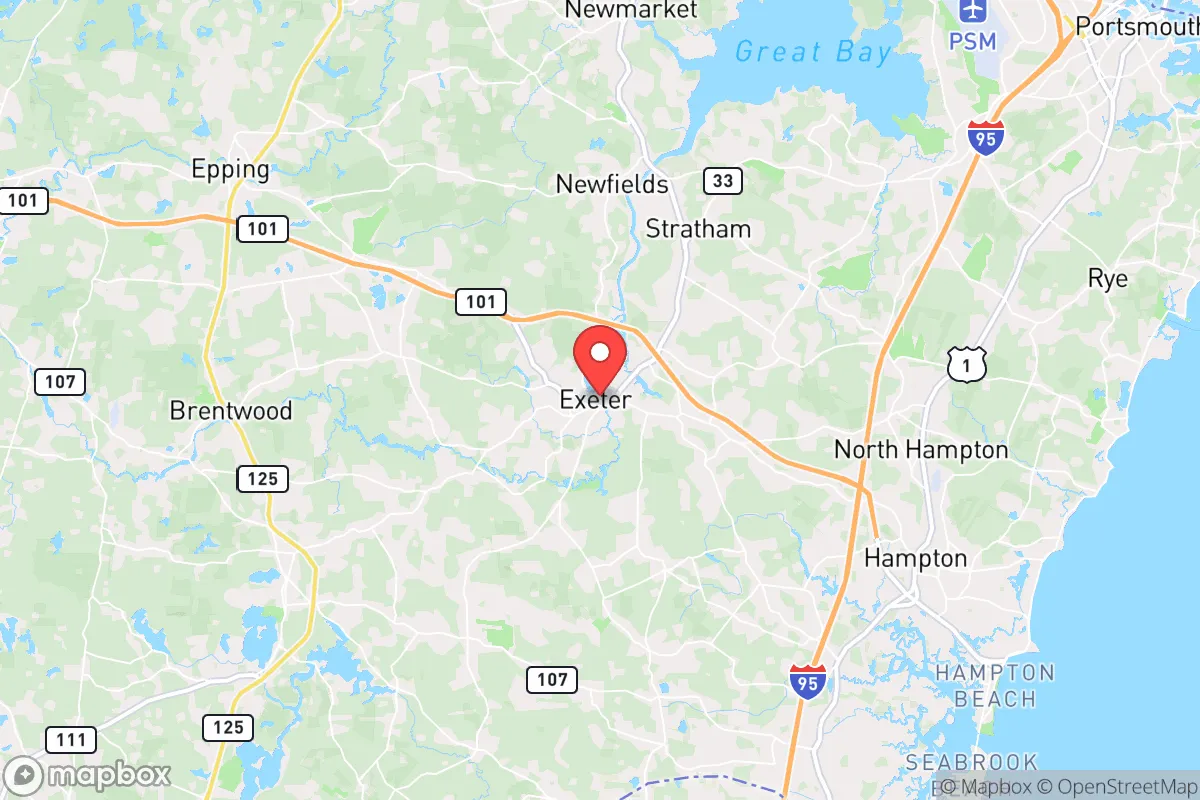
Compared to the rest of New Hampshire, Exeter is noticeably more liberal than the state’s northern and western regions, where towns like Berlin or Keene lean redder. But it’s not as uniformly blue as Portsmouth, just 10 miles east, which has a PVI closer to D+10. Exeter’s politics are closer to what you’d find in Durham (home to UNH) or Dover—places where college-educated professionals and younger families drive a moderate-to-liberal tilt, but where old-school New England fiscal conservatism still has a foothold. In the 2024 presidential election, Exeter’s precincts split roughly 55-45 for the Democratic candidate, a tighter margin than in Portsmouth’s 65-35 split. Surrounding towns like Hampton and North Hampton lean more Republican, creating a patchwork where a 10-minute drive can change the political conversation entirely. The state’s famous “Live Free or Die” libertarian streak is alive here, but it’s tempered by a strong local focus on public education and environmental issues, which often pull Exeter leftward on policy.
What this means for residents
For liberal residents, Exeter feels like a comfortable place to live, with a town council that generally supports progressive initiatives like renewable energy investments and affordable housing projects. The local school board, for instance, has consistently funded full-day kindergarten and expanded mental health services, reflecting the community’s priorities. Conservative residents, however, aren’t marginalized—they hold seats on the planning board and often win elections for county offices. What this means in practice is that policy debates are real and contested. A proposed zoning change for a new apartment complex might spark heated town hall meetings, with both sides getting a fair hearing. The tax rate, currently around $18.50 per $1,000 of assessed value, is a perennial flashpoint: liberals argue it’s necessary for services, while conservatives push for cuts. Neither side gets everything it wants, which keeps the political climate pragmatic rather than ideological.
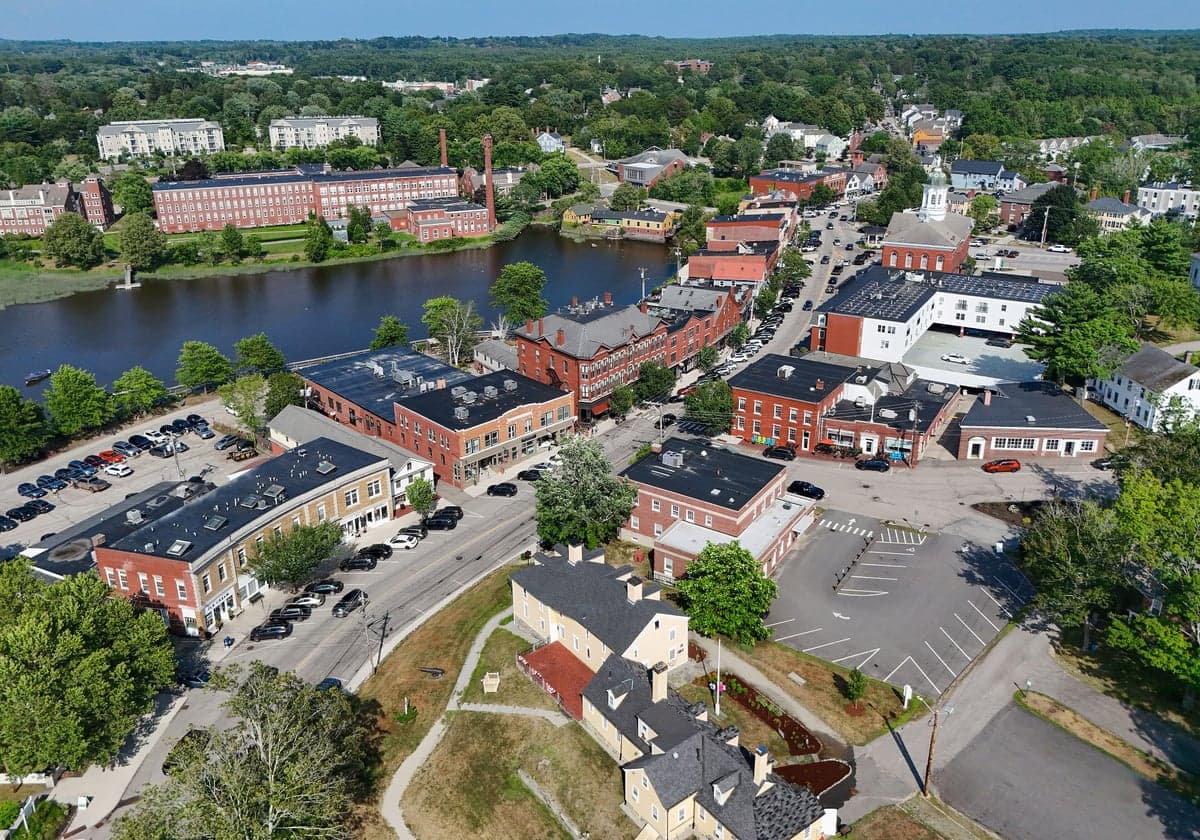
Culturally, Exeter stands out for its strong sense of civic engagement—voter turnout here regularly tops 75% in presidential years, well above the national average. The town’s historic downtown, anchored by Phillips Exeter Academy, fosters a more cosmopolitan vibe than many inland New Hampshire towns, with independent bookstores and farm-to-table restaurants that lean left in their clientele. But the gun culture and Second Amendment advocacy common across the state are still present, with a local gun shop on Portsmouth Avenue doing steady business. The key distinction is that Exeter’s politics are less about national culture wars and more about local quality-of-life issues: how to manage growth along Route 27, whether to expand the rail trail, or how to fund the fire department. For both conservatives and liberals, the takeaway is that Exeter rewards participation—your vote genuinely matters here, and the outcome of a town election can shift the balance of power for years to come.

State Political ClimatePolitical Climate in New Hampshire
State Political AnalysisPolitical Environment in the State
New Hampshire is the ultimate swing state in miniature, with a Cook PVI of D+2 that barely captures its true volatility. Over the past 20 years, it’s voted for Barack Obama twice, then flipped to Donald Trump in 2016, then swung back to Joe Biden in 2020 by a razor-thin 7.4 points, and in 2024 it went for Kamala Harris by about 2.5 points. The state’s political identity is a tug-of-war between a libertarian-leaning, tax-averse Yankee independence and a growing influx of out-of-state liberals, especially in the southeastern corner. The result is a place where both parties have real power, and where a single legislative seat can flip the balance of the entire state government.
Urban vs. rural divide
The political map of New Hampshire is a story of two distinct regions. The southeastern quadrant, anchored by Manchester, Nashua, and the Seacoast (Portsmouth, Dover, Durham), is the Democratic stronghold. These areas are dense with out-of-state transplants, tech workers, and university communities (especially around the University of New Hampshire in Durham). Manchester and Nashua alone account for roughly a quarter of the state’s population and vote reliably blue. In contrast, the rest of the state—the North Country (Berlin, Lancaster), the Lakes Region (Meredith, Wolfeboro), and the western border towns (Keene, Lebanon)—leans heavily Republican. The Dartmouth College area in Hanover is a blue island in a sea of red. The rural-urban split is stark: in 2024, Hillsborough County (Manchester) went for Harris by 8 points, while Coos County (North Country) went for Trump by 30. The divide isn’t just about population density—it’s about economic base. The Seacoast thrives on tech and tourism, while the North Country relies on logging, manufacturing, and seasonal recreation, making it deeply skeptical of coastal elites.
Policy environment
New Hampshire’s policy environment is defined by its famous “Live Free or Die” ethos, but that slogan masks a more complicated reality. The state has no broad-based income tax and no sales tax, relying instead on high property taxes and business taxes. This makes it a magnet for high-earning individuals and remote workers, but it also means local school funding is heavily dependent on property values, creating wide disparities between wealthy suburbs and struggling rural towns. The regulatory posture is generally light—no seatbelt law for adults, no helmet law for motorcyclists—but the state has a robust permitting system for businesses. On education, New Hampshire has a strong school choice movement: it passed a universal Education Freedom Account (EFA) program in 2021, allowing any family to use public funds for private school or homeschooling. Healthcare is a mixed bag: the state expanded Medicaid under the Affordable Care Act, but it also has one of the highest rates of private insurance. Election laws are famously open—same-day voter registration, no excuse needed for absentee voting, and a 10-day residency requirement—which makes it easy to vote but also a target for fraud allegations from both sides.
Recent policy direction
The last five years have seen New Hampshire lurch rightward on several fronts, even as it remains competitive statewide. In 2021, the Republican-controlled legislature passed a constitutional carry law (HB 433), allowing permitless concealed carry, which was signed by Governor Chris Sununu. In 2022, they passed a parental bill of rights (HB 1431) requiring schools to notify parents about curriculum changes and medical decisions, including gender-related issues. On education, the EFA program was expanded in 2023 to include all families regardless of income, making it one of the most expansive school choice programs in the country. On the other hand, the state has resisted some conservative priorities: a near-total abortion ban was vetoed by Sununu in 2022, and the current law allows abortion up to 24 weeks. On privacy, New Hampshire passed a data privacy law in 2024 (SB 255) giving residents control over how companies use their personal data, but it’s weaker than California’s. On property rights, the state has a strong tradition of local zoning control, but a 2023 law (HB 50) preempted local bans on short-term rentals like Airbnb, which has been a flashpoint in tourist towns like Conway and Lincoln. On voting, the state passed a voter ID law in 2012 and has resisted efforts to tighten it further, but a 2024 law (SB 418) requires proof of residency for same-day registration, which critics say suppresses turnout. The overall direction is a patchwork: more freedom on guns and school choice, but tighter on voting and local control.
Civil unrest & political movements
New Hampshire has a long history of political activism, but it’s generally more orderly than chaotic. The Free State Project, a movement to move 20,000 libertarians to the state, has been active since the early 2000s and has had a real impact, especially in the Monadnock Region (Keene, Peterborough). They’ve pushed for smaller government, gun rights, and drug decriminalization, and they’ve successfully elected a few state representatives. On the left, the Seacoast has seen significant protests, including Black Lives Matter marches in Portsmouth in 2020 and ongoing climate activism around the Seabrook Nuclear Power Plant. Immigration politics are relatively muted—New Hampshire has a small foreign-born population (about 6%), and there are no sanctuary city policies, though Manchester has a “welcoming city” resolution that’s mostly symbolic. Election integrity has been a hot topic: after the 2020 election, Trump supporters held rallies at the State House in Concord, and a 2022 audit of the 2020 election in Windham (a Republican-leaning town) found discrepancies in vote counts, leading to a lawsuit that was eventually dismissed. The state’s “first-in-the-nation” presidential primary status means it’s a magnet for national political attention every four years, which can amplify local tensions. Overall, the political climate is active but not violent—more town hall debates than street brawls.
Projection
Over the next 5-10 years, New Hampshire is likely to become more competitive, not less. The in-migration from Massachusetts and other blue states is accelerating, especially in the Seacoast and along the I-93 corridor. These newcomers tend to be younger, more educated, and more liberal, which will push the southeastern counties further left. At the same time, the rural areas are aging and losing population, which could shrink the Republican base. However, the state’s libertarian streak means that even as it gets bluer, it won’t become a Massachusetts-style liberal bastion—the tax structure and gun laws are too deeply embedded. The wild card is the Free State Project: if they continue to grow, they could turn the Monadnock Region into a libertarian enclave that disrupts the two-party dynamic. The state’s electoral votes (4) will remain in play, and it’s likely to be a presidential battleground for the foreseeable future. For a new resident, this means you’ll live in a state where your vote actually matters, but also where policy can swing wildly depending on which party controls the legislature.
For a conservative-leaning relocator, New Hampshire offers a rare combination: low taxes, strong gun rights, school choice, and a culture of personal liberty, all within a state that’s still competitive enough to keep liberal policies in check. For a liberal relocator, it offers a high quality of life, good schools in the southeast, and a political environment where your vote can make a difference. The bottom line is that New Hampshire is not a red state or a blue state—it’s a state where the outcome depends on who shows up to vote, and where the “Live Free or Die” motto is still taken seriously by both sides. If you move here, expect to be engaged in politics whether you like it or not, because your neighbors will be.
* Values derived from national, state, county, city and local statistics and may differ in a specific area. Last updated: 2026-09-22T00:53:16.000Z
Narrative content on this page is AI-generated and may contain mistakes. Verify any details that matter before acting on them.
ReloMaps may earn a commission from affiliate links at no extra cost to you.

