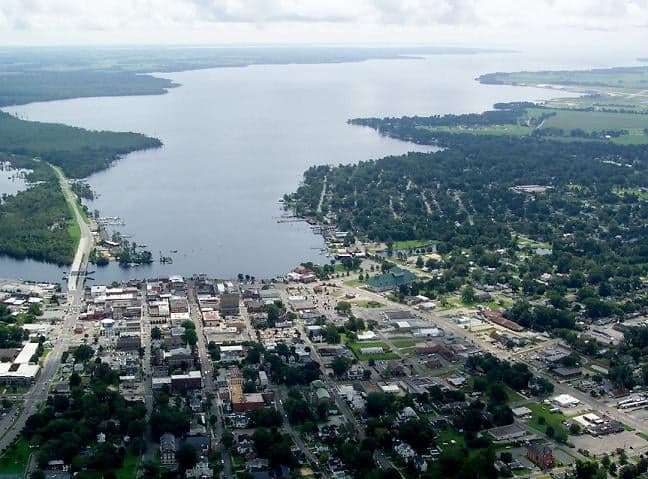
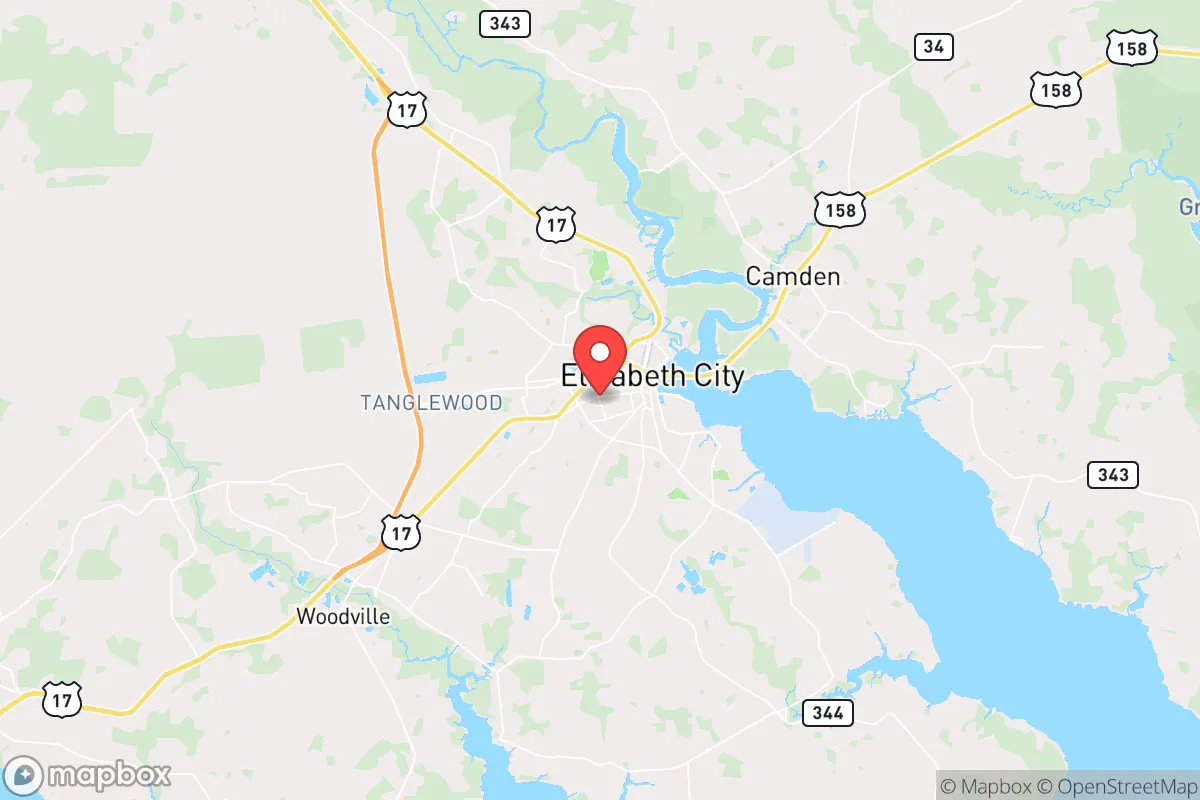
Photo: Wikipedia
Personal Sovereignty in Elizabeth City, NC
Viable for self-reliance. Generally workable, though some barriers may limit total independence.
What does Personal Sovereignty tell us?
Personal Sovereignty measures your capacity for self-reliance and independence with minimal government friction. Higher scores mean fewer barriers between you and the way you want to live... but it assumes you have the space you need and good neighbors.
What does this tell us?
Personal Sovereignty measures your capacity for self-reliance and independence with minimal government friction. Higher scores mean fewer barriers between you and the way you want to live... but it assumes you have the space you need and good neighbors.
State Policy
Energy independence: Importer (15% of energy produced in-state)
Personal Liberty
Homesteading

Personal Liberty Analysis
Elizabeth City, North Carolina, offers a notably high degree of personal sovereignty relative to many mid-Atlantic and Northeastern locales, anchored by North Carolina’s statewide preemption laws and a historically light-touch local governance culture. For individuals and families who prioritize autonomy—whether in self-defense, property use, or financial decisions—the city provides a legal and regulatory environment that generally defers to individual judgment rather than imposing top-down mandates. The trade-off is a slower pace of public services and infrastructure, which aligns with a self-reliant mindset but requires residents to be proactive about their own needs.
Tax burden and regulatory posture in Elizabeth City
North Carolina’s flat income tax rate of 4.5% (as of 2026) and a state sales tax of 4.75% (with local add-ons bringing the combined rate to around 7% in Pasquotank County) keep the overall tax burden moderate. Elizabeth City does not levy a local income tax, and property taxes in Pasquotank County are reasonable, with a rate of approximately $0.67 per $100 of assessed value. This means a $200,000 home carries an annual tax bill of roughly $1,340. The regulatory posture at the city and county level is generally permissive: there are no city-specific business license fees for most small operations, and zoning ordinances are less restrictive than in larger urban areas. However, North Carolina’s statewide building codes and environmental regulations (particularly around the Pasquotank River and wetlands) do impose some constraints on development and property modification. For a relocation audience, the key takeaway is that the tax and regulatory environment is favorable to individual financial autonomy, but not a complete free-for-all—especially near waterways.
Self-defense and gun law specifics in North Carolina
North Carolina is a “shall-issue” state for concealed carry permits, meaning that if you meet the statutory requirements (age 21, no disqualifying criminal record, completion of a firearms safety course), the sheriff’s office must issue the permit. Elizabeth City and Pasquotank County do not impose additional local restrictions beyond state law, thanks to state preemption that prohibits cities and counties from enacting their own gun ordinances. Open carry of handguns is legal without a permit for anyone who can legally possess a firearm, though a concealed carry permit is required for carrying a concealed handgun. Stand-your-ground laws are in effect, with no duty to retreat in any place where the individual has a lawful right to be. Castle doctrine protections extend to vehicles and occupied structures. For those moving from states with more restrictive gun laws, the transition is straightforward: no firearm registration, no magazine capacity limits, and no waiting periods for purchases from licensed dealers (private sales have no background check requirement). The local sheriff’s office in Pasquotank County processes permits efficiently, typically within the 45-day statutory window.
Self-reliance and homesteading viability: lot sizes, zoning, and off-grid feasibility
Elizabeth City’s residential zoning allows for a range of property sizes, from standard quarter-acre lots in subdivisions to larger parcels of 1-5 acres in the county’s rural areas. For those interested in homesteading, the unincorporated areas of Pasquotank County and nearby Camden County offer the most flexibility, with minimum lot sizes of 1 acre in many agricultural zones. Raising chickens, goats, and even small livestock is generally permitted on parcels of 1 acre or more, though city limits impose stricter rules on livestock and noise. Off-grid feasibility is moderate: North Carolina does not have a statewide ban on rainwater collection, and solar panel installation is straightforward with no HOA restrictions in unincorporated areas. However, the county requires a permit for any permanent structure, and septic system approval is mandatory for properties without municipal sewer access. The Albemarle region’s high water table can complicate septic installation, so a percolation test is advisable before purchasing land. For families seeking a self-sufficient lifestyle, the rural outskirts of Elizabeth City offer a viable path, but the city itself is more oriented toward suburban convenience than full homesteading.
Personal liberties: parental rights, medical autonomy, speech, and property
North Carolina has a strong tradition of parental rights in education, with laws that allow parents to opt their children out of specific instructional materials and to homeschool without excessive bureaucratic hurdles. The state’s medical autonomy landscape is mixed: there is no state-level vaccine mandate for adults, and COVID-19-era restrictions were lifted early compared to many states, but the state does require certain vaccinations for school attendance (with medical and religious exemptions available). Freedom of speech is robustly protected under both the U.S. Constitution and North Carolina law, with no local ordinances in Elizabeth City that restrict public expression beyond standard time-place-manner regulations. Property rights are generally strong, with eminent domain used sparingly and primarily for infrastructure projects. One notable area of tension is the city’s historic district overlay, which imposes design review for exterior modifications to properties in certain neighborhoods—a consideration for buyers of older homes near downtown. Overall, the personal liberties environment in Elizabeth City leans toward individual discretion, with the primary constraints being those imposed by state-level health and education mandates rather than local overreach.
Compared to other mid-sized cities in the Southeast, Elizabeth City offers a balanced sovereignty profile: lighter than Virginia’s more regulated Tidewater region, but not as permissive as rural counties in the Deep South. The absence of local gun control, the moderate tax burden, and the feasibility of small-scale homesteading make it attractive for those who value self-reliance. The trade-offs are a slower economy and fewer specialized services, which reward residents who are prepared to handle their own maintenance, legal research, and community organizing. For a conservative-leaning individual or family, the area provides a solid foundation for personal autonomy without the extreme isolation of more remote locations.

* Values derived from national, state, county, city and local statistics and may differ in a specific area. Last updated: 2026-10-21T18:42:18.000Z
Narrative content on this page is AI-generated and may contain mistakes. Verify any details that matter before acting on them.
ReloMaps may earn a commission from affiliate links at no extra cost to you.

