

Photo: Wikipedia
Quality of Life in East St. Louis, IL
Above-average quality of iife. The area offers a reasonable cost of living, decent mobility, and a mix of neighborhood amenities.
What does Quality of Life tell us?
Quality of Life blends cost of living, nearby amenities, socioeconomic signals, and neighborhood character. City-level scores represent the whole municipality; individual neighborhoods can differ.
What does this tell us?
Quality of Life blends cost of living, nearby amenities, socioeconomic signals, and neighborhood character. City-level scores represent the whole municipality; individual neighborhoods can differ.
Cost of Living
62% below national average
The Real Cost of Living in East St. Louis, IL for 2026
| Tier | Individual | Family (4) |
|---|---|---|
| Survival | $10k | $18k |
| Comfortable | $16k | $24k |
| Luxury | $56k+ | $87k+ |
| Elite (Top 5%) | $81k+ | $126k+ |
128%
The Area Signal
A metric tracking the socioeconomic signals of the area.
Hobbies
Explore the areaGroceries
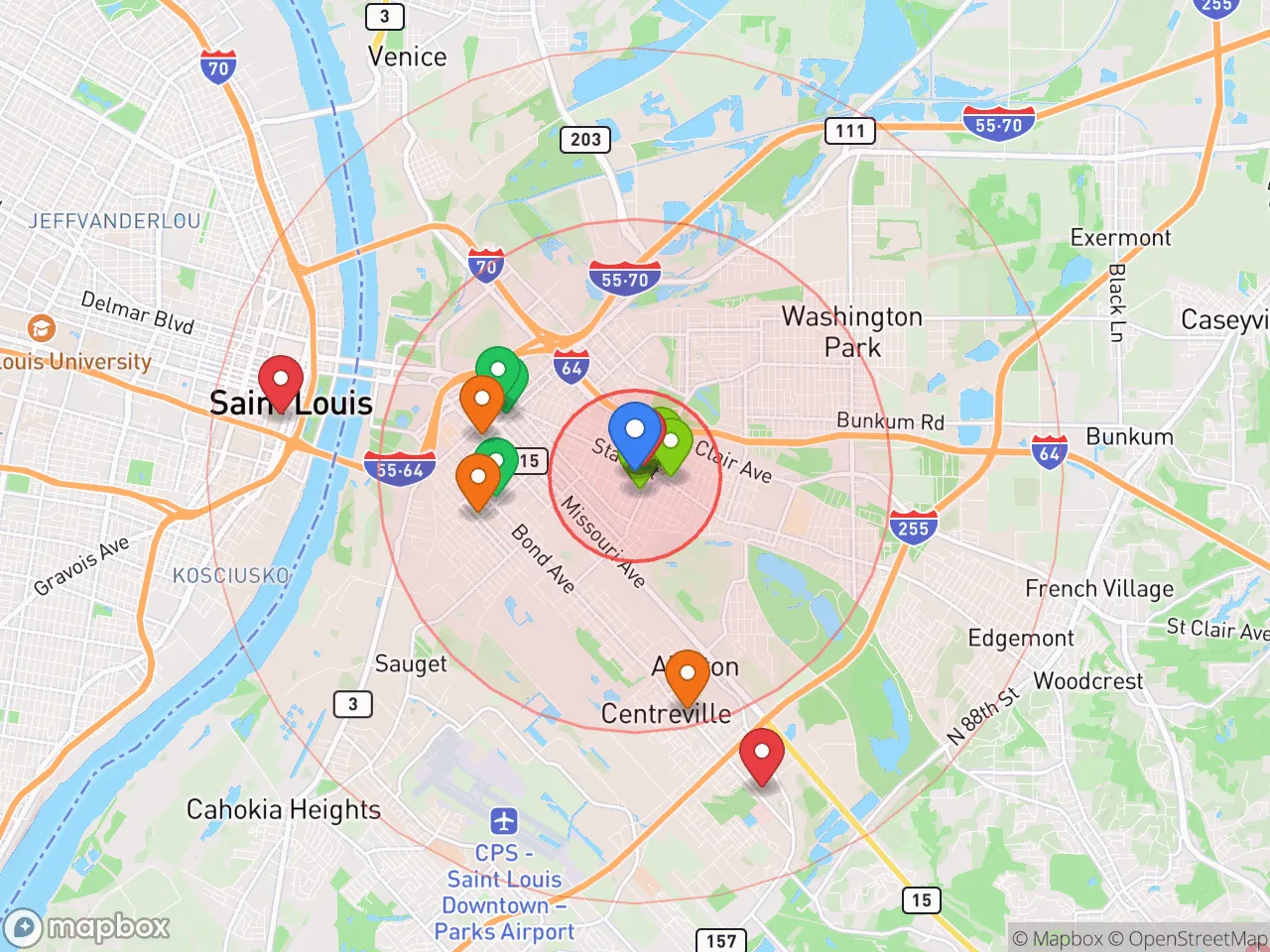
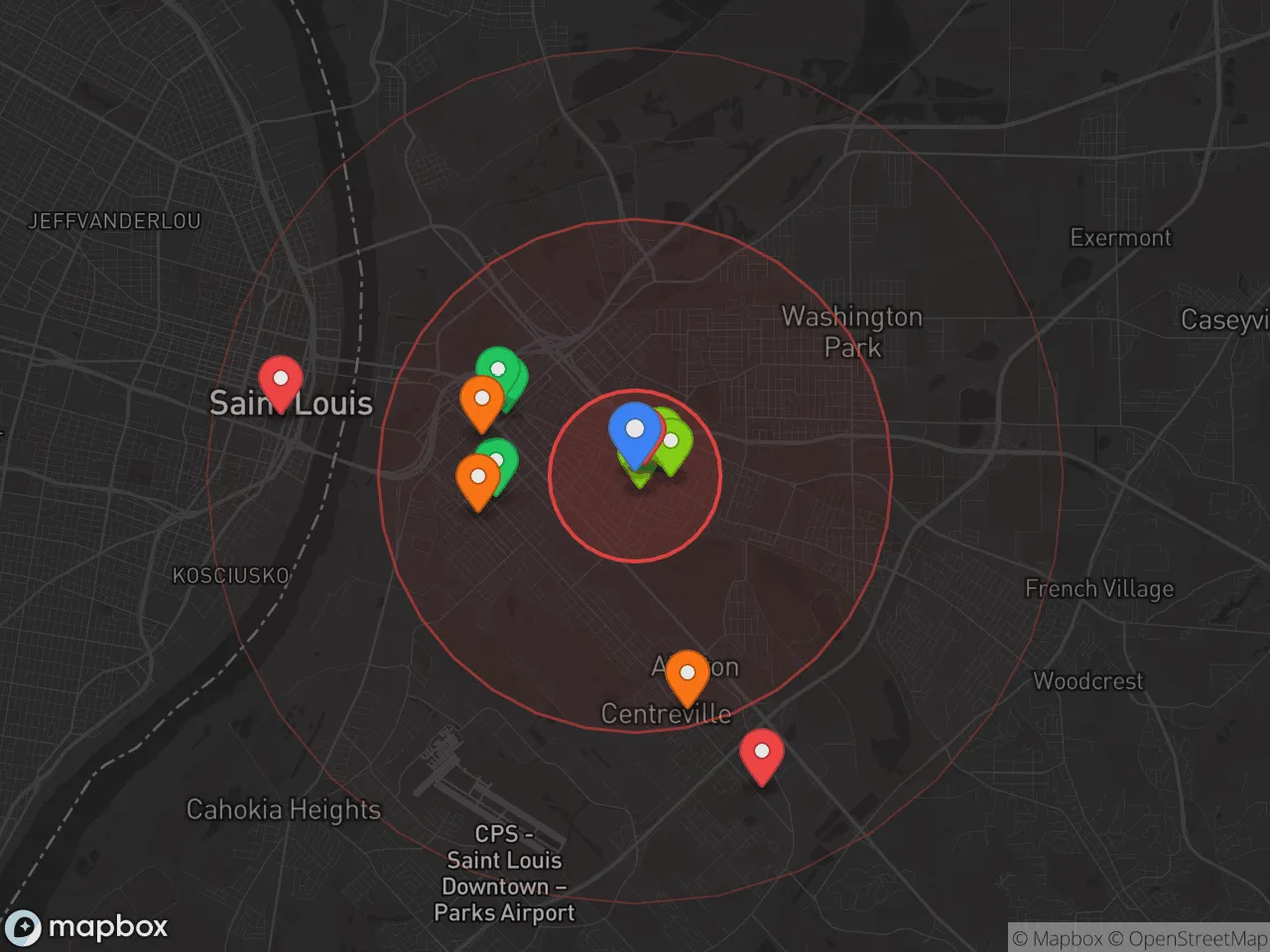
5 within 10 miles
Gas
20 within 10 miles
Hospital
20 within 20 miles
Airport
Indianapolis International Airport
Post Office
USPS — East Saint Louis, IL
Critical Amenities
Quality-of-Life Analysis
East St. Louis, Illinois, presents a unique quality-of-life profile defined by extreme affordability and significant socioeconomic challenges. With a cost of living index of 38—well below the U.S. average of 100—the city attracts residents who prioritize low housing costs and a slower pace, often including retirees on fixed incomes, young families seeking starter homes, and workers commuting to higher-paying jobs in nearby St. Louis. The population is predominantly African American, and the area has faced decades of population decline and disinvestment, resulting in a community that is both resilient and resource-constrained.
Cost of living, housing affordability, and how it compares to St. Louis
East St. Louis is one of the most affordable housing markets in the St. Louis metropolitan area. The median home value is $52,700, a fraction of the St. Louis city median of roughly $150,000 and less than a third of the national median. Median rent sits at $597 per month, making it accessible for low-income households. However, this affordability comes with trade-offs: the housing stock is older, with many vacant or deteriorated properties, and property taxes in St. Clair County are moderate but can be a burden relative to home values. The average commute time of 22.5 minutes is slightly shorter than the national average of 26 minutes, reflecting the city's proximity to St. Louis—just across the Mississippi River via the Poplar Street Bridge or the Martin Luther King Bridge. For comparison, a similar commute from a St. Louis suburb like Belleville averages 25 minutes, but with significantly higher housing costs. The low COL index means that a household earning $30,000 can afford a modest home here, whereas the same income would struggle in most other parts of the metro area.
What daily life is like for families: schools, amenities, and safety
Daily life in East St. Louis is shaped by limited local amenities and a heavy reliance on St. Louis for employment, shopping, and entertainment. The East St. Louis School District 189 serves the city, but it has faced chronic underfunding and low academic performance—graduation rates hover around 75%, below the Illinois state average of 87%. For families seeking stronger schools, nearby districts like Belleville Township High School District 201 or O'Fallon Township High School District 203 are options, though they require a commute. Grocery stores are sparse; the city is considered a food desert, with many residents traveling to Caseyville or Fairview Heights for full-service supermarkets. Parks like Emerson Park and the Malcolm W. Martin Memorial Park offer green space, but recreational programming is limited. Safety is a major concern: East St. Louis consistently reports violent crime rates several times the national average, though property crime has declined since 2020. The city's police department has been under state oversight in recent years, and community groups like the East St. Louis Action Research Project work to improve neighborhood conditions. For daily errands, most residents drive; public transit via MetroLink light rail connects to downtown St. Louis in about 15 minutes, but bus service within the city is infrequent.
Who would thrive here? East St. Louis is best suited for budget-conscious individuals or families who are willing to trade suburban amenities and high safety ratings for dramatically lower housing costs. It works well for workers with jobs in St. Louis who want a short commute and minimal rent, or for retirees who own their home outright and can manage on a fixed income. It is less ideal for families prioritizing top-tier schools or for professionals seeking walkable neighborhoods with robust retail and dining. The city's challenges—crime, underfunded schools, and limited services—mean that newcomers should visit first, talk to current residents, and weigh the financial benefits against the daily realities of a community still rebuilding from decades of economic hardship.

Crime in East St. Louis, IL
Crime rates similar to the national median for U.S. locations.
Violent CrimeViolent Crime Analysis
Property CrimeProperty Crime Analysis
Crime Analysis
East St. Louis, Illinois, faces a severe public safety crisis, with violent and property crime rates that far exceed state and national averages, creating a challenging environment for residents and businesses. The city’s violent crime rate of 243.3 per 100,000 residents is more than double the Illinois state average and roughly 70% higher than the national rate, while property crime at 1,469.3 per 100,000 is nearly triple the national figure. These numbers reflect a community where safety is a daily concern, driven in part by a justice system that has been criticized for prioritizing progressive, offender-focused policies over public protection.
Crime in context
When compared to the broader St. Louis metropolitan area, East St. Louis stands out as a high-crime outlier. The city’s violent crime rate is roughly 2.5 times the metro average, and its property crime rate is nearly double. Statewide, Illinois’s violent crime rate sits at approximately 110 per 100,000, meaning East St. Louis is more than twice as dangerous by that measure. The disparity is even starker against the national violent crime rate of roughly 140 per 100,000. Property crime in East St. Louis is 1,469.3 per 100,000, compared to the U.S. average of about 500 per 100,000, indicating a pervasive risk of theft, burglary, and vehicle break-ins. These statistics are consistent with patterns seen in many small cities adjacent to large, liberal-leaning metro areas, where progressive district attorneys and judges have implemented policies that reduce incarceration and prioritize diversion programs, often at the expense of victim justice and community safety.
What residents experience
For those living in East St. Louis, the crime statistics translate into a daily reality of heightened vigilance. Residents report that property crimes like car theft and home burglaries are common occurrences, with many avoiding leaving vehicles or valuable items outside overnight. Violent incidents, including armed robberies and assaults, are concentrated in certain neighborhoods, but the overall risk is elevated citywide. The presence of a progressive justice system in St. Clair County, which includes East St. Louis, has been a point of contention. Critics argue that policies such as cash bail reform, reduced sentencing for nonviolent offenders, and a focus on restorative justice have led to repeat offenders cycling back onto the streets quickly, undermining deterrence and eroding public trust. This environment makes it difficult for families to feel secure, especially after dark, and discourages new residents from moving into the area.
Neighborhood-level variation exists, but data is limited. Areas closer to the central business district and along major thoroughfares like State Street and Collinsville Avenue tend to see higher concentrations of both violent and property crime. Some residential pockets, particularly in the northern and western edges of the city, report lower crime rates, though still above national norms. Prospective residents should consult local police department crime maps and speak with current residents to identify safer blocks. However, the overarching reality is that East St. Louis’s crime problem is systemic, and the influence of progressive criminal justice policies in the region makes it a location where safety concerns should be a primary consideration for anyone evaluating a move.
* Values derived from national, state, county, city and local statistics and may differ in a specific area. Last updated: 2026-10-10T16:27:22.000Z
Narrative content on this page is AI-generated and may contain mistakes. Verify any details that matter before acting on them.
ReloMaps may earn a commission from affiliate links at no extra cost to you.

