Photo: Wikipedia
Demographics of East St. Louis, IL
Affluence Level in East St. Louis, IL
A low-income area with significant economic hardship. Household wealth and educational attainment are well below national averages.
People of East St. Louis, IL
Today, East St. Louis, Illinois is a predominantly Black city of 18,278 residents, with 94.0% of the population identifying as Black or African American. The city is characterized by its deep historical roots in industrial labor and the Great Migration, yet it now faces extreme population loss, having shed over 60% of its residents since its 1950 peak. With a foreign-born population of just 0.3% and a college attainment rate of 14.7%, East St. Louis remains one of the most racially homogeneous and economically challenged cities in the St. Louis metropolitan area, a stark contrast to the diverse, growing suburbs surrounding it.
How the city was settled and grew
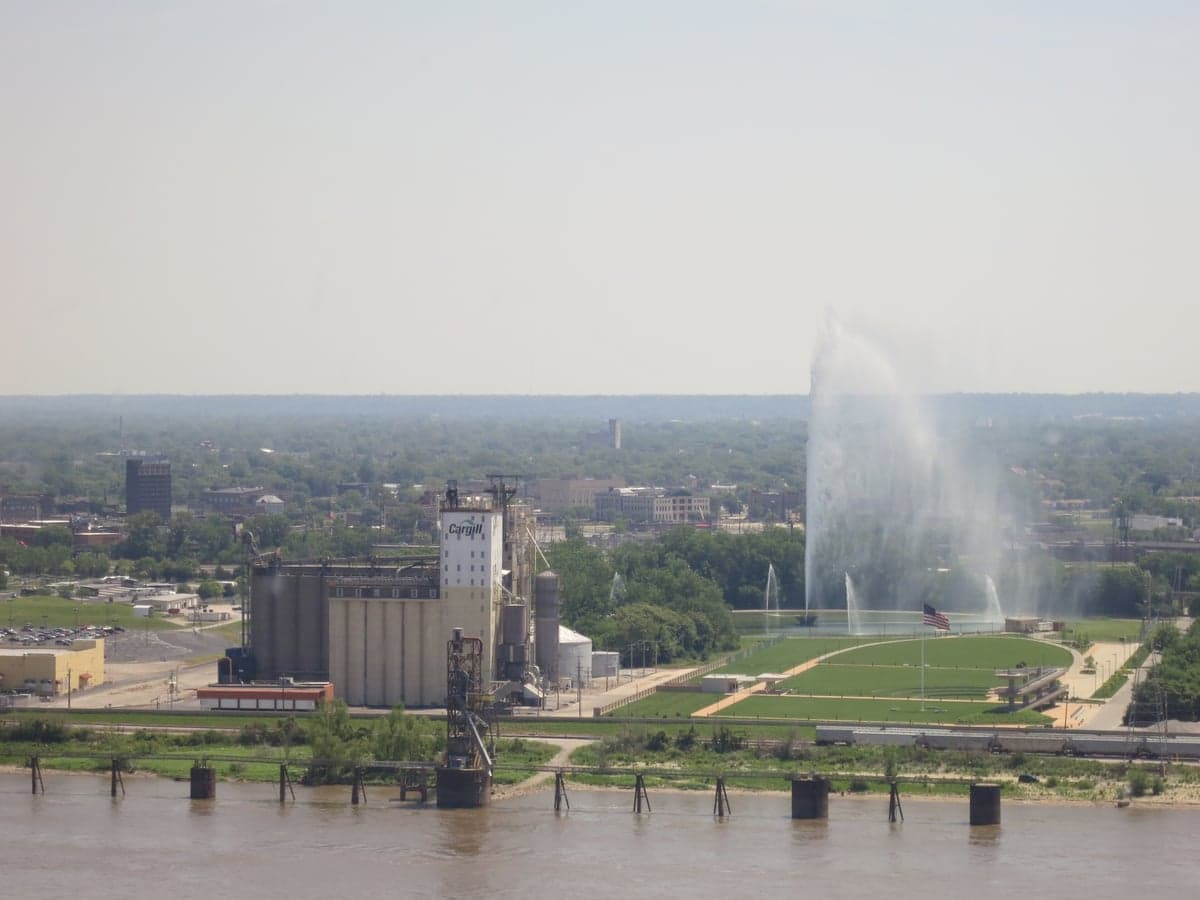
East St. Louis was founded in the early 19th century as a river town and transportation hub, but its explosive growth came after the Civil War, driven by industrialization. The city’s location on the Mississippi River opposite St. Louis made it a magnet for meatpacking, chemical plants, and railroad yards. The original white working-class population—largely German, Irish, and Italian immigrants—settled in neighborhoods like Goose Hill and St. Mary’s, building the city’s early industrial base. The first major demographic shift began during the Great Migration (1910–1940), when tens of thousands of Black families from the Deep South—particularly Mississippi, Arkansas, and Louisiana—arrived seeking jobs in the stockyards and factories. They were largely confined to the Lower East Side and Winstanley neighborhoods due to restrictive covenants and racial violence, including the infamous 1917 race riot. By 1950, the city’s population peaked at 82,366, with Black residents making up roughly 30% of the total, concentrated in the city’s core wards.
Modern era (post-1965)
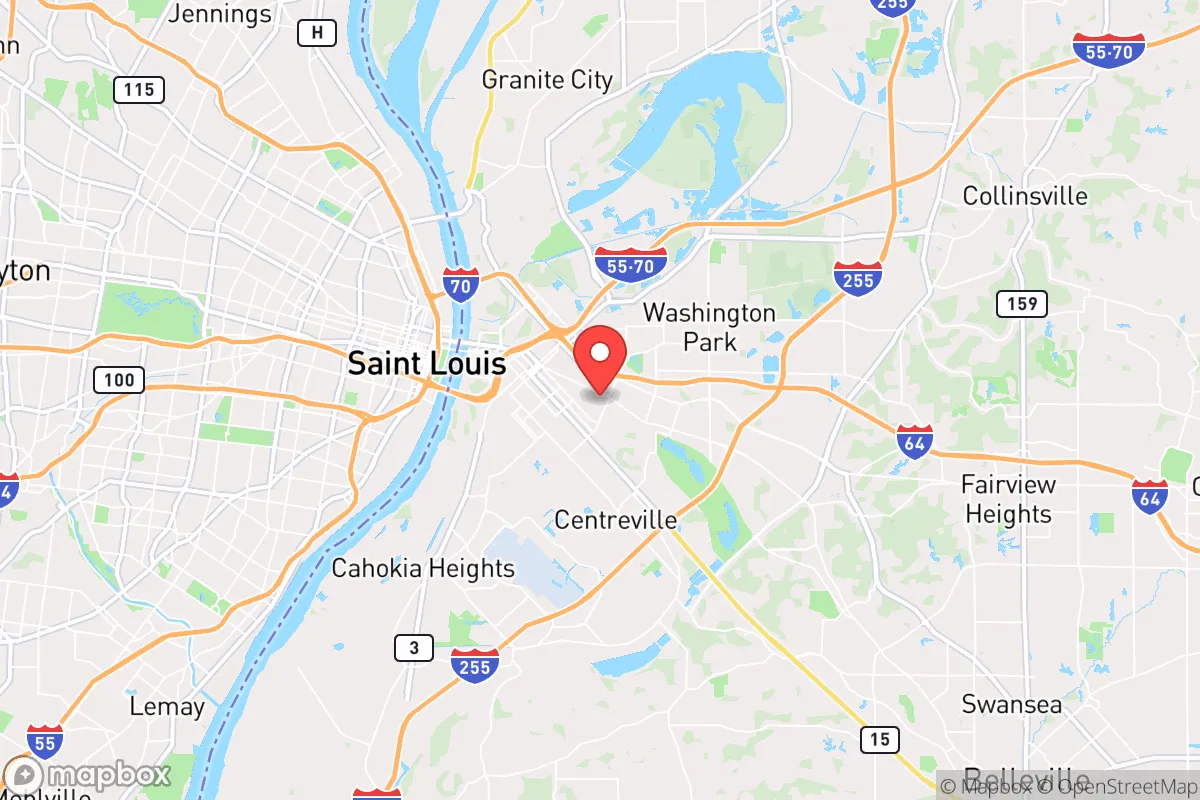
The post-1965 era brought a dramatic racial inversion and population collapse. The Civil Rights Act and the end of restrictive housing covenants allowed white families to leave for St. Clair County suburbs like Belleville and O’Fallon, a process accelerated by deindustrialization. Between 1960 and 1990, the city’s white population plummeted from over 50,000 to fewer than 1,000, while the Black share rose from 40% to over 97%. This white flight was not replaced by new immigration—East St. Louis’s foreign-born rate has never exceeded 1%. Instead, the city’s Black population itself began to decline after 1970, as middle-class families moved to Washington Park and Centreville neighborhoods within the city limits, or outward to Fairview Heights and Shiloh. The remaining population is concentrated in the Edgemont and Olivette Park areas, where poverty rates exceed 40%. The city’s tiny non-Black population today—1.6% white, 1.4% Hispanic, 0.6% Indian, and 0.3% East/Southeast Asian—is scattered, with no single ethnic enclave forming.
The future
East St. Louis’s population is projected to continue shrinking, with no signs of reversal. The city lost another 12% of its residents between 2010 and 2020, and the 2023 estimate of 18,278 is the lowest since the 1880s. The population is becoming slightly less Black—down from 97.5% in 2010 to 94.0% in 2023—but this is driven by a small influx of Hispanic and Indian residents, not a broad diversification. The Hispanic share (1.4%) and Indian share (0.6%) are growing from a near-zero base, but these groups are dispersing into the State Park Place and Alorton fringe areas rather than forming distinct neighborhoods. The city’s cultural identity remains overwhelmingly tied to its Black working-class heritage, with little prospect of significant demographic change. The next 10–20 years will likely see further population decline, with the city stabilizing at perhaps 12,000–14,000 residents, unless major economic redevelopment—such as the proposed National Geospatial-Intelligence Agency campus nearby—attracts new residents.
For someone moving in now, East St. Louis is a city defined by its history of industrial rise and fall, racial segregation, and population exodus. It offers deeply affordable housing and a strong sense of community among long-term Black residents, but it lacks the diversity, job base, and services found in the surrounding St. Louis metro. The city is not becoming more cosmopolitan or diverse; it is consolidating as a smaller, poorer, and still overwhelmingly Black urban core, making it a challenging relocation choice for most families and individuals.

* Values derived from national, state, county, city and local statistics and may differ in a specific area. Last updated: 2026-10-10T16:27:22.000Z
Narrative content on this page is AI-generated and may contain mistakes. Verify any details that matter before acting on them.
ReloMaps may earn a commission from affiliate links at no extra cost to you.

