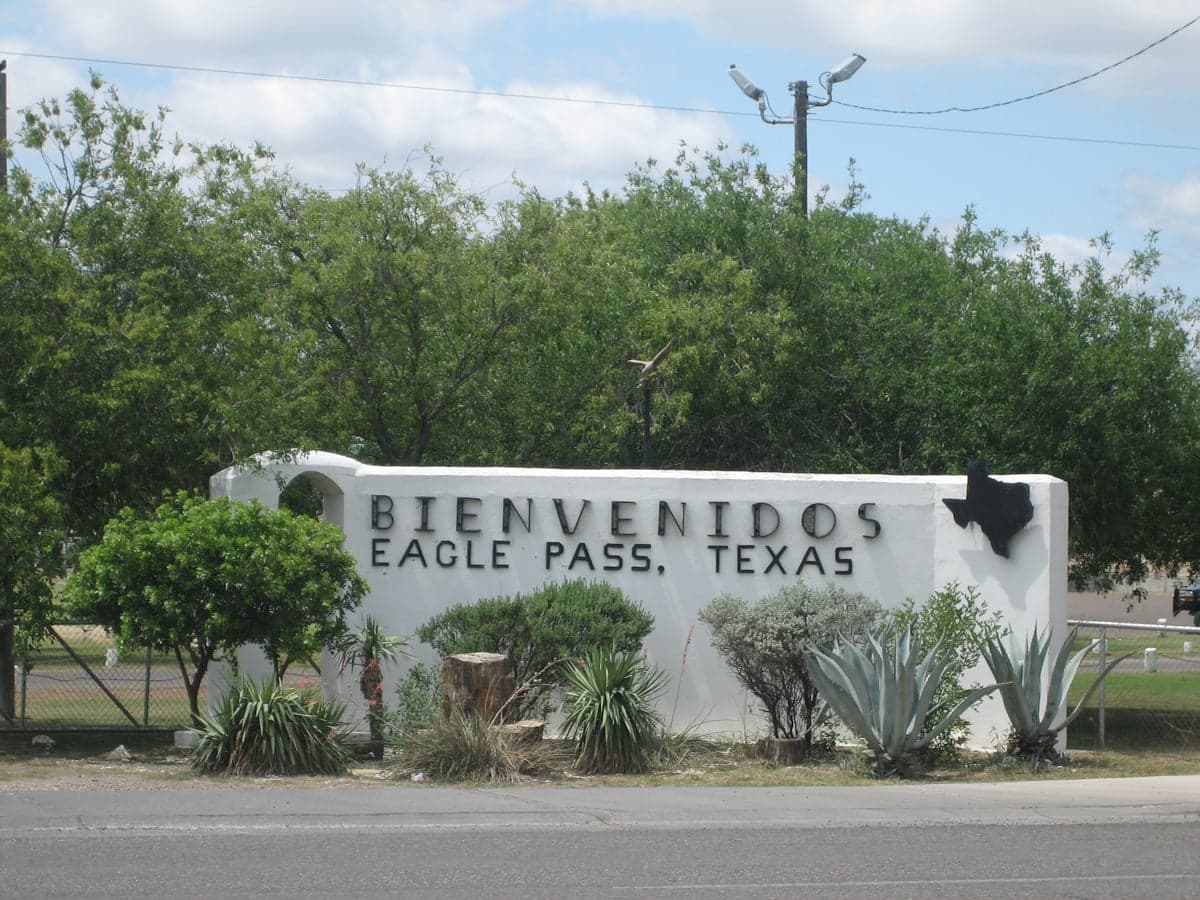
Photo: Wikipedia
Find The Best Places To Live
in Eagle Pass
PRO TIP! You can paste a Zillow or Redfin link to get info on that property.
Compare Eagle Pass with another place
What It's Like Living in Eagle Pass, TX
Eagle Pass feels less like a typical Texas border town and more like a tight-knit community where the rhythms of daily life are shaped by the Rio Grande, the Maverick County Lake, and a deep sense of local pride. With a population just over 28,000 and a median age of 30.3, it’s a young, family-oriented place where people know their neighbors, high school football is a major event, and the cost of living is genuinely low enough to let a single income stretch further than in most of the country.
Daily Rhythm: Slow Mornings, Busy Evenings, and a Border Beat
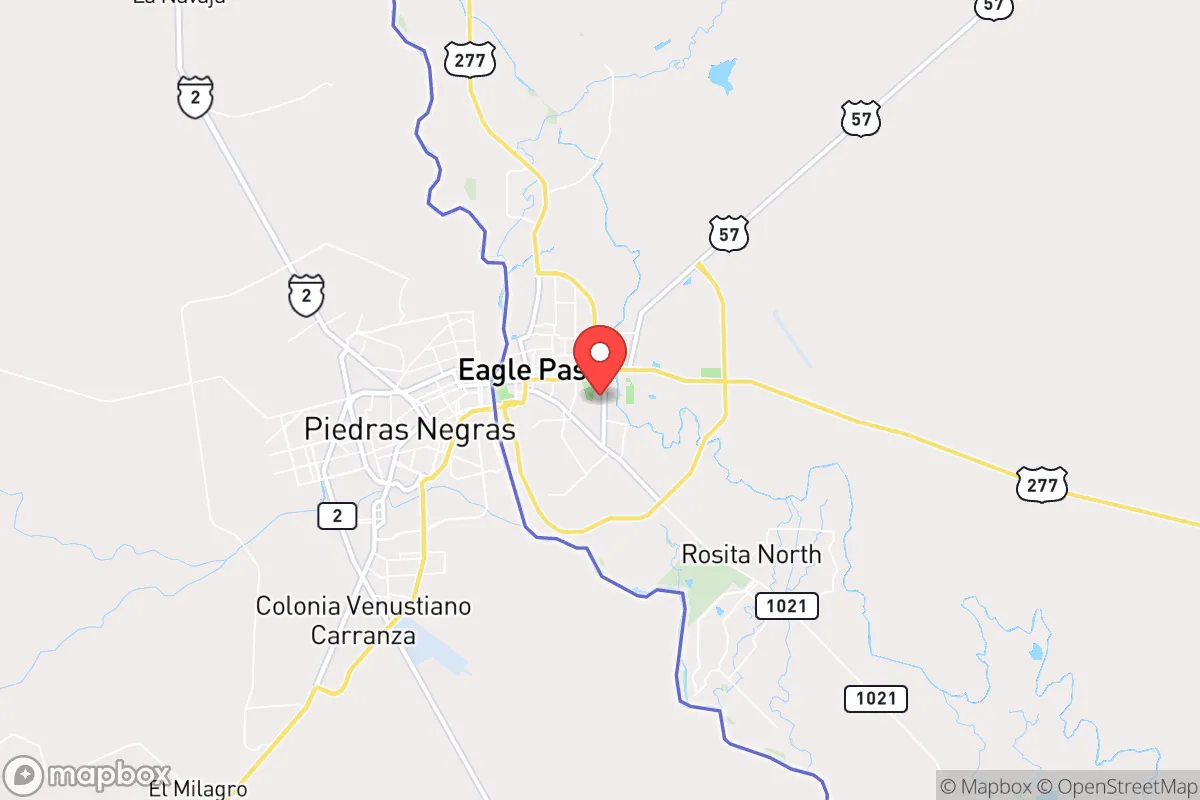
Most mornings start with a drive that averages about 20 minutes—short enough that you can grab breakfast tacos at a local spot like Taqueria El Rodeo and still get to work on time. The biggest employers are the school district, the county, and the hospital, so a lot of people work in education, healthcare, or local government. Shopping is mostly concentrated along Main Street and the commercial corridors near the border crossing, with H-E-B being the go-to grocery store and Walmart handling the rest. Weekends often mean a trip to Maverick County Lake for fishing or kayaking, or a drive across the international bridge to Piedras Negras for a meal or a visit to the mercado. The border presence is constant but not overwhelming—you’ll see Border Patrol vehicles and hear Spanish as often as English, and the local identity is proudly bicultural.
Sports, School Spirit, and the Community Hub
High school sports are the main event here. Eagle Pass High School’s football games on Friday nights draw huge crowds, and the rivalry with Del Rio is genuinely intense—people plan their weekends around it. The community also rallies around the local baseball and softball teams, and the Maverick County Lake provides a natural gathering spot for fishing tournaments and family cookouts. There’s no pro sports team within a two-hour drive, so the Eagles and the local little league teams get the full attention of the town. The schools themselves are a central part of daily life—parent-teacher nights, band concerts, and booster club events are where you’ll meet your neighbors. With only 23.2% of adults holding a college degree, many families value the school system as a path to opportunity, and the district is one of the largest employers in the area.
What’s There to Do: Festivals, Parks, and Local Hangouts
Entertainment is low-key but genuine. The biggest annual event is the Eagle Pass International Festival, which brings in music, food vendors, and a parade that shuts down Main Street. The city’s parks—especially Rosita Valley Park and the riverwalk area along the Rio Grande—are well-used for weekend soccer games, jogging, and picnics. For nightlife, you’ll find a handful of bars and cantinas, like El Patio and La Cabaña, where live Tejano and norteño bands play on weekends. Dining leans heavily toward Mexican food—places like El Rodeo and Taqueria Jalisco are local staples—but there are also a few American chains and a solid barbecue spot called Smokehouse BBQ. If you want a bigger night out, Piedras Negras is a 10-minute drive across the border, offering more restaurants, bars, and a different pace entirely.
Pros and Cons: What Locals Love and What Frustrates Them
- Pro: Cost of living is remarkably low. With a cost of living index of 68 (32% below the national average) and a median home value of $192,600, a family earning the median income of $54,952 can afford a comfortable home and still have room for savings. Rent is also affordable—a two-bedroom apartment often runs under $900.
- Pro: Short commute and low stress. The average commute is just over 20 minutes, and traffic is almost nonexistent outside of school pickup times. You can get from one end of town to the other in 15 minutes.
- Pro: Strong sense of community. People look out for each other. If your kid plays sports, you’ll know half the parents in the bleachers. The violent crime rate is 179.8 per 100,000—lower than the national average and well below many Texas cities of similar size.
- Con: Limited job opportunities outside of government and education. If you’re not in healthcare, teaching, or law enforcement, you may need to commute to Del Rio (45 minutes) or Laredo (2 hours) for work. Remote work is growing, but the local economy is narrow.
- Con: Summers are brutal. Temperatures regularly hit 100°F from June through September, and the humidity from the river can make it feel even hotter. Air conditioning is non-negotiable, and outdoor activities are best done early morning or after sunset.
- Con: Not much for singles or nightlife. If you’re under 30 and not married, the dating pool is small, and the entertainment options are limited. Most social life revolves around family, church, or school events.
The kind of person who fits in here is someone who values stability, family, and a slower pace over career ambition or urban excitement. It’s a place where you can buy a house in your 20s, raise kids who play sports and know their neighbors, and retire without ever feeling the need to move. The weather is tough, the job market is limited, and the cultural scene is modest—but for the right person, Eagle Pass offers a genuinely affordable, safe, and connected life that’s increasingly hard to find elsewhere in Texas.

* Values derived from national, state, county, city and local statistics and may differ in a specific area. Last updated: 2026-11-11T04:03:54.000Z
Narrative content on this page is AI-generated and may contain mistakes. Verify any details that matter before acting on them.
ReloMaps may earn a commission from affiliate links at no extra cost to you.

