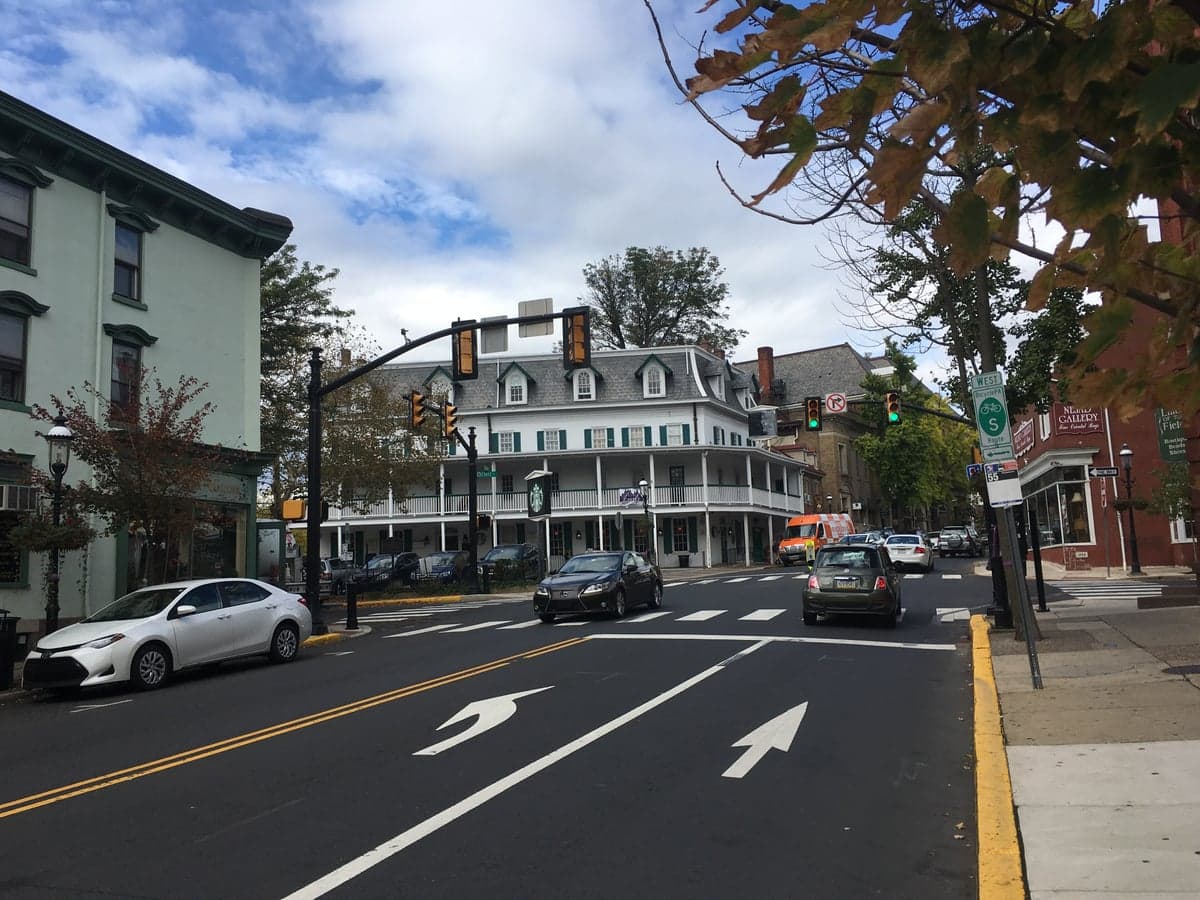
Photo: Wikipedia
Personal Sovereignty in Doylestown, PA
Strong independent fundamentals that actively favor personal liberty and low regulation.
What does Personal Sovereignty tell us?
Personal Sovereignty measures your capacity for self-reliance and independence with minimal government friction. Higher scores mean fewer barriers between you and the way you want to live... but it assumes you have the space you need and good neighbors.
What does this tell us?
Personal Sovereignty measures your capacity for self-reliance and independence with minimal government friction. Higher scores mean fewer barriers between you and the way you want to live... but it assumes you have the space you need and good neighbors.
State Policy
Energy independence: Net exporter (150% of energy produced in-state)
Personal Liberty
Homesteading

Personal Liberty Analysis
Doylestown, Pennsylvania, offers a notably high degree of personal sovereignty for a suburban community, blending the autonomy-enhancing legal framework of a commonwealth with the practical constraints of a densely populated, historic borough. While residents enjoy strong protections for self-defense, property rights, and parental authority under state law, the local regulatory environment—particularly regarding land use and taxation—creates a mixed picture for those seeking maximum independence. For the freedom-minded individual or family, Doylestown represents a strategic compromise: robust personal liberties within a structured, high-cost, and moderately regulated community.
Tax burden and regulatory posture in Bucks County
Pennsylvania's overall tax burden is moderate compared to neighboring states, and Doylestown benefits from this state-level posture. The state levies a flat 3.07% personal income tax and a 6% sales tax (with no tax on most clothing and groceries), which are among the lower rates in the Northeast. However, Doylestown Borough imposes its own earned income tax of 1% (shared with the Central Bucks School District), plus a local services tax of $52 per year for most workers. Property taxes are the heavier burden: the combined millage rate from the borough, county, and school district typically lands between 25 and 30 mills, meaning a home assessed at $400,000 carries an annual property tax bill of $10,000–$12,000. This is high by national standards, though typical for desirable Philadelphia suburbs. The regulatory posture at the borough level is moderately interventionist: Doylestown enforces a detailed zoning code, historic district design guidelines for properties in the central core, and standard building permits. There is no county-level sales tax, and Pennsylvania does not impose a tax on retirement income (Social Security, pensions, 401(k) withdrawals), which is a significant plus for retirees seeking to keep more of their money. Overall, the tax burden is manageable for higher-income households but a real constraint for those on fixed budgets.
Self-defense and gun law specifics in Pennsylvania
Pennsylvania is a shall-issue state for concealed carry permits, meaning the Bucks County Sheriff's Office must issue a License to Carry Firearms (LTCF) to any qualified applicant who is not prohibited by law. Doylestown residents can apply in person at the sheriff's office in the county courthouse, with processing typically taking 45 days or less. The state preempts local firearm ordinances, so Doylestown Borough cannot enact its own bans on carry, magazine capacity, or firearm types—a critical protection for gun owners. Open carry is legal without a permit for anyone who can legally possess a firearm, though it becomes illegal without an LTCF during a state of emergency. Pennsylvania law also provides a strong Castle Doctrine with no duty to retreat in one's home or vehicle, and a Stand Your Ground provision applies to any place where the individual has a legal right to be. There is no state-level registration of firearms, no waiting period for long guns (though a 48-hour wait applies to handguns purchased from dealers), and no limit on magazine capacity. Private firearm sales between unlicensed individuals are legal without a background check, though this is subject to federal law for interstate transactions. For the self-defense-minded resident, Doylestown offers a legal environment that is among the most permissive in the Northeast, with the key caveat that carrying in Philadelphia requires awareness of that city's separate, more restrictive policies.
Self-reliance and homesteading viability in a suburban borough
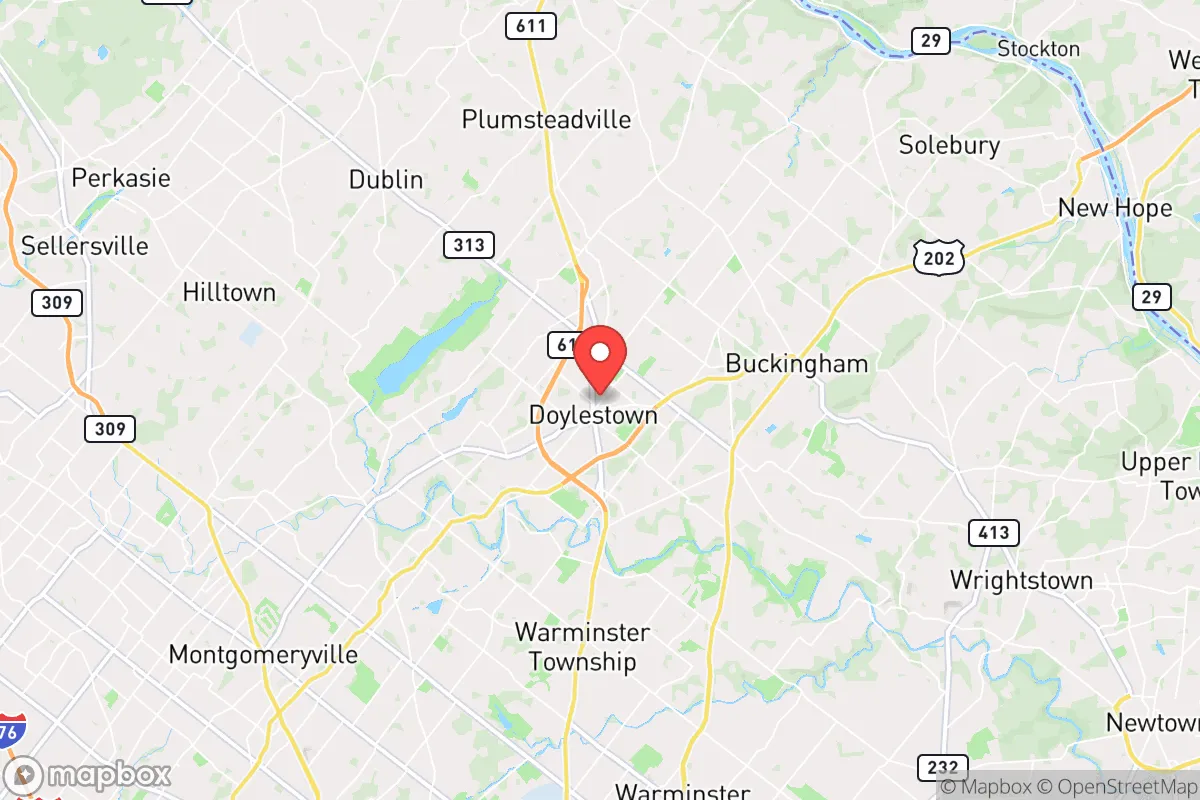
Doylestown Borough's dense, historic layout—with typical residential lot sizes of 0.1 to 0.25 acres—severely limits traditional homesteading activities. Raising livestock is generally prohibited within the borough limits, and keeping chickens is restricted to a small number of hens (typically 3–6) with a permit and setback requirements. Beekeeping is allowed but requires registration with the Pennsylvania Department of Agriculture and neighbor notification. Gardening is unrestricted, and many residents maintain productive vegetable plots, but the small lot sizes constrain food self-sufficiency. Off-grid living is effectively impossible within the borough: all properties must connect to public water and sewer systems, and building codes require grid-tied electrical service for new construction. Solar panels are permitted but must comply with historic district guidelines in designated areas, and net metering is available through PECO, the local utility. For those seeking true self-reliance, the surrounding townships in central Bucks County—such as Buckingham, Solebury, or Plumstead—offer 1- to 5-acre lots where chickens, goats, and even small-scale agriculture are more feasible, though still subject to township zoning. Doylestown itself is best viewed as a base for self-reliance through community engagement and local sourcing rather than through land-based independence.
Personal liberties: parental rights, medical autonomy, speech, and property
Pennsylvania law provides strong protections for parental rights in education and healthcare. Parents have the legal right to opt their children out of specific curriculum materials, and the state's Act 66 of 2021 requires school districts to post curriculum materials online for parental review. Homeschooling is legal and relatively straightforward: parents must file a notarized affidavit with the local school district each year, maintain a portfolio of work, and have the child undergo annual standardized testing or evaluation. Medical autonomy is more limited: Pennsylvania requires childhood vaccinations for school attendance (with medical and religious exemptions available), and the state's medical marijuana program is operational but does not permit home cultivation. Recreational cannabis remains illegal as of 2026, though decriminalization has been adopted in Philadelphia and some other municipalities—Doylestown Borough has not decriminalized. Free speech is protected under both the U.S. and Pennsylvania constitutions, and the borough has not enacted any local ordinances restricting public expression beyond standard time-place-manner regulations. Property rights are generally respected, but the borough's historic district overlay imposes design review for exterior changes to properties in the central area, which can be a frustration for owners who want to modify their homes freely. There is no rent control, and short-term rentals (like Airbnb) are permitted with a zoning permit and occupancy limits.
In the broader context of southeastern Pennsylvania, Doylestown offers a strong balance of personal sovereignty and community structure. It is significantly more freedom-friendly than Philadelphia or many New Jersey suburbs, with better gun laws, lower taxes on retirement income, and stronger parental rights. However, it is less autonomy-oriented than rural Pennsylvania counties like Bradford or Tioga, where land is cheap, zoning is minimal, and off-grid living is practical. For the reader who values personal liberty but also wants excellent schools, walkable amenities, and proximity to a major metro area, Doylestown represents a top-tier choice—provided they accept the trade-offs of higher property taxes and limited homesteading potential. The borough's regulatory environment is best described as moderately light on personal behavior, moderately heavy on property use, which aligns well with a conservative-leaning audience that prioritizes self-defense, family autonomy, and fiscal prudence over rural self-sufficiency.

* Values derived from national, state, county, city and local statistics and may differ in a specific area. Last updated: 2026-09-27T19:28:49.000Z
Narrative content on this page is AI-generated and may contain mistakes. Verify any details that matter before acting on them.
ReloMaps may earn a commission from affiliate links at no extra cost to you.

