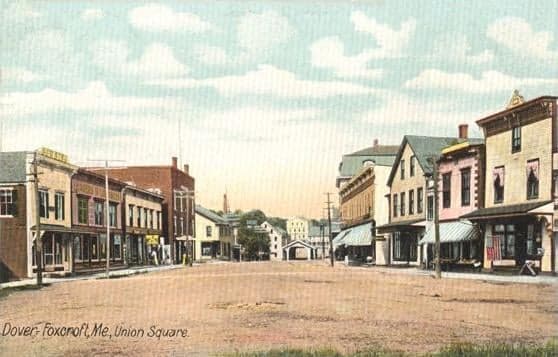
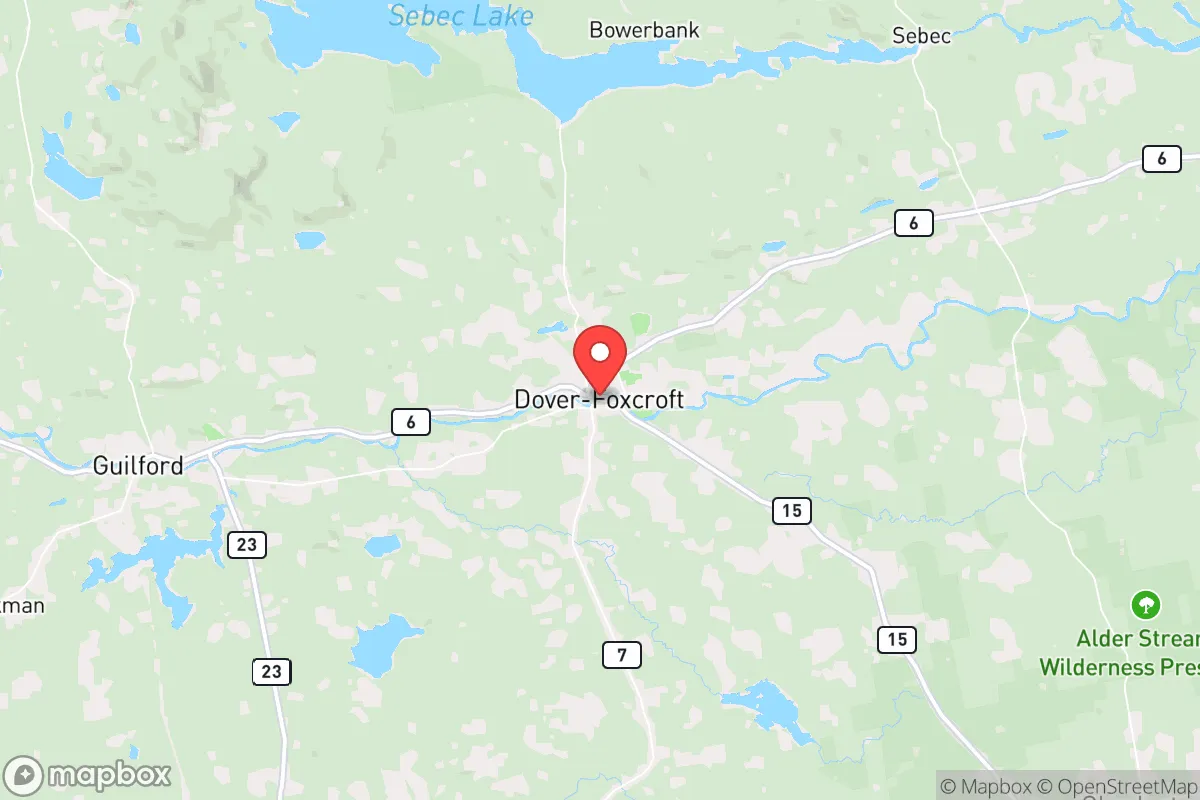
Photo: Wikipedia
Political ClimatePolitical Climate in Dover-Foxcroft, ME
District shown is the primary district for this city’s centroid. Cities may span multiple districts.
Inherited from parent county — no local data available.
* Lean and PVI are calculated from Dover-Foxcroft, ME’s own 2020 presidential results (precinct returns summed to the city), with 2024 estimated from the surrounding county’s 2020–2024 shift, Cook-style. Sources: state election offices; VEST 2020 precinct results (CC BY 4.0).
Political rankings in Maine
- Most Conservative Cities in Maine
- Most Liberal Cities in Maine
- Best Conservative-Leaning Towns in New England
- Best Conservative-Leaning Towns in the Northeast
- Safest Liberal-Leaning Towns on the East Coast
- Safest Conservative-Leaning Towns on the East Coast
- Most Affordable Liberal-Leaning Small Towns in the U.S.
- Safest Liberal-Leaning Cities in the U.S.
- Most Conservative Counties in Maine
- Most Liberal Counties in Maine
Local Political AnalysisPolitical Analysis of Dover-Foxcroft, ME
Dover-Foxcroft is a reliably conservative stronghold in central Maine, with a Cook Partisan Voting Index of R+15 that places it well to the right of the state as a whole. The town and surrounding Piscataquis County have voted Republican in every presidential election since at least 2000, often by double-digit margins. In 2024, the county went for Donald Trump by roughly 20 points, a pattern that has held steady for the past decade. This isn't a recent shift—Dover-Foxcroft has long been a place where independent-minded voters lean right, even when the rest of Maine was more competitive.
How it compares
Maine as a whole is a split-state politically: its 1st Congressional District (coastal, southern) leans Democratic, while the 2nd District (rural, northern, including Dover-Foxcroft) is Republican-leaning. The state's overall Cook PVI is not officially calculated, but the 2nd District sits around R+6, meaning Dover-Foxcroft is about 9 points more conservative than its own congressional district. Nearby towns like Bangor (about 45 minutes south) and Orono (home to the University of Maine) are more moderate or left-leaning, with Bangor's Penobscot County voting within a few points of the national average. In contrast, smaller communities like Milo, Brownville, and Guilford—all within a 20-minute drive—share Dover-Foxcroft's conservative lean, though none are as pronounced. The political divide here isn't just rural vs. urban; it's also cultural. Dover-Foxcroft's economy is rooted in logging, small manufacturing, and agriculture, industries that tend to favor lower taxes and fewer regulations, while Bangor's mix of healthcare, education, and retail creates a more diverse political base.
What this means for residents
For conservative residents, the local political climate is comfortable and familiar. Town council meetings and county commission seats are almost always held by Republicans or independents who caucus with them. Gun rights are broadly supported, and there's little appetite for new state-level environmental regulations that could affect logging or farming. For liberal residents, the reality is more nuanced. You'll find a small but active Democratic group in town, and the local library and community center host events that lean progressive, but statewide issues like Medicaid expansion (passed in 2017) and renewable energy mandates are often debated with a skeptical eye. Property taxes are a perennial hot-button issue, with many residents feeling squeezed by state education funding formulas that favor southern districts. In practice, this means that while national politics can feel polarized, local governance is pragmatic—roads, schools, and emergency services get funded, but with a tight-fisted approach that reflects the town's fiscal conservatism.
Culturally, Dover-Foxcroft stands apart from Maine's coastal and southern regions. The town's annual Piscataquis County Fair and its strong tradition of snowmobiling and hunting reinforce a rural, self-reliant identity. There's a noticeable distrust of Augusta (the state capital) and Portland, seen as out-of-touch with upcountry life. This isn't hostility—it's a quiet insistence that local knowledge should guide local decisions. Over the next decade, the political trajectory here likely stays steady: the town's population is aging and slowly declining, which tends to reinforce existing voting patterns. Newcomers, often retirees from southern Maine or out-of-state, occasionally bring more liberal views, but they're a small minority. For anyone moving here, the key takeaway is that Dover-Foxcroft offers a predictable, conservative-leaning environment where community ties matter more than party labels, and where the biggest political fights are usually about the school budget, not national culture wars.

State Political ClimatePolitical Climate in Maine
State Political AnalysisPolitical Environment in the State
Maine has a reputation as a moderate, independent-minded state, but its political reality is more complex than the "Maine is a blue state" shorthand suggests. Over the last 20 years, the state has shifted from a classic swing state — voting for George W. Bush in 2000 and then flipping to John Kerry in 2004 — to a reliably Democratic lean in presidential elections, with Joe Biden winning by 9 points in 2020 and Kamala Harris by roughly 7 in 2024. However, that top-of-ticket blue tint masks a deeply divided electorate: the state’s two congressional districts often split their votes, with the more rural, northern 2nd District going for Donald Trump in both 2016 and 2020, while the southern 1st District (anchored by Portland and its suburbs) has become solidly Democratic. For a conservative relocator, the key takeaway is that Maine is not a monolith — your experience will vary dramatically depending on whether you settle in Portland, Bangor, or a small town like Rangeley.
Urban vs. rural divide
The political map of Maine is a textbook case of the urban-rural split that defines American politics today. The southern coastal corridor — from Kittery up through Portland, South Portland, and Scarborough — is the engine of the state’s Democratic vote. Portland itself is a progressive stronghold, with a city council that has pushed rent control, sanctuary city policies, and green energy mandates. Drive 30 minutes inland to Lewiston or Auburn, and you hit a more working-class, historically Franco-American region that has trended Republican in recent cycles, though it still hosts a sizable Democratic base. The real Republican heartland is the vast, forested 2nd Congressional District, which covers everything north of Bangor and west to the New Hampshire border. Places like Presque Isle, Caribou, and Houlton in Aroostook County are deeply conservative, with Trump winning some precincts by 30 points or more. Even within the 2nd District, there’s nuance: Bangor itself is a purple city with a moderate Democratic lean, while its rural outskirts vote heavily red. The coastal midcoast — towns like Camden, Rockland, and Belfast — have a strong libertarian and independent streak, often splitting tickets between socially liberal and fiscally conservative candidates.
Policy environment
Maine’s state-level policy environment is a mixed bag that reflects its independent character. On taxes, the state has a progressive income tax with rates from 5.8% to 7.15%, and a statewide property tax that funds education, which can be a shock for newcomers from low-tax states. Sales tax is a relatively low 5.5%, but it applies to few services. The regulatory posture is generally business-friendly for small enterprises, but environmental regulations are strict, especially along the coast and for development near waterways. Education policy is locally controlled, with school choice limited to charter schools (there are only about a dozen) and a robust homeschooling community that is legally protected but requires annual notification. Healthcare is a major issue: Maine expanded Medicaid under the Affordable Care Act via a 2017 ballot initiative, and the state runs its own exchange, CoverME.gov. Election laws are notably progressive: Maine was the first state to adopt ranked-choice voting for federal and state primaries and general elections (used since 2018), and it offers same-day voter registration and no-excuse absentee voting. For a conservative, the ranked-choice system can feel like a thumb on the scale for moderate candidates, but it has also allowed independents to win — Senator Angus King is a prime example.
Recent policy direction
Over the last five years, Maine’s legislature, controlled by Democrats since 2018, has moved the state in a distinctly progressive direction on several fronts. On gun policy, the state passed a "red flag" law (extreme risk protection order) in 2019 and, after the Lewiston mass shooting in October 2023, enacted a 72-hour waiting period for firearm purchases and expanded background checks to private sales — a significant shift in a state with a strong hunting and gun culture. Self-defense law remains relatively permissive, with no duty to retreat in your home or vehicle. On education and parental rights, the state has not passed the kind of "parents’ bill of rights" seen in Florida or Texas; instead, it has expanded LGBTQ+ inclusive curriculum mandates and protected transgender student rights, including access to bathrooms and sports participation consistent with gender identity. Medical and bodily autonomy is strongly protected: Maine codified abortion rights into state law in 2023, with no gestational limit, and requires insurers to cover abortion care. On privacy and surveillance, the state has a weak data privacy law compared to California or Virginia, but it did ban facial recognition use by government agencies in 2021. Property rights are generally strong, but coastal development is heavily regulated, and the state has a "right to farm" law that protects agricultural operations from nuisance lawsuits. On voting and ballot access, the trend is toward expansion: automatic voter registration was passed in 2019, and the state has resisted voter ID laws, maintaining a signature-based verification system.
Civil unrest & political movements
Maine is not a hotbed of civil unrest, but it has seen its share of organized political movements. The most visible flashpoint in recent memory was the Lewiston mass shooting in October 2023, which galvanized both gun-control advocates and Second Amendment supporters, leading to the aforementioned legislative changes. Protests have been relatively small and localized: Black Lives Matter demonstrations in Portland in 2020 drew a few thousand people, and there have been periodic pro-Palestinian rallies on college campuses. On the right, the "Maine 2nd" movement — a loose coalition of conservative activists — has pushed for greater local control and opposed vaccine mandates, with some rural counties passing symbolic "Second Amendment sanctuary" resolutions. Immigration politics are less heated than in border states, but Portland’s status as a sanctuary city (it limits cooperation with federal immigration enforcement) has drawn criticism from conservatives, especially as the city has seen an influx of asylum seekers from Africa and the Middle East. There is no serious secession or nullification movement in Maine, though the idea of northern Maine splitting off to form a more conservative state has been floated in online forums without real political traction. Election integrity controversies have been minimal compared to other states; Maine’s ranked-choice voting system has actually reduced the kind of "spoiler" accusations common in other states, though some conservatives argue it dilutes the vote.
Projection
Over the next 5-10 years, Maine’s political trajectory points toward a continued, slow drift leftward at the state level, driven by in-migration from southern New England and the mid-Atlantic. The Portland metro area is growing faster than the rest of the state, attracting younger, more educated, and more liberal residents who work remotely or in the growing tech and healthcare sectors. Meanwhile, the rural 2nd District is aging and losing population, which will likely shrink its political influence over time — though it will remain a Republican stronghold for the foreseeable future. The state’s independent streak will persist, meaning that while Democrats may hold the governorship and legislature, they will rarely have supermajorities, forcing compromise on issues like taxes and energy policy. For a conservative relocator, the practical implication is that you can find a welcoming community in rural or small-town Maine, but you will be living under a state government that is increasingly progressive on social issues, gun policy, and taxation. The state’s fiscal health is stable, thanks to a rainy-day fund and tourism revenue, but property taxes will continue to rise as the population ages and school funding needs grow.
For a new resident, the bottom line is that Maine offers a genuine political choice depending on where you land. If you value low taxes, strong gun rights, and local control, you’ll be happiest in a town like Rangeley, Millinocket, or Calais, where the state government feels distant and the community is conservative. If you’re more moderate or libertarian, the midcoast towns like Belfast or Camden offer a blend of fiscal conservatism and social tolerance. But if you’re looking for a reliably red state with a conservative policy agenda, Maine is not that — the state government in Augusta will lean left on most issues, and you’ll need to accept that your vote in state elections will often be in the minority. The trade-off is a high quality of life, low crime, and a pace of life that many find worth the political mismatch.
* Values derived from national, state, county, city and local statistics and may differ in a specific area. Last updated: 2026-11-21T14:21:35.000Z
Narrative content on this page is AI-generated and may contain mistakes. Verify any details that matter before acting on them.
ReloMaps may earn a commission from affiliate links at no extra cost to you.

