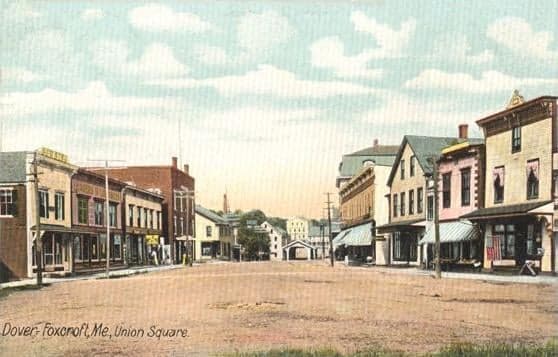
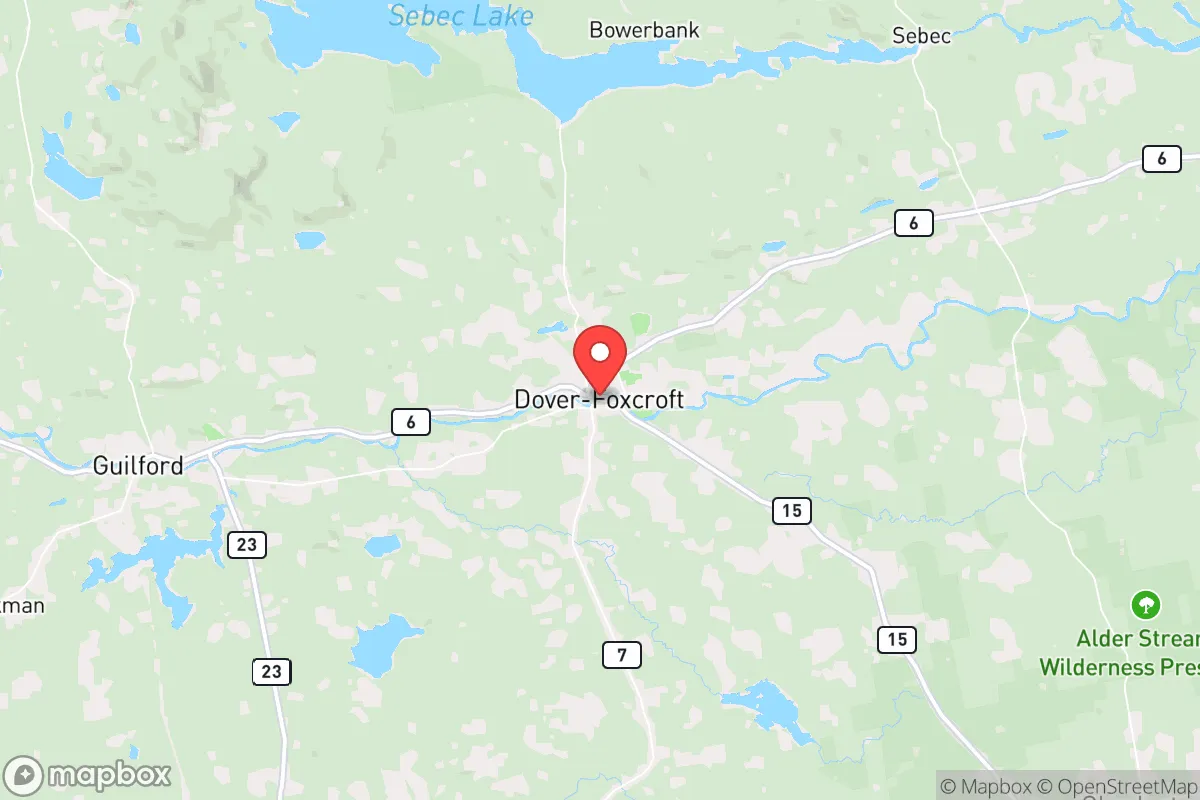
Photo: Wikipedia
Demographics of Dover-Foxcroft, ME
Affluence Level in Dover-Foxcroft, ME
A below-average socioeconomic profile. Incomes, home values, and educational attainment trail the U.S., with higher poverty and unemployment.
People of Dover-Foxcroft, ME
Today, Dover-Foxcroft is a predominantly white, close-knit community of 2,758 residents, where a strong sense of local identity is rooted in its rural Maine character and historic downtown. The population is notably less diverse than the national average, with 93.8% identifying as white and only 1.3% foreign-born, reflecting a community shaped by generations of families who have remained in the area. The town's character is defined by its role as the Piscataquis County seat, a hub for local government, small businesses, and outdoor recreation along the Piscataquis River. For those moving in now, Dover-Foxcroft offers a quiet, family-oriented lifestyle with a strong volunteer ethic, but limited demographic change and a modestly educated workforce (30.9% college educated) mean newcomers should expect a stable, slow-paced environment.
How the city was settled and grew
Dover-Foxcroft's population history begins with the original land grants to European settlers in the late 18th century, primarily of English and Scottish descent, who were drawn by the region's abundant timber and waterpower. The town was officially incorporated in 1812, and its growth was driven by the lumber industry, with mills springing up along the Piscataquis River. The original settlement clustered around what is now the Dover Village district, where the first sawmills and gristmills were built, and the nearby Foxcroft Village area, which developed as a separate commercial center before the two communities merged in 1922. A second wave of growth came in the mid-19th century with the arrival of Irish immigrants, who worked in the mills and built homes in the South Street neighborhood, near the river. By the early 20th century, the population peaked at around 4,000, supported by a thriving shoe and textile industry that attracted a small number of French-Canadian workers, who settled in the Pleasant Street area. These waves established a pattern of family-owned businesses and a strong community fabric that persists today.
Modern era (post-1965)
After the 1960s, Dover-Foxcroft experienced a gradual population decline as manufacturing jobs moved away, and the town's demographic makeup remained remarkably stable. The 1965 Hart-Cellar Act had little impact here; the foreign-born population remains at just 1.3%, and the town saw no significant influx of immigrants from Asia, Latin America, or the Indian subcontinent. Instead, domestic in-migration has been limited, with most new residents coming from other parts of Maine or nearby New England states, often retirees or families seeking a lower cost of living. These newcomers have tended to settle in the East Main Street corridor and the newer subdivisions like Birchwood Estates, which offer single-family homes on larger lots. The Hispanic population, at 2.5%, is the largest minority group, but it remains small and dispersed, with no concentrated ethnic neighborhood. The Black (0.8%) and East/Southeast Asian (0.1%) populations are negligible, and there is no recorded Indian subcontinent population. The town's cultural identity has remained firmly rooted in its rural, white, working-class heritage, with local events like the Piscataquis County Fair reinforcing a sense of continuity.
The future
Dover-Foxcroft's population is projected to remain stable or decline slightly over the next 10-20 years, mirroring broader trends in rural Maine. The town is not becoming more diverse; the white share is expected to stay above 90%, and the foreign-born population will likely remain under 2%. New residents will continue to be primarily domestic migrants from within Maine, drawn by affordable housing and a slower pace of life, and they will likely settle in the West Main Street area or the newer River Road developments. The town's cultural identity is evolving only slowly, with a growing emphasis on outdoor recreation and tourism, but the core values of self-reliance and community involvement remain strong. For someone moving in now, Dover-Foxcroft offers a predictable, low-diversity environment where integration is straightforward, but those seeking a multicultural or rapidly changing community will not find it here.
Dover-Foxcroft is becoming a stable, aging community that values its history and rural character, with little demographic change on the horizon. For a family or individual seeking a quiet, affordable, and safe place to live in central Maine, it offers a welcoming but homogeneous environment where newcomers are embraced for their willingness to participate in local life.

* Values derived from national, state, county, city and local statistics and may differ in a specific area. Last updated: 2026-11-21T14:21:35.000Z
Narrative content on this page is AI-generated and may contain mistakes. Verify any details that matter before acting on them.
ReloMaps may earn a commission from affiliate links at no extra cost to you.

