Political ClimatePolitical Climate in Dora, MO
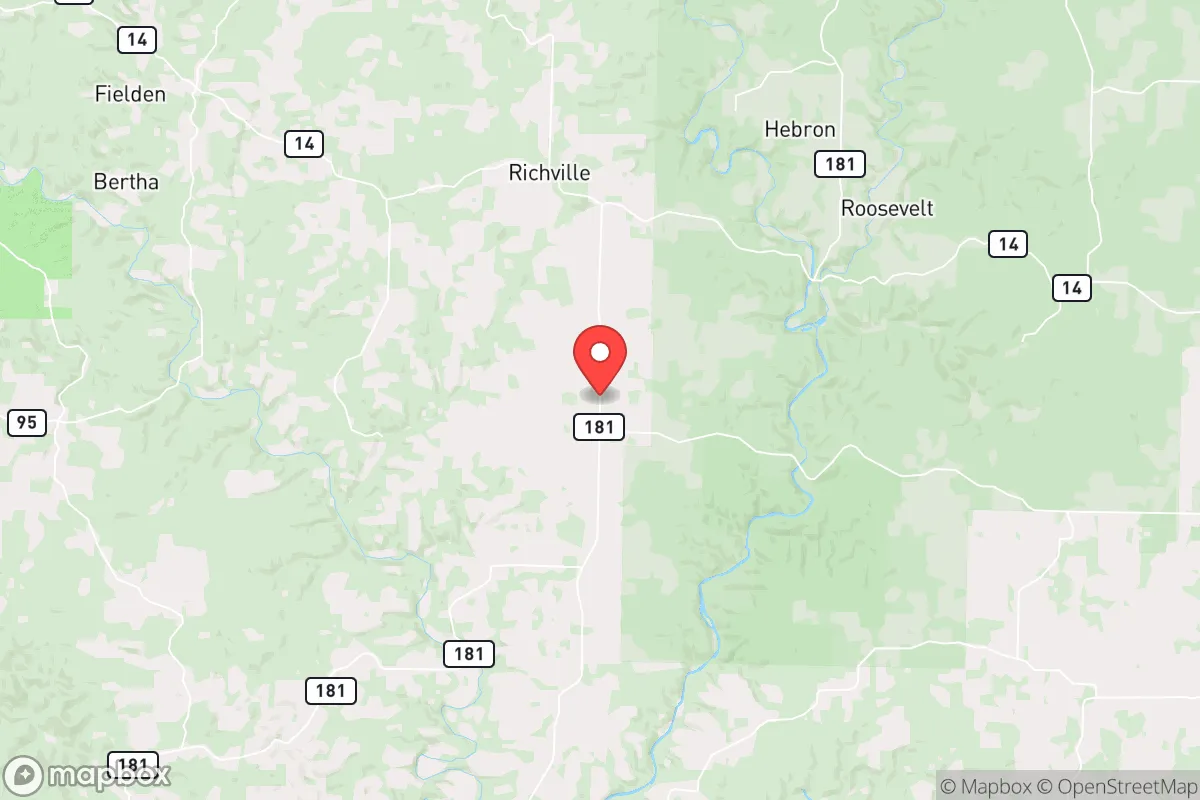
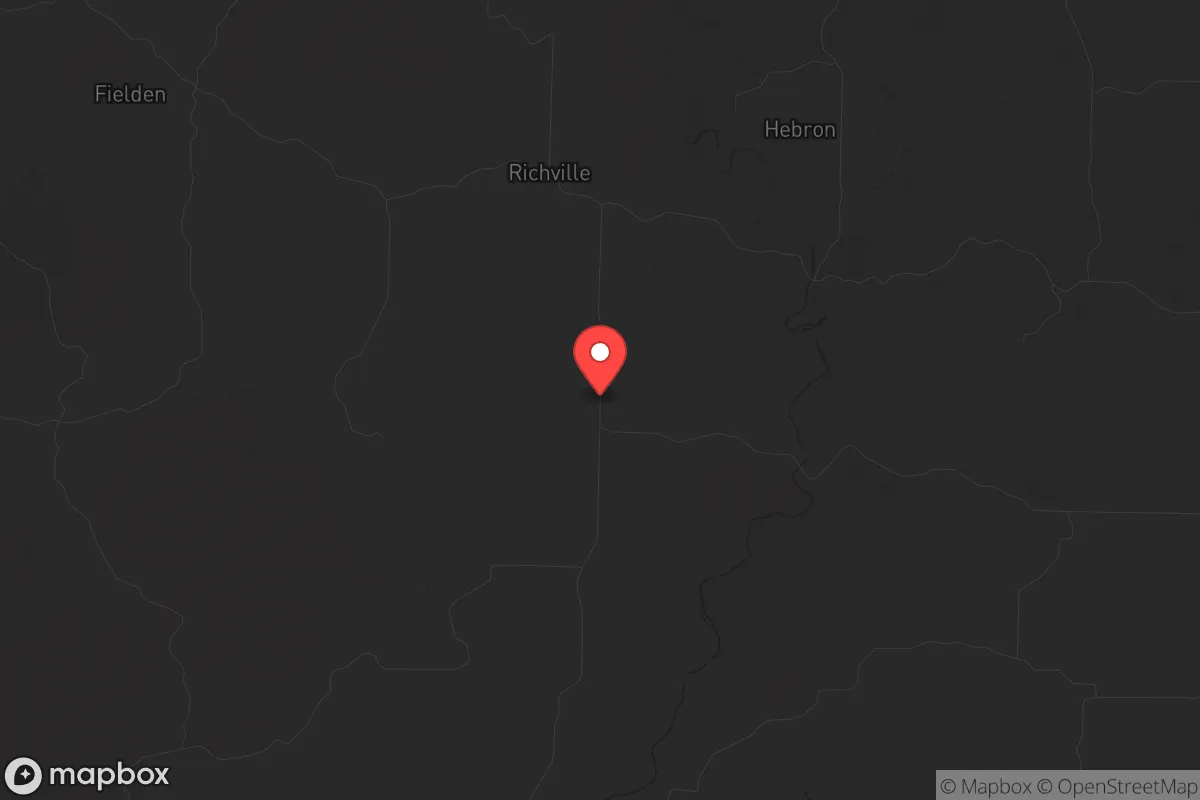
District shown is the primary district for this city’s centroid. Cities may span multiple districts.
Local Political AnalysisPolitical Analysis of Dora, MO
Dora, Missouri, sits deep in the heart of the Ozarks, and its politics reflect that isolation and tradition. With a Cook Partisan Voting Index (PVI) of R+27, this area is one of the most reliably Republican corners of the state—far more conservative than the state of Missouri as a whole, which sits at R+8. That’s not a subtle difference; it’s a chasm. In Dora, you’re looking at a place where registered Republicans often outnumber Democrats by more than three to one, and where a Democratic candidate winning a precinct here would be a genuine shock. The trajectory has been steady: this area has been getting redder, not bluer, as rural communities across the Ozarks have shifted even further right over the past decade, driven by cultural and economic concerns.
How it compares
To understand Dora’s politics, you have to look at the surrounding landscape. Drive 30 minutes east to West Plains (Howell County, R+33) and you’ll find an even more conservative pocket. Head 45 minutes north to Mountain Grove (Texas County, R+36) and the pattern holds. But the real contrast is with the state of Missouri itself. Missouri’s R+8 rating means it’s a solid red state, but one with competitive pockets—think the St. Louis suburbs (St. Louis County, D+15) or Boone County (home to Columbia, D+8). Dora, by contrast, is in Ozark County, which is R+27. That’s a difference of 19 points from the state average. In practical terms, a statewide candidate who wins Missouri by 8 points might lose Ozark County by 27. The last time a Democrat carried Ozark County was Lyndon B. Johnson in 1964, and that was a national landslide. Locally, the county commission, school board, and municipal offices are almost entirely held by Republicans, and that’s not expected to change anytime soon.
What this means for residents
For conservative residents, Dora is a comfortable place to live politically. Your views on taxes, gun rights, and limited government are the local norm. You’ll find that the local sheriff’s office, county clerk, and state representative (currently a Republican in the heavily gerrymandered 155th district) are all aligned with your values. For liberal residents, the reality is different. You’ll be in a distinct minority, and you’ll likely keep your political opinions to yourself in public settings. There’s no active Democratic party presence in Ozark County, and local elections are effectively decided in the Republican primary. That said, the area is not hostile in a personal sense—people are neighborly regardless of party, but the political culture is overwhelmingly conservative. You won’t find many “coexist” bumper stickers in the Walmart parking lot in nearby Gainesville.
One cultural distinction worth noting: Dora is part of the “Bible Belt” of the Ozarks, where church attendance is high and social conservatism is the baseline. This isn’t just about voting—it shapes local policy on things like alcohol sales (Ozark County is a “wet” county, but many precincts have voted to remain dry) and Sunday business hours. The area’s trajectory suggests it will only get more conservative as younger residents move to cities and retirees from other red states settle in. For anyone moving here, the key takeaway is simple: if you’re conservative, you’ll feel right at home. If you’re not, you’ll be a quiet minority, but the natural beauty and low cost of living might still make it worth the trade-off.

State Political ClimatePolitical Climate in Missouri
State Political AnalysisPolitical Environment in the State
Missouri is a solidly Republican state with a Cook PVI of R+8, but it’s not a monolith. The state has shifted rightward over the past two decades, driven by rural and exurban voters abandoning the Democratic Party, while the urban cores of St. Louis and Kansas City remain deep blue. If you’re moving here, you’ll find a state that votes reliably red in statewide races, but with a persistent, organized Democratic minority that keeps things competitive in the suburbs and along the I-70 corridor.
Urban vs. rural divide
The political map of Missouri is a classic tale of two Missouris. The urban centers—St. Louis City and County, Kansas City, and Columbia—vote overwhelmingly Democratic. In 2024, St. Louis City gave Democrats over 80% of the vote, while Kansas City and Columbia hovered around 70-75%. These metros are the engine of the state’s Democratic base, powered by younger, more diverse populations and strong union and academic communities. In contrast, the rural and exurban counties—like Christian County (outside Springfield), Franklin County (west of St. Louis), and Buchanan County (St. Joseph)—vote Republican by margins of 60-70% or more. The suburbs have been the real battleground. St. Charles County, once a swing area, has become reliably red, while Clay County (north of Kansas City) and Jackson County (excluding Kansas City proper) have trended toward Democrats, though they still lean Republican in most races. The divide is stark: drive 20 minutes outside any major city, and you’re in deep-red territory where Trump flags and “Let’s Go Brandon” signs are common.
Policy environment
Missouri’s policy environment is conservative, but with populist and libertarian streaks. The state has a flat income tax rate of 4.8% (down from 5.3% in 2023, with a trigger to drop to 4.5% if revenue targets are met). Sales taxes are moderate, but local jurisdictions can add their own, so rates vary from around 7% to over 10% in some cities. Property taxes are among the lowest in the nation, averaging about 0.8% of home value. The state is a right-to-work state (though voters repealed the law in 2018 via referendum, the legislature has since passed other union-limiting measures). Education policy is a flashpoint: Missouri has a robust charter school system in St. Louis and Kansas City, and a school choice program (the Missouri Empowerment Scholarship Accounts) that provides tax credits for private school tuition. The state’s constitutional amendment process is unusually accessible, allowing voters to directly enact laws—a feature that has produced both conservative (e.g., voter ID requirements) and liberal (e.g., Medicaid expansion) outcomes. Election laws are moderately restrictive: voter ID is required, absentee voting requires an excuse, and early voting is limited to two weeks before Election Day. The state does not have automatic voter registration.
Recent policy direction
Over the past five years, Missouri has moved decisively right on most fronts. In 2021, the legislature passed a constitutional carry law, allowing permitless concealed carry of firearms. The same year, it enacted a “Second Amendment Preservation Act” that purports to nullify federal gun laws—a measure that has been challenged in court and led to a standoff with the Biden administration. On abortion, Missouri became the first state to effectively ban the procedure after the Dobbs decision in 2022, with a trigger law that prohibits abortion except in medical emergencies. There is no exception for rape or incest. Parental rights have been strengthened: a 2022 law requires schools to notify parents of any “sexual or gender-related” instruction, and a 2023 law bans transgender girls from participating in girls’ sports. On education, the state has passed a “Critical Race Theory” ban in K-12 schools, though it is largely symbolic. Property rights are strong: Missouri is a “right to farm” state, with a constitutional amendment protecting agricultural practices from nuisance lawsuits. On privacy and surveillance, the state has no comprehensive data privacy law, but it does have a biometric privacy law that allows individuals to sue companies for unauthorized collection of biometric data. Voting access has tightened: in 2022, the legislature passed a voter ID law that also banned ballot drop boxes and limited absentee ballot assistance. The state’s medical marijuana program (approved by voters in 2018) is operational but relatively restrictive, with no home cultivation and a limited number of qualifying conditions. Recreational marijuana was legalized by voters in 2022, with sales beginning in early 2023.
Civil unrest & political movements
Missouri has a history of political flashpoints. The Ferguson protests in 2014, following the police shooting of Michael Brown, were a national catalyst for the Black Lives Matter movement and left a lasting scar on St. Louis-area race relations. Since then, protests have been smaller but persistent, particularly around police accountability and racial justice. On the right, the Missouri Freedom Caucus has become a powerful force in the state legislature, pushing for more aggressive conservative policies and often clashing with Republican leadership. Immigration politics are less visible here than in border states, but there have been local controversies: in 2023, the city of Springfield saw protests over a proposed immigrant detention center. There is no sanctuary city policy in any major Missouri city, though St. Louis and Kansas City have “welcoming city” ordinances that limit cooperation with federal immigration enforcement. Election integrity remains a hot-button issue: after the 2020 election, Missouri Republicans launched a “forensic audit” of the results in St. Louis County, which found no evidence of widespread fraud but fueled ongoing distrust. Secession or nullification rhetoric is mostly confined to fringe groups, though the Second Amendment Preservation Act represents a real, if legally dubious, attempt at nullification. A new resident would notice the political divide most acutely in the suburbs: in St. Charles County, you’ll see “Don’t Tread on Me” flags and campaign signs for conservative candidates; in Clay County, you’ll see more yard signs for Democrats and local progressive causes.
Projection
Over the next 5-10 years, Missouri is likely to remain solidly Republican, but the margins could narrow slightly. The state’s population is aging and growing slowly, with most growth happening in the conservative exurbs (like St. Charles County and Christian County) and the liberal urban cores. The suburbs are the key: as St. Louis County continues to diversify and Kansas City’s suburbs attract younger, more educated transplants, Democrats may gain ground in state legislative races. However, the rural vote is so lopsided that it will take a major demographic shift to flip the state’s electoral votes. The biggest wildcard is the state’s initiative process: if voters continue to use it to enact liberal policies (like Medicaid expansion and marijuana legalization), the legislature may try to make it harder to amend the constitution. Expect continued fights over abortion, education funding, and gun rights. For a new resident, the political climate will feel stable but polarized—you’ll know which side your neighbors are on, and you’ll see the effects of conservative policy in your tax bill and your kids’ school curriculum.
Bottom line for a new resident: If you’re a conservative, you’ll find a state that largely aligns with your values—low taxes, strong gun rights, and a government that prioritizes parental control and religious liberty. If you’re a liberal, you’ll find vibrant, progressive communities in St. Louis, Kansas City, and Columbia, but you’ll be living under a state government that is actively working against many of your policy preferences. The practical takeaway is that your experience will depend heavily on where you live: the urban cores feel like blue islands in a red sea, while the suburbs and rural areas are deeply conservative. Plan your move accordingly.
* Values derived from national, state, county, city and local statistics and may differ in a specific area. Last updated: 2026-09-07T02:10:32.000Z
Narrative content on this page is AI-generated and may contain mistakes. Verify any details that matter before acting on them.
ReloMaps may earn a commission from affiliate links at no extra cost to you.

