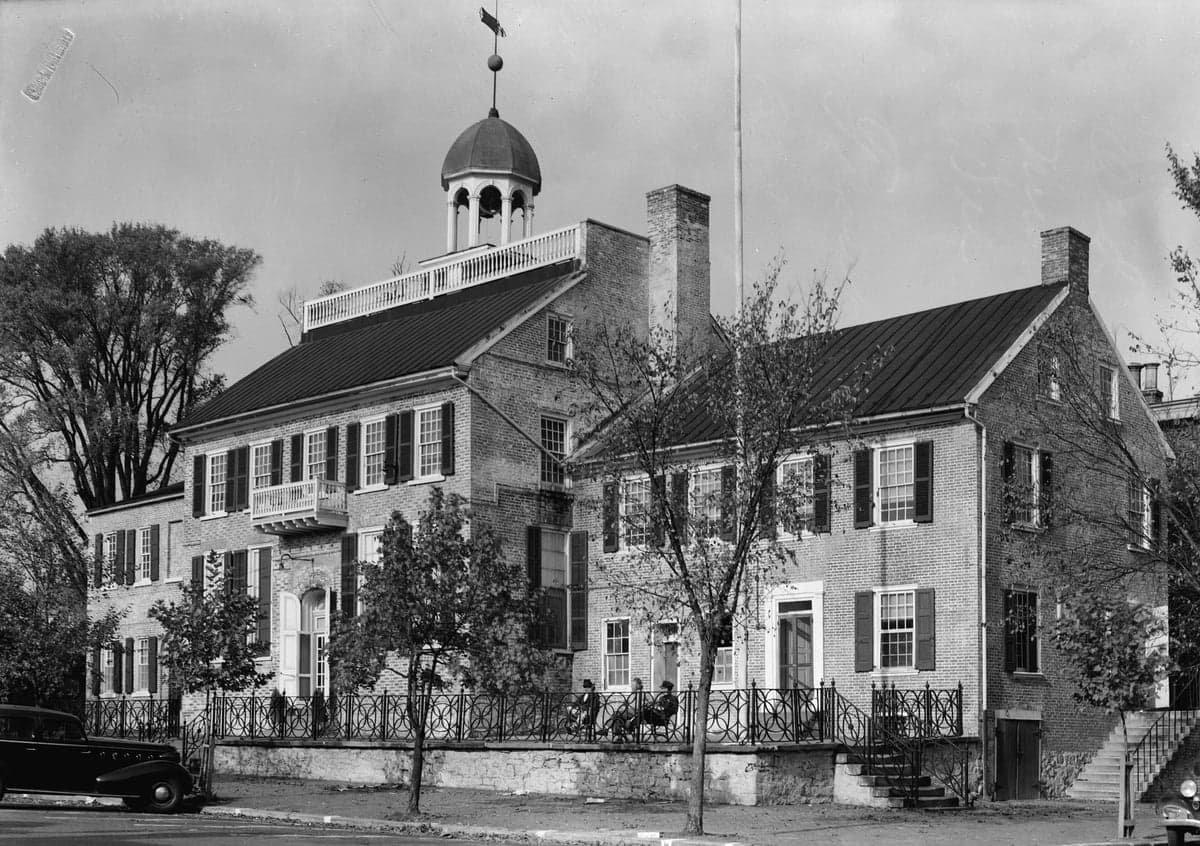
Photo: Wikipedia
Political ClimatePolitical Climate in New Castle County
Showing state-level results — no local-only data available.
Local Political AnalysisPolitical Analysis of New Castle County
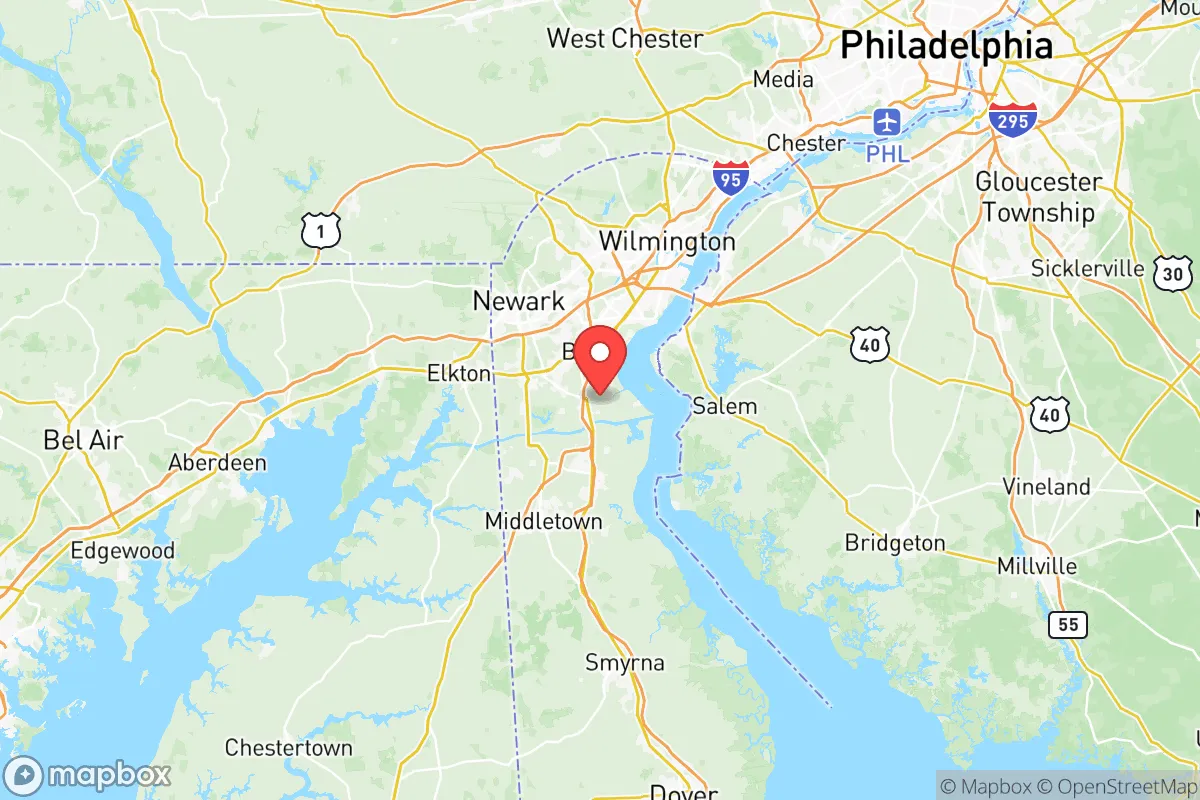
New Castle County is the solid blue anchor of Delaware politics, carrying a Cook PVI of D+8 that mirrors the state's overall partisan lean. In practice, this means Democrats reliably win countywide races by comfortable margins, but the political reality on the ground is far more nuanced than a single number suggests. The county's trajectory has been steadily Democratic since the early 2000s, driven by suburban growth around Wilmington and an influx of professionals and families into areas like Newark and Middletown, though conservative pockets remain in the rural northern and southern fringes.
How it compares
At first glance, New Castle County and Delaware share the same D+8 PVI, making the county a perfect microcosm of the state's overall political balance. But the comparison gets more interesting when you zoom in. The county's Democratic strength is concentrated in the urban core of Wilmington and the inner-ring suburbs of Arden, Ardentown, and Ardencroft, where precincts routinely deliver 70-80% of the vote to Democratic candidates. Meanwhile, the western and southern parts of the county tell a different story. Hockessin and Greenville lean Republican, often voting 55-60% for GOP candidates, while Middletown has become a genuine swing area — its fast-growing subdivisions and commuter population have made it one of the few places in the county where either party can win a close race. The rural stretches near the Maryland border, around Port Penn and Odessa, are reliably red, though their small populations limit their electoral impact. This internal diversity means the county's D+8 label masks a real urban-suburban-rural divide that shapes local policy debates.
What this means for residents
For liberal residents, the Democratic lean translates into consistent policy alignment on issues like environmental regulation, public transit investment, and social services. The county government, led by County Executive Matt Meyer (a Democrat), has pushed initiatives like the Clean Water for Delaware program and expanded pre-K access, reflecting the priorities of its majority-Democratic electorate. Conservative residents, however, are not politically isolated. In towns like Hockessin and Greenville, Republican voters hold significant influence in local school board races and municipal elections, and the county's moderate Democratic establishment often courts their support on fiscal matters. The practical effect is that while statewide elections are rarely competitive, local governance tends toward pragmatism — tax rates remain moderate, development is managed carefully, and both parties find room to negotiate on issues like infrastructure and public safety.
Culturally, New Castle County stands apart from the rest of Delaware in its density, diversity, and pace of life. Wilmington's arts scene, the University of Delaware in Newark, and the corporate presence of companies like DuPont and AstraZeneca give the county a more cosmopolitan feel than the rural stretches of Kent and Sussex counties. Policy-wise, the county has been an early adopter of progressive measures — it was the first in Delaware to implement a paid leave ordinance for county employees and has stricter stormwater management rules than the state requires. For residents, this means a political environment where the Democratic majority sets the agenda, but the county's internal variation ensures that no single viewpoint goes unheard.

State Political ClimatePolitical Climate in Delaware
State Political AnalysisPolitical Environment in the State
Delaware is a solidly Democratic state with a Cook PVI of D+8, but that number masks a more nuanced reality than a simple blue-state label suggests. The state has shifted leftward over the past 20 years, driven primarily by the growth of the northern suburbs of Wilmington and the influx of professionals from the Philadelphia and New York metros. However, the southern two-thirds of the state — Kent and Sussex counties — remain reliably Republican, creating a sharp urban-rural split that defines nearly every political debate in the First State.
Urban vs. rural divide
The political map of Delaware is essentially a tale of three counties. New Castle County, home to Wilmington and its affluent suburbs like Greenville and Hockessin, is the Democratic stronghold, delivering margins of 60-70% in statewide races. This is where the state's population and economic activity are concentrated, and it drives the overall blue lean. In contrast, Sussex County, which includes the beach towns of Rehoboth Beach and Lewes, votes reliably Republican, though the coastal areas are becoming more competitive as retirees and second-home owners move in. Kent County, anchored by the capital Dover, is a true swing county — Dover itself leans Democratic due to its diverse population and state government workforce, but the surrounding agricultural areas are deeply red. The divide is stark: drive 20 minutes south of Dover into Milford or Harrington, and you'll find Trump signs and conservative values that feel a world away from the liberal enclaves of northern New Castle County.
Policy environment
Delaware's policy environment reflects its Democratic control of the governorship and both legislative chambers, but with a moderate, business-friendly twist that keeps it from being a progressive laboratory. The state has no sales tax, which is a major draw for conservatives, but its income tax rates are relatively high — topping out at 6.6% — and property taxes are low compared to neighboring states like New Jersey and Pennsylvania. The regulatory posture is generally pro-business, especially for the financial and legal sectors that dominate the Wilmington economy, thanks to the Court of Chancery's influence on corporate law. Education policy is a mixed bag: the state has a strong charter school presence, including the highly regarded Charter School of Wilmington, but public school funding disparities between wealthy northern suburbs and poorer rural districts remain a persistent issue. Healthcare policy leans left, with the state expanding Medicaid under the ACA and enacting a paid family leave program in 2022. Election laws are among the most accessible in the country — no-excuse absentee voting, same-day registration, and early voting are all available, which conservatives often criticize as lacking security but which Democrats defend as expanding access.
Recent policy direction
Over the past five years, Delaware has moved decisively left on several fronts, though not as aggressively as states like New York or California. In 2022, the legislature passed the Delaware Reproductive Healthcare Act, codifying abortion rights into state law and removing waiting periods and mandatory counseling — a direct response to the Dobbs decision. Gun laws have tightened significantly: the state enacted a permit-to-purchase requirement for handguns, banned "assault weapons" and high-capacity magazines in 2022, and passed a red flag law in 2018. These measures are deeply unpopular in Sussex and Kent counties, where gun ownership is a cultural norm. On education, the state has expanded parental rights in some areas — requiring parental notification for certain school health services — but stopped short of the broader "parents' bill of rights" laws seen in red states. Privacy and surveillance laws are relatively weak; Delaware has no comprehensive data privacy law like California's, though it did pass a biometric privacy law in 2023. Property rights are generally respected, but the state's slow-moving land use process in New Castle County can frustrate developers. On voting, the state has moved toward universal mail-in ballots, though a 2024 court challenge temporarily blocked that expansion. For a conservative relocator, the bottom line is that Delaware is trending left on social issues, but its tax structure and business climate remain comparatively friendly.
Civil unrest & political movements
Delaware is not a hotbed of civil unrest, but it has seen its share of political flashpoints. The 2020 Black Lives Matter protests in Wilmington were large and occasionally violent, leading to property damage and a heavy police response that drew criticism from activists. On the right, the Delaware GOP has become more populist and Trump-aligned in recent years, with grassroots groups like the Sussex County Republican Club pushing for stricter election integrity measures and opposing vaccine mandates. Immigration politics are relatively quiet — Delaware is not a border state and has no major sanctuary city policies, though Wilmington has a "welcoming city" ordinance that limits cooperation with federal immigration enforcement. There is no serious secession or nullification movement, though some rural conservatives have floated the idea of splitting Sussex County into its own state — a fringe notion that gains no traction. Election integrity has been a recurring issue: the 2020 election saw no major fraud in Delaware, but Republican activists continue to push for voter ID laws, which Democrats have blocked. The most visible flashpoint for a new resident would likely be the annual debate over gun laws, which dominates local politics in a way that surprises newcomers from less polarized states.
Projection
Over the next 5-10 years, Delaware will likely continue its slow leftward drift, driven by demographic trends that favor Democrats. The northern suburbs of Wilmington are growing faster than the rural south, and the influx of remote workers from the Northeast — many of whom are younger and more liberal — is accelerating this shift. The beach towns in Sussex County are also becoming more purple, as retirees from blue states bring their politics with them. However, the state's small size and strong sense of local identity mean that change happens incrementally, not in waves. A conservative moving to Delaware today should expect to find a state where their vote in statewide races will be in the minority, but where their voice in local government — especially in Kent or Sussex counties — can still carry real weight. The tax advantages and business-friendly climate are unlikely to disappear, but social policies will continue to move left, particularly on gun control and reproductive rights. The wild card is the state's budget: Delaware faces long-term pension liabilities and infrastructure needs that could force tax increases, which would erode one of its key conservative selling points.
For a new resident, the practical takeaway is that Delaware offers a genuine compromise: low property taxes, no sales tax, and a pro-business legal environment, paired with increasingly liberal social policies and a Democratic-dominated state government. If you're a conservative who values fiscal restraint and personal liberty but can tolerate a blue social landscape, Delaware can work well — especially if you settle in the southern counties or the more moderate parts of Kent County. If you're looking for a state where your vote consistently wins, you'll want to look elsewhere. But if you want a place where you can live affordably, run a business, and still have access to the cultural and economic opportunities of the Northeast corridor, Delaware is a surprisingly livable middle ground.
* Values derived from national, state, county, city and local statistics and may differ in a specific area. Last updated: 2026-06-17T15:01:38.000Z
Narrative content on this page is AI-generated and may contain mistakes. Verify any details that matter before acting on them.
ReloMaps may earn a commission from affiliate links at no extra cost to you.

