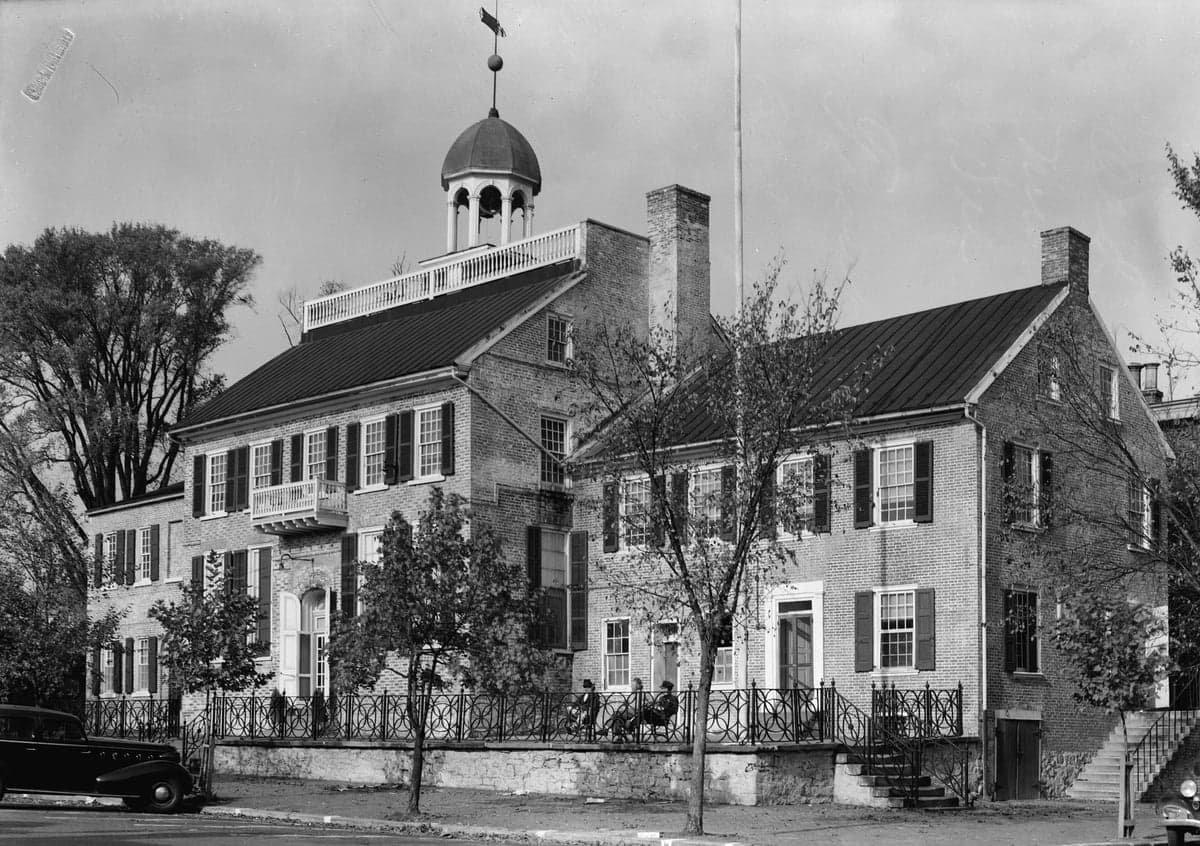
Photo: Wikipedia
Personal Sovereignty in New Castle County
Viable for self-reliance. Generally workable, though some barriers may limit total independence.
What does Personal Sovereignty tell us?
Personal Sovereignty measures your capacity for self-reliance and independence with minimal government friction. Higher scores mean fewer barriers between you and the way you want to live... but it assumes you have the space you need and good neighbors.
What does this tell us?
Personal Sovereignty measures your capacity for self-reliance and independence with minimal government friction. Higher scores mean fewer barriers between you and the way you want to live... but it assumes you have the space you need and good neighbors.
State Policy
Energy independence: Importer (2% of energy produced in-state)
Personal Liberty
Homesteading

Personal Liberty Analysis
New Castle County presents a complex personal sovereignty environment where state-level progressive policies often override local preferences, creating a regulatory landscape that leans heavily toward collective governance over individual autonomy. As Delaware's most populous county, home to over 570,000 residents across cities like Wilmington, Newark, Middletown, and the suburban corridor along I-95, the area offers limited room for the kind of self-directed living found in less densely regulated parts of the country. For a conservative-leaning individual or family weighing personal freedom, the county's tax structure, gun laws, homesteading feasibility, and civil liberties all carry significant trade-offs that demand careful consideration before relocation.
Tax burden and regulatory climate for residents and businesses
Delaware's overall tax posture is a mixed bag for those prioritizing financial autonomy. The state imposes no sales tax, which provides a meaningful advantage for day-to-day purchasing power, but personal income tax rates range from 2.2% to 6.6%, with the top bracket hitting relatively modest incomes compared to other states. New Castle County adds its own layer: a county-level realty transfer tax of 1% on property sales and a documentary stamp tax that effectively raises transaction costs. Property taxes in the county are moderate by regional standards, typically falling between 0.5% and 0.8% of assessed value, though assessments have been rising steadily. The regulatory environment is notably heavier than in Sussex or Kent counties. Zoning in Newark and the Wilmington suburbs tends to be prescriptive, with extensive permitting requirements for home-based businesses, accessory dwelling units, and property modifications. The state's corporate-friendly reputation—Delaware is the legal home for over 60% of Fortune 500 companies—does not extend to individual regulatory relief. Environmental regulations, building codes, and land-use restrictions in New Castle County are among the most stringent in the state, reflecting the area's denser population and progressive governance structure.
Self-defense rights and gun law specifics in New Castle County
Delaware's firearm laws have tightened considerably in recent years, and New Castle County is the epicenter of that shift. The state now requires a permit to purchase a handgun, imposes a 10-day waiting period, and bans so-called assault weapons and magazines over 17 rounds. Delaware is a may-issue state for concealed carry, meaning local authorities have discretion in granting permits, though a 2023 law removed the requirement for a permit to carry a concealed firearm in most public places—a change that has been challenged in court. In practice, New Castle County's permitting process is more administratively burdensome than in Kent or Sussex counties, with longer wait times and more rigorous background checks. Open carry is legal but uncommon, and local ordinances in Wilmington and Newark impose additional restrictions on carrying in municipal parks and public buildings. For self-defense-minded residents, the practical reality is that the legal landscape is less permissive than in neighboring Pennsylvania or Maryland's Eastern Shore, and the political climate in the county's urban core is actively hostile to expanded gun rights. Rural areas near the county's western edge, around places like Hockessin and Yorklyn, tend to have more firearm-friendly social norms, but they remain subject to the same state-level restrictions.
Self-reliance and homesteading viability: lot sizes, zoning, and off-grid feasibility
New Castle County's dense development pattern makes traditional homesteading difficult for most residents. Minimum lot sizes in the suburban and urban zones are typically one-quarter to one-half acre, with agricultural zoning requiring at least 10 acres in the county's rural preservation areas. The county's Unified Development Code imposes strict limits on livestock, with chickens permitted only on lots of one acre or more and larger animals like goats or horses requiring at least three acres. Off-grid living is effectively illegal in most of the county: all dwellings must be connected to public water and sewer where available, and the state's building code requires grid-tied electrical systems for new construction. Solar panels are permitted but must comply with utility interconnection standards. Rainwater collection is legal but limited to 1,100 gallons per property without a permit. The areas most viable for self-reliant living are the rural western fringe—towns like Middletown, Townsend, and the unincorporated areas near the Maryland border—where larger parcels and more lenient enforcement create breathing room. Even there, however, state environmental regulations on well water, septic systems, and wetland buffers impose significant constraints. For someone seeking true off-grid independence, New Castle County is a poor fit compared to Delaware's southern counties or neighboring states with looser land-use rules.
Personal liberties: parental rights, medical autonomy, speech, and property
Delaware's legal framework generally prioritizes state authority over individual or parental discretion in several key areas. The state mandates comprehensive sex education in public schools, with no opt-out for specific content—only a general exemption from the entire program. Vaccine requirements for school attendance are strict, with no philosophical exemption and a narrow medical exemption process. During the COVID-19 pandemic, Delaware was among the most aggressive states in imposing mandates, and New Castle County's school districts, including Christina and Red Clay Consolidated, were early adopters of mask and vaccine requirements. Medical autonomy is further constrained by the state's certificate-of-need laws, which limit the availability of independent healthcare providers and can restrict treatment options. On property rights, Delaware's eminent domain authority is broad, and the state's coastal zone act gives regulators significant power over land use within two miles of tidal waters—a provision that affects much of eastern New Castle County. Parental rights in education have become a flashpoint, with the state legislature passing laws that limit local school board authority and mandate specific curricula. Speech protections follow the First Amendment baseline, but the state's hate crime statutes and anti-discrimination laws create legal exposure for certain forms of expression. For a conservative-leaning family, the cumulative effect is a governance environment that consistently favors state-level uniformity over local or individual discretion.
Compared to other mid-Atlantic counties, New Castle County ranks as one of the more restrictive environments for personal sovereignty, particularly in the areas of self-defense, land use, and parental rights. The tax burden is moderate but paired with a regulatory apparatus that leaves little room for individual deviation from state and county standards. For a relocation-minded conservative, the county's urban and suburban zones offer convenience and economic opportunity at the cost of significant personal autonomy. The rural western towns—Middletown, Townsend, and the agricultural pockets near the Maryland line—provide marginally more breathing room, but they remain under the same state-level constraints that define Delaware's governance model. For those who prioritize maximum personal freedom, the southern counties of Kent and Sussex, or neighboring states like Pennsylvania and West Virginia, offer substantially more latitude across nearly every dimension of self-directed living.

* Values derived from national, state, county, city and local statistics and may differ in a specific area. Last updated: 2026-06-17T15:01:38.000Z
Narrative content on this page is AI-generated and may contain mistakes. Verify any details that matter before acting on them.
ReloMaps may earn a commission from affiliate links at no extra cost to you.

