
Photo: Wikipedia
Political ClimatePolitical Climate in Davidsonville, MD
District shown is the primary district for this city’s centroid. Cities may span multiple districts.
Political rankings in Maryland
- Most Conservative Cities in Maryland
- Most Liberal Cities in Maryland
- Best Conservative-Leaning Towns in the Mid-Atlantic
- Safest Liberal-Leaning Towns on the East Coast
- Safest Conservative-Leaning Towns on the East Coast
- Affordable Small Towns for Conservatives
- Most Affordable Liberal-Leaning Small Towns in the U.S.
- Safest Liberal-Leaning Cities in the U.S.
- Most Conservative Counties in Maryland
- Most Liberal Counties in Maryland
Local Political AnalysisPolitical Analysis of Davidsonville, MD
Davidsonville, Maryland, is a reliably Democratic area that mirrors the statewide political lean almost exactly, with a Cook Partisan Voting Index (PVI) of D+17. This means the area votes about 17 points more Democratic than the national average, a figure that has held steady in recent cycles. While the surrounding Anne Arundel County has seen some suburban shifts, Davidsonville itself remains a solid blue dot, with local elections often decided in the Democratic primary rather than the general election. The trajectory here is one of stability rather than dramatic change, though the growing influence of nearby Annapolis and the Washington, D.C., exurbs continues to reinforce the area’s progressive lean.
How it compares
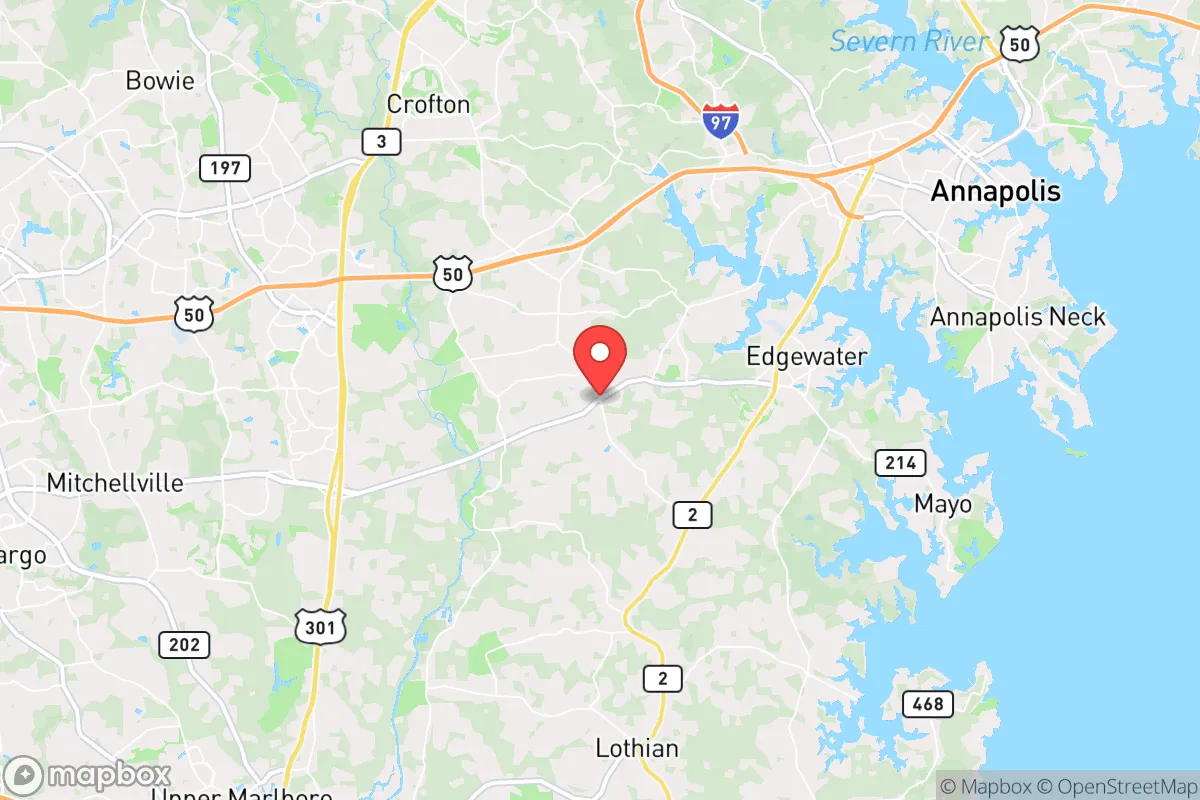
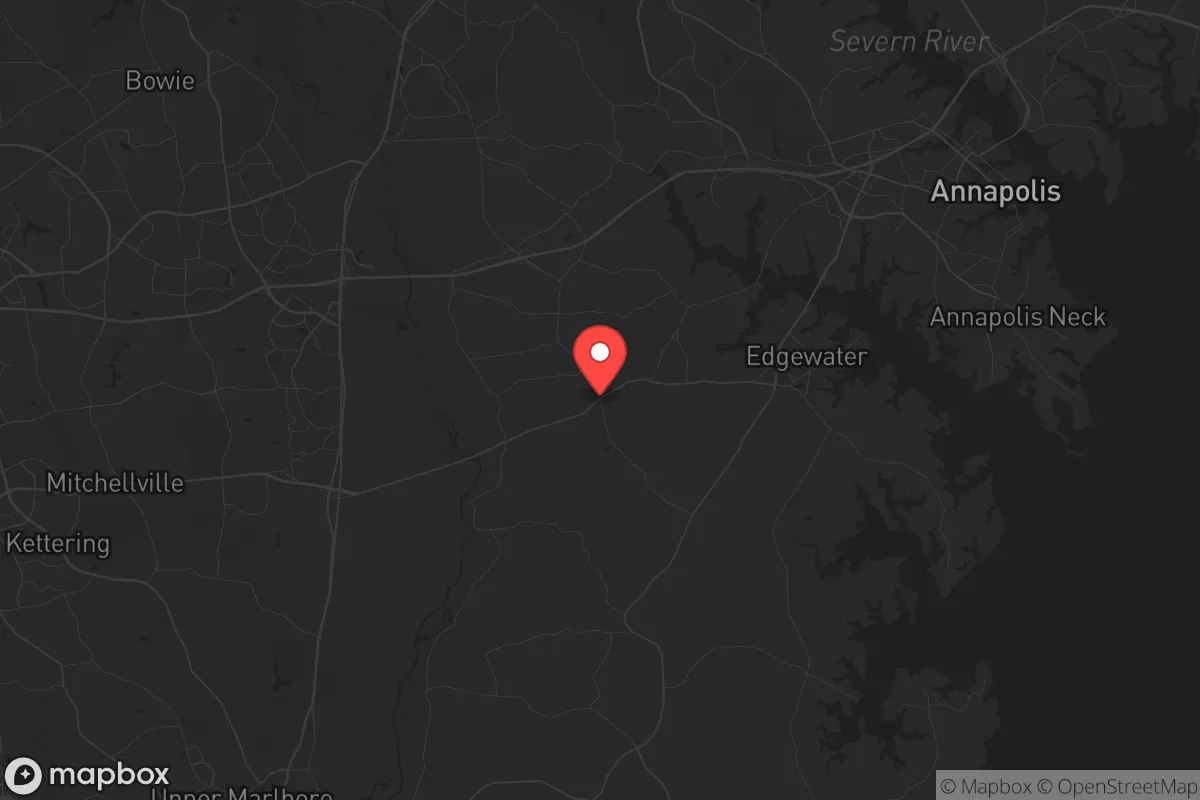
Davidsonville’s D+17 PVI is identical to the statewide Maryland PVI of D+17, making it a perfect bellwether for the state’s overall political complexion. However, this uniformity masks sharp contrasts with nearby communities. Just a few miles north, the city of Annapolis leans even more Democratic, while rural areas like Lothian and parts of southern Anne Arundel County trend more conservative, often voting Republican in local races. To the west, Bowie and Crofton also lean Democratic but with slightly less intensity, while towns like Edgewater and Mayo show a more mixed pattern. For a conservative resident, Davidsonville can feel like a political island, surrounded by even bluer suburbs and the deep-blue state capital. For a liberal resident, it’s a comfortable fit, though the lack of a strong Republican opposition can sometimes make local politics feel less competitive and more insular.
What this means for residents
For liberal residents, Davidsonville’s political climate means local policies generally align with their values—strong environmental regulations, support for public education, and progressive zoning laws. The area’s Democratic lean also means that state-level initiatives, like Maryland’s recent police reform and paid family leave laws, are broadly supported here. For conservative residents, the reality is more about navigating a landscape where their views are a minority. They often find their voice in local civic associations or through the county’s Republican Party, which remains active but rarely wins countywide office. The practical impact is that conservative residents may feel their property taxes and land-use decisions are shaped by a majority that doesn’t share their fiscal priorities, but they also benefit from the area’s high-quality schools and well-funded public services, which are hallmarks of the Democratic governance they might oppose.
A key cultural distinction in Davidsonville is its strong sense of local identity, which transcends party lines. The area’s rural character—with horse farms, large lots, and a slower pace—creates a shared appreciation for land preservation and limited development, even if residents disagree on how to achieve it. This means that while national politics can feel divisive, local issues like school funding, traffic management, and farmland conservation often see bipartisan cooperation. Looking ahead, the area’s political trajectory is likely to remain steady, with the D+17 lean persisting as long as the broader D.C. metro area continues to attract a diverse, educated, and Democratic-leaning population. For anyone moving here, the takeaway is clear: Davidsonville is a place where your vote will align with the state’s majority, but where local life is shaped more by the land than by the party line.

State Political ClimatePolitical Climate in Maryland
State Political AnalysisPolitical Environment in the State
Maryland is one of the most reliably Democratic states in the country, with a Cook Partisan Voting Index of D+17, meaning it votes about 17 points more Democratic than the national average in presidential elections. The state hasn’t voted for a Republican presidential candidate since George H.W. Bush in 1988, and Democrats hold a supermajority in the General Assembly and every statewide office. Over the last 10-20 years, the shift has been steady and pronounced: the once-competitive suburbs of Baltimore and Washington, D.C., have moved sharply left, while the rural eastern and western edges have become more Republican, creating a widening urban-rural chasm.
Urban vs. rural divide
The political map of Maryland is a tale of two worlds. The entire Democratic margin is generated by the densely populated Washington, D.C., suburbs — Montgomery County and Prince George’s County — plus the city of Baltimore. Montgomery alone cast over 400,000 votes for Joe Biden in 2020, more than the entire population of the state’s most Republican county. Prince George’s is the wealthiest majority-Black county in the U.S. and votes about 90% Democratic. Baltimore City, despite population loss, still delivers huge Democratic margins. Meanwhile, the Eastern Shore counties like Worcester and Queen Anne’s, along with western Maryland’s Garrett County and Allegany County, vote Republican by 30-40 points. The suburbs of Anne Arundel County (home to Annapolis) and Howard County have trended blue over the past decade, while Frederick County — once a swing area — is now reliably Democratic. The only real battleground left is Baltimore County, where the northern and eastern parts remain competitive, but the county as a whole has shifted left since 2016.
Policy environment
Maryland’s policy environment is consistently progressive. The state has a graduated income tax with rates up to 5.75%, plus county-level income taxes that push the combined top rate over 8% in most jurisdictions. Property taxes are moderate but vary widely by county. Sales tax is 6%, with no tax on groceries or prescription drugs. The regulatory posture is business-friendly in some sectors (biotech, cybersecurity) but heavy on labor and environmental rules. Education spending is among the highest per pupil in the nation, anchored by the Blueprint for Maryland’s Future law, which pours billions into K-12. Healthcare is dominated by the state’s own exchange and expanded Medicaid. Election laws are among the most accessible in the country: no-excuse mail-in voting, same-day registration, early voting, and automatic voter registration. Gun laws are strict — a “may issue” concealed carry regime was only loosened after the Supreme Court’s Bruen decision, and the state responded by passing a law requiring a handgun qualification license, a 10-round magazine limit, and a ban on many semi-automatic rifles. Abortion is codified into state law with no gestational limits, and the state has a shield law protecting providers who serve out-of-state patients.
Recent policy direction
The last five years have seen Maryland accelerate leftward on nearly every front. In 2023, the legislature passed the Gun Safety Act, which bans firearms in most public places, requires a state license to purchase a handgun, and restricts magazine capacity to 10 rounds — a law currently being challenged in federal court. On education, the Blueprint for Maryland’s Future (2021) commits the state to massive spending increases, universal pre-K, and teacher salary hikes, funded by a new digital advertising tax and higher income taxes on top earners. Parental rights have been a flashpoint: the state passed a law requiring school districts to adopt policies that affirm LGBTQ+ students, including allowing them to use preferred names and pronouns without parental consent, which has drawn sharp criticism from conservative families. On medical freedom, Maryland was one of the first states to pass a shield law protecting gender-affirming care for minors traveling from states where it’s banned. Property rights are constrained by some of the strongest growth-control and environmental land-use laws in the country, particularly in the Chesapeake Bay watershed. Voting access has been expanded with automatic voter registration at the DMV and same-day registration on Election Day. The overall direction is toward a high-tax, high-service state with strong regulatory oversight and a clear tilt toward individual rights on social and medical issues — but with corresponding limits on gun rights and parental opt-outs.
Civil unrest & political movements
Maryland has a history of visible political activism, though it rarely reaches the intensity of neighboring D.C. The 2015 Baltimore protests after the death of Freddie Gray saw days of unrest, arson, and a state of emergency, and the city’s relationship with law enforcement remains a live issue. More recently, the 2020 George Floyd protests were large and widespread, particularly in Baltimore and the D.C. suburbs. On the right, the “We the People” movement and local Republican clubs are active in rural counties, and there have been organized efforts to push back on school curriculum and library books, especially in Carroll County and Harford County. Immigration politics are less heated than in border states, but the D.C. suburbs are home to large immigrant communities, and the state has a sanctuary law limiting local cooperation with federal immigration enforcement. Election integrity controversies have been muted compared to other states, though some rural counties passed symbolic resolutions questioning the 2020 results. A new resident would notice the political divide most in the stark difference between the liberal, diverse, affluent suburbs and the conservative, rural, older communities — it’s a state where you can drive 30 minutes and feel like you’ve crossed into a different country.
Projection
Over the next 5-10 years, Maryland is likely to become even more Democratic. In-migration is driven by the expansion of the federal government and the defense/cyber sector around Fort Meade and Aberdeen Proving Ground, bringing in a highly educated, diverse workforce that leans left. The rural counties are aging and losing population, while the D.C. suburbs continue to grow. The only wild card is the potential for a Republican governor — Larry Hogan won twice in this deep-blue state by running as a moderate — but the legislature’s supermajority means policy direction won’t change much regardless. Expect continued expansion of the Blueprint education spending, tighter gun laws, and more protections for abortion and transgender rights. The tax burden is unlikely to decrease, and property taxes in growing counties will rise with demand. A conservative moving in should expect to live in a state where their vote is unlikely to affect presidential or Senate outcomes, but where local elections in their county or town can still be competitive. A liberal moving in will find a state that largely aligns with their values, but with a high cost of living and a tax system that funds generous services.
For a new resident, the bottom line is this: Maryland is a deeply blue state where your daily experience will be shaped more by your county than by Annapolis. If you’re conservative, you’ll find like-minded communities in the rural counties and some Baltimore suburbs, but you’ll be living under state laws that are consistently progressive. If you’re liberal, you’ll find a state that is actively building the policy infrastructure you want, but you’ll pay for it. The political climate is stable, predictable, and unlikely to surprise you — for better or worse.
* Values derived from national, state, county, city and local statistics and may differ in a specific area. Last updated: 2026-11-24T12:33:08.000Z
Narrative content on this page is AI-generated and may contain mistakes. Verify any details that matter before acting on them.
ReloMaps may earn a commission from affiliate links at no extra cost to you.

