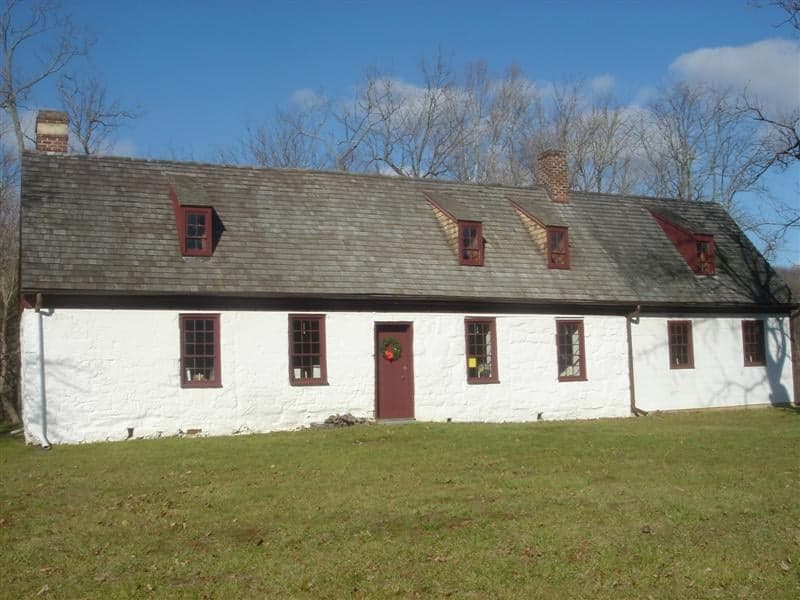
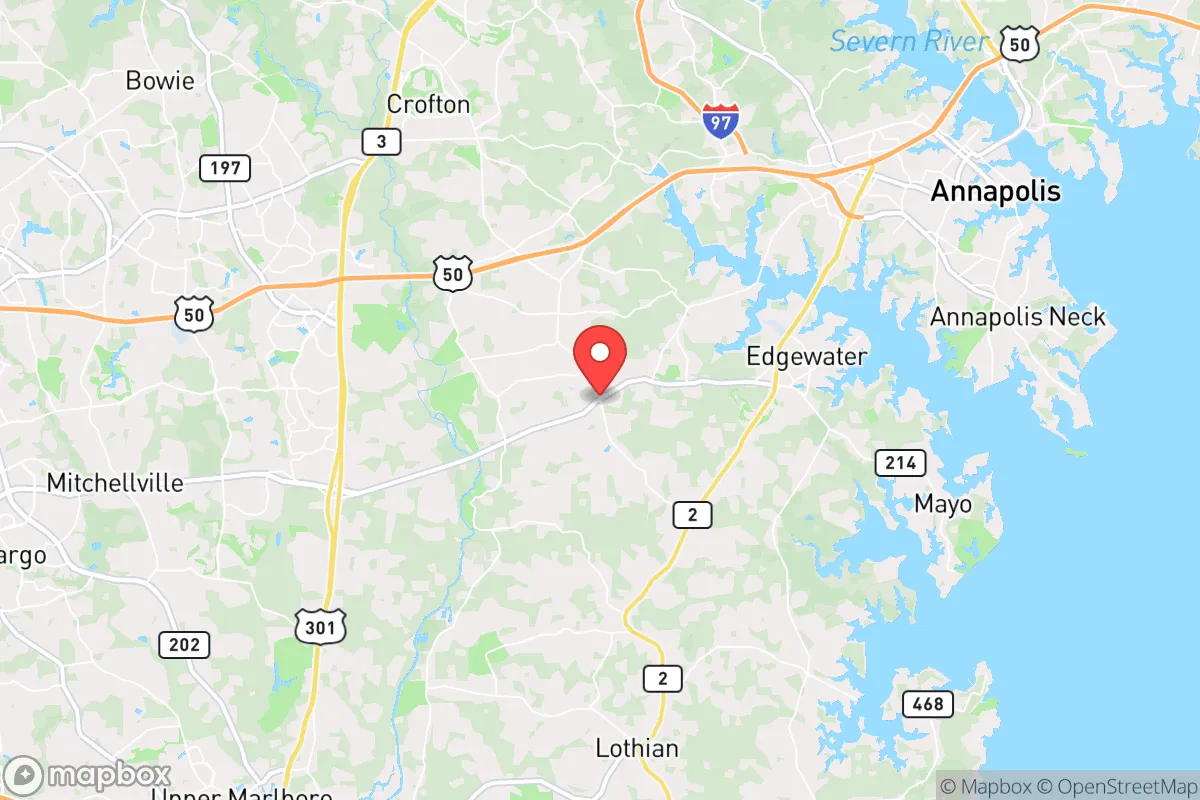
Photo: Wikipedia
Personal Sovereignty in Davidsonville, MD
Moderate friction. Expect trade-offs in some aspect of personal liberty and independence.
What does Personal Sovereignty tell us?
Personal Sovereignty measures your capacity for self-reliance and independence with minimal government friction. Higher scores mean fewer barriers between you and the way you want to live... but it assumes you have the space you need and good neighbors.
What does this tell us?
Personal Sovereignty measures your capacity for self-reliance and independence with minimal government friction. Higher scores mean fewer barriers between you and the way you want to live... but it assumes you have the space you need and good neighbors.
State Policy
Energy independence: Importer (18% of energy produced in-state)
Personal Liberty
Homesteading

Personal Liberty Analysis
Davidsonville, Maryland, offers a nuanced personal sovereignty environment that balances rural autonomy with the constraints of Anne Arundel County and state-level governance. For individuals and families prioritizing independence, the area provides meaningful opportunities for self-reliance—particularly in housing and land use—while navigating a moderate-to-high tax burden and a regulatory posture that is generally permissive on property rights but restrictive on certain personal liberties like firearm carry. The overall autonomy picture is one of trade-offs: Davidsonville’s semi-rural character and large-lot zoning allow for significant self-directed living, but residents must contend with Maryland’s progressive state-level policies on taxation, gun control, and medical mandates.
Tax burden and regulatory posture in Anne Arundel County
Maryland’s tax environment is among the heaviest in the nation, and Davidsonville residents feel that weight directly. The state’s income tax rates range from 2% to 5.75%, with Anne Arundel County adding a local income tax of 2.81%—bringing the combined top marginal rate to roughly 8.56%. Property taxes are also notable: the county’s real property tax rate is $0.933 per $100 of assessed value, and while Davidsonville lacks a municipal tax overlay, the overall effective rate is above the national median. For a $500,000 home, annual property taxes run approximately $4,665. The regulatory posture at the county level is moderately light-touch for land use: Davidsonville is zoned primarily for rural residential and agricultural use, with minimum lot sizes of 1 to 3 acres in most areas. This zoning discourages dense development and preserves a semi-rural character, but it also means that building permits, septic system approvals, and stormwater management requirements are enforced by the county health department and planning office. There is no countywide rent control or business licensing overlay that would constrain a home-based enterprise, though home occupation permits are required for commercial activity. Overall, the tax burden is high relative to neighboring states like Delaware or Virginia, but the regulatory environment for property owners is permissive enough to allow significant autonomy in how land is used—provided state environmental regulations (e.g., Chesapeake Bay critical area rules) are followed.
Self-defense and gun law specifics in Maryland
Maryland’s firearm laws are among the most restrictive in the country, and Davidsonville residents must comply with state-level requirements that limit personal sovereignty in self-defense. The state requires a Handgun Qualification License (HQL) to purchase a handgun, which involves a background check, fingerprinting, and a four-hour training course. Additionally, Maryland has a “may issue” concealed carry permit system that, as of 2023, shifted to “shall issue” following the Supreme Court’s Bruen decision—but the permitting process remains onerous. Applicants must complete a 16-hour training course, submit references, and undergo a state police background investigation. The state also bans so-called “assault weapons” and limits magazine capacity to 10 rounds. For long guns, no permit is required to purchase a rifle or shotgun, but a seven-day waiting period applies to all firearm purchases. Open carry is effectively prohibited without a permit. For a conservative-leaning reader, this means that while it is possible to own firearms for home defense, the process is time-consuming and expensive, and carrying a concealed weapon for personal protection requires significant bureaucratic effort. The county sheriff’s office in Anne Arundel has historically been more accommodating than some urban jurisdictions, but the state law is the binding constraint. Self-defense autonomy is therefore limited compared to states with constitutional carry or less restrictive permitting.
Self-reliance and homesteading viability: lot sizes, zoning, and off-grid feasibility
Davidsonville’s rural zoning and large lot sizes make it one of the more viable areas in the Baltimore-Washington corridor for homesteading and self-reliance. Most residential parcels are zoned R1 (rural residential) or RA (rural agricultural), with minimum lot sizes of 1 to 3 acres, and many properties exceed 5 acres. This allows for substantial gardening, small-scale livestock (chickens, goats, bees), and even limited farming without special permits, provided the activity is accessory to a primary residence. The county’s zoning code permits “agricultural uses” by right on parcels of 3 acres or more, including crop cultivation, pasture, and farm stands. Off-grid feasibility is mixed: Maryland requires connection to public water and sewer only in denser subdivisions; in Davidsonville, most homes rely on private wells and septic systems, which are regulated by the county health department. Solar panels are permitted by right, but net metering is subject to state utility regulations, and battery storage is allowed. Rainwater collection is legal for non-potable uses, but the state’s environmental laws limit large-scale cistern systems. Composting toilets and greywater systems require health department approval and are not common. The practical reality is that a motivated resident can achieve a high degree of food self-sufficiency and energy independence, but full off-grid living (no utility connections) is difficult due to septic and well regulations. The area’s rural character also means that noise ordinances are less restrictive than in suburban neighborhoods, so woodworking, welding, or small engine repair are feasible on larger lots.
Personal liberties: parental rights, medical autonomy, speech, and property
Maryland’s state-level policies create a mixed environment for personal liberties in Davidsonville. On parental rights, the state has a relatively strong legal framework: parents have the right to direct their children’s education, including homeschooling, which is regulated but not overly burdensome (annual notification, portfolio review). Maryland also allows religious exemptions from vaccination for school attendance, though the process requires a notarized statement. Medical autonomy is more constrained: the state has a COVID-19 vaccine mandate for healthcare workers and school staff (though largely unenforced as of 2026), and it maintains a prescription drug monitoring program that limits access to certain controlled substances. There is no state-level right-to-try law for terminally ill patients, but the federal right-to-try applies. On speech, Maryland has no unique restrictions beyond standard defamation and incitement laws, and Anne Arundel County does not impose local content-based restrictions. Property rights are generally strong: eminent domain is limited to public use projects, and the county’s zoning code is stable, with no rent control or short-term rental bans in rural areas. However, the state’s environmental regulations—particularly the Chesapeake Bay Critical Area Act—impose restrictions on development within 1,000 feet of tidal waters, which affects some Davidsonville properties near the South River and its tributaries. Overall, personal liberties are robust for property owners and parents, but medical autonomy and firearm rights are significantly curtailed by state law.
In the broader context of the Mid-Atlantic, Davidsonville offers a relatively high degree of personal sovereignty for a Maryland location, particularly in land use and self-reliance. The tax burden is heavy, and state-level restrictions on firearms and medical choice are real constraints, but the area’s rural zoning, large lots, and permissive agricultural policies allow for a lifestyle that prioritizes independence. Compared to neighboring states like Virginia (which has lower taxes and constitutional carry) or Delaware (which has no sales tax and more permissive gun laws), Davidsonville falls short on fiscal and self-defense autonomy. However, within the Baltimore-Washington corridor, it stands out as a place where a family can own acreage, raise animals, install solar panels, and homeschool without excessive interference. For a conservative-leaning reader who values self-reliance and is willing to navigate Maryland’s regulatory landscape, Davidsonville represents a viable compromise between proximity to urban employment and a genuinely autonomous rural lifestyle.

* Values derived from national, state, county, city and local statistics and may differ in a specific area. Last updated: 2026-11-24T12:33:08.000Z
Narrative content on this page is AI-generated and may contain mistakes. Verify any details that matter before acting on them.
ReloMaps may earn a commission from affiliate links at no extra cost to you.

