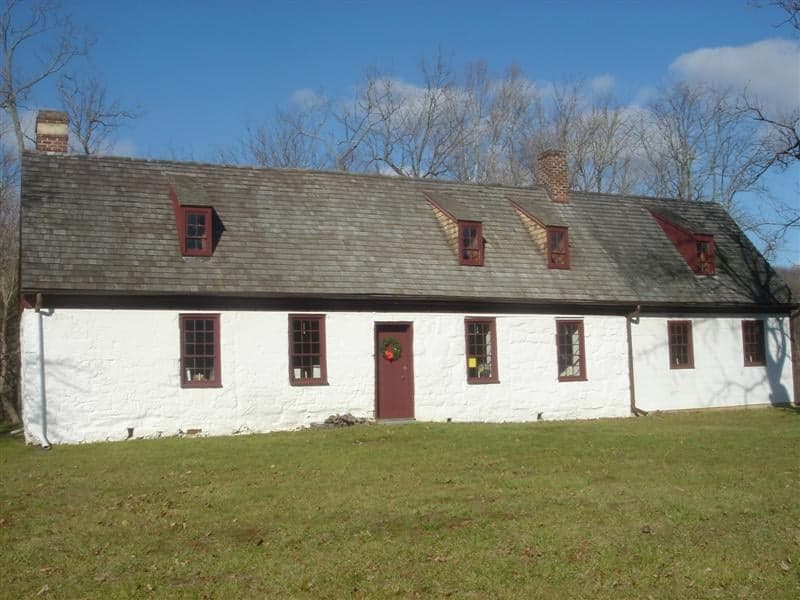
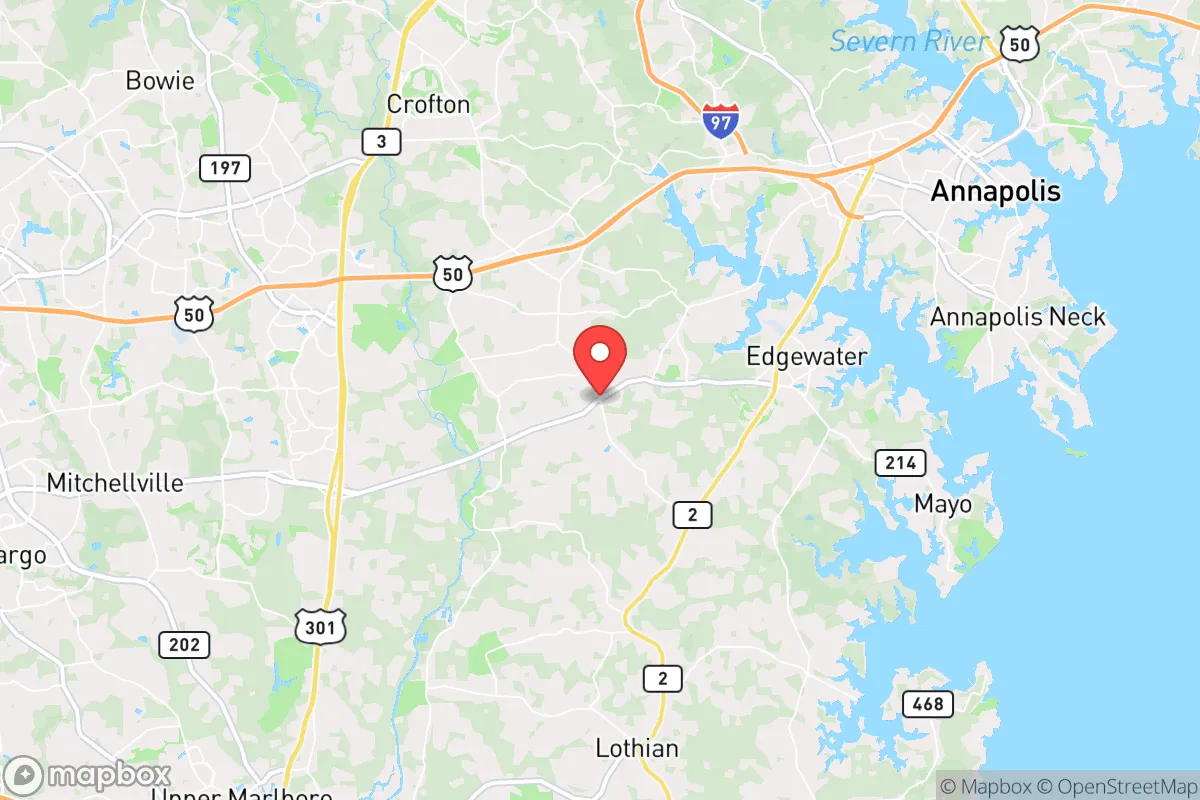
Photo: Wikipedia
Demographics of Davidsonville, MD
Historical data isn't available for Davidsonville, MD. Trends shown are for Anne Arundel County, MD.
Affluence Level in Davidsonville, MD
An upper-middle-class area. Household wealth, education levels, and homeownership run ahead of national benchmarks.
People of Davidsonville, MD
Davidsonville, Maryland, is a small, unincorporated community of roughly 3,985 residents that retains a distinctly rural, land-conscious character despite its proximity to Annapolis and Washington, D.C. The population is predominantly white (82.0%) with a significant Black minority (12.4%), and notably has zero foreign-born residents, reflecting a deeply rooted, multi-generational local population. The community is defined by its large-lot zoning, horse farms, and a strong sense of privacy, attracting families and individuals who prioritize space and a slower pace over suburban convenience. With 44.8% of adults holding a college degree, Davidsonville is an educated but insular enclave, where newcomers are often drawn by the promise of land and quiet, not by ethnic diversity or urban amenities.
How the city was settled and grew
Davidsonville’s population history begins with the land grants of the 17th and 18th centuries, when the area was part of Anne Arundel County’s tobacco plantation economy. The original European settlers were English and Scottish farmers who established large tracts, many of which remain intact today as family farms. The community was named after the Davidson family, early landowners, and the crossroads at Davidsonville Road and Route 424 became a modest agricultural hub. The historic Davidsonville Historic District, centered around the old general store and post office, was the original population nucleus, housing the families who worked the surrounding tobacco fields. Through the 19th and early 20th centuries, the population remained small and overwhelmingly white, with a Black population consisting largely of descendants of enslaved people who stayed on as sharecroppers and laborers. The Rutland and Central Avenue areas, with their older farmhouses and narrow roads, still show this original settlement pattern.
Modern era (post-1965)
The modern era in Davidsonville began not with the 1965 Immigration Act—which had virtually no effect here, as the foreign-born population remains zero—but with the suburbanization of Anne Arundel County in the 1970s and 1980s. As Annapolis and Bowie expanded, Davidsonville’s large-lot zoning (typically 2- to 5-acre minimums) became a magnet for white, upper-middle-class families seeking to escape denser suburbs. This wave built the Davidsonville Estates and Davidsonville Woods neighborhoods, which feature custom homes on wooded lots. The Black population, which had historically been concentrated in the Rutland area near the old schoolhouse and church, remained stable at roughly 12-13% through this period, as the community’s high land costs limited in-migration by lower-income groups. The Hispanic and Asian populations remained negligible (1.4% and 0.3% respectively), and the Indian-subcontinent population is a mere 0.2%, reflecting the area’s lack of rental housing, public transit, and entry-level jobs. The Patuxent River corridor and the Davidsonville Park area saw some new construction in the 1990s and 2000s, but the overall demographic profile has been remarkably stable: a white majority with a persistent Black minority, and virtually no growth from international migration.
The future
The population of Davidsonville is likely to remain stable in size and composition over the next 10-20 years. The community’s zoning is fiercely protected by residents, and there is little political will for higher-density development or affordable housing. The white population share may decline slightly as older homeowners sell to younger families, but the Black population is expected to hold steady or grow modestly as long-time Black families remain and a few new Black professionals move in from Annapolis. The Hispanic and Asian populations will likely remain below 2% each, as the area offers no rental stock, no ethnic grocery stores, and no cultural institutions that typically attract immigrant communities. The Davidsonville Commons area, a small commercial node, may see some redevelopment, but it will not become a population center. The future of Davidsonville is one of managed stability: a place where land is the primary asset, and the population is defined by those who can afford to buy and hold it. For a mover, this means joining a community where neighbors know each other by name, where the school system (South River High) is excellent, and where the cultural identity is rooted in rural tradition, not diversity.
Davidsonville is becoming a more expensive, more exclusive version of itself—a rural retreat for the educated and land-owning, not a melting pot. For someone moving in now, the community offers privacy, space, and a stable, low-crime environment, but little ethnic or cultural variety. It is a place for those who value land and quiet over diversity and urban energy.

* Values derived from national, state, county, city and local statistics and may differ in a specific area. Last updated: 2026-11-24T12:33:08.000Z
Narrative content on this page is AI-generated and may contain mistakes. Verify any details that matter before acting on them.
ReloMaps may earn a commission from affiliate links at no extra cost to you.

