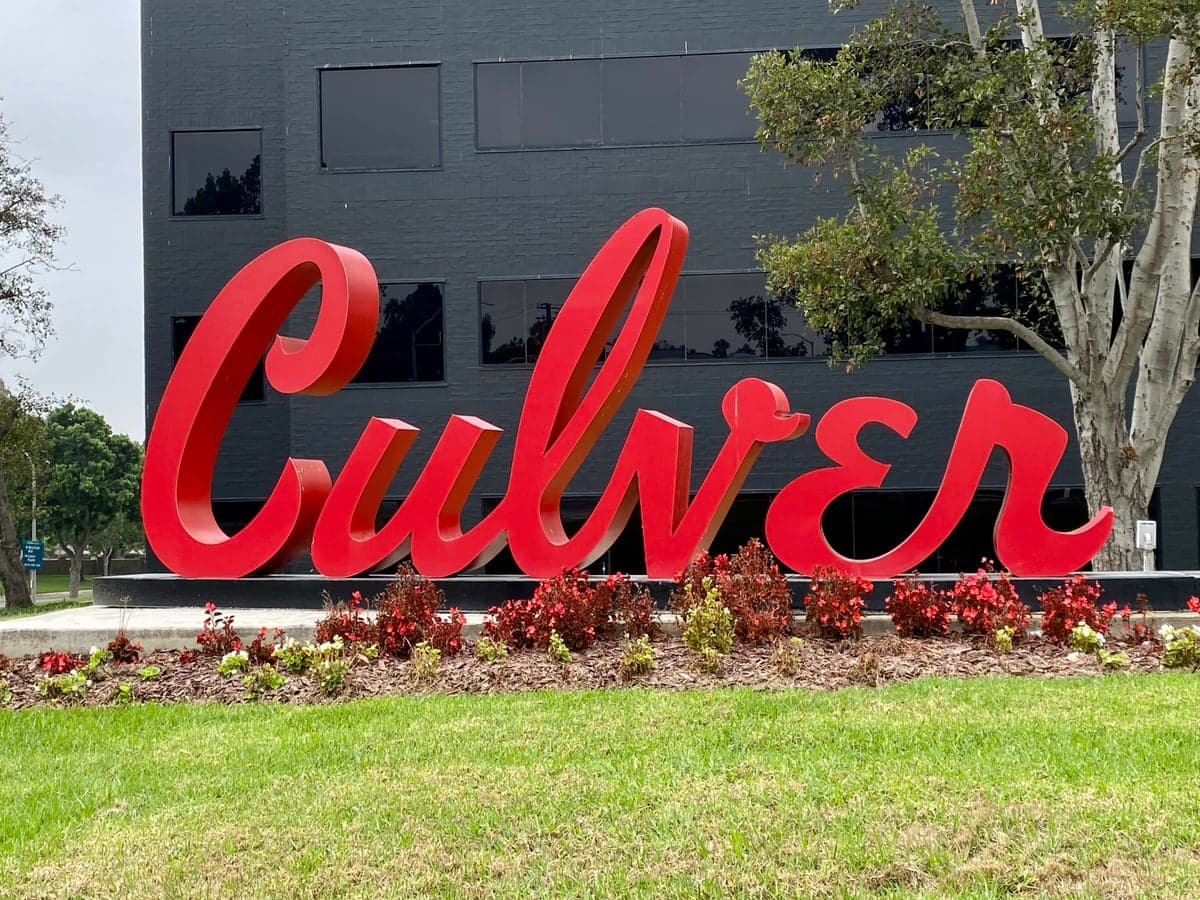
Photo: Wikipedia
Political ClimatePolitical Climate in Culver City, CA
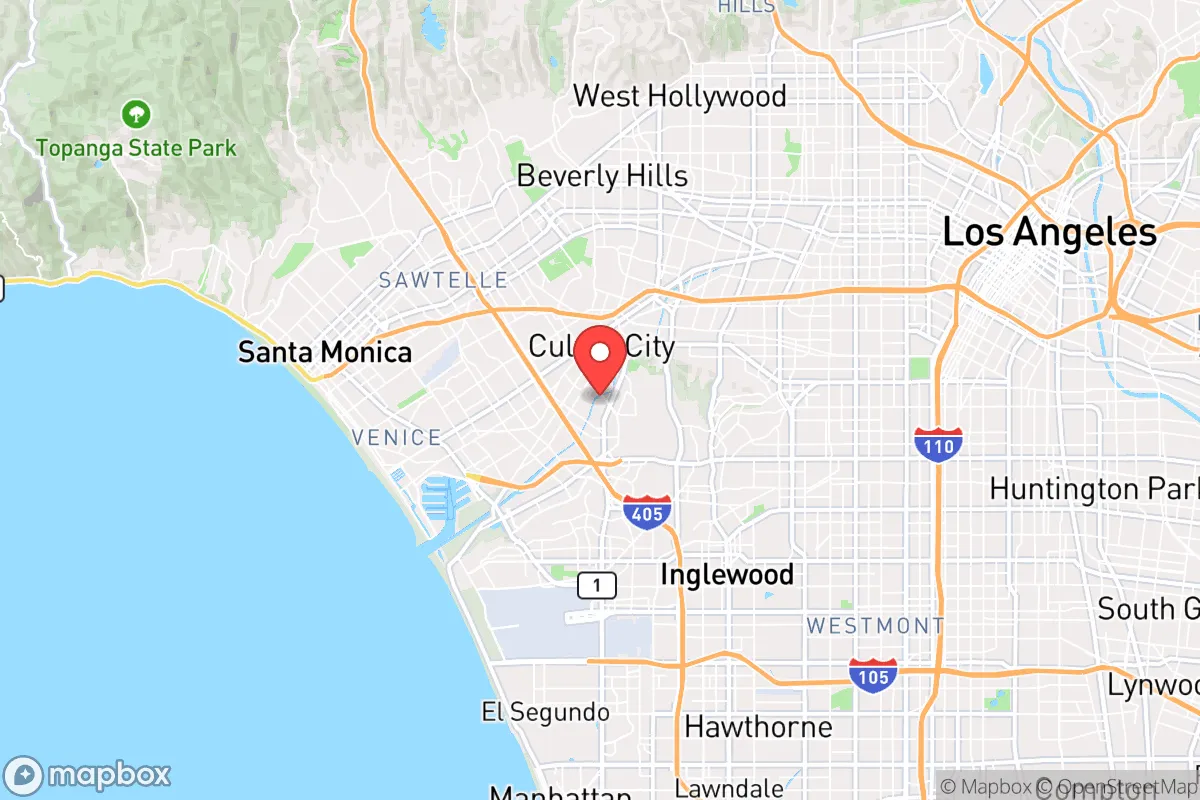
District shown is the primary district for this city’s centroid. Cities may span multiple districts.
Political rankings in California
- Most Conservative Cities in California
- Most Liberal Cities in California
- Best Conservative-Leaning Towns on the West Coast
- Affordable Small Towns for Conservatives
- Most Affordable Liberal-Leaning Small Towns in the U.S.
- Safest Liberal-Leaning Cities in the U.S.
- Most Conservative Counties in California
- Most Liberal Counties in California
Local Political AnalysisPolitical Analysis of Culver City, CA
Culver City is one of the most reliably liberal jurisdictions in Southern California, carrying a Cook Partisan Voting Index of D+33 — meaning it votes 33 points more Democratic than the national average. That places it well to the left of Los Angeles County as a whole and puts it in a league with neighboring Santa Monica and West Hollywood. The city has trended steadily blue over the past two decades, with no serious sign of reversal, and local politics are dominated by progressive Democrats who prioritize housing density, rent control, and environmental policy.
How it compares
To understand how deep blue Culver City is, look at its neighbors. Just a few miles south, the city of Inglewood has a D+25 PVI — still strongly Democratic, but noticeably less so. Head east into the Baldwin Hills/Crenshaw area and you’ll find similar Democratic dominance, but with more internal debate around development and policing. The real contrast comes when you drive west to Santa Monica (D+31) or north to West Hollywood (D+30), which are Culver City’s ideological cousins. Meanwhile, the broader state of California carries a Cook PVI of D+13, meaning Culver City is more than twice as Democratic-leaning as the state average. In practical terms, a Republican candidate for city council in Culver City hasn’t been competitive in a generation, while statewide races like governor or Senate still see the GOP pulling 30-35% of the vote in most of California’s interior counties.
What this means for residents
For liberal residents, Culver City’s political climate means local government is generally aligned with their values on issues like tenant protections, police oversight, and climate action. The city council passed one of the region’s strongest rent control ordinances in 2019, and the school board has embraced progressive curriculum reforms. For conservative residents, the reality is that they are a distinct minority in local elections, but not entirely without influence — the city’s business community, particularly in the tech and media sectors that anchor the downtown area, often pushes back against the most aggressive regulatory proposals. The practical effect is that Culver City tends to pass progressive policies, but with more moderation than neighboring Santa Monica, where anti-development sentiment has been stronger. The city’s small size (about 40,000 residents) means local politics feel personal — you’ll see council members at the farmers market, and neighborhood groups have real sway over zoning decisions.
Culturally, Culver City’s political identity is inseparable from its role as a hub for creative industries — Sony Pictures Studios, Amazon Studios, and a dense cluster of post-production houses give the city a workforce that skews young, educated, and socially liberal. That demographic reality has pushed the city’s politics leftward over the past decade, especially on housing and homelessness policy. The city has embraced a “Housing First” approach and has been one of the more aggressive local governments in Los Angeles County at building supportive housing. Looking ahead, the trajectory is likely to stay blue, though internal fights between pro-development YIMBYs and slow-growth progressives will continue to define local elections. For anyone moving here, the key takeaway is simple: if you’re comfortable in a deeply Democratic environment where local politics are active and consequential, you’ll fit right in. If you’re looking for political diversity, you’ll find more of it in neighboring Culver City-adjacent areas like Ladera Heights or the unincorporated parts of Baldwin Hills.

State Political ClimatePolitical Climate in California
State Political AnalysisPolitical Environment in the State
California is a deeply blue state, with Democrats holding every statewide office and supermajorities in both legislative chambers, but that monolithic label hides a far more complex and fractured political reality. The state’s overall partisan lean is roughly D+20 to D+25 in presidential elections, a shift that has hardened over the past two decades as the GOP’s once-strong foothold in the suburbs and Central Valley has eroded. In 2024, Kamala Harris carried California by about 20 points, down slightly from Biden’s 29-point margin in 2020, hinting at a subtle but real rightward drift in some corners. The trajectory since 2000 has been a steady march leftward on cultural and regulatory issues, even as the state’s cost of living and housing crisis have begun to reshape who can afford to live here—and therefore who votes.
Urban vs. rural divide
The political map of California is a textbook study in urban-rural polarization. The massive Democratic majorities come almost entirely from the coastal metros: Los Angeles County alone delivers about a quarter of the state’s Democratic votes, while the San Francisco Bay Area (San Francisco, Alameda, Santa Clara counties) adds another 15-20% of the blue margin. These areas vote 70-85% Democratic and are the engine of the state’s progressive policy agenda. In contrast, the Central Valley and inland rural counties are deeply red: Bakersfield (Kern County) and Fresno (Fresno County) are reliably Republican, though Fresno itself has been inching left as its Latino population grows. The state’s few remaining competitive areas are the suburban “collar counties” like Orange County and San Diego County—Orange County flipped from red to purple to blue between 2016 and 2020, but in 2024 it shifted back toward the center, with Trump improving his margin there. The Inland Empire (Riverside and San Bernardino counties) is a true bellwether: fast-growing, more working-class, and increasingly split, with Democrats holding a registration edge but Republicans winning some local races. The rural north—Redding and Yreka in Siskiyou County—votes 70-80% Republican, but those areas have so few people that they barely register in statewide totals.
Policy environment
California’s policy environment is the most aggressively progressive of any large state, and it’s codified in law, not just rhetoric. The state has a progressive income tax with a top marginal rate of 13.3% (the highest in the nation), no estate tax, but a high sales tax (base 7.25%, often 9-10% with local add-ons). Property taxes are capped at 1% of assessed value plus 2% annual growth under Prop 13, which is a major boon for long-term homeowners but a barrier for newcomers. The regulatory posture is dense: California has its own environmental review process (CEQA), its own emissions standards (CARB), and its own labor laws (including a $16/hour minimum wage that will rise with inflation). Education policy is dominated by the California Teachers Association, with per-pupil spending around $15,000 but wide disparities between wealthy coastal districts and inland ones. Healthcare is heavily regulated, with a state-run exchange (Covered California) and a recent push toward a single-payer system that hasn’t passed. Election laws are among the most accessible in the country: universal vote-by-mail, same-day registration, and no-excuse absentee voting. For a conservative relocator, the practical effect is higher taxes, more bureaucracy, and a government that actively intervenes in housing, energy, and business decisions.
Recent policy direction
The last five years have seen California double down on its progressive identity, with a series of laws that directly affect the liberties a relocator might care about. On gun and self-defense law, the state has passed some of the nation’s strictest measures: a 2023 law (SB 2) effectively bans carrying firearms in most public places, and a 2024 law (AB 28) imposes an 11% excise tax on guns and ammunition. Parental and education rights have been a flashpoint: a 2023 law (AB 1078) bans school boards from removing books on LGBTQ+ or racial topics, and a 2024 law (AB 1955) prohibits schools from requiring parental notification when a child changes their gender identity. On speech and privacy, the state has a strong consumer privacy law (CCPA) but also a 2023 law (AB 587) that requires social media platforms to report their content moderation policies—critics call it a backdoor to censorship. Medical and bodily autonomy is fully protected: abortion is a constitutional right under Prop 1 (2022), and the state has a “sanctuary” law for gender-affirming care (SB 107, 2022). Property rights are constrained by rent control (AB 1482 caps annual increases at 5% plus inflation) and by a 2024 law (SB 423) that streamlines housing approvals but overrides local zoning. Taxation is trending upward: a 2024 ballot measure (Prop 5) would have lowered the threshold for local tax increases, but it failed; the state’s budget deficit has led to talk of raising the corporate tax rate. Voting and ballot access remains wide open, with no voter ID requirement and automatic voter registration at the DMV. The net direction is clear: more regulation, more state control, and less local autonomy.
Civil unrest & political movements
California has been a stage for high-profile political movements on both sides. The 2020 George Floyd protests in Los Angeles and Oakland were among the largest and most destructive in the country, with billions in property damage and a lasting impact on policing policy (the state banned chokeholds and created a police decertification process). The recall of Governor Gavin Newsom in 2021 failed by a 14-point margin, but it showed that the GOP can still rally around a single issue—in that case, COVID lockdowns and school closures. Immigration politics are a constant: California is a “sanctuary state” (SB 54, 2017), meaning local law enforcement cannot cooperate with federal immigration authorities, and the state has spent millions on legal defense for undocumented residents. Secession rhetoric (the “Calexit” movement) flares up periodically but has never gotten on the ballot. Election integrity controversies are less intense than in swing states, but the 2020 and 2024 elections saw scattered claims of fraud from rural counties, and the state’s universal mail-in voting system remains a target of conservative criticism. The most visible flashpoint for a new resident is likely the homelessness crisis in cities like San Francisco, Los Angeles, and Sacramento, which has spawned its own political movement (the “tent city” debates) and a 2024 Supreme Court case (Grants Pass) that may force the state to change its approach. For a conservative, the daily reality is seeing encampments, needle exchanges, and open drug use in urban centers—a visible symbol of the state’s policy direction.
Projection
Over the next 5-10 years, California’s political trajectory is likely to be a slow, uneven drift toward the center on economics, even as it stays far left on culture. The demographic shift is the key driver: the state’s population has declined for three consecutive years (2020-2023), driven by out-migration of middle-class families and young professionals to Texas, Arizona, and Nevada. Those leaving tend to be moderate and conservative-leaning, while the newcomers are largely international immigrants (especially from Asia and Latin America) who lean Democratic but are often more socially conservative than the coastal elite. The housing crisis is the wild card: if the state’s recent upzoning laws (SB 9, SB 10, and the 2024 streamlining bills) actually produce new housing, it could bring in younger, more progressive voters. If they fail, the state will continue to lose its middle class, making it even more polarized between a wealthy, liberal coast and a struggling, conservative interior. The GOP’s future depends on whether it can rebuild in the Inland Empire and Central Valley—places like Bakersfield and Fresno are growing, and if the party moderates on immigration and abortion, it could become competitive in a decade. But for now, expect the legislature to remain firmly Democratic, with occasional ballot measures (like the 2024 crime reform Prop 36) that pull the state back toward the center on specific issues. A conservative moving in now should expect to live under a government that is hostile to their cultural values but may become slightly more pragmatic on taxes and housing as the budget crisis deepens.
For a new resident—especially one with conservative leanings—the bottom line is that California offers world-class natural beauty, a dynamic economy, and unmatched career opportunities, but you will pay for it in taxes, regulation, and cultural isolation. You will be a permanent minority in state politics, with little chance of changing the overall direction, but you can find like-minded communities in places like Orange County (still purple), San Diego’s northern suburbs, or the Central Valley cities like Clovis and Visalia. Your vote will matter most in local races—school boards, city councils, and county supervisors—where conservative candidates can still win. If you value low taxes, gun rights, school choice, and a government that stays out of your life, California will be a frustrating place to live. If you can afford the cost and tolerate the politics, the trade-off is access to the Pacific, the Sierra Nevada, and an economy that still leads the world in tech, entertainment, and agriculture. Just know what you’re signing up for.
* Values derived from national, state, county, city and local statistics and may differ in a specific area. Last updated: 2026-11-24T17:48:45.000Z
Narrative content on this page is AI-generated and may contain mistakes. Verify any details that matter before acting on them.
ReloMaps may earn a commission from affiliate links at no extra cost to you.

