Photo: Wikipedia
Quality of Life in Culver City, CA
Above-average quality of iife. The area offers a reasonable cost of living, decent mobility, and a mix of neighborhood amenities.
What does Quality of Life tell us?
Quality of Life blends cost of living, nearby amenities, socioeconomic signals, and neighborhood character. City-level scores represent the whole municipality; individual neighborhoods can differ.
What does this tell us?
Quality of Life blends cost of living, nearby amenities, socioeconomic signals, and neighborhood character. City-level scores represent the whole municipality; individual neighborhoods can differ.
Cost of Living
198% above national average
The Real Cost of Living in Culver City, CA for 2026
| Tier | Individual | Family (4) |
|---|---|---|
| Survival | $43k | $80k |
| Comfortable | $181k | $266k |
| Luxury | $221k+ | $342k+ |
| Elite (Top 5%) | $312k+ | $484k+ |
46%
The Area Signal
A metric tracking the socioeconomic signals of the area.
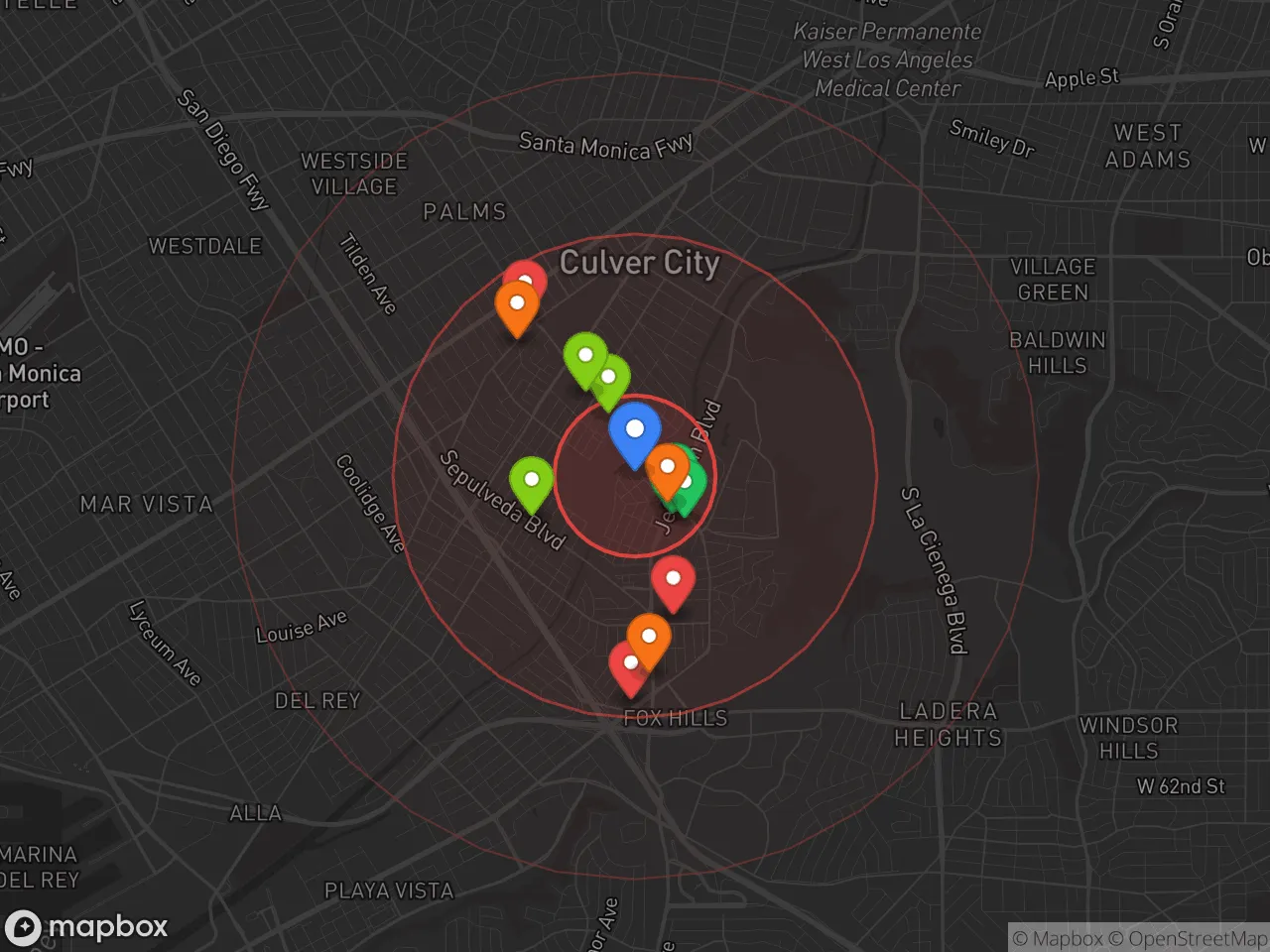
Hobbies
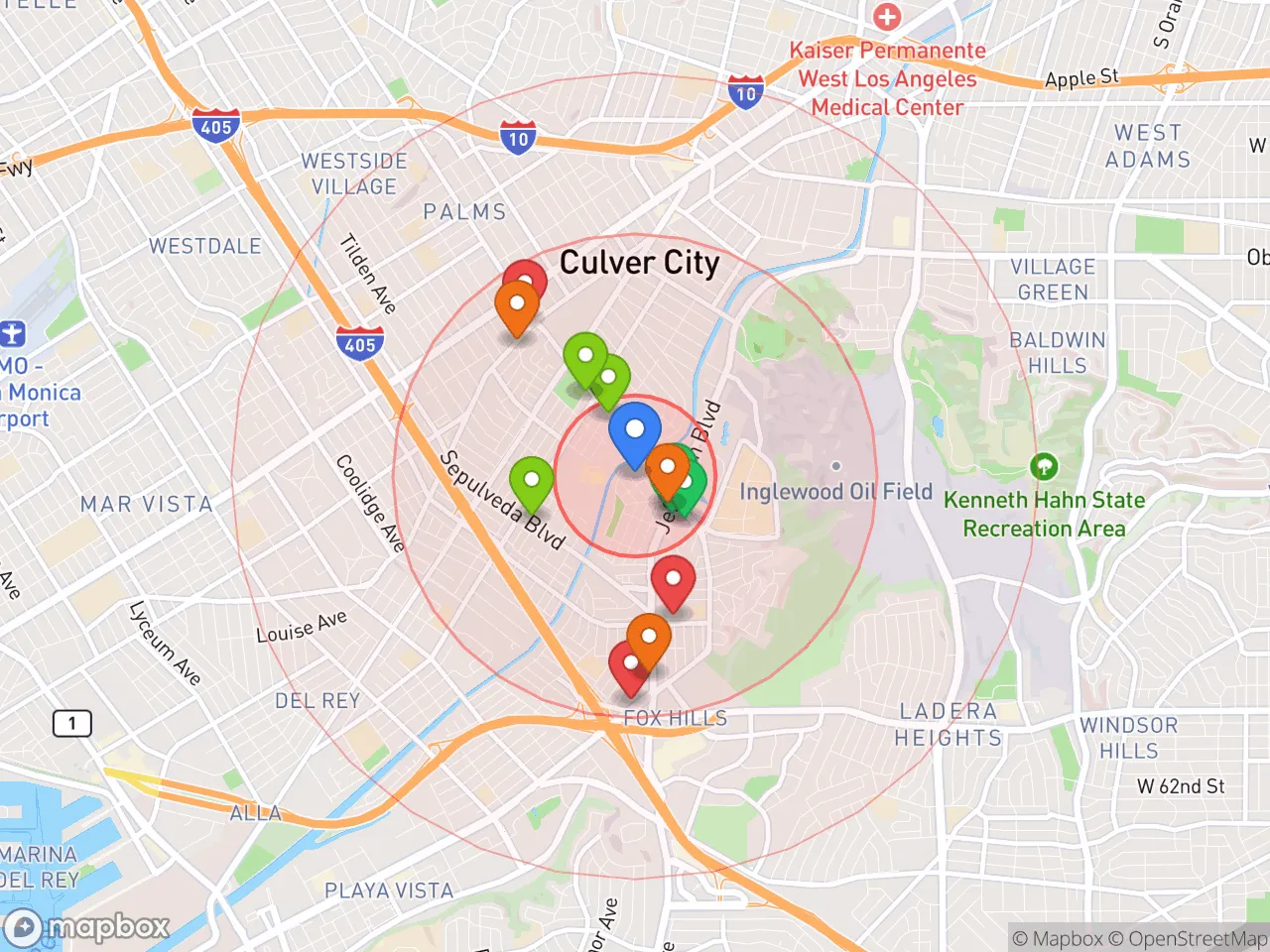
Explore the areaGroceries
0 within 10 miles
Gas
0 within 10 miles
Hospital
0 within 20 miles
Airport
LAX — Los Angeles International
Post Office
Critical Amenities
Quality-of-Life Analysis
Culver City is an affluent, walkable enclave in Los Angeles County that attracts a mix of entertainment-industry professionals, creative-class families, and long-term residents who value its small-town feel within a sprawling metropolis. With a cost-of-living index of 298 (nearly three times the U.S. average), the city commands premium prices for its proximity to major studios like Sony Pictures and Amazon MGM, its historic downtown, and its highly rated public schools. The population skews educated and upper-middle-class, with a median household income well above the county median, and the daily rhythm is defined by sidewalk cafés, farmers markets, and a calendar of community events that give Culver City a distinct identity apart from neighboring Los Angeles neighborhoods.
Cost of living, housing prices, and how Culver City compares to nearby areas
Culver City’s cost of living is among the highest in the region, driven almost entirely by housing. The median home value sits at $1,126,900, roughly 50% higher than the Los Angeles County median and more than double the national figure. Renters face a median monthly rent of $2,683, which is about 20% above the county average and significantly higher than in adjacent areas like Palms or Mar Vista. Compared to Santa Monica or Beverly Hills, however, Culver City offers slightly more square footage per dollar and a lower price per square foot for single-family homes. The city’s housing stock is a mix of mid-century bungalows, newer townhomes, and a growing number of luxury apartment complexes near the downtown and Expo Line stations. Property taxes are capped under Proposition 13, but new buyers face effective rates around 1.1% of purchase price, plus Mello-Roos fees in some newer developments. For renters, the city’s rent control ordinance (covering units built before 1995) provides some stability, though vacancy rates remain below 3%, keeping upward pressure on prices.
Schools, parks, and what daily life actually feels like in Culver City
Daily life in Culver City is defined by its walkable, bike-friendly core and a strong sense of local community that is rare in the LA basin. The Culver City Unified School District is a major draw, with all six elementary schools scoring 8 or above on GreatSchools ratings and Culver City High School consistently ranked among the top 10% of California public high schools. The city maintains over 20 parks and public spaces, including the 42-acre Culver City Park with its sports fields, dog park, and hiking trails, and the newly renovated Veterans Memorial Park. The downtown area along Washington Boulevard and Culver Boulevard is lined with independent bookstores, art galleries, and a rotating roster of farm-to-table restaurants. Commute times average 27.2 minutes, which is below the LA County average of 30 minutes, thanks to the Expo Line light-rail station that connects directly to Santa Monica and downtown LA. The city also runs its own police department, which contributes to a violent crime rate roughly 40% lower than the Los Angeles city average. Cultural amenities include the Culver City Arts District, the historic Culver Theater, and the annual Culver City Film Festival, all within a 15-minute walk of most residential neighborhoods.
This quality of life is best suited for professionals and families who prioritize walkability, strong public schools, and a tight-knit community atmosphere over raw affordability. Remote workers in tech or media, dual-income households with children, and empty-nesters downsizing from larger LA homes will find the trade-off between high housing costs and daily convenience worthwhile. Those on a tighter budget or seeking a more suburban, car-dependent lifestyle may find better value in neighboring Inglewood or Hawthorne, but for anyone who values being able to walk to a farmers market, a top-rated school, and a Metro station, Culver City delivers a rare combination of urban amenities and small-town comfort.

Crime in Culver City, CA
Higher crime rates than 58% of comparable U.S. locations.
Violent CrimeViolent Crime Analysis
Property CrimeProperty Crime Analysis
Crime Analysis
Culver City reports a violent crime rate of 434.5 incidents per 100,000 residents and a property crime rate of 1,819.1 per 100,000, placing it above national averages for a city of its size. As a dense, progressive-leaning city embedded within Los Angeles County, safety concerns are amplified by a local justice system that often prioritizes rehabilitation over incarceration, a pattern that contributes to higher recidivism and more visible street-level crime.
Crime in context
Culver City’s violent crime rate is roughly 24% higher than the national average, while its property crime rate sits about 15% above the U.S. median. These figures are consistent with many small cities inside large, liberal metro areas where district attorneys and judges frequently apply progressive sentencing policies—such as reduced bail, diversion programs, and early release—that keep repeat offenders on the streets. Compared to nearby conservative-leaning suburbs like Thousand Oaks (violent crime rate ~120 per 100K), Culver City’s risk profile is significantly elevated. The city’s proximity to high-crime areas in South Los Angeles and Inglewood further strains local policing resources.
What residents experience
Residents report that property crime—particularly vehicle break-ins, package theft, and catalytic converter theft—is the most common safety nuisance, concentrated around the downtown Culver City business district and apartment-heavy corridors like Washington Boulevard and Sepulveda Boulevard. Violent incidents, including aggravated assaults and robberies, are less frequent but tend to occur near transit hubs and late-night entertainment venues. The Culver City Police Department maintains a responsive force, but progressive county policies often result in arrested individuals being released within hours, undermining deterrence. Many locals supplement police presence with private security cameras and neighborhood watch groups, especially in areas like Culver Crest and the Fox Hills neighborhood.
Neighborhood-level variation
Safety varies noticeably by area. The Baldwin Hills–Culver City border and the area around the Culver City Metro station see higher rates of theft and occasional violent crime. In contrast, the Carlson Park and Blair Hills neighborhoods report lower incident rates, benefiting from tighter community cohesion and fewer transient footfalls. Renters in the downtown core face the highest property crime risk, while homeowners in the hills enjoy relative security. For those prioritizing safety, choosing a quieter residential pocket and investing in layered home security is strongly advised.
* Values derived from national, state, county, city and local statistics and may differ in a specific area. Last updated: 2026-11-24T17:48:45.000Z
Narrative content on this page is AI-generated and may contain mistakes. Verify any details that matter before acting on them.
ReloMaps may earn a commission from affiliate links at no extra cost to you.

