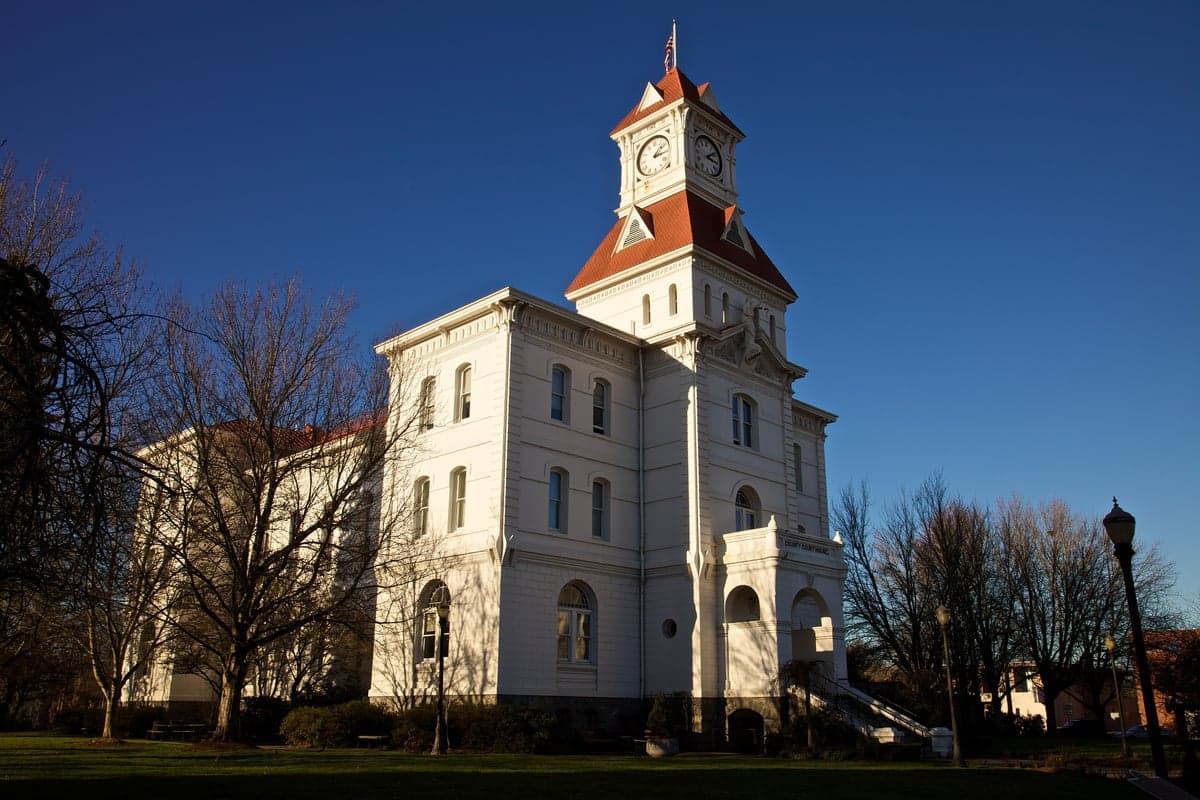
Photo: Wikipedia
Quality of Life in Corvallis, OR
A high quality of life with strong walkability, manageable living costs, healthy neighborhood signals, and solid amenity access.
What does Quality of Life tell us?
Quality of Life blends cost of living, nearby amenities, socioeconomic signals, and neighborhood character. City-level scores represent the whole municipality; individual neighborhoods can differ.
What does this tell us?
Quality of Life blends cost of living, nearby amenities, socioeconomic signals, and neighborhood character. City-level scores represent the whole municipality; individual neighborhoods can differ.
Cost of Living
37% above national average
The Real Cost of Living in Corvallis, OR for 2026
| Tier | Individual | Family (4) |
|---|---|---|
| Survival | $21k | $40k |
| Comfortable | $89k | $132k |
| Luxury | $115k+ | $179k+ |
| Elite (Top 5%) | $154k+ | $239k+ |
49%
The Area Signal
A metric tracking the socioeconomic signals of the area.
Hobbies
Explore the areaGroceries
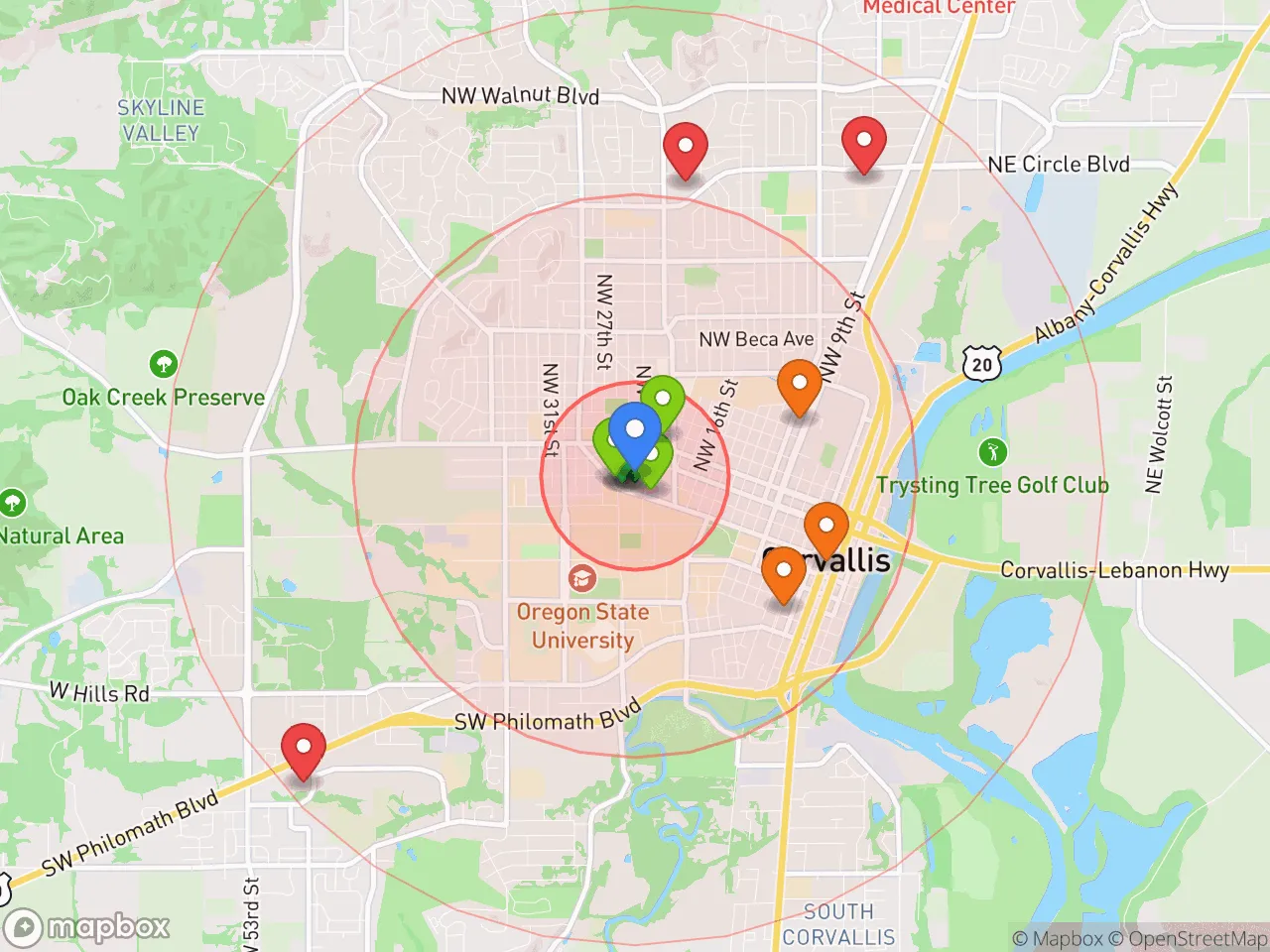
6 within 10 miles
Gas
18 within 10 miles
Hospital
3 within 20 miles
Airport
PDX — Portland International
Post Office
USPS — Corvallis, OR
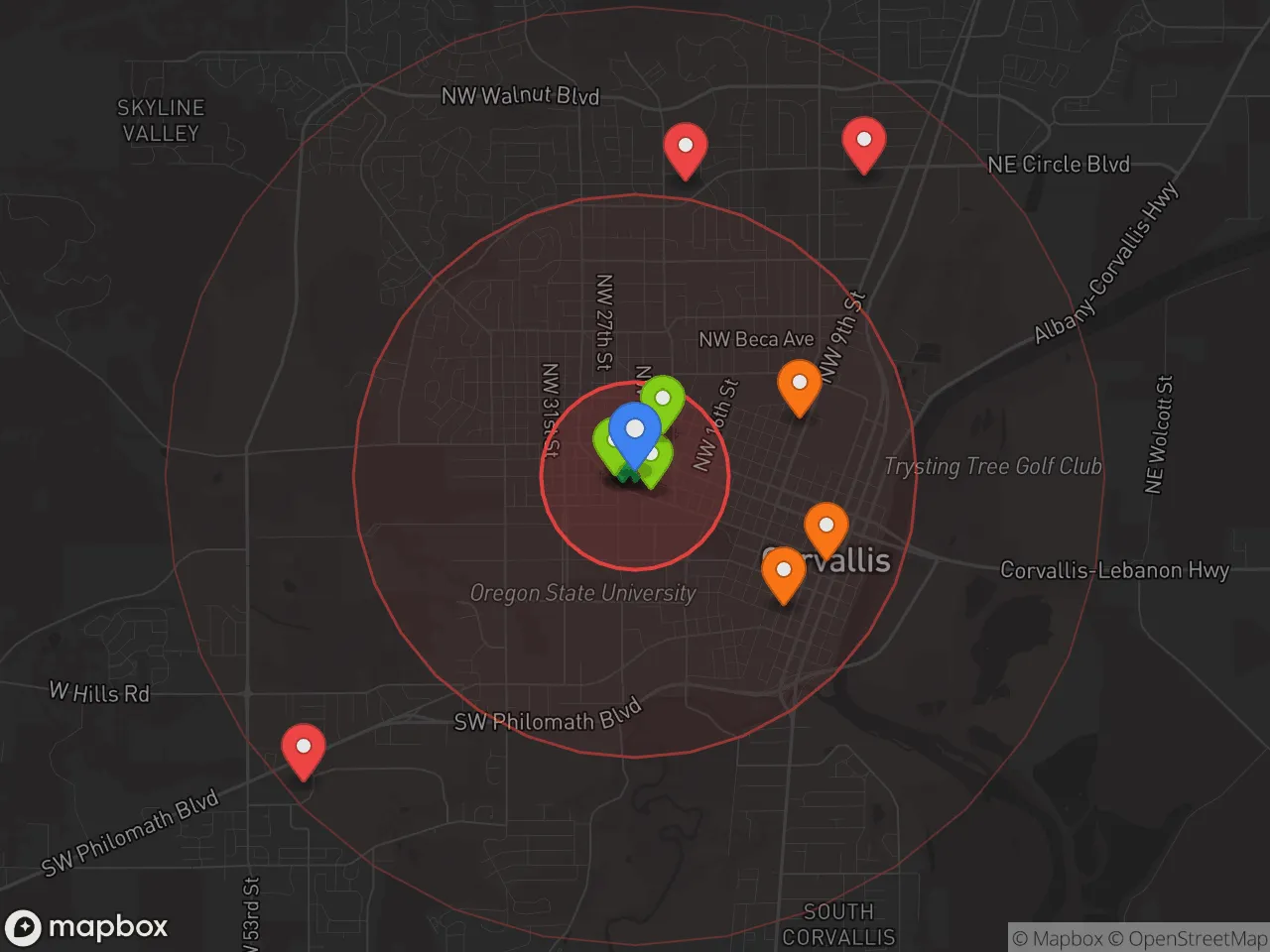
Critical Amenities
Quality-of-Life Analysis
Corvallis, Oregon, is a notably affluent and highly educated community, shaped by its role as the home of Oregon State University. The city’s population of roughly 60,000 includes a large proportion of students, faculty, researchers, and professionals in the biosciences and engineering sectors, giving the area a distinctly academic and progressive character. With a cost of living index of 137 (well above the U.S. average of 100), Corvallis commands a premium for its quality of life, but the trade-off is access to a compact, walkable city with strong public schools and abundant natural amenities.
Cost of living, housing affordability, and how Corvallis compares to nearby cities
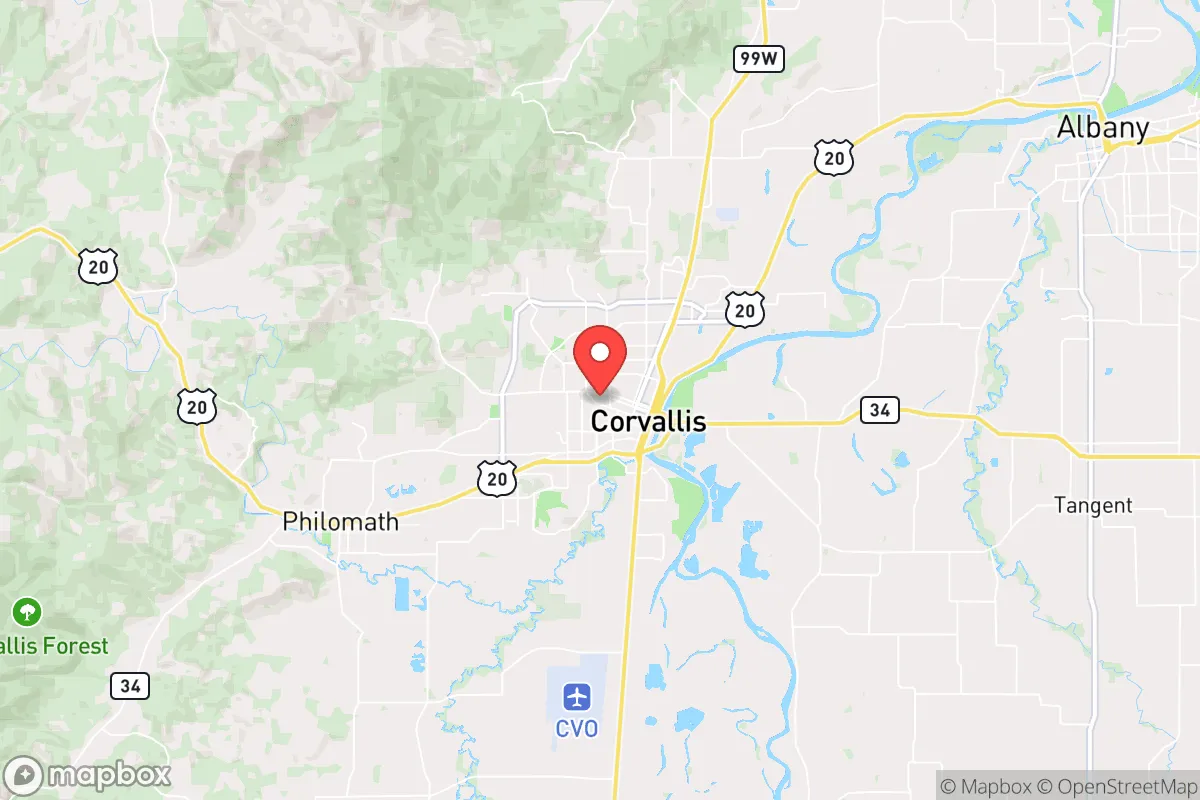
Housing is the primary driver of Corvallis’s elevated cost of living. The median home value sits at $480,600, which is roughly 30% higher than the national median and significantly above the Oregon state average of about $450,000. Renters face a median monthly rent of $1,342, which is manageable for dual-income professionals but steep for students and service workers. Compared to nearby cities, Corvallis is more expensive than Albany (median home value ~$380,000) and Philomath (~$420,000), but less costly than Portland’s metro area, where median values exceed $550,000. The average commute time in Corvallis is just under 17 minutes—far shorter than the national average of 26 minutes—which offsets some housing costs by reducing transportation expenses and allowing more time for family or recreation.
What daily life is like: amenities, schools, and community rhythm
Daily life in Corvallis revolves around Oregon State University, which anchors the downtown and provides a steady calendar of cultural events, lectures, and Division I athletics. The Corvallis School District consistently ranks among the top in Oregon, with Lincoln Elementary and Crescent Valley High School earning high marks for academic performance and extracurricular offerings. The city’s park system includes more than 50 parks, with the 4.5-mile Willamette Riverfront Trail being a central hub for walking, cycling, and kayaking. Grocery and retail options are concentrated along the 9th Street corridor, while the historic downtown offers independent bookstores, coffee shops, and farm-to-table restaurants. The community’s rhythm is notably slower than Portland’s, with a strong emphasis on outdoor recreation—hiking in McDonald-Dunn Forest, biking on the Philomath-to-Corvallis path, and weekend trips to the Oregon Coast (about 50 miles west) are common routines.
Corvallis is best suited for professionals, academics, and families who prioritize education, walkability, and access to nature over low housing costs or a fast-paced urban scene. The city’s high cost of living and limited nightlife may deter young singles or those seeking career diversity outside of education and research. However, for someone working at OSU, Samaritan Health Services, or a local tech firm, the combination of short commutes, strong schools, and a tight-knit, environmentally conscious community makes Corvallis a compelling place to settle.

Crime in Corvallis, OR
Generally safer than 65% of comparable U.S. locations.
Violent CrimeViolent Crime Analysis
Property CrimeProperty Crime Analysis
Crime Analysis
Corvallis, Oregon, reports a violent crime rate of 176.3 incidents per 100,000 residents, which is below the national average but sits in a concerning context given the city's location within a liberal-leaning metropolitan region. Property crime, however, is a more pressing issue at 2,177.2 per 100,000—a figure that exceeds both the Oregon state average and the national median. The city's progressive judicial and prosecutorial environment, typical of many Willamette Valley jurisdictions, raises legitimate concerns about recidivism and the practical impact on public safety for residents and businesses.
Crime in context
Corvallis's violent crime rate of 176.3 per 100,000 is roughly 52% lower than the U.S. average of about 370 per 100,000, placing it among safer small cities for violent offenses like homicide and aggravated assault. However, the property crime rate of 2,177.2 per 100,000 is approximately 24% higher than the national average of 1,760 per 100,000, driven largely by theft, burglary, and motor vehicle theft. This pattern aligns with broader trends in Oregon's Benton County, where progressive district attorneys and judges often emphasize diversion and reduced sentencing for property crimes. For readers evaluating safety, the elevated property crime rate is a tangible risk, particularly for homeowners and renters in central neighborhoods near Oregon State University.
What residents experience
Daily life in Corvallis involves a low risk of violent confrontation but a moderate-to-high risk of property crime, especially bicycle theft, package theft, and vehicle break-ins. The city's liberal justice policies—including Benton County's District Attorney's office, which has publicly prioritized restorative justice and reduced incarceration for non-violent offenses—mean that repeat property offenders often cycle through the system quickly. Residents report that stolen items are rarely recovered, and prosecution for low-level theft is inconsistent. This creates a practical safety concern: while walking downtown or on campus feels safe, leaving a bike unlocked or a car door open invites near-certain theft. The presence of Oregon State University (enrollment ~32,000) amplifies these dynamics, as transient populations and student housing areas see concentrated property crime.
Neighborhood-level variation is significant. Areas west of 9th Street and near the OSU campus experience the highest property crime rates, while residential neighborhoods south of Harrison Boulevard and east of Highway 99/Walnut Boulevard report fewer incidents. The College Hill and Central Park districts see frequent thefts from vehicles and porches. For those considering relocation, homes in the more suburban southwest or northwest quadrants—closer to Philomath or along the Marys River—offer notably lower crime exposure. Regardless of location, the overarching reality is that Corvallis's progressive criminal justice approach, while ideologically consistent, directly contributes to a higher property crime burden that residents must actively mitigate through security measures and insurance.
* Values derived from national, state, county, city and local statistics and may differ in a specific area. Last updated: 2026-06-13T19:02:48.000Z
Narrative content on this page is AI-generated and may contain mistakes. Verify any details that matter before acting on them.
ReloMaps may earn a commission from affiliate links at no extra cost to you.

