
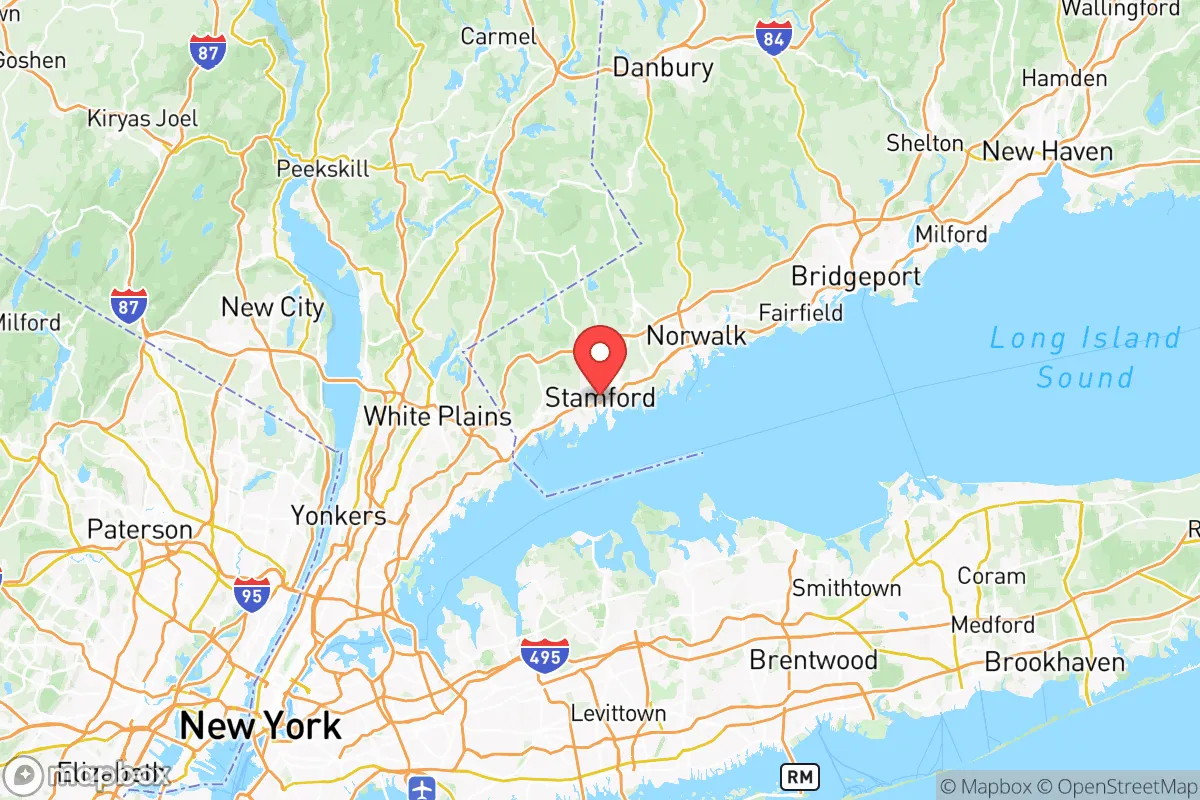
Personal Sovereignty in Western Connecticut Planning Region County
Viable for self-reliance. Generally workable, though some barriers may limit total independence.
What does Personal Sovereignty tell us?
Personal Sovereignty measures your capacity for self-reliance and independence with minimal government friction. Higher scores mean fewer barriers between you and the way you want to live... but it assumes you have the space you need and good neighbors.
What does this tell us?
Personal Sovereignty measures your capacity for self-reliance and independence with minimal government friction. Higher scores mean fewer barriers between you and the way you want to live... but it assumes you have the space you need and good neighbors.
State Policy
Energy independence: Importer (5% of energy produced in-state)
Personal Liberty
Homesteading

Personal Liberty Analysis
Western Connecticut Planning Region County presents a constrained environment for personal sovereignty, where state-level authority significantly limits local autonomy in taxation, self-defense, and land use. The region’s regulatory posture is distinctly heavier than in most of the United States, with property taxes among the highest nationally and gun laws that rank among the most restrictive. For individuals and families prioritizing personal freedom, the area offers a trade-off: proximity to New York City and robust public services in exchange for a diminished scope of independent action, with notable differences between more rural towns like Kent and Sherman and the denser, more regulated communities like Danbury and New Milford.
Tax burden and regulatory posture: how property taxes and state oversight shape autonomy
Connecticut’s tax burden is the second-highest in the nation, and Western Connecticut Planning Region County reflects this reality. Property taxes are the primary local revenue source, with effective rates often exceeding 2.5% of assessed home value in towns like New Milford and Brookfield. This creates a significant ongoing cost for homeowners, reducing disposable income and the financial freedom to invest in personal projects or land improvements. The state’s regulatory framework is similarly dense: building permits, septic system approvals, and zoning variances can involve multiple layers of review, particularly in towns with active planning commissions like Danbury and Bethel. The state income tax, with a top marginal rate of 6.99%, further constrains household budgets. For those accustomed to lower-tax states like Texas or Florida, the combined property, income, and sales tax burden here is a substantial reduction in personal economic sovereignty. However, the trade-off includes well-funded public schools and infrastructure, which some families view as a necessary investment.
Self-defense and gun law specifics: navigating Connecticut’s restrictive firearms environment
Connecticut’s gun laws are among the most restrictive in the nation, and Western Connecticut Planning Region County offers no local exceptions. The state requires a permit to purchase any firearm, a process that includes a background check, a safety course, and a waiting period. Carrying a handgun in public requires a separate permit, which is issued at the discretion of local authorities—a "may-issue" system that varies by town. In practice, permits are more readily obtained in rural towns like Kent and Sherman, where the local police departments are more accustomed to processing applications, than in larger municipalities like Danbury, where administrative delays can be longer. The state bans "assault weapons" and high-capacity magazines, and magazine capacity is limited to 10 rounds for long guns and 10 rounds for handguns. Stand-your-ground laws do not exist; Connecticut imposes a duty to retreat in public spaces before using deadly force. For a reader prioritizing self-defense rights, this environment is significantly more restrictive than in states like Texas or Florida, and the legal landscape requires careful navigation, including secure storage laws that mandate firearms be locked away when not in use.
Self-reliance and homesteading viability: lot sizes, zoning, and off-grid feasibility
Homesteading and off-grid living are possible in Western Connecticut Planning Region County, but they are heavily constrained by zoning and building codes. Minimum lot sizes vary dramatically: in rural towns like Kent and Sherman, one-acre or two-acre minimums are common, allowing for gardens, small livestock, and solar panels. In more suburban towns like New Milford and Brookfield, minimum lot sizes are often smaller, and zoning restricts the keeping of chickens, goats, or bees. Off-grid living—meaning no connection to the electrical grid or municipal water—is legally difficult. Connecticut’s building codes require connection to a septic system approved by the local health department, and most towns mandate a minimum square footage for dwellings. Solar panels are permitted but must meet state net-metering rules, and rainwater collection for potable use is restricted by health regulations. The state’s climate, with cold winters and heavy snowfall, also makes year-round off-grid living challenging without significant investment in insulation, heating, and snow removal. For those seeking true self-reliance, the regulatory and climatic hurdles are substantial, though a small number of residents in the most rural pockets of Kent and Sherman do manage it with careful planning and compliance.
Personal liberties: parental rights, medical autonomy, speech, and property
Personal liberties in Western Connecticut Planning Region County are shaped by state law, which generally prioritizes collective welfare over individual autonomy. Parental rights are protected under state law, but the state mandates school attendance until age 18 and requires homeschoolers to file annual notices and provide instruction in specific subjects. Medical autonomy is limited: the state requires vaccines for school attendance, and medical marijuana is legal but tightly regulated, with no home cultivation allowed. Free speech is protected under the First Amendment, but local noise ordinances and public assembly permits can create practical constraints, particularly in denser towns like Danbury. Property rights are constrained by zoning, environmental regulations, and the state’s strict wetland protection laws, which can limit development on even private land. The state’s estate tax, with a threshold of $9.1 million, affects property transfer for wealthier families. Overall, the region offers less personal sovereignty than many parts of the South or Midwest, but it provides a stable, predictable legal environment that some families value for its consistency and public services.
Compared to other regions, Western Connecticut Planning Region County ranks low for personal sovereignty. The tax burden, restrictive gun laws, and dense regulatory environment place it closer to New York or New Jersey than to Texas or Florida. For a reader who prioritizes maximum autonomy in self-defense, land use, and financial independence, this area is likely a poor fit. However, for those who value high-quality public schools, proximity to metropolitan job markets, and a stable legal framework, the trade-offs may be acceptable. The most sovereignty-friendly towns within the county are Kent and Sherman, where lower population density and more rural character offer slightly more room for independent living, but even there, state-level constraints remain dominant.

* Values derived from national, state, county, city and local statistics and may differ in a specific area. Last updated: 2026-06-17T00:30:19.000Z
Narrative content on this page is AI-generated and may contain mistakes. Verify any details that matter before acting on them.
ReloMaps may earn a commission from affiliate links at no extra cost to you.

