Political ClimatePolitical Climate in Northeastern Connecticut Planning Region County
Showing district-level results — no local-only data available.
Local Political AnalysisPolitical Analysis of Northeastern Connecticut Planning Region County
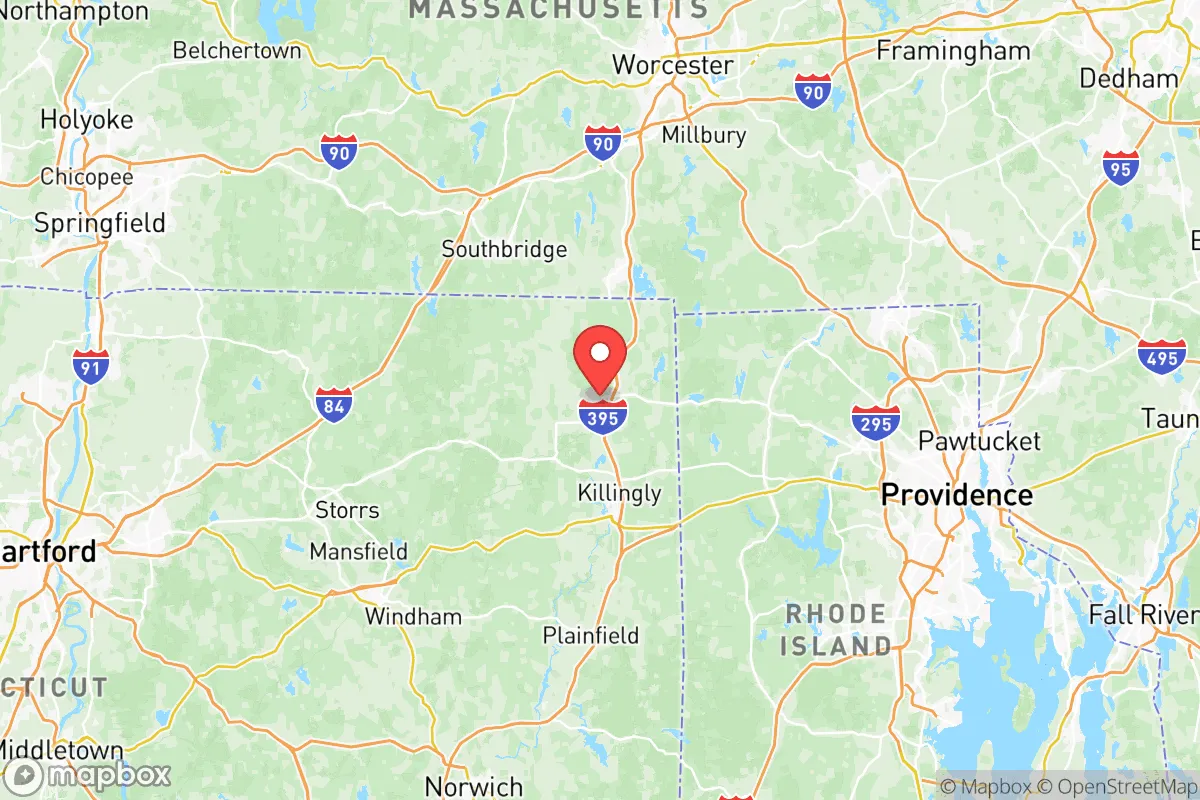
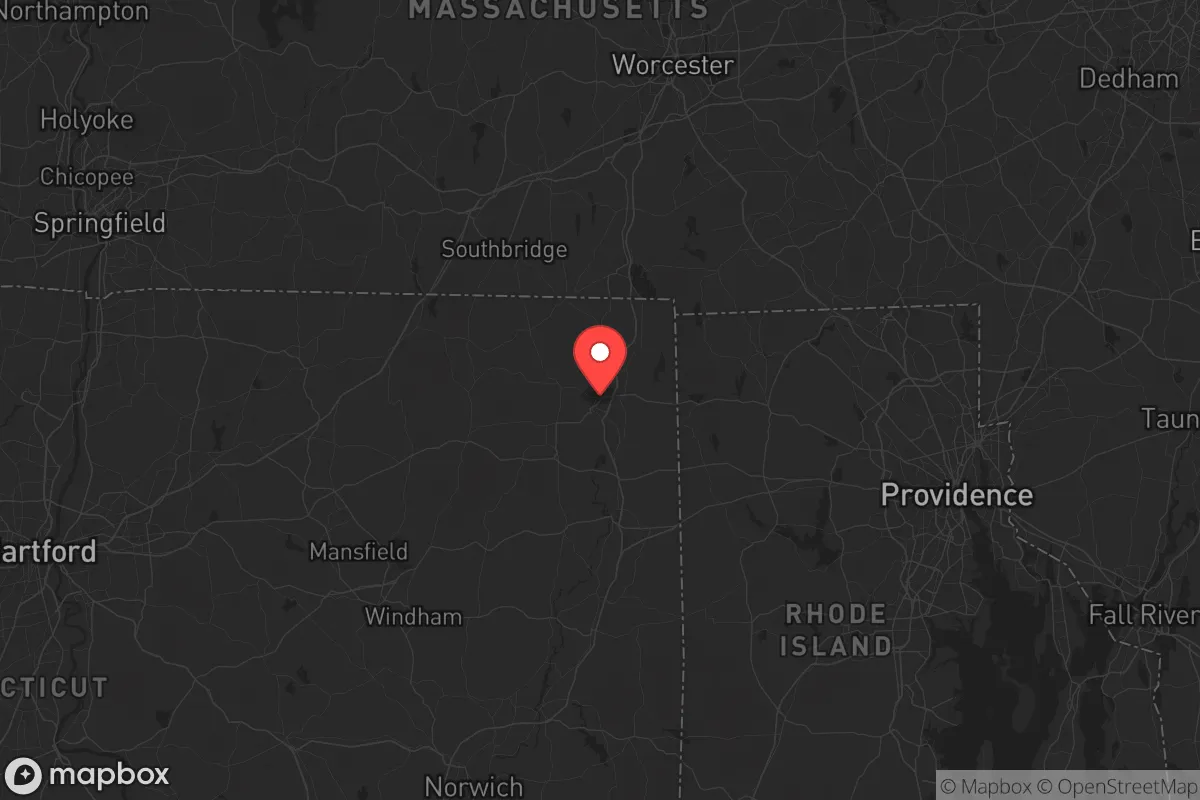
The Northeastern Connecticut Planning Region, often called the Quiet Corner, is a distinct political island within a blue state. While Connecticut as a whole has a Cook PVI of D+8, this region sits at D+4, making it significantly more competitive and conservative-leaning than the state average. This isn't a deep-red stronghold, but a place where Democrats hold a slim, structural advantage that has been shrinking in recent cycles, driven by a mix of rural independence, working-class economic anxiety, and a growing contingent of exurban commuters.
How it compares
The D+4 rating means this region votes about 4 percentage points more Republican than the national average, while the state's D+8 rating means Connecticut as a whole votes about 8 points more Democratic. In practical terms, a Democrat running statewide in CT can expect to win by a comfortable margin, but that same candidate will often struggle or lose outright in the Quiet Corner. The region's political geography is not uniform. Towns like Windham and Willimantic are solidly blue, anchored by Eastern Connecticut State University and a more diverse, lower-income population. In contrast, rural towns like Pomfret, Woodstock, and Eastford lean reliably red, driven by a strong culture of land stewardship, gun rights, and local control. The real battlegrounds are the "swing" towns like Killingly and Plainfield, where working-class voters, many employed in manufacturing or logistics, have been trending rightward in presidential elections, even as they split tickets for local offices. This creates a political reality where a statewide Democratic wave, like in 2018 or 2020, still carries the region, but a close race, like the 2022 gubernatorial contest, sees the Quiet Corner break for the Republican.
What this means for residents
For a conservative resident, the Quiet Corner offers a rare pocket of political sanity within a blue state. You can live in a town where the local board of selectmen is Republican, the town meeting is the real seat of power, and your neighbors largely share your views on taxes and property rights. You'll still pay Connecticut's high state income tax and deal with state-level gun laws you likely oppose, but your day-to-day local governance feels more like New Hampshire than New Haven. For a liberal resident, the region can feel like a lonely outpost. You'll find your community in Windham or at the farmers' market in Brooklyn, but you'll also encounter "Don't Tread on Me" flags and heated debates at town hall about spending. The upside is that your vote carries more weight here than in a deep-blue suburb; a few hundred engaged progressives can swing a local election, and the region's D+4 lean means state-level Democrats still invest in organizing here, unlike in truly red parts of the state.
Culturally, the Quiet Corner's political climate manifests in a fierce defense of local autonomy. This is a region that has historically resisted regional school consolidation, zoning reform, and state mandates on affordable housing. The recent fights over a proposed wind farm in the towns of Scotland and Chaplin, or the ongoing debate about a new natural gas pipeline through Killingly, show a deep skepticism of both corporate and state power. The policy distinction is clear: while the state pushes for denser development and transit-oriented growth, the Quiet Corner's political DNA is rooted in the idea that a person's property is their castle, and the town, not Hartford, knows best. This tension between localism and state-level progressivism is the defining political story of the region, and it's not going away anytime soon.

State Political ClimatePolitical Climate in Connecticut
State Political AnalysisPolitical Environment in the State
Connecticut is a reliably Democratic state with a Cook PVI of D+8, meaning it typically votes about eight points more Democratic than the national average in presidential elections. Over the past 10-20 years, the state has shifted leftward, driven by the consolidation of Democratic power in its wealthy, educated suburbs and the continued decline of its once-competitive manufacturing and industrial base. While the state hasn't flipped in a presidential race since 1988 (when it went for George H.W. Bush), the margin has widened: Barack Obama won by 17 points in 2012, Joe Biden by 20 in 2020, and Kamala Harris by roughly 14 in 2024. The state's political trajectory is one of slow, steady Democratic entrenchment, though with notable pockets of Republican resistance in the eastern and northwestern rural areas.
Urban vs. rural divide
The political map of Connecticut is a classic story of three distinct regions. The southwestern corner, anchored by Stamford, Greenwich, and Norwalk, is the state's Democratic engine—wealthy, highly educated, and heavily influenced by New York City commuters. These towns routinely vote 65-75% Democratic. The state's largest city, Bridgeport, is a Democratic stronghold (often 80%+ Democratic), but its influence is somewhat diluted by its smaller population relative to the suburbs. The central corridor, including Hartford and New Haven, is also solidly blue, driven by state government, universities (Yale, UConn), and a large minority population. The real Republican resistance comes from the eastern half of the state—places like Ledyard, Killingly, and Plainfield—and the northwestern hills around Litchfield and Torrington. These areas are more rural, less wealthy, and more culturally conservative, often voting 55-65% Republican. The 2024 election saw New London County flip back to the GOP after a brief Democratic flirtation, while Fairfield County (the southwestern commuter belt) remained the state's Democratic anchor. The divide isn't just about population density—it's about economic structure: the Democratic suburbs are service-and-finance economies, while the Republican rural areas still have a manufacturing and agricultural base.
Policy environment
Connecticut's policy environment is distinctly progressive, with a high-tax, high-service model. The state has a progressive income tax (top rate 6.99% on income over $500,000) and one of the highest property tax burdens in the nation—the median effective property tax rate is about 2.1%, roughly double the national average. Sales tax is 6.35%, with no local add-ons. The regulatory posture is business-friendly in some sectors (insurance, finance, defense) but burdensome for small businesses, with a complex permitting and environmental review process. Education policy is a mixed bag: the state spends more per pupil than almost any other state (over $20,000 annually), but outcomes are highly unequal—wealthy suburbs like Westport and Darien have top-tier schools, while urban districts like Hartford and Bridgeport struggle with chronic underperformance. Healthcare is heavily regulated, with a state-run exchange (Access Health CT) and strong Medicaid expansion. Election laws are among the most liberal in the country: no-excuse absentee voting, early voting (14 days), same-day registration, and automatic voter registration at the DMV. The state also has a public campaign financing system for legislative races, which has reduced the influence of big donors but also created a class of career politicians.
Recent policy direction
Over the last five years, Connecticut has moved decisively left on several fronts. On gun and self-defense law, the state already had some of the strictest laws in the nation (universal background checks, assault weapons ban, magazine capacity limits), and in 2023 it passed a law requiring a permit to purchase any firearm (including long guns) and raising the minimum purchase age to 21. Open carry is effectively banned. On parental and education rights, the state has been a battleground: in 2022, it passed a law requiring school districts to adopt policies on LGBTQ+ inclusivity, including curriculum that addresses sexual orientation and gender identity, which has sparked intense local fights in conservative towns like Woodbury and Southbury. On speech and privacy, Connecticut has a strong data privacy law (the Connecticut Data Privacy Act, effective 2023) that gives residents the right to opt out of data collection, but it also has a broad anti-discrimination law that some conservatives argue chills speech on religious and moral views. On medical and bodily autonomy, the state has codified abortion rights into law (the Reproductive Freedom Defense Act of 2022) and expanded access to gender-affirming care for minors, including a 2023 law that protects providers from out-of-state lawsuits. On property rights, the state has a strong eminent domain framework but also a controversial "fair share" housing law (passed in 2023) that requires towns to plan for more affordable housing, which has been challenged by suburban towns as an infringement on local zoning control. On taxation, the state has not cut income taxes significantly, but it did pass a modest property tax credit expansion in 2023. On voting and ballot access, the state expanded early voting in 2023 and is moving toward universal mail-in voting, though that remains a partisan flashpoint.
Civil unrest & political movements
Connecticut has seen relatively low levels of civil unrest compared to larger states, but there have been notable flashpoints. The 2020 Black Lives Matter protests in New Haven and Hartford were large but mostly peaceful, though there were isolated incidents of property damage. The state's sanctuary policy—a 2013 law that limits local police cooperation with federal immigration enforcement—has been a persistent source of tension, particularly in towns like Danbury and Norwalk where immigration enforcement raids have occurred. In 2023, a controversy erupted over the state's "clean slate" law, which automatically erases certain criminal records after a period of time, with critics arguing it undermines public safety. The most visible political movement on the right is the "Save Our Schools" coalition, which has organized against LGBTQ+ curriculum mandates and critical race theory in schools, holding rallies at the state capitol and winning some local school board seats in towns like Monroe and Newtown. On the left, the Working Families Party has become a significant force, often cross-endorsing Democrats but pushing them left on issues like rent control and single-payer healthcare. Election integrity has been a minor issue—the state's universal mail-in voting expansion was challenged in court but upheld, and there have been no major fraud scandals. The state's political culture is generally civil, but the divide between the progressive suburbs and the conservative rural areas is growing sharper, with town-level fights over zoning, schools, and policing becoming more common.
Projection
Over the next 5-10 years, Connecticut is likely to become more Democratic, but the pace of change will slow. The state's population is aging and slowly declining (down about 0.5% since 2020), with out-migration to lower-tax states like Florida and Texas. However, the people moving in—often from New York City and other expensive metros—tend to be younger, more educated, and more liberal, reinforcing the Democratic lean in the southwestern suburbs. The rural Republican areas will continue to shrink in relative population, but they will become more politically vocal and organized, potentially flipping a few state legislative seats in the eastern part of the state. The biggest wildcard is housing: if the state's "fair share" housing law leads to significant new development in wealthy suburbs, it could bring in more diverse, Democratic-leaning residents, accelerating the leftward shift. Conversely, if the law is gutted by legal challenges or local resistance, the status quo of segregated, high-cost suburbs will persist. On policy, expect continued movement on climate (the state has a goal of 100% zero-carbon electricity by 2040), further expansion of early voting, and likely a push for a state-level public option for health insurance. The gun control debate is largely settled—the state will only tighten further. The biggest fight will be over education: expect more state mandates on curriculum and school funding, and more local backlash in conservative towns. A new resident moving in now should expect to find a state that is stable, predictable, and increasingly progressive, but with a vocal and resilient conservative minority that will continue to fight on local issues.
For a conservative-leaning relocator, the bottom line is this: Connecticut is a blue state that will remain blue, and you will be in the minority politically. But the minority is not powerless—it controls many town governments, some state legislative seats, and has a real voice in local school boards and zoning commissions. The state's high taxes and regulatory burden are real, but they come with high-quality public services (roads, schools, parks) that are well-funded. If you value low taxes and minimal government, this is not the state for you. If you value a stable, well-run state with strong public institutions and are willing to pay for it, and if you can find a town that matches your political and cultural preferences (like Litchfield or Killingly for a more conservative environment, or Westport or Stamford for a liberal one), Connecticut can work. Just know that the political trajectory is leftward, and the state's policy environment will continue to reflect that direction.
* Values derived from national, state, county, city and local statistics and may differ in a specific area. Last updated: 2026-06-16T22:46:21.000Z
Narrative content on this page is AI-generated and may contain mistakes. Verify any details that matter before acting on them.
ReloMaps may earn a commission from affiliate links at no extra cost to you.

