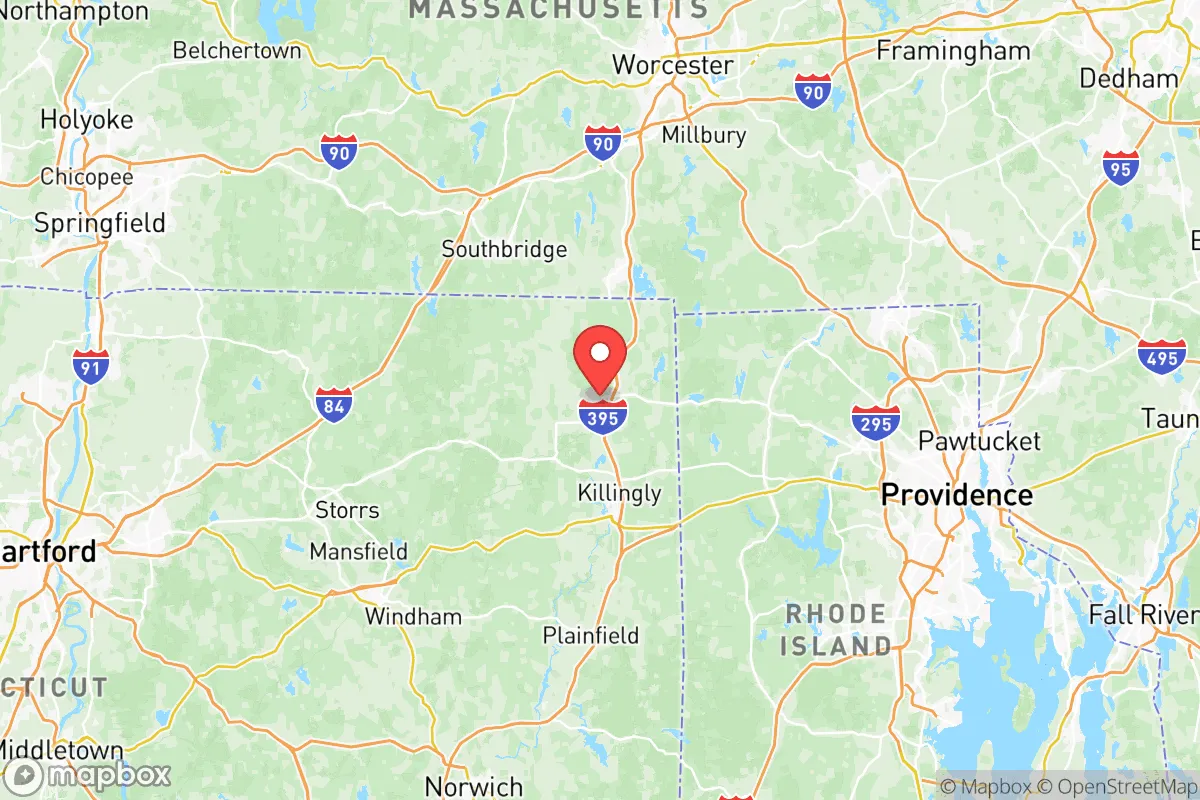
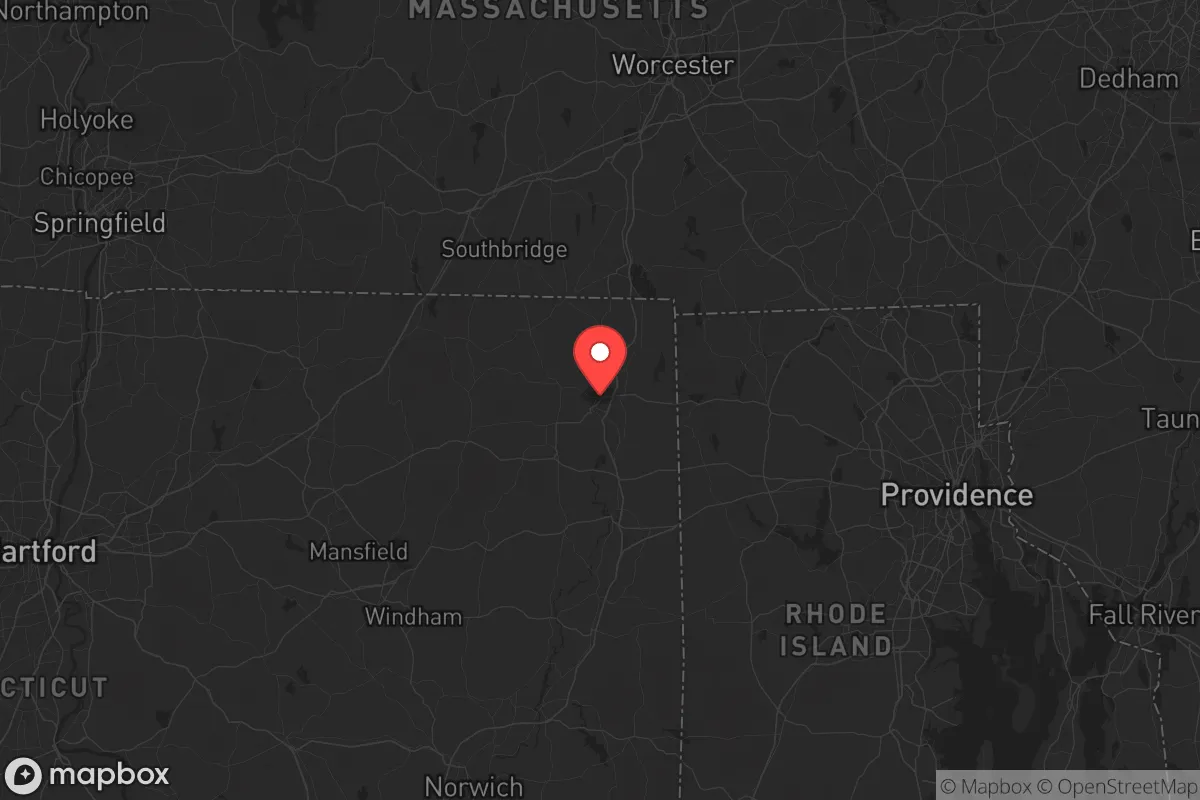
Demographics of Northeastern Connecticut Planning Region County
Historical data isn't available for Northeastern Connecticut Planning Region County. Trends shown are for Connecticut, Connecticut.
Affluence Level in Northeastern Connecticut Planning Region County
A middle-class area roughly in line with national averages across income, home values, education, and employment.
People of Northeastern Connecticut Planning Region County
The people of Northeastern Connecticut Planning Region County are a predominantly white, long-established population of 95,829 residents, characterized by a deep-rooted Yankee and French-Canadian heritage that remains the region's defining cultural identity. With only 2.0% foreign-born and 87.2% white, this is one of Connecticut's most ethnically homogeneous counties, where small-town New England traditions and a quiet, rural lifestyle prevail. The population is notably less diverse than the state average, with a modest 5.0% Hispanic share and minimal representation from Black (1.7%), East/Southeast Asian (1.0%), and Indian subcontinent (0.3%) communities. This is a region where the past still shapes the present, and understanding who lives here requires tracing the waves of settlement that built its towns.
Settlement & growth (pre-1960)
Long before European arrival, the region was the homeland of the Nipmuc and Mohegan peoples, who lived in small, dispersed villages along the Quinebaug and Shetucket River valleys. These Algonquian-speaking groups practiced seasonal agriculture, hunting, and fishing, leaving behind a network of trails and place names that still echo in the landscape. English colonists from the Massachusetts Bay Colony began pushing into the area in the late 17th century, establishing the first permanent European settlements in what would become the towns of Woodstock (1686), Thompson (1685), and Killingly (1708). These early settlers were primarily of English Puritan stock, drawn by the promise of fertile river-bottom land and the relative isolation from coastal pressures. They established a pattern of subsistence farming, small mills, and tight-knit Congregational church communities that would define the region for generations.
The 19th century brought two transformative waves. The first was the arrival of French-Canadian immigrants between 1850 and 1900, who came south from Quebec to work in the region's burgeoning textile mills. Towns like Putnam and Danielson (in Killingly) became industrial hubs, with the Quinebaug River powering cotton and woolen mills that employed thousands. French-Canadian families settled in dense, working-class neighborhoods, building Catholic parishes like St. Mary's in Putnam and St. Joseph's in Danielson that remain cultural anchors today. By 1900, French was widely spoken in these mill villages, and the community's influence is still visible in local surnames, festivals, and the region's strong Catholic presence.
The second wave was a smaller but significant influx of Polish and Italian immigrants between 1890 and 1920, also drawn by mill work. Polish families concentrated in Plainfield and Canterbury, where they established their own churches and social clubs. Italian immigrants settled in Brooklyn and Pomfret, often working as stonemasons, farmers, or railroad laborers. These groups remained distinct from the older Yankee population, creating a layered social fabric of ethnic enclaves within the region's small towns. The Great Depression and the subsequent decline of the textile industry after World War II halted large-scale immigration, and the region's population stabilized. By 1960, Northeastern Connecticut was a quiet, predominantly white, working-class area with a strong manufacturing base that was already beginning to erode.
Modern era (post-1965)
The 1965 Hart-Cellar Act, which reshaped American immigration, had a minimal impact on Northeastern Connecticut. Unlike coastal cities or Sun Belt suburbs, the region did not attract significant new immigrant populations. The foreign-born share remains at just 2.0%, far below the national average of roughly 14%. The modest Hispanic population (5.0%) is largely of Puerto Rican descent, with families arriving in the 1970s and 1980s to work in remaining manufacturing and service jobs, settling primarily in Willimantic (Windham) and Danielson. These communities have established small but visible cultural presences, including bodegas and Pentecostal churches, but they remain a minority within the broader white population.
Domestic migration has been the more significant demographic force since 1970. The region experienced a steady out-migration of younger residents seeking opportunities in Hartford, Boston, or the Sun Belt, while attracting a modest inflow of retirees and second-home buyers drawn to the area's low property taxes and rural character. Towns like Woodstock and Pomfret have seen an uptick in affluent newcomers from southern Connecticut and New York, who purchase historic farmhouses and horse properties. This has created a subtle cultural tension between long-established working-class families and newer, wealthier residents. The Black population (1.7%) and East/Southeast Asian population (1.0%) remain very small, concentrated in Windham and Killingly, often tied to the University of Connecticut's regional campus or local healthcare facilities. The Indian subcontinent population (0.3%) is negligible, with no distinct enclave.
Suburbanization has been limited by the region's distance from major employment centers. Unlike Hartford's suburbs, Northeastern Connecticut has not experienced sprawling development. Instead, population has slowly decentralized from historic mill villages into surrounding rural areas, with new single-family homes on acre lots becoming the norm. The college-educated share (26.2%) is below the state average, reflecting the region's historical reliance on manufacturing and trades rather than knowledge-economy jobs.
The future
Demographic projections suggest Northeastern Connecticut will remain one of the whitest and least diverse regions in Connecticut for the foreseeable future. The population is aging, with a median age above the state average, and natural increase (births minus deaths) is negative in several towns. Growth, if any, will come from domestic in-migration of retirees and remote workers seeking affordable rural living. The Hispanic share may rise slowly, potentially reaching 7-8% by 2040, driven by natural increase and continued migration from Puerto Rico and other U.S. territories. However, the region is unlikely to attract significant international immigration due to its limited job market and lack of established ethnic networks.
The cultural identity is evolving, but slowly. The old Yankee-French-Canadian-Polish-Italian mosaic is fading as younger generations intermarry and move away. In its place, a broader "rural New England" identity is emerging, centered on outdoor recreation, local agriculture, and historic preservation. The region is becoming more politically conservative relative to the rest of Connecticut, with towns like Thompson and Killingly trending Republican in recent elections. For newcomers, this means a place where tradition matters, where community ties are strong but insular, and where diversity is limited.
For someone moving in now, Northeastern Connecticut offers a stable, safe, and affordable environment with a clear sense of place. The population is not growing rapidly, nor is it diversifying quickly. What it provides is a quiet, rural lifestyle rooted in centuries of New England history, where the biggest changes are often the restoration of a 19th-century mill building or the opening of a new farm stand. It is a region that values continuity over change, and for those seeking that, it remains a compelling choice.

* Values derived from national, state, county, city and local statistics and may differ in a specific area. Last updated: 2026-06-16T22:46:21.000Z
Narrative content on this page is AI-generated and may contain mistakes. Verify any details that matter before acting on them.
ReloMaps may earn a commission from affiliate links at no extra cost to you.

