
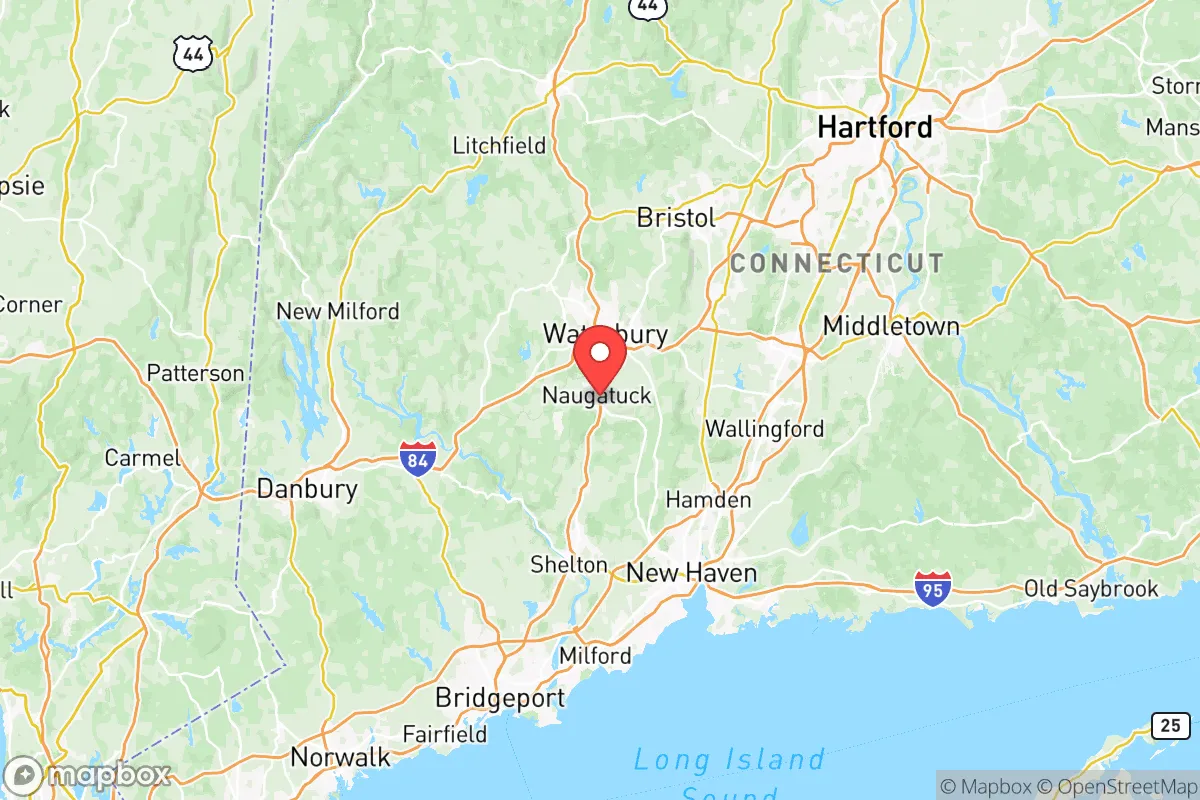
Personal Sovereignty in Naugatuck Valley Planning Region County
Viable for self-reliance. Generally workable, though some barriers may limit total independence.
What does Personal Sovereignty tell us?
Personal Sovereignty measures your capacity for self-reliance and independence with minimal government friction. Higher scores mean fewer barriers between you and the way you want to live... but it assumes you have the space you need and good neighbors.
What does this tell us?
Personal Sovereignty measures your capacity for self-reliance and independence with minimal government friction. Higher scores mean fewer barriers between you and the way you want to live... but it assumes you have the space you need and good neighbors.
State Policy
Energy independence: Importer (5% of energy produced in-state)
Personal Liberty
Homesteading

Personal Liberty Analysis
The Naugatuck Valley Planning Region in western Connecticut offers a mixed but improving environment for personal sovereignty, where state-level constraints on taxation, self-defense, and land use are tempered by local variation and a growing pushback against Hartford's regulatory reach. While Connecticut as a whole ranks among the highest-taxed and most regulated states in the Northeast, the Naugatuck Valley—anchored by cities like Waterbury, Torrington, and Danbury, and dotted with smaller towns such as Litchfield, Thomaston, and Woodbury—provides pockets where autonomy-minded individuals can find more breathing room. The region's industrial heritage and working-class character foster a self-reliant culture, but anyone considering relocation must weigh the state's heavy hand in property taxes, gun laws, and land-use rules against the area's relatively affordable real estate and lower population density compared to Fairfield County or the Hartford suburbs.
Tax burden and regulatory posture across Naugatuck Valley towns
Connecticut's tax burden is among the highest in the nation, with a state income tax that tops out at 6.99% and property taxes that average roughly 2.1% of home value—the third-highest effective rate in the U.S. In the Naugatuck Valley, mill rates vary significantly: Waterbury's mill rate hovers around 50 mills (meaning $50 per $1,000 of assessed value), while smaller towns like Litchfield and Woodbury sit closer to 30 mills, reflecting lower municipal spending and more conservative fiscal management. The regulatory posture is similarly uneven. Connecticut mandates strict building codes, environmental reviews, and wetland protections that can delay or block construction projects, but towns like Thomaston and Plymouth have more permissive zoning for home-based businesses and accessory dwellings than larger cities. For a relocation-minded reader, the key takeaway is that property tax rates in Naugatuck Valley towns can differ by nearly 40% between neighboring municipalities, making town selection a critical financial decision. The state's estate tax exemption of $7.1 million (indexed for inflation) and lack of a state-level homestead exemption mean that homeowners bear the full brunt of property taxes, though some towns offer tax deferral programs for seniors.
Self-defense and gun law specifics in Connecticut's regulatory landscape
Connecticut's gun laws are among the strictest in the nation, requiring a permit to purchase any firearm, a 14-day waiting period for handguns, and a ban on "assault weapons" and magazines over 10 rounds. The Naugatuck Valley, however, has a strong hunting and sport-shooting tradition, with gun shops and ranges in towns like Torrington, Watertown, and New Milford serving a community that largely complies with state law while advocating for Second Amendment rights. Open carry is illegal in Connecticut, and concealed carry requires a permit that involves an 8-hour safety course and a background check, but the state's "may-issue" system has been effectively replaced by "shall-issue" after a 2022 court ruling, making permits more accessible. For self-defense, Connecticut does not have a "stand your ground" law; instead, it imposes a duty to retreat in public spaces before using deadly force, except in one's home. This legal framework means that personal sovereignty in self-defense is more constrained than in states like Texas or Florida, but local gun culture remains robust, with organizations like the Connecticut Citizens Defense League actively lobbying for reform. Readers prioritizing self-defense should note that ammunition purchases also require a permit, and private firearm sales must go through a licensed dealer.
Self-reliance and homesteading viability: lot sizes, zoning, and off-grid feasibility
Homesteading and off-grid living in the Naugatuck Valley are feasible but require careful town selection due to Connecticut's dense regulatory web. Minimum lot sizes vary dramatically: in rural Litchfield and Cornwall, you can find 2- to 5-acre parcels zoned for agriculture, while more suburban towns like Southbury and Oxford require 1-2 acres for single-family homes. Off-grid systems face significant hurdles: Connecticut law requires all dwellings to be connected to a public water supply or a permitted private well, and septic systems must meet strict health codes. Solar panels are allowed statewide, but net metering policies are less favorable than in sunbelt states, and battery storage is increasingly common. Rainwater collection is legal but limited to non-potable uses, and composting toilets require local health department approval. Towns like Kent and Sharon in the northern part of the region have more permissive zoning for small-scale farming and livestock, while Waterbury and Danbury impose urban restrictions. For a family seeking self-reliance, the Naugatuck Valley's agricultural exemption for property taxes on active farmland (PA 490) can reduce tax burdens by 50-80%, but the land must be actively used for farming or forestry. The region's growing network of farmers' markets and CSAs in towns like New Milford and Washington Depot supports local food production, but full off-grid independence is rare due to state building codes that mandate grid connection for new construction.
Personal liberties: parental rights, medical autonomy, speech, and property
Connecticut's approach to personal liberties is generally progressive, which can be a double-edged sword for conservative-leaning readers. Parental rights are protected under state law, with parents having the right to direct their children's education, including homeschooling, which requires a notice of intent and annual portfolio review. The state's medical autonomy landscape is mixed: Connecticut has legalized recreational marijuana and allows medical aid-in-dying for terminally ill patients, but vaccine mandates for school attendance remain in place, and COVID-era emergency orders have left some residents wary of future overreach. Free speech is protected under the state constitution, but Connecticut has a "hate speech" law that can be applied to certain public expressions, and local ordinances in cities like Waterbury and Danbury regulate noise and signage. Property rights are constrained by Connecticut's strict eminent domain laws and environmental regulations, including the Connecticut Environmental Protection Act, which allows citizens to sue to block development that harms natural resources. For a relocation reader, the most significant liberty concern is the state's income tax on all earned income, which directly reduces financial autonomy, though towns with lower mill rates partially offset this burden. The region's strong tradition of local governance means that school boards and zoning commissions in towns like Woodbury and Bethlehem often reflect conservative values, providing a buffer against state-level policies.
Overall, personal sovereignty in the Naugatuck Valley Planning Region is a study in contrasts: the state imposes high taxes, strict gun laws, and dense regulations, but the region's towns offer meaningful variation in cost, culture, and enforcement. Compared to Fairfield County's high prices and progressive politics, or the more libertarian-leaning areas of northern New England, the Naugatuck Valley sits in a middle ground where a determined individual can carve out a self-reliant lifestyle—especially in towns like Litchfield, Thomaston, and Woodbury—but must accept Connecticut's overarching legal framework. For a conservative-leaning family or individual, the region's affordability relative to the rest of the state, combined with its rural pockets and strong community ties, makes it a viable option if the trade-offs in tax burden and regulatory compliance are understood and accepted. The key is town selection: choosing a municipality with lower mill rates, more permissive zoning, and a local culture aligned with self-reliance can significantly enhance personal sovereignty within the constraints of Connecticut law.

* Values derived from national, state, county, city and local statistics and may differ in a specific area. Last updated: 2026-07-09T11:51:32.000Z
Narrative content on this page is AI-generated and may contain mistakes. Verify any details that matter before acting on them.
ReloMaps may earn a commission from affiliate links at no extra cost to you.

