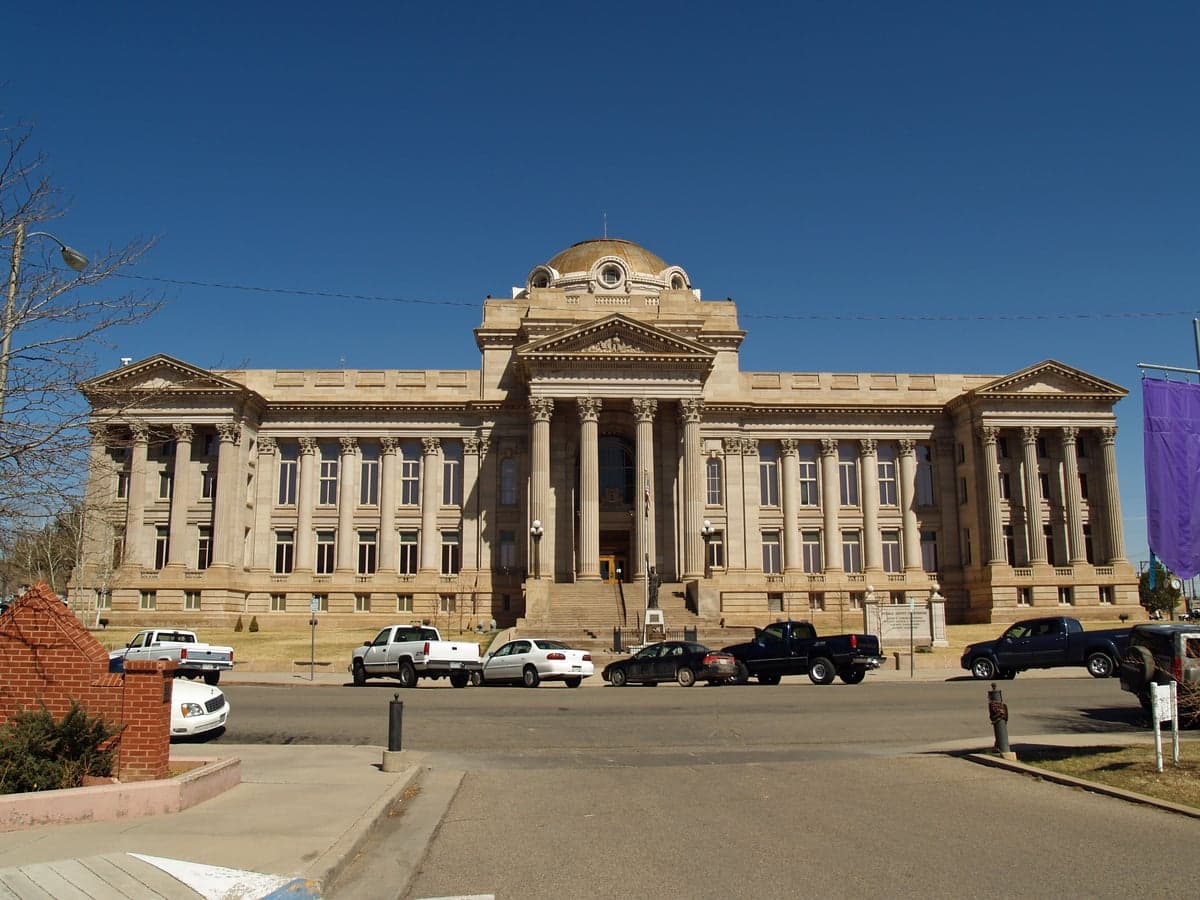
Photo: Wikipedia
Personal Sovereignty in Pueblo County
Viable for self-reliance. Generally workable, though some barriers may limit total independence.
What does Personal Sovereignty tell us?
Personal Sovereignty measures your capacity for self-reliance and independence with minimal government friction. Higher scores mean fewer barriers between you and the way you want to live... but it assumes you have the space you need and good neighbors.
What does this tell us?
Personal Sovereignty measures your capacity for self-reliance and independence with minimal government friction. Higher scores mean fewer barriers between you and the way you want to live... but it assumes you have the space you need and good neighbors.
State Policy
Energy independence: Net exporter (110% of energy produced in-state)
Personal Liberty
Homesteading

Personal Liberty Analysis
Pueblo County offers a notably higher degree of personal sovereignty than Colorado's Front Range urban core, with a regulatory environment that leans permissive on property use and self-defense while operating within the constraints of state-level mandates on taxation and energy policy. The county's mix of agricultural land, exurban subdivisions, and the city of Pueblo itself creates a patchwork of autonomy — what is possible on a 5-acre parcel near Rye is very different from what is allowed inside the Pueblo city limits. For a relocation-minded individual or family prioritizing independence, the key variable is location within the county, as zoning, HOA presence, and municipal codes vary significantly between places like Pueblo West, Beulah, Avondale, and Colorado City.
Tax burden and regulatory posture compared to Colorado's Front Range
Pueblo County's property tax rate is among the lowest in Colorado, with a residential assessment rate of 6.7% and a mill levy that typically lands between 60 and 80 mills depending on the specific taxing district. For a median-valued home around $320,000, annual property tax often falls between $1,200 and $1,800 — roughly half what a comparable home would cost in Douglas County or Boulder County. The county has no local income tax, and Colorado's flat state income tax of 4.4% applies uniformly. Sales tax in unincorporated areas is 7.9% (state plus county), while the city of Pueblo adds its own levy for a combined rate near 9.2%. Regulatory posture is mixed: the county planning department is generally accommodating for rural construction and accessory dwelling units, but state-level energy mandates and water rights administration impose real constraints. Pueblo West, a large unincorporated community with its own metropolitan district, offers particularly light-touch building codes and no municipal zoning — a rarity in Colorado that appeals to those seeking maximum property freedom.
Self-defense and gun law specifics in Pueblo County
Colorado is a shall-issue state for concealed carry permits, and Pueblo County's sheriff's office processes applications without additional local restrictions beyond state statute. The county has not adopted any of the "red flag" ordinance enhancements seen in Denver or Boulder, though the state's Extreme Risk Protection Order law (effective 2020) applies uniformly. Open carry is legal in unincorporated areas and most of Pueblo County, but the city of Pueblo prohibits open carry of firearms in public buildings and parks via municipal code. No county-level magazine capacity or assault weapon bans exist, and private firearm sales between individuals do not require a background check under state law (though commercial sales require a federal firearms license). Beulah and Rye, small mountain-adjacent communities in the Wet Mountains, have a strong gun culture with multiple private shooting ranges and minimal neighbor density, making them attractive for those who prioritize self-defense training and recreational shooting without urban restrictions.
Self-reliance and homesteading viability: lot sizes, zoning, and off-grid feasibility
Homesteading viability in Pueblo County is highly location-dependent. Unincorporated areas generally allow livestock, gardens, and accessory structures with minimal permitting, but Colorado City (a census-designated place in the southern part of the county) has some of the most permissive zoning for small-scale agriculture, with minimum lot sizes of one acre and no HOA oversight in many subdivisions. Avondale and the St. Charles Mesa area offer larger agricultural parcels — often 5 to 40 acres — with established irrigation ditches and soil suitable for market gardening. Off-grid feasibility is constrained by Colorado's water rights system: rainwater collection is legal (since 2016) only for properties with a well permit or a rainwater catchment system serving a single-family home, and solar panels are permitted without county-level restriction. Septic systems require county health department approval, but composting toilets are allowed in rural areas. The county does not mandate grid connection for new construction, making true off-grid living possible on parcels with adequate groundwater. Pueblo West's lack of zoning means a homeowner can theoretically run a small farm, repair vehicles, or operate a home business without county interference — a significant draw for self-reliance-minded relocators.
Personal liberties: parental rights, medical autonomy, speech, and property
Pueblo County has not enacted any local ordinances that restrict parental rights in education or medical decision-making beyond state baseline requirements. School district policies vary: Pueblo County School District 70 (covering most rural areas) has a conservative-leaning board that has resisted curriculum mandates from the state level, while Pueblo City Schools (District 60) has a more progressive orientation. Medical autonomy is shaped by state law — Colorado permits medical aid-in-dying, recreational cannabis, and gender-affirming care for minors — but no county-level restrictions or mandates exist beyond what the state imposes. Free speech and assembly are protected under standard First Amendment jurisprudence, and the county has not passed any local protest-permitting ordinances. Property rights are generally strong, with no county-level rent control or short-term rental bans in unincorporated areas, though the city of Pueblo requires a license for Airbnb-style rentals. The absence of countywide inclusionary zoning or growth boundaries means landowners can develop or subdivide with relatively few hurdles compared to Front Range counties like Boulder or Larimer.
Overall, Pueblo County ranks as one of the more sovereignty-friendly areas in Colorado for those willing to live outside the city limits, offering low property taxes, permissive rural zoning, and a gun-friendly culture that contrasts sharply with the Denver metro area. The trade-off is acceptance of state-level mandates on energy, water, and medical policy that cannot be overridden locally. For a family or individual seeking maximum personal autonomy — particularly in property use, self-defense, and homesteading — the unincorporated communities of Pueblo West, Beulah, Rye, Avondale, and Colorado City each offer distinct advantages that reward careful parcel selection and a clear understanding of what state law permits versus what local enforcement tolerates.

* Values derived from national, state, county, city and local statistics and may differ in a specific area. Last updated: 2026-07-28T18:02:54.000Z
Narrative content on this page is AI-generated and may contain mistakes. Verify any details that matter before acting on them.
ReloMaps may earn a commission from affiliate links at no extra cost to you.

