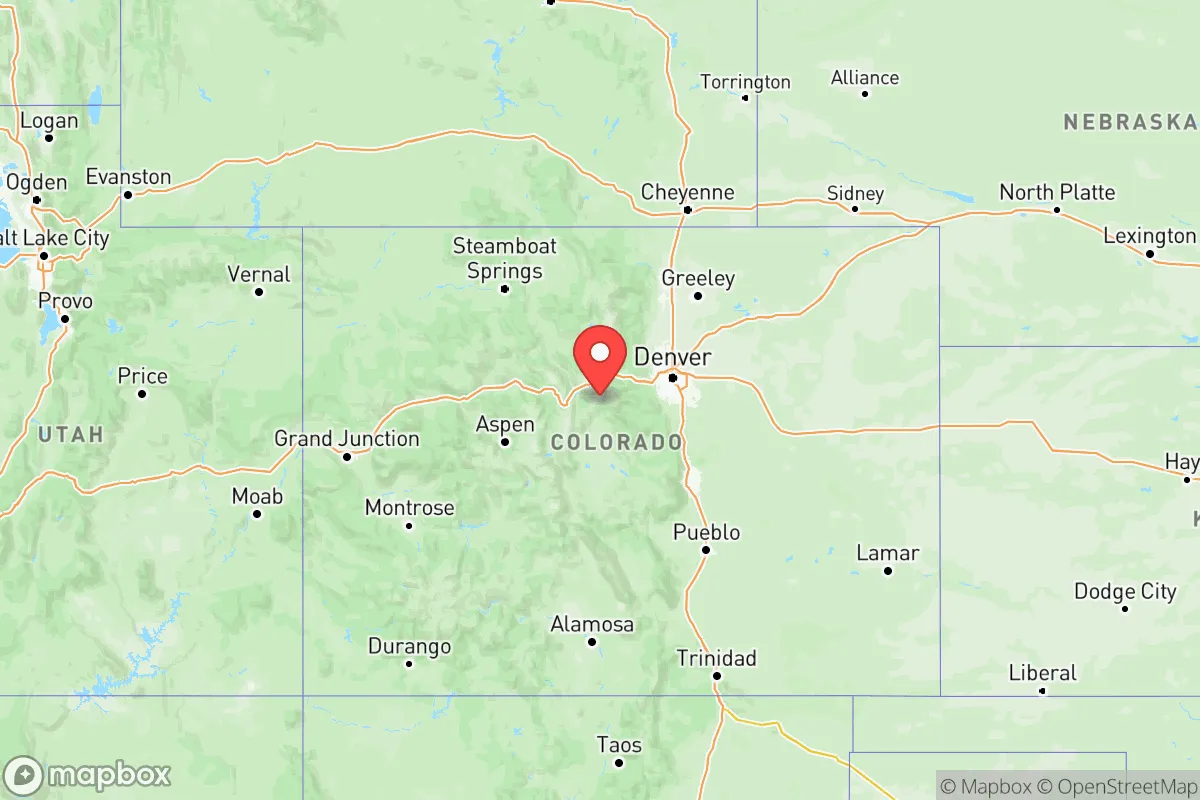
Photo: Wikipedia
Political ClimatePolitical Climate in Colorado
Political Environment in the State
Colorado has transformed from a classic purple swing state into a solidly blue-leaning state over the past two decades, driven by explosive growth in the Denver metro and Front Range corridor. While the state voted for the Democratic presidential candidate in every election since 2008, the margins have tightened recently — Biden won by 13.5 points in 2020, but that was down from Hillary Clinton’s 4.9-point win in 2016. The real story is the urban-rural chasm: the Denver-Boulder-Aurora axis and the I-25 corridor now dictate statewide outcomes, while the Eastern Plains, Western Slope, and southern mountain counties remain deeply Republican. For a conservative relocator, the practical reality is that Colorado is a state where your vote matters most in local and county-level races, but statewide policy will likely continue trending left.
Urban vs. rural divide
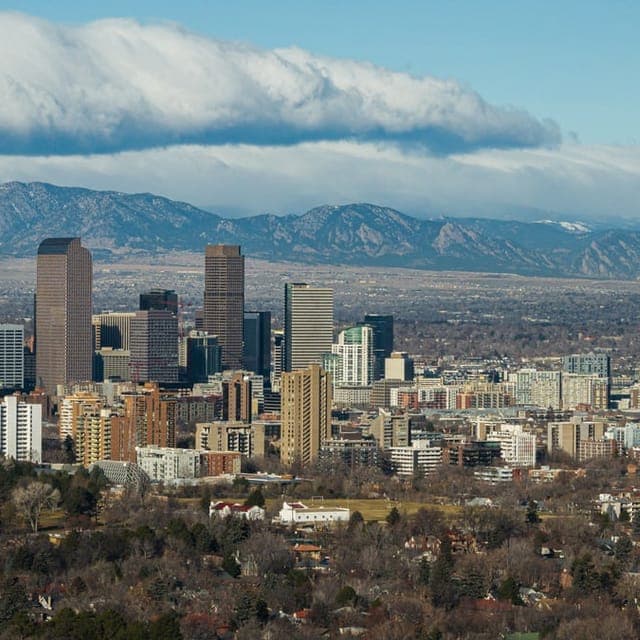
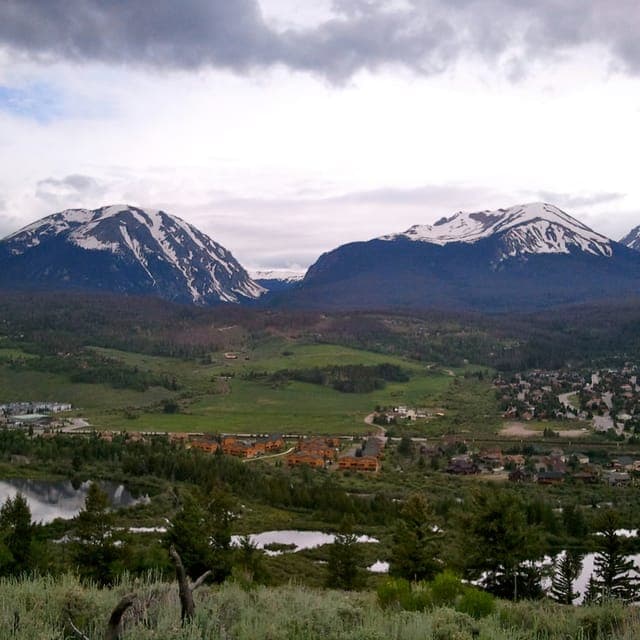
The political map of Colorado is essentially a tale of two states. The Denver metro area, including Denver, Aurora, Boulder, and Lakewood, is the Democratic engine — these counties alone deliver roughly 60% of the statewide Democratic vote. Boulder County is one of the most liberal jurisdictions in the country, while Denver County consistently votes 75-80% Democratic. The I-25 corridor extending north to Fort Collins and Greeley is more mixed: Larimer County (Fort Collins) has trended blue but still has competitive local races, while Weld County (Greeley) remains reliably red. The Western Slope, including Grand Junction and Montrose, votes heavily Republican, as does the Eastern Plains — Yuma County and Kit Carson County routinely go 70-80% GOP. The mountain resort counties like Summit and Pitkin (Aspen) are blue-leaning due to wealthy second-home owners and a tourism-driven economy. The key shift: suburban counties like Jefferson, Arapahoe, and Douglas — once reliably red — have moved toward Democrats, with Douglas County flipping from +18 R in 2016 to +2 D in 2020. That suburban realignment is the single biggest factor in Colorado’s leftward drift.
Policy environment
Colorado’s state-level policy is a mixed bag that reflects its competitive history. The state has a flat income tax rate of 4.4% (down from 4.55% in 2024 via Proposition HH adjustments), and the Gallagher Amendment — which capped residential property tax rates — was repealed by voters in 2020, leading to rising property taxes in fast-growing areas. Sales tax rates vary widely by locality, with Denver at 8.81% and some rural areas under 3%. The state has a strong regulatory posture on environmental issues, including a 2024 law requiring 100% renewable energy by 2040 for utilities. Education policy is dominated by the 2018 teacher strike and subsequent funding increases, but Colorado still ranks near the bottom nationally in per-pupil funding. Healthcare is heavily regulated, with a state-run insurance exchange and Medicaid expansion under the Affordable Care Act. Election laws are among the most accessible in the country: universal mail-in voting, same-day registration, and automatic voter registration at the DMV. For a conservative relocator, the tax structure is relatively friendly — no inheritance tax, no estate tax, and a flat income tax — but the regulatory environment, especially on energy and land use, can be restrictive.
Recent policy direction
The last five years have seen a clear leftward shift on several fronts. On gun policy, Colorado passed a 2023 law raising the minimum age to purchase a firearm to 21, a 2024 law requiring a 10-day waiting period for all firearm purchases, and a 2025 law banning "ghost guns" and requiring serial numbers on homemade firearms. Self-defense law remains relatively strong — Colorado is a "stand your ground" state with no duty to retreat — but the trend is toward more restrictions. On education, the 2023 "Parents’ Bill of Rights" was actually a compromise bill that preserved school district autonomy while requiring parental notification for curriculum changes, but it was weaker than similar laws in Florida or Texas. On speech and privacy, Colorado passed the Colorado Privacy Act in 2021, one of the strongest state-level data privacy laws in the country, and a 2024 law restricting social media algorithms for minors. On medical and bodily autonomy, Colorado enshrined abortion rights in state law in 2022 and passed a 2023 law protecting gender-affirming care for minors, making it a sanctuary state for both. Property rights are a flashpoint: the 2024 "Right to Repair" law for agricultural equipment passed, but land-use regulation remains tight, especially in the Front Range. Voting access has expanded steadily, with automatic voter registration and mail-in ballots now standard. The net effect: Colorado is becoming a state where individual liberties on social issues are broadly protected, but gun rights and property rights face increasing regulation.
Civil unrest & political movements
Colorado has seen its share of political flashpoints. The 2020 protests in Denver over George Floyd’s death were among the largest in the country, with property damage and clashes with police that led to a $14 million settlement for protesters’ claims. The state has a strong organized left: the Colorado Democratic Socialists of America is active in Denver and Boulder, and environmental groups like 350 Colorado have successfully pushed for the renewable energy mandate. On the right, the Colorado Republican Party has fractured between establishment and Trump-aligned factions, with the 2024 state convention featuring a contentious fight over party leadership. Immigration politics are heated: Denver has been a sanctuary city since 2019, and the state passed a 2023 law limiting cooperation between local law enforcement and ICE, leading to tensions with rural counties that passed resolutions opposing the policy. The "12th Amendment" movement — a push for Colorado to secede and form a separate state — has gained some traction on the Eastern Plains, with 11 counties voting on secession measures in 2023, though none passed. Election integrity remains a live issue: the 2020 election saw no evidence of widespread fraud, but the 2024 election cycle featured a high-profile lawsuit over ballot drop box security in Mesa County. For a new resident, the most visible sign of political tension is the proliferation of yard signs and bumper stickers — it’s common to see both "Let’s Go Brandon" and "In This House We Believe" signs in the same neighborhood in swing suburbs like Littleton or Centennial.
Projection
Over the next 5-10 years, Colorado is likely to continue its leftward drift, but at a slower pace. The key demographic driver is in-migration: the state added 750,000 people between 2010 and 2020, and the majority of new arrivals are from blue states like California, Texas, and Illinois, bringing their political preferences with them. The suburban shift — especially in Douglas and El Paso counties — is the wild card: if these areas continue to trend blue, the statewide Democratic margin could widen. However, there are countervailing forces: the cost of living in the Front Range is pushing some residents to the Western Slope and Eastern Plains, which could strengthen rural Republican voting blocs. The state’s housing crisis — median home prices in Denver are over $600,000 — is creating a political backlash that could benefit either party depending on how it’s framed. The most likely scenario: Colorado remains a blue-leaning state with a Democratic trifecta in state government, but with narrow enough margins that policy shifts are incremental rather than radical. For a conservative relocator, the practical implication is that your vote will matter most in local races — school board, county commission, city council — where the balance of power is still genuinely competitive in many areas.
For someone moving to Colorado today, the bottom line is straightforward: you’re moving to a state where the statewide political culture is center-left, but where local control still matters enormously. If you’re a conservative, you’ll find like-minded communities in Colorado Springs, Grand Junction, or the Eastern Plains, but you’ll need to accept that state-level policy will often run counter to your preferences. If you’re a liberal, you’ll find a welcoming environment in Denver, Boulder, or the mountain towns, but you’ll encounter sharp resistance in rural areas. The state’s political future is being written by the suburbs — places like Broomfield, Parker, and Castle Rock — where the battle for Colorado’s soul is being fought one school board meeting and one city council race at a time.

Most Conservative Cities in Colorado

Most Liberal Cities in Colorado
* Values derived from national, state, county, city and local statistics and may differ in a specific area. Last updated: 2026-08-03T16:05:48.000Z
Narrative content on this page is AI-generated and may contain mistakes. Verify any details that matter before acting on them.
ReloMaps may earn a commission from affiliate links at no extra cost to you.

