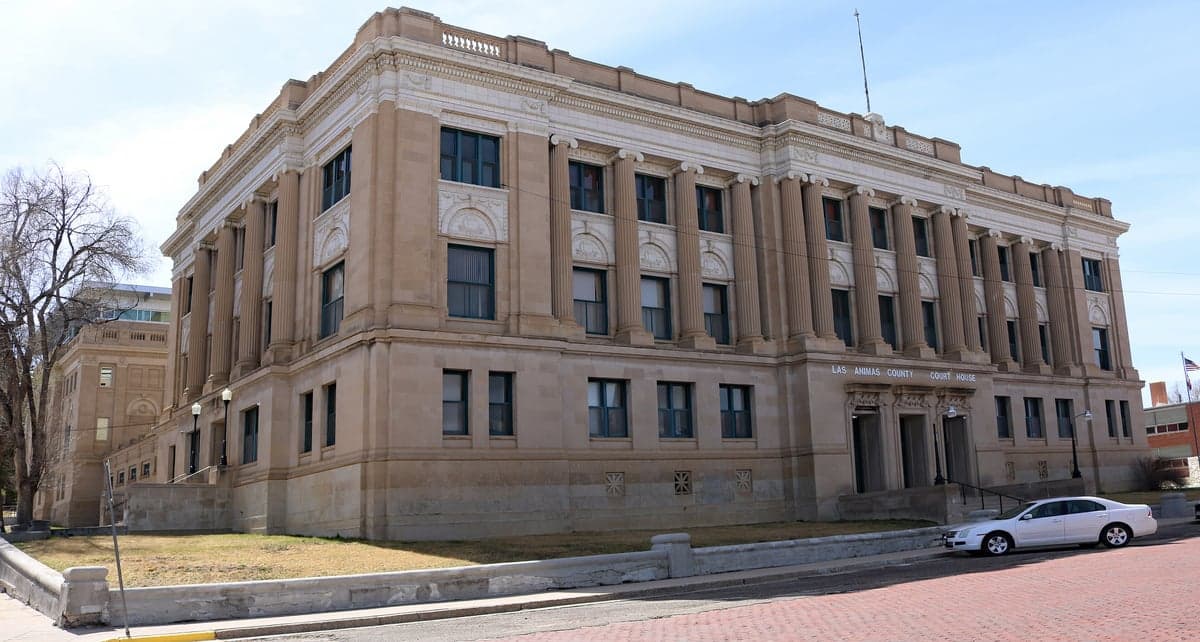
Photo: Wikipedia
Political ClimatePolitical Climate in Las Animas County
Showing district-level results — no local-only data available.
Local Political AnalysisPolitical Analysis of Las Animas County
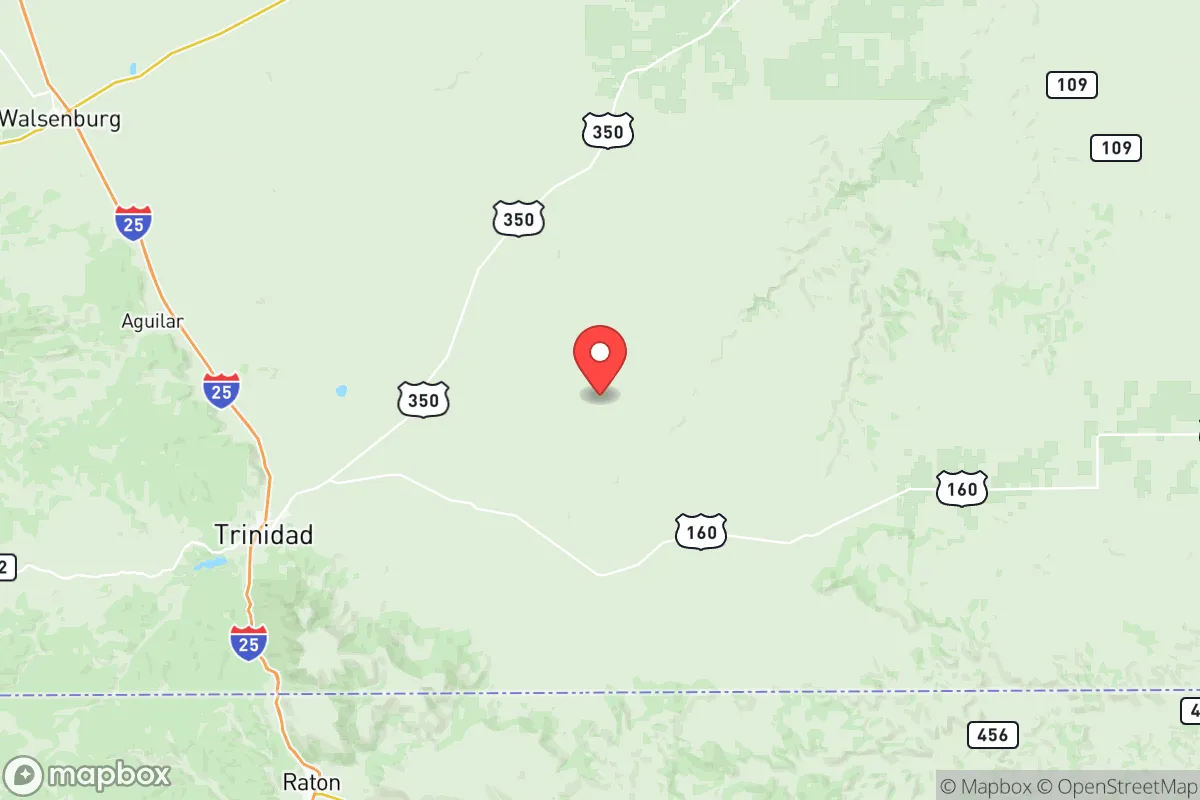
Las Animas County, anchored by the city of Trinidad, is a political outlier in Colorado. While the state as a whole has shifted decisively blue, earning a Cook PVI of D+6, this southeastern county remains a Republican stronghold with a PVI of R+5. That 11-point gap between county and state is one of the widest in Colorado, and it reflects a deep cultural and economic divide between the rural, resource-dependent southeast and the booming Front Range. The county has been trending redder over the past decade, driven by a growing distrust of state-level environmental regulations and a population that feels increasingly left behind by Denver's priorities.
How it compares
To understand the political landscape, you have to look inside the county. Trinidad, the county seat, is the only real blue dot in a sea of red, thanks to its historic union roots and a small but active progressive community centered around Trinidad State College. In the 2024 presidential election, Trinidad's precincts split roughly 50-50, a stark contrast to the rest of the county. Drive 15 minutes south to Starkville or east to Hoehne, and you'll find precincts that went 70-80% Republican. The rural precincts around Kim and Villegreen are even more conservative, often exceeding 85% GOP. The swing precincts are in the unincorporated areas near the interstate, where newer residents—often retirees from Texas or California—bring unpredictable voting patterns. Statewide, Colorado's D+6 PVI is powered by the Denver-Boulder corridor and mountain resort counties, places that feel a world away from the cattle ranches and coal mines of Las Animas.
What this means for residents
For conservative residents, the county's red lean means local government is reliably aligned with their values. The county commission, sheriff's office, and school boards are dominated by Republicans, and there's little appetite for progressive policies like sanctuary city status or strict land-use regulations. Gun rights are broadly supported, and property taxes remain low compared to Front Range counties. For liberal residents, it can feel isolating. There's no local Democratic Party infrastructure to speak of outside Trinidad, and progressive candidates rarely bother to campaign here. That said, the blue pocket in Trinidad means left-leaning residents aren't completely without representation—they just have to drive to the city to find it. The practical effect is a low-tension political environment; people tend to avoid heated arguments because everyone already knows where their neighbors stand.
Culturally, Las Animas County is defined by its Hispanic heritage and its history of coal mining and railroad work. That legacy creates a unique brand of conservatism—fiscally cautious, socially traditional, but with a strong sense of community mutual aid that doesn't always match national GOP talking points. The county has a higher-than-average rate of public land ownership, which means federal land management is a constant source of friction. Locals often resent the U.S. Forest Service and BLM for restricting grazing and energy development, a sentiment that fuels the red vote. At the same time, the county's small but growing cannabis industry—Trinidad was an early adopter of recreational marijuana—shows a pragmatic streak that defies simple partisan labels. Looking ahead, the political divide between Las Animas County and Colorado is likely to widen as the state continues to urbanize and the county's population ages and shrinks. The county will remain a Republican redoubt, but its influence in state politics will keep fading unless the rural-urban dynamic shifts.

State Political ClimatePolitical Climate in Colorado
State Political AnalysisPolitical Environment in the State
Colorado has shifted from a quintessential purple state to a solidly blue one over the past two decades, now carrying a Cook Partisan Voting Index of D+6. The Democratic coalition is anchored by the Denver-Boulder-Aurora metroplex and the I-25 corridor, while the Eastern Plains, Western Slope, and southern mountain counties remain deeply Republican. The state’s trajectory has been a steady march leftward since the early 2000s, driven by explosive population growth in the Front Range, but the shift has not been uniform — and the state’s political identity is more fractured than the statewide numbers suggest.
Urban vs. rural divide
The political map of Colorado is a textbook case of the urban-rural chasm. The Denver metro area, home to roughly 60% of the state’s population, is the engine of Democratic dominance. Denver, Boulder, and Aurora are deep blue strongholds, with Boulder County routinely delivering 70-75% of its vote to Democratic candidates. The I-25 corridor from Fort Collins through Denver to Colorado Springs is the state’s political spine, but it’s not monolithic. Colorado Springs (El Paso County) remains a conservative redoubt, though it has been trending purple — it voted for Trump in 2020 by a narrower margin than in 2016, and local GOP control has frayed. Larimer County (Fort Collins) flipped from red to blue in the 2010s and now reliably backs Democrats. The Eastern Plains — places like Yuma, Kit Carson, and Prowers counties — vote 75-80% Republican, but their populations are tiny and shrinking. The Western Slope, including Mesa County (Grand Junction), is reliably red, though the ski resort counties like Pitkin (Aspen), Summit, and Eagle are blue islands in a red sea. The rural-urban divide is so stark that a Democrat can win statewide by 10 points while losing 50 of Colorado’s 64 counties.
Policy environment
Colorado’s policy environment is a mix of libertarian-leaning traditions and progressive activism. The state has a flat income tax rate of 4.4% (set by the Taxpayer’s Bill of Rights, or TABOR, which limits revenue growth and requires voter approval for tax increases). Property taxes are relatively low compared to the national average, but sales taxes vary widely by locality. The regulatory posture is generally business-friendly for tech and outdoor industries, but strict on energy and environmental matters — Colorado has some of the nation’s toughest oil and gas regulations, including setback requirements from homes and schools. Education policy is dominated by the state’s school funding formula, which relies heavily on local property taxes, creating wide disparities between wealthy Front Range districts and rural ones. Charter schools are allowed but face more restrictions than in states like Arizona. Healthcare is a major issue: Colorado expanded Medicaid under the ACA and has a state-run health insurance exchange (Connect for Health Colorado) that has stabilized the individual market. Election laws are among the most accessible in the country — every registered voter receives a mail ballot automatically, same-day registration is available, and voting by mail is the norm. This system has been widely praised for turnout (Colorado consistently ranks in the top 5 nationally) but has drawn criticism from conservatives who worry about ballot security, though no major fraud has been documented.
Recent policy direction
The last five years have seen a flurry of legislation that has moved Colorado decisively left on multiple fronts. On gun and self-defense law, the state passed a red-flag law (Extreme Risk Protection Orders) in 2019, a ban on high-capacity magazines in 2022, and a three-day waiting period for all firearm purchases in 2023. A 2024 law raised the minimum age to purchase any firearm to 21. These measures have made Colorado a target for gun-rights advocates, and several counties have declared themselves “Second Amendment sanctuaries,” though these resolutions are largely symbolic. On parental and education rights, the state has moved in the opposite direction from many red states: a 2023 law prohibits school boards from banning books based on “controversial” content, and a 2024 law requires schools to adopt inclusive curriculum standards for LGBTQ+ history. Speech and privacy are protected by the state constitution’s strong free-expression clause, but a 2023 law (the Colorado Privacy Act) gives residents broad rights over their personal data. On medical and bodily autonomy, Colorado has been a national leader: it fully legalized recreational marijuana in 2012 (the first state to do so), and in 2022 passed a constitutional amendment protecting abortion rights. A 2023 law created a “safe haven” for gender-affirming care providers, shielding them from out-of-state legal actions. Property rights are a flashpoint: the state’s 2021 oil and gas reform law (SB 21-181) gave local governments more power to restrict drilling, which has led to lawsuits from mineral-rights owners. Taxation remains constrained by TABOR, but voters have approved several tax increases for specific purposes (e.g., a nicotine tax for preschool funding in 2020). Voting and ballot access expanded further in 2023 with automatic voter registration at DMVs and expanded early voting hours.
Civil unrest & political movements
Colorado has seen its share of political flashpoints. The 2020 protests in Denver over George Floyd’s death were large and occasionally violent, leading to property damage and a lasting debate over police reform. The state passed a sweeping police accountability law (SB 20-217) in 2020 that limited qualified immunity and banned chokeholds. On the right, the “Colorado Project” and other grassroots groups have organized around election integrity, school board races, and opposition to the red-flag law. The Weld County area (Greeley) has been a hotbed of secessionist rhetoric — there have been multiple attempts to form a separate “North Colorado” state, though none have gained traction. Immigration politics are tense: Denver has a “sanctuary city” policy that limits cooperation with federal immigration enforcement, and the city has struggled with an influx of migrants from the southern border in 2023-2024, straining shelter resources. The state’s 2019 “sanctuary state” law (SB 19-242) prohibits state and local law enforcement from detaining individuals solely based on immigration status. Election integrity controversies have been less intense than in states like Arizona or Georgia, but a 2021 audit of the 2020 election in Mesa County (Grand Junction) led to a criminal investigation of the county clerk, a prominent election denier. The overall atmosphere is one of polarized but generally peaceful coexistence — you’ll see “Let’s Go Brandon” flags on the Eastern Plains and “In This House We Believe” signs in Boulder, but open confrontation is rare outside of organized protests.
Projection
Over the next 5-10 years, Colorado’s political trajectory is likely to continue leftward, but at a slower pace. The demographic drivers are clear: the Front Range is growing faster than the rest of the state, and new arrivals tend to be younger, more educated, and more liberal. The rural counties will continue to lose population and political influence. However, there are countervailing forces. The cost of housing in Denver and Boulder is pushing some moderate and conservative families to exurbs like Parker, Castle Rock, and Windsor, which are growing fast and remain reliably red. The state’s libertarian streak — embodied in TABOR and the marijuana legalization — creates a ceiling on how far left policy can go, especially on taxes. A Republican could win a statewide race if the Democratic nominee is seen as too extreme on crime or housing, but the party’s brand is badly damaged among suburban women and independents. The most likely scenario is that Colorado remains a D+5 to D+8 state, with Democrats controlling the governorship and legislature for the foreseeable future, but with narrow margins in the state Senate that force some moderation. A new resident moving in now should expect a state where progressive policies on guns, abortion, and the environment are locked in, but where taxes remain relatively low and the outdoor lifestyle is bipartisan common ground.
For a conservative-leaning relocator, the bottom line is that Colorado is not a red state and is not trending red. You will live under Democratic governance at the state level, with all that entails on guns, education, and regulation. But the state’s political culture is still more libertarian than authoritarian — you won’t be told what to do in your private life, and the rural and exurban communities offer strong conservative enclaves where you can find like-minded neighbors. For a liberal relocator, Colorado offers a stable progressive environment with a functioning government and a high quality of life, but the cost of living — especially housing — is the real political issue that affects everyone, regardless of party. The practical takeaway is that Colorado is a state where your vote matters less in statewide races than your choice of county and city, and where the political battles are fought over local school boards and city councils as much as the statehouse.
* Values derived from national, state, county, city and local statistics and may differ in a specific area. Last updated: 2026-07-27T01:29:57.000Z
Narrative content on this page is AI-generated and may contain mistakes. Verify any details that matter before acting on them.
ReloMaps may earn a commission from affiliate links at no extra cost to you.

