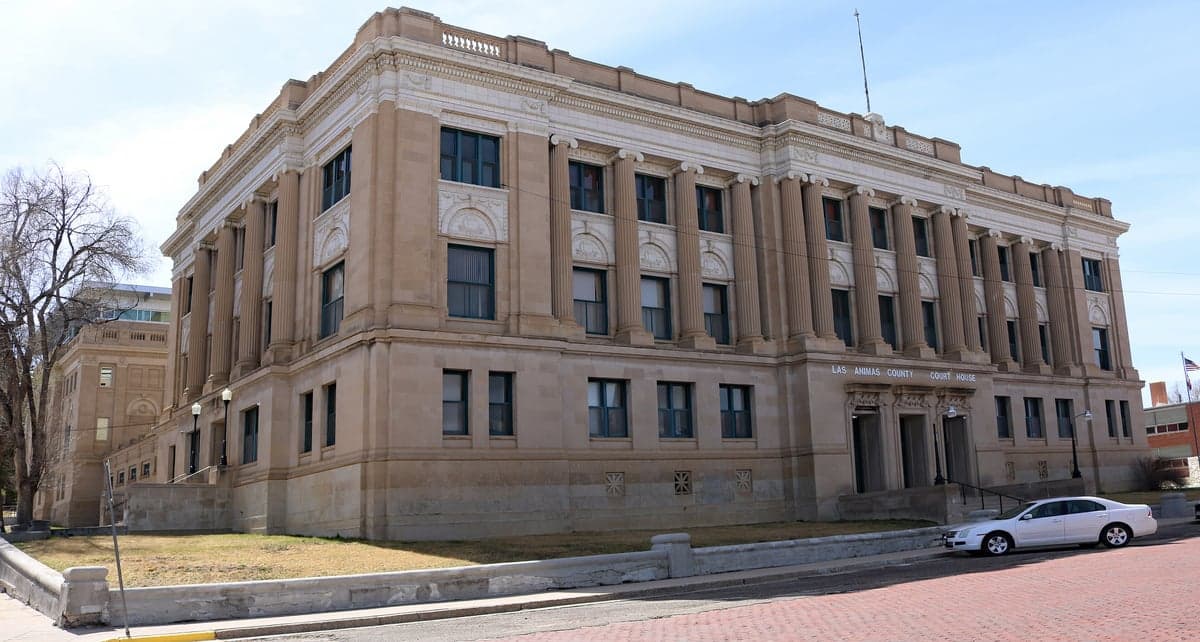
Photo: Wikipedia
Demographics of Las Animas County
Affluence Level in Las Animas County
A below-average socioeconomic profile. Incomes, home values, and educational attainment trail the U.S., with higher poverty and unemployment.
People of Las Animas County
Today, Las Animas County’s 14,392 residents form one of Colorado’s most distinctive rural populations — a majority-Hispanic community (39.0%) with deep roots in the Spanish and Mexican land-grant era, layered over a smaller but historically significant Anglo ranching and coal-mining population. The county is overwhelmingly native-born (97.6% U.S.-born), with a low college attainment rate (17.3%) that reflects its working-class heritage in agriculture, energy, and corrections. Its character is defined by the old Santa Fe Trail corridor, the historic coal camps of the Purgatoire River valley, and the enduring cultural presence of the town of Trinidad, the county seat and commercial hub.
Settlement & growth (pre-1960)
Long before European contact, the land that is now Las Animas County was home to Ute and Apache peoples, who used the Purgatoire River valley and the Raton Pass area for seasonal hunting and trade routes. The Spanish Empire claimed the region in the 16th century, but permanent European settlement did not begin until the 19th century, when the Mexican government granted large land holdings — the Vigil and St. Vrain Grant — to attract settlers. The first Hispanic families, many of them genízaro (detribalized Native Americans) and mestizo, established small farming and ranching communities along the Purgatoire River in the 1820s and 1830s, founding settlements that would later become Trinidad (founded 1862) and Starkville.
The United States acquired the area after the Mexican-American War in 1848, and the 1860s brought a new wave: Anglo-American ranchers and traders drawn by the Santa Fe Trail. The town of Trinidad became a major stopover, and its population boomed after the arrival of the Atchison, Topeka and Santa Fe Railway in 1878. The railroad opened the county’s vast coal deposits, and from the 1880s through the 1910s, Las Animas County became Colorado’s leading coal-producing region. This industrial boom pulled in a diverse workforce: Italian, Slavic (Croatian, Serbian, Slovenian), and Greek immigrants arrived to work the mines, settling in company towns like Ludlow, Hastings, Morley, and Delagua. The 1914 Ludlow Massacre — a deadly confrontation between striking miners and the Colorado National Guard — remains a defining event in the county’s labor history and cemented its reputation as a place of working-class struggle.
By the 1920s, the county’s population peaked at over 38,000, with a patchwork of ethnic enclaves: Italian fraternal halls in Trinidad, Slavic churches in the coal camps, and a small but established Black community centered in Trinidad’s north side. The decline of the coal industry after World War II triggered a steady exodus. Mines closed, and families left for Denver, Pueblo, and the West Coast. By 1960, the population had fallen to roughly 15,000, a level it has roughly maintained ever since. The Hispanic population, which had always been a majority in the southern part of the county, gradually became the dominant demographic group as Anglo and immigrant mining families moved away.
Modern era (post-1965)
The 1965 Hart-Cellar Act had little direct effect on Las Animas County — the foreign-born share today is just 2.4%, far below the national average. Instead, the county’s modern demographic story is one of domestic out-migration and ethnic consolidation. The Hispanic share rose from roughly 30% in 1970 to 39.0% today, driven by higher birth rates and the departure of non-Hispanic white families. The white population now stands at 54.4%, down from over 65% in 1990. The county’s small Black population (1.6%) is concentrated in Trinidad, where descendants of the original railroad and mining-era families remain. East/Southeast Asian residents (0.9%) and Indian-subcontinent residents (0.3%) are present in very small numbers, mostly professionals employed at the county’s largest employer, the Trinidad Correctional Facility, or at Trinidad State College.
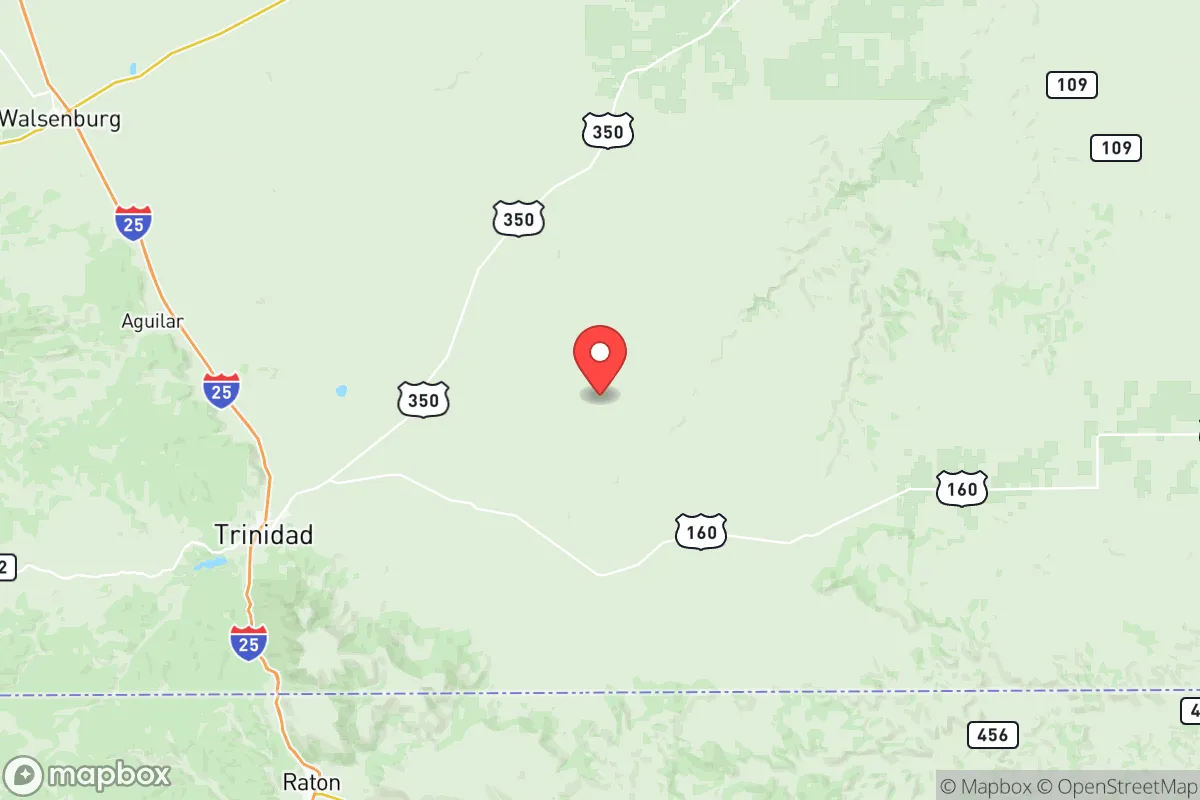
Suburbanization has not occurred in the conventional sense — there are no bedroom communities feeding a nearby metropolis. Instead, the county’s population has slowly decentralized within its existing towns. Trinidad remains the anchor, with roughly 8,000 residents, while Aguilar (pop. ~500) and Walsenburg (just over the Huerfano County line) serve as smaller service centers. The old coal camps — Ludlow, Hastings, Morley — are now ghost towns or near-ghost towns, with only a handful of residents. The county’s population density is just 4.5 people per square mile, one of the lowest in Colorado.
Economically, the county has shifted from coal to corrections, healthcare, and renewable energy. The Trinidad Correctional Facility, opened in 1997, and the nearby San Carlos Correctional Facility in Pueblo employ a significant number of residents. The 2010s saw a modest influx of retirees and remote workers drawn by cheap land and the scenic beauty of the Fishers Peak area, but this has not been large enough to reverse the long-term population decline. The county lost roughly 5% of its population between 2010 and 2020.
The future
Las Animas County is likely to continue its slow population decline, with the Hispanic share gradually rising toward 45-50% over the next two decades. The county’s low college attainment rate (17.3%) and limited job growth outside of corrections and healthcare will continue to push younger residents toward Denver and Colorado Springs. The small but growing remote-worker and retiree influx — concentrated around Trinidad and the Fishers Peak State Park area — may add a modest number of higher-income, non-Hispanic white residents, but not enough to shift the county’s overall demographic trajectory. The county’s cultural identity will remain rooted in its Hispanic and labor-history heritage, with Spanish-language media, Catholic parishes, and annual events like the Trinidad Santa Fe Trail Festival reinforcing that character. The old coal-camp ethnic enclaves — Italian, Slavic, Greek — will continue to fade as living memory of the mining era recedes.
For someone moving in now, Las Animas County offers a deeply rural, culturally traditional environment with a strong sense of place and a low cost of living. It is not a place of rapid growth or demographic change, but rather a stable, slowly aging community where the past — from the Santa Fe Trail to the Ludlow Massacre — remains visible in the landscape and the people. The county’s future is one of continuity, not transformation, and that stability is its primary appeal for those seeking an affordable, quiet, and historically grounded corner of Colorado.

* Values derived from national, state, county, city and local statistics and may differ in a specific area. Last updated: 2026-07-27T01:29:57.000Z
Narrative content on this page is AI-generated and may contain mistakes. Verify any details that matter before acting on them.
ReloMaps may earn a commission from affiliate links at no extra cost to you.

