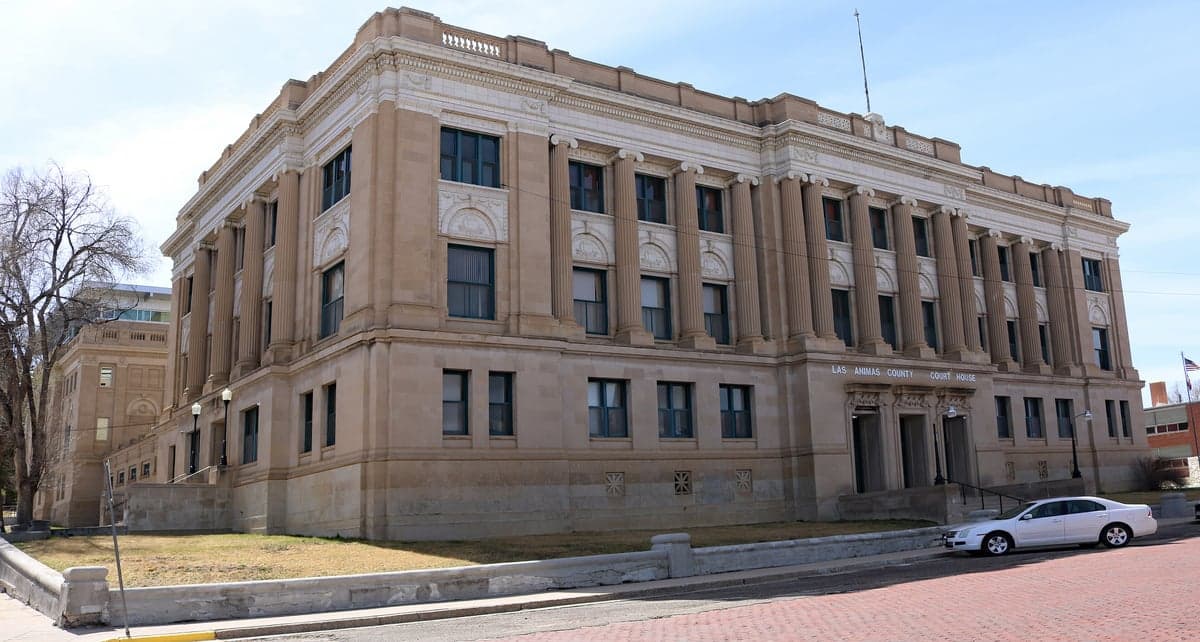
Photo: Wikipedia
Personal Sovereignty in Las Animas County
Viable for self-reliance. Generally workable, though some barriers may limit total independence.
What does Personal Sovereignty tell us?
Personal Sovereignty measures your capacity for self-reliance and independence with minimal government friction. Higher scores mean fewer barriers between you and the way you want to live... but it assumes you have the space you need and good neighbors.
What does this tell us?
Personal Sovereignty measures your capacity for self-reliance and independence with minimal government friction. Higher scores mean fewer barriers between you and the way you want to live... but it assumes you have the space you need and good neighbors.
State Policy
Energy independence: Net exporter (110% of energy produced in-state)
Personal Liberty
Homesteading

Personal Liberty Analysis
Las Animas County offers one of the most robust personal sovereignty environments in Colorado, largely because its rural character and low population density have kept both state and local government intervention light. The county seat, Trinidad, anchors a region where property rights, self-defense, and self-reliance are not just tolerated but expected, creating a distinct contrast with Colorado's Front Range urban centers. For individuals and families prioritizing autonomy, the trade-off is clear: fewer services and amenities in exchange for significantly more freedom from regulatory oversight.
Tax burden and regulatory posture in Las Animas County
Colorado's state-level tax structure is already relatively friendly to personal sovereignty, with a flat income tax rate of 4.4% and a state sales tax of 2.9%. Las Animas County amplifies this by keeping its own property tax mill levy among the lowest in the state. The county's total property tax rate typically falls below 50 mills, meaning a home valued at $200,000 might carry an annual tax bill of roughly $1,000 or less. This is a fraction of what homeowners pay in Boulder or Denver counties. Sales tax in unincorporated areas is limited to the state rate, though the city of Trinidad adds its own 4% municipal sales tax, bringing the combined rate there to about 7.9%. The regulatory posture is equally light: the county has no countywide building code for most rural residential construction, and zoning is minimal outside of Trinidad's city limits. In towns like Kim and Starkville, residents can build, repair, and modify structures without the permit delays common in more regulated jurisdictions. The county's approach to business licensing is similarly hands-off, with no general business license requirement for most small operations, making it easier to start a home-based enterprise without bureaucratic hurdles.
Self-defense and gun law specifics in a rural county
Colorado is a "shall-issue" state for concealed carry permits, and Las Animas County's sheriff's office processes applications efficiently, typically within 30 days. The county's rural character means that open carry is common and socially accepted, particularly in unincorporated areas and smaller towns like Aguilar and Weston. There are no county-level restrictions on magazine capacity or firearm types beyond what state law mandates. Importantly, Las Animas County has not adopted any of the "red flag" law enforcement measures that some Colorado counties have resisted; the state's Extreme Risk Protection Order law applies, but local law enforcement is not proactive in seeking such orders. The county's vast open spaces also mean that target shooting on private property is a routine activity, with no county noise ordinances that would restrict it. For residents who prioritize self-defense, the combination of permissive carry laws, a cooperative sheriff's office, and a culture that respects firearm ownership makes Las Animas County one of the most gun-friendly areas in Colorado outside of the Eastern Plains.
Self-reliance and homesteading viability across the county
Las Animas County is a strong candidate for homesteading and off-grid living, though the terrain and climate impose real constraints. The county's average lot size in unincorporated areas is large, with many parcels exceeding 5 acres and some reaching 40 acres or more. Zoning in these areas is minimal: there are no countywide restrictions on keeping livestock, building outbuildings, or installing alternative energy systems. In towns like Trinidad itself, city zoning does apply, but outside city limits, residents can install solar panels, wind turbines, and rainwater catchment systems without permits. The county's water rights system is the primary regulatory hurdle; new wells require a permit from the Colorado Division of Water Resources, and the process can take several months. However, the county's groundwater availability is generally good in the Purgatoire River valley, and many properties come with existing water rights. Off-grid feasibility is highest in the county's southern and eastern sections, near Branson and Villegreen, where land prices are lowest and county oversight is thinnest. The trade-off is access to services: these areas have no natural gas lines, limited internet, and the nearest grocery store may be 30-45 minutes away. For those willing to accept that isolation, the county offers a genuine homesteading environment with minimal government interference.
Personal liberties: parental rights, medical autonomy, speech, and property
Las Animas County's small population and conservative lean create an environment where personal liberties are broadly respected. Parental rights are strong in practice: the county's school district, Trinidad School District 1, has not adopted controversial curriculum mandates, and parents in rural areas often homeschool or use online programs without significant oversight. Medical autonomy is more constrained by state law than local preference; Colorado's vaccine mandates for school attendance apply, but the county's low population means enforcement is less aggressive than in urban districts. Speech and assembly rights are fully protected, with no local ordinances restricting public expression. Property rights are the county's strongest liberty: the county has no countywide zoning for agricultural or residential use outside city limits, and there are no historic preservation overlays or view corridor protections that limit what owners can do with their land. Eminent domain is rarely used, and the county's planning department is small and responsive. In Hoehne and Model, residents routinely build, fence, and modify their properties without any county interaction, reflecting a deeply ingrained culture of property autonomy.
Overall, Las Animas County ranks among the top tier of Colorado counties for personal sovereignty, comparable to Baca or Kiowa counties on the Eastern Plains but with better access to Trinidad's services and the interstate highway. The county's combination of low taxes, minimal regulation, strong gun rights, and genuine off-grid viability makes it a practical choice for those who want to live with minimal government interference. The trade-offs—limited healthcare access, long distances to major cities, and a harsh high-desert climate—are real, but for the freedom-minded individual or family, Las Animas County delivers a level of autonomy that is increasingly rare in modern Colorado.

* Values derived from national, state, county, city and local statistics and may differ in a specific area. Last updated: 2026-07-27T01:29:57.000Z
Narrative content on this page is AI-generated and may contain mistakes. Verify any details that matter before acting on them.
ReloMaps may earn a commission from affiliate links at no extra cost to you.

