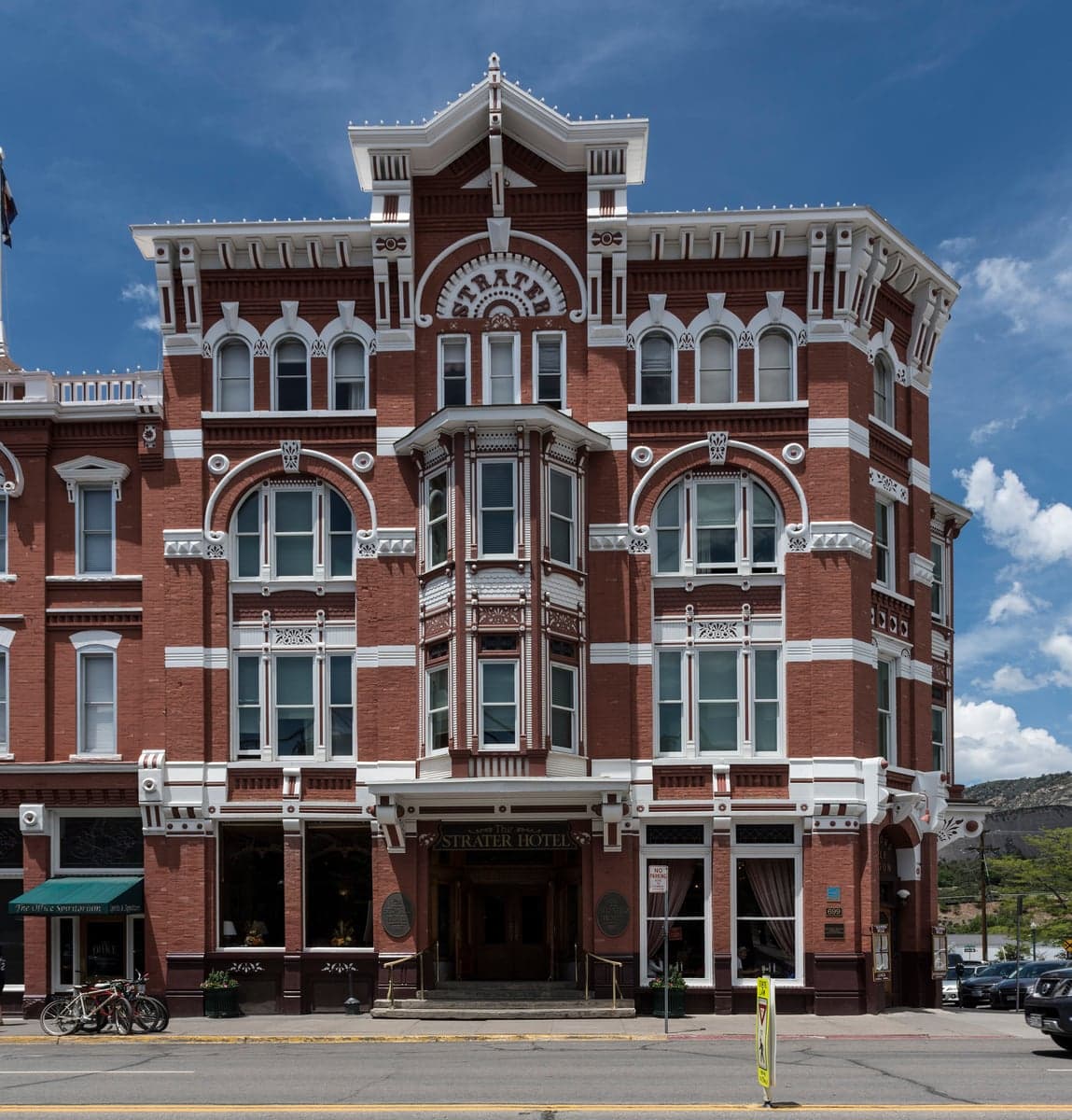
Photo: Wikipedia
Political ClimatePolitical Climate in La Plata County
Showing district-level results — no local-only data available.
Local Political AnalysisPolitical Analysis of La Plata County
La Plata County leans conservative overall with a Cook PVI rating of R+5, but its political landscape is far from monolithic. The county has trended slightly more competitive in recent cycles, though it remains a reliable red vote in a state that has shifted sharply blue, with Colorado’s statewide PVI now D+6. This divergence means La Plata County is one of the few places in Colorado where conservative voters still hold a clear numerical edge, albeit with growing pockets of liberal influence, especially in and around Durango.
How it compares
La Plata County’s R+5 rating stands in stark contrast to Colorado’s D+6 overall, a shift of 11 points toward the left when viewed from the local to the state level. Within the county itself, political geography tells the real story. Durango, the county seat, leans reliably blue, with precincts near Fort Lewis College and the historic downtown routinely delivering Democratic margins of 60% or higher. In contrast, Bayfield and Ignacio are solidly conservative, often voting Republican by 20-plus points. The rural unincorporated areas – places like Marvel, Hesperus, and the La Plata Canyon – swing hard red, with some precincts reporting 75-80% Republican turnout in recent presidential elections. The swing precincts are concentrated in the suburbs and exurbs of Durango, particularly around Grandview and Three Springs, where growth has brought a mix of young families and remote workers who split tickets more evenly. The 2022 gubernatorial race saw the county back Republican Heidi Ganahl by 3 points, while the same year’s Senate race featured a closer margin with Democrat Michael Bennet winning the county by just 1.2 points, underscoring the area’s live-wire nature.
What this means for residents
For conservative residents, La Plata County offers a rare cultural and political refuge in a state that has become increasingly inhospitable to right-of-center views. The local Republican Party is active and well-organized, with strong turnout in school board and county commission races. Issues like Second Amendment rights, property taxes, and energy development (the county sits above the San Juan Basin’s natural gas fields) resonate deeply. Liberal or progressive residents, while outnumbered countywide, find a robust community in Durango, where climate action, affordable housing, and indigenous rights dominate local discourse. The practical reality is that both sides must engage in genuine coalition-building to get anything done. The five-member Board of County Commissioners has been split 3-2 Republican since 2020, meaning every major land-use or budget decision requires at least one crossover vote. This has produced a governance style that is pragmatic rather than ideological, with both sides often finding common ground on open space preservation and water rights.
On the cultural and policy front, La Plata County bucks several Colorado trends. It is one of the few counties in the state that has not adopted sanctuary policies favored by many urban counties, though the Durango city council has passed resolutions supporting immigrant communities. The tension between Durango’s progressive downtown and the county’s rural conservative outposts plays out in debates over short-term rental regulations, oil and gas setbacks, and school curriculum. Yet the shared love of the outdoors – from the San Juan National Forest to the Animas River – creates unexpected alliances. If you move here as either a conservative or a liberal, you will find your tribe, but you will also need to talk to the other side. That is just how La Plata County works.

State Political ClimatePolitical Climate in Colorado
State Political AnalysisPolitical Environment in the State
Colorado’s political DNA has transformed over the past two decades from a classic swing state into a solidly Democratic-leaning state — its Cook PVI of D+6 reflects a coalition built on explosive growth along the Front Range and a vanishing moderate Republican brand. The state hasn’t voted for a Republican presidential candidate since George W. Bush in 2004, and the state legislature has been under unified Democratic control since 2019. But that blue veneer masks a deeply divided geography: the Denver-Boulder corridor, Colorado Springs, and a scattering of mountain resort counties drive the Democratic edge, while the Eastern Plains, Western Slope, and southern counties remain as conservative as any place in the country.
Urban vs. rural divide
The political map of Colorado is essentially a tale of two nations living under one capital dome. The Democratic stronghold stretches from Fort Collins down through Denver, Aurora, Lakewood, and Boulder — these counties alone deliver enough votes to offset the entire rest of the state. Boulder County gave Biden 76% in 2020, while Denver County hit 80%. But drive 45 minutes east to Limon or Burlington, and you’re in Trump +30 territory. The Western Slope town of Grand Junction is a conservative redoubt, and Colorado Springs — home to the Air Force Academy and Focus on the Family — is a conservative island in a blue state, though El Paso County has been creeping purple in recent cycles. The rural-urban gulf is wider here than in almost any other state, because the Front Range growth has been so concentrated and so fast.
Policy environment
Colorado’s state-level policy is a mixed bag that reflects its purple roots and its current blue control. The state has a flat income tax rate of 4.4%, mandated by the Taxpayer’s Bill of Rights (TABOR), which requires voter approval for any tax increase — a constitutional legacy of the 1990s that still constrains spending. Property taxes are relatively low compared to Texas or the Midwest, but the Gallagher Amendment, which capped residential property tax rates, was repealed by voters in 2020, so you should expect gradual upward pressure on homeowners. The regulatory posture leans progressive: renewable energy mandates, tight oil and gas drilling setbacks (SB 19-181), and a strict red-flag gun law (HB 19-1177) that allows temporary seizure of firearms from individuals deemed a risk. Education spending per pupil is above the national average, but the system is heavily reliant on local property taxes, creating wide disparities between wealthy suburban districts and rural ones. Healthcare is a major issue: Colorado has a robust Medicaid expansion under the ACA, and the state operates its own health insurance exchange (Connect for Health Colorado). Election laws are among the most convenient in the nation — every registered voter automatically receives a mail ballot, same-day registration is available, and voting is generally secure and accessible.
Recent policy direction
The past five years have seen a sharp leftward shift on many fronts. In 2021, the state legalized psilocybin therapy (therapeutic use of magic mushrooms) via Proposition 122, making Colorado the second state to do so after Oregon. On gun policy, the 2023 session passed a three-day waiting period for firearm purchases (HB 23-1219) and raised the purchasing age to 21 (HB 23-1218), both of which face legal challenges. Parental rights and education became a flashpoint: the state expanded funding for full-day kindergarten and universal preschool but also passed a controversial law limiting school boards’ ability to ban books (HB 24-1349), which conservative parents see as a threat to local control. On privacy and surveillance, Colorado passed one of the strongest data privacy laws in the country (the Colorado Privacy Act, effective 2023), which gives residents rights to access, delete, and opt out of the sale of their personal data. Medical and bodily autonomy: abortion remains legal and protected under state law (the Reproductive Health Equity Act of 2022), and the state has positioned itself as a safe haven for out-of-state patients. Property rights have been a battleground, especially around oil and gas development and water rights — the state’s long-standing prior appropriation system remains intact, but new environmental regulations are complicating agricultural and industrial uses. Ballot access remains easy, but there’s a growing battle over ranked-choice voting and citizen-initiated ballot measures, which the Democratic legislature has attempted to restrict.
Civil unrest & political movements
Colorado has seen its share of political flashpoints. The 2020 protests in Denver turned violent for several nights, leading to property damage and a lingering distrust between city leadership and law enforcement. On the right, the State of the Rockies Secession movement — a proposal to split off the Eastern Plains and Western Slope into a separate state called "Colorado West" — gained enough steam to get on some county ballots, though it remains a symbolic protest. Immigration politics are heated: Denver has declared itself a sanctuary city, and the state has a law limiting local law enforcement’s cooperation with ICE (SB 20-216). In 2023-2024, the arrival of tens of thousands of migrants from the southern border overwhelmed Denver’s shelter system, creating a visible crisis that conservative critics point to as proof of failed policy. Election integrity controversies flared in 2022 when a county clerk in Mesa County (Tina Peters) was indicted for allegedly allowing unauthorized access to voting equipment — a case that became a national symbol for the "stop the steal" movement. The state’s top election official, Secretary of State Jena Griswold, has been a vocal target of election-denial groups. None of this has caused widespread unrest, but the tensions are real and visible, especially in rural county commissioner meetings and school board elections.
Projection
Over the next decade, Colorado is likely to become more, not less, Democratic — but not uniformly. The Front Range population growth shows no sign of slowing, with Colorado Springs becoming a bellwether: if it flips blue, the state becomes a D+8 or D+9. However, the rural counties are also emptying out, which dilutes their electoral power. The wildcard is affordability: Denver and Boulder are pricing out the very young professionals who drive Democratic majorities, pushing new arrivals to cheaper exurbs like Pueblo and Colorado City, which are more conservative. Water scarcity will become a dominant political issue, likely forcing painful trade-offs between agriculture and urban development — and that could fracture the Democratic coalition if rural Democrats feel their water rights are sacrificed for metro growth. The state’s tax structure, constrained by TABOR, may eventually face a fiscal reckoning as population growth outpaces revenue growth, leading to fights over ballot measures. For a new resident moving in now, expect the culture wars to intensify at the local level (school boards, county commissions) while state policy continues to lean left on climate, guns, and social issues.
For a conservative relocating to Colorado, the practical reality is that your vote on statewide races will likely be on the losing side, but your day-to-day life will be largely unaffected unless you move into metro Denver or Boulder. Local elections in the suburbs and rural areas still matter enormously: school boards, city councils, and county commissioners control zoning, taxes, and school curriculum. The state’s strong TABOR protections mean taxes are unlikely to skyrocket, and the outdoor lifestyle — hunting, fishing, skiing — remains bipartisan. For a liberal moving in, you’ll find a state that matches your politics on most social and environmental issues, but you’ll also face a high cost of living and a housing crisis that the state legislature has so far failed to solve. In short, Colorado is a blue state with red pockets, and the thing that unites both sides is a fierce independence that resists being told what to do — which is probably why people move here in the first place.
* Values derived from national, state, county, city and local statistics and may differ in a specific area. Last updated: 2026-06-25T08:18:32.000Z
Narrative content on this page is AI-generated and may contain mistakes. Verify any details that matter before acting on them.
ReloMaps may earn a commission from affiliate links at no extra cost to you.

