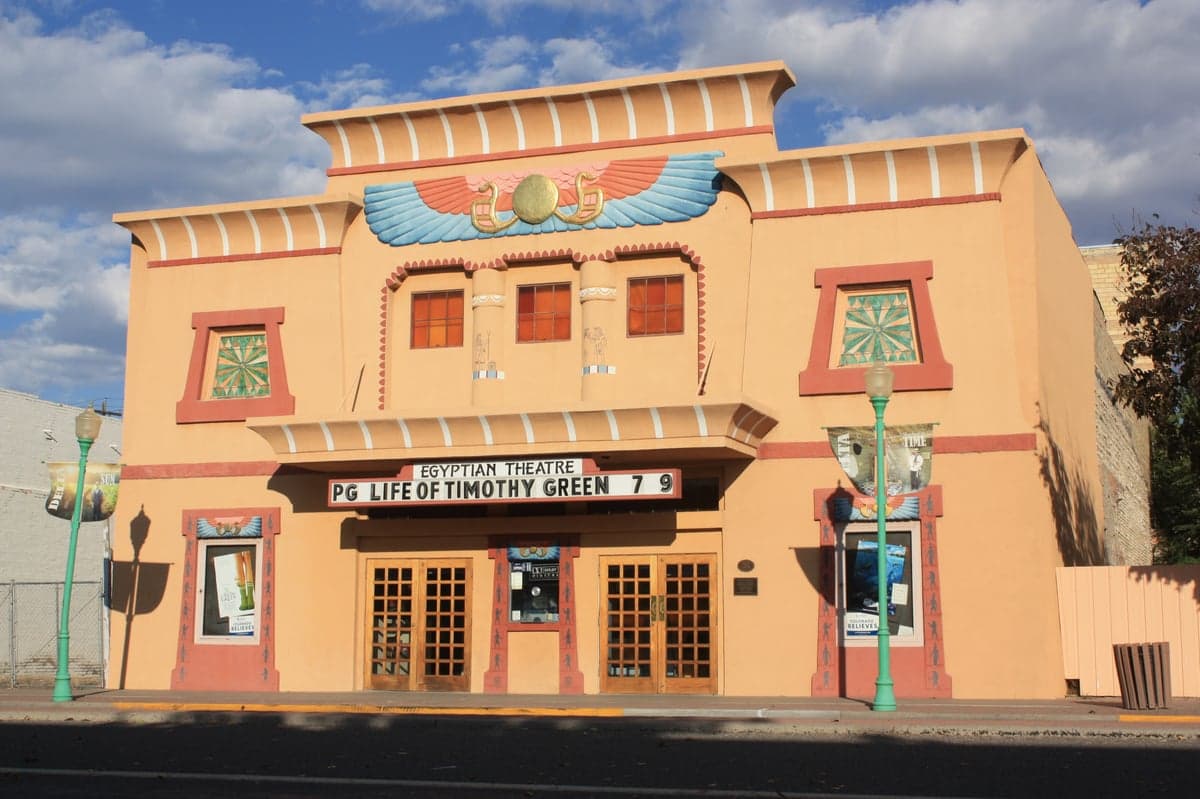
Photo: Wikipedia
Personal Sovereignty in Delta County
Viable for self-reliance. Generally workable, though some barriers may limit total independence.
What does Personal Sovereignty tell us?
Personal Sovereignty measures your capacity for self-reliance and independence with minimal government friction. Higher scores mean fewer barriers between you and the way you want to live... but it assumes you have the space you need and good neighbors.
What does this tell us?
Personal Sovereignty measures your capacity for self-reliance and independence with minimal government friction. Higher scores mean fewer barriers between you and the way you want to live... but it assumes you have the space you need and good neighbors.
State Policy
Energy independence: Net exporter (110% of energy produced in-state)
Personal Liberty
Homesteading

Personal Liberty Analysis
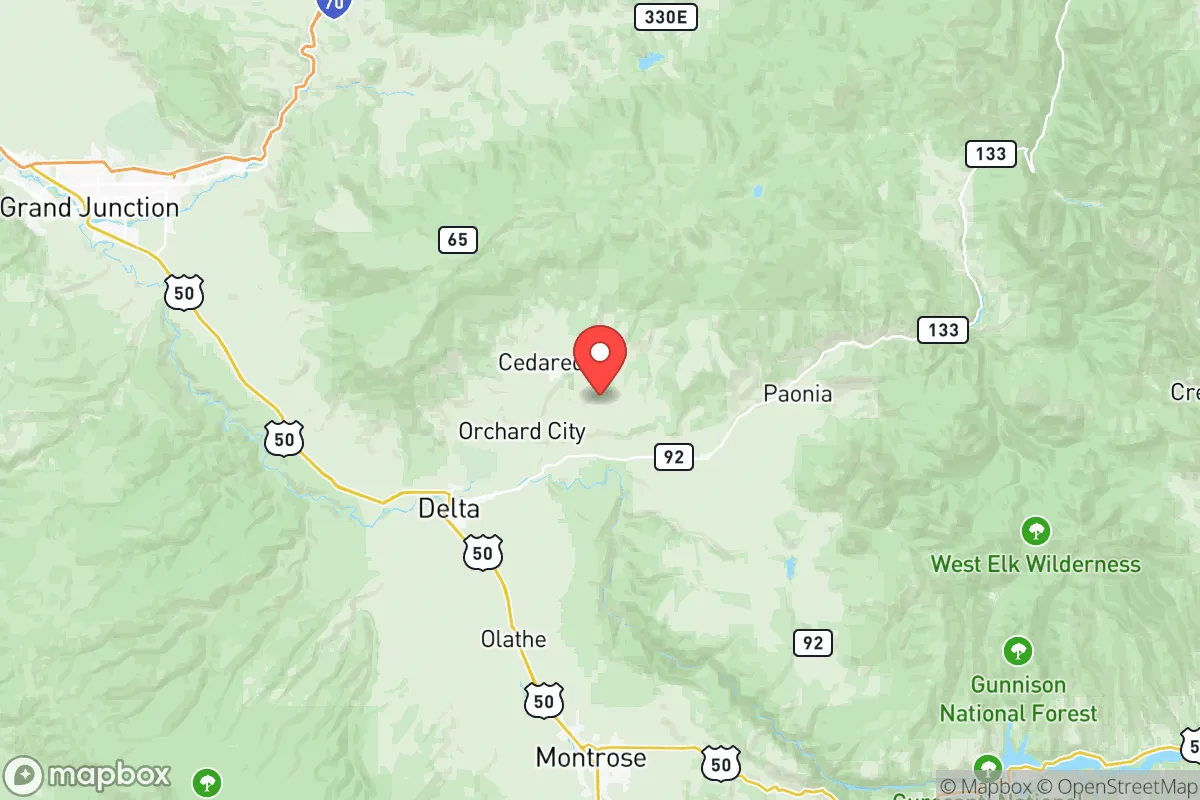
Delta County, Colorado, consistently ranks among the state's most autonomy-friendly rural areas, offering individuals and families a tangible degree of personal sovereignty that is increasingly rare along the Front Range. With the county seat of Delta and towns like Cedaredge, Hotchkiss, Paonia, and Crawford each presenting distinct regulatory and cultural postures, the region supports a self-reliance ethos that appeals to conservative-leaning readers. The balance between state-level mandates—such as Colorado's flat income tax rate and Constitutional Carry law—and local flexibility in land use and enforcement creates an environment where personal freedom is a practical reality, not just a talking point. For a single individual or family prioritizing independence, Delta County delivers a mix of low regulatory friction in rural areas and nuanced constraints in its more populated towns.
Tax burden and regulatory climate across Delta County towns
Colorado's overall tax structure is relatively light compared to coastal states, and Delta County amplifies that advantage through local fiscal restraint. The state imposes a flat income tax of 4.4% (as of 2025), with no progressive brackets, and the county's property tax rates are among the lowest in the state: around 5.5% to 6.5% of assessed value, depending on the town and school district. Sales tax varies by municipality—Delta city charges 7.5%, Cedaredge 7.9%, and Hotchkiss 7.5%—while unincorporated areas default to the county's 4.5% rate. Paonia's local add-on pushes its combined rate to 8.9%, making it the highest in the county, while Crawford maintains a lean 5.5% rate. Regulatory posture differs noticeably: Delta city tends toward a business-friendly approach with streamlined permitting for commercial expansions, while Paonia's town council has enacted more stringent land-use and environmental overlay zones, reflecting its agricultural and artist-community character. Hotchkiss and Cedaredge fall in the middle, with moderate regulation but consistent deference to property rights in agricultural zoning. The county-wide approach to short-term rentals is light-touch—no moratoriums or strict caps as seen in mountain resort counties—so owners near the Grand Mesa or the North Fork Valley face fewer hurdles. For a reader comparing to Front Range counties, Delta County's overall regulatory temperature runs markedly cooler, though the variation between towns matters for site-specific decisions.
Self-defense law and gun rights in Delta County's rural landscape
Colorado became a Constitutional Carry state in 2021, meaning anyone at least 21 who can legally possess a firearm may carry a concealed handgun without a permit. Delta County's culture aligns strongly with that framework. Sheriff Mark Taylor has publicly stated that his office will not enforce state magazine capacity limits (15-round cap) as a priority, reflecting the rural consensus that such rules are impractical for self-defense against wildlife and two-legged threats. The county has no local gun ordinances beyond state law—no "sensitive place" expansions beyond the state's list (schools, government buildings, bars). In practice, gun ownership rates in Delta County are high: roughly 55-60% of households, compared to the state average of 40%. Shooting ranges exist at the Delta County Shooting Sports Complex and private clubs near Hotchkiss. Paonia is the relative outlier, with its town council having passed a non-binding resolution in 2022 supporting "responsible" storage education, but it carries no legal force and does not restrict carry. For a family moving from a state with permit-to-purchase or registry laws, the transition to Delta County's permissive environment is seamless—no registration, no waiting periods beyond the federal NICS check (usually instant), and no local licensing for long guns. The sheriff's office issues concealed handgun permits to those who want reciprocity in non-Constitutional-Carry states, with processing averaging under 30 days. Overall, the self-defense posture is robust and culturally embedded, with the rural character of Cedaredge, Hotchkiss, and Crawford providing the strongest alignment with gun-friendly norms.
Off-grid living and homesteading feasibility in Delta County
Delta County is one of Colorado's most viable regions for off-grid and self-reliant lifestyles, owing to its agricultural zoning, water access, and county-level regulatory tolerance. Lot sizes for residential agriculture vary: the county requires a minimum of 35 acres for a new "rural residential" subdivision, but existing parcels of 5 to 10 acres are common in areas like Fruitland Mesa and Surface Creek. Off-grid dwellings—solar power, composting toilets, rainwater catchment—are legal if basic health and safety codes are met (a septic system or approved alternative). Paonia and Hotchkiss have more flexible building codes that explicitly permit "alternative" waste treatment systems, while Delta city and Cedaredge enforce standard plumbing codes. The county does not require connection to municipal water or sewer in unincorporated areas, so well drilling is standard (depths range 150-400 feet, with yields good in the river valleys). Solar access is excellent: Delta County averages 260-280 sunny days per year, and net metering is available through Delta-Montrose Electric Association (DMEA) with a reasonable interconnection process. Water rights are the critical constraint—junior water rights can be costly and uncertain, so due diligence on the prior appropriation system is essential. Crawford and Hotchkiss sit within the North Fork Valley Groundwater Management District, which has historically allowed permit exemptions for domestic wells on parcels over 35 acres. For a homesteader, the outlying areas of Cedaredge (L

* Values derived from national, state, county, city and local statistics and may differ in a specific area. Last updated: 2026-06-24T22:31:14.000Z
Narrative content on this page is AI-generated and may contain mistakes. Verify any details that matter before acting on them.
ReloMaps may earn a commission from affiliate links at no extra cost to you.

