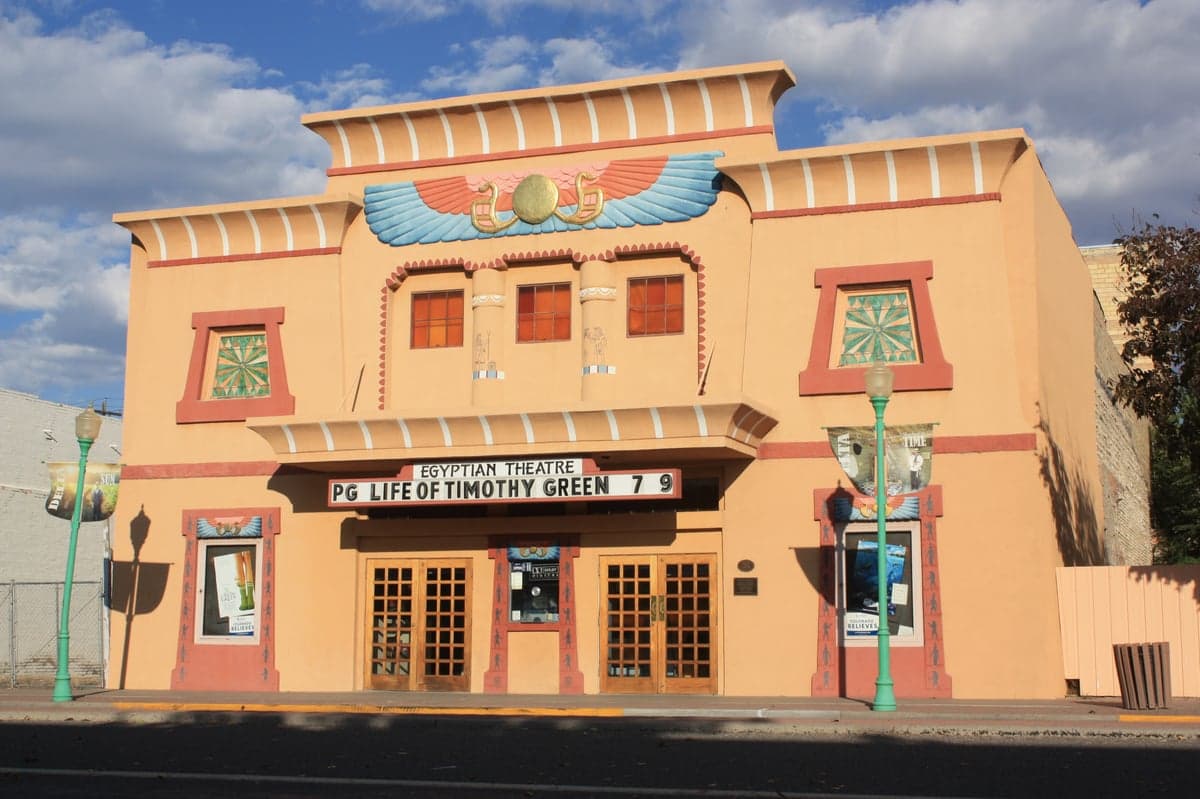
Photo: Wikipedia
Demographics of Delta County
Affluence Level in Delta County
A middle-class area roughly in line with national averages across income, home values, education, and employment.
People of Delta County
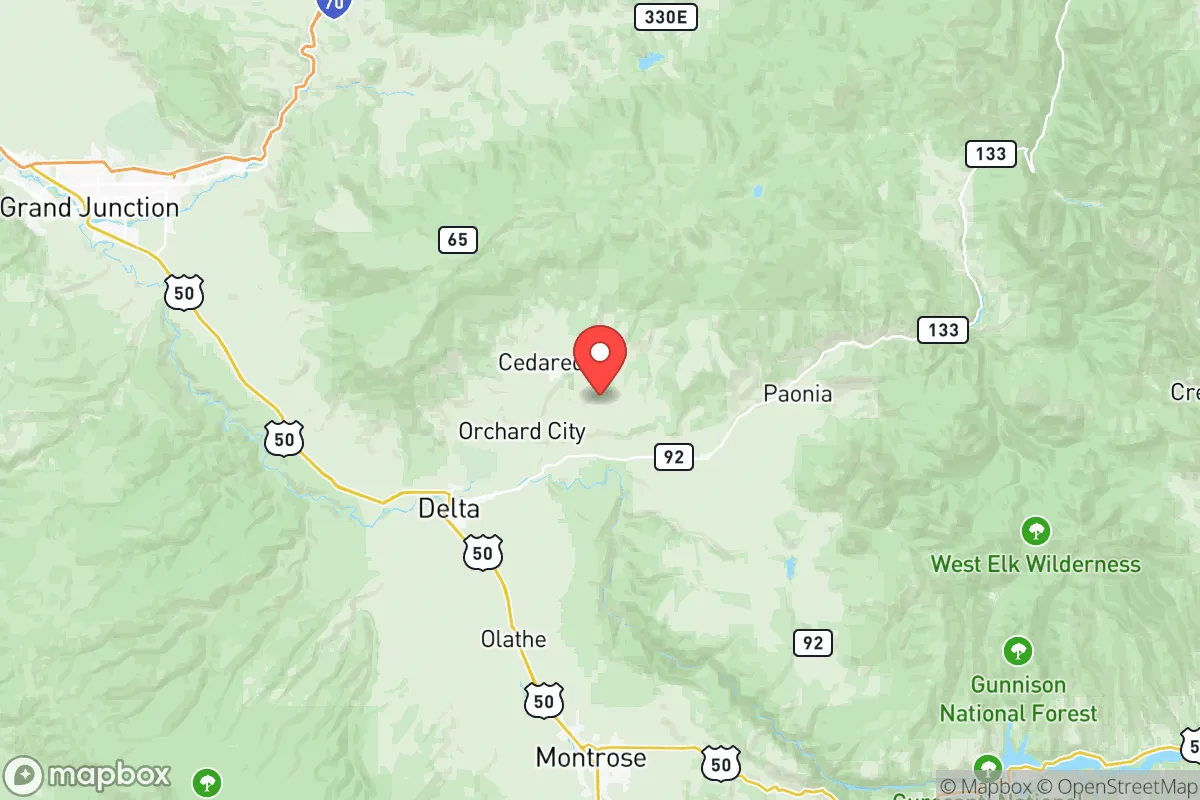
The people of Delta County, Colorado today form a rural, predominantly white population of 31,353 that is deeply tied to agriculture, family roots, and a slow pace of life. With 80.5% of residents identifying as white alone and 14.2% as Hispanic (primarily of Mexican heritage), the county’s overall diversity remains modest—foreign-born residents account for just 1.4% of the population. The county’s identity is rooted in its orchard country heritage, conservative social values, and a strong sense of place found in small towns like Delta, Cedaredge, Hotchkiss, Paonia, and Crawford.
Settlement & growth (pre-1960)
Before Anglo-American settlement, the area now comprising Delta County was inhabited by the Ute people, who used the Gunnison and Uncompahgre river valleys seasonally. The Utes were forcibly removed to reservations in Utah following the Brunot Agreement of 1873, which opened the Uncompahgre Valley to Euro-American homesteading. Spanish exploration had touched the region earlier, but no permanent Spanish settlements took hold in Delta County proper—unlike areas further south along the Rio Grande.
The first major wave of American settlement began in the 1880s, spurred by the 1873 Brunot Treaty and the arrival of the Denver & Rio Grande Western Railroad. Homesteaders—many from the Midwest and the Great Plains—took up land along the Gunnison River and its tributaries. The town of Delta (founded 1882) became the county seat and commercial hub, serving the surrounding agricultural districts. Water diversion projects, including the Grand Mesa Irrigation Project and the Gunnison River diversion, allowed farmers to irrigate fruit orchards, and by the early 1900s Delta County was known as the “fruit basket” of Colorado. German and Swiss-German families were prominent among the homesteaders, drawn by the promise of irrigated land and a temperate growing season.
Further north, the communities of Hotchkiss (1881), Paonia (1882), and Crawford (1882) grew as agricultural service centers. Paonia in particular became a hub for Italian and Slavic immigrant families who arrived after 1900 to work in the coal mines of the North Fork Valley and the nearby Somerset coal fields. The Orchard City area (incorporating the hamlets of Eckert, Cory, and Austin) was settled by fruit growers who planted apples, peaches, and cherries. By 1920, the population of Delta County had reached about 15,000, built on a mix of Anglo homesteaders, Northern European immigrants, and a small number of Mexican laborers who came seasonally for harvests. The Dust Bowl of the 1930s brought a new influx of Okie and Arkie families from Oklahoma and Arkansas, many of whom settled in the Cedaredge and Surface Creek areas to work on fruit and vegetable farms.
After World War II, the population grew slowly as agriculture mechanized and small family farms consolidated. The completion of the Grand Mesa Scenic and Historic Byway improved access to the region, but outmigration of young adults to Front Range cities like Grand Junction and Denver kept growth modest. By 1960, the county’s population stood at 15,952, still overwhelmingly white and native-born, with a strong agricultural character.
Modern era (post-1965)
The 1965 Hart-Cellar Act had minimal impact on Delta County. Immigration from abroad remained exceedingly low—the foreign-born share today is 1.4%, one of the lowest in Colorado. The most significant demographic change since the 1970s has been the growth of the Hispanic population, largely through domestic migration and natural increase among families already present for generations. Many Hispanic residents are descendants of Mexican farm laborers who settled permanently in towns like Delta and Hotchkiss after the Bracero program ended in 1964. The Hispanic share rose from roughly 6% in 1990 to 14.2% in the 2020s, concentrated in the lower-skilled agricultural and service sectors. The vast majority are U.S.-born citizens.
Domestic migration has been the other major driver of change. Starting in the 1990s, retirees and second-home buyers from the Front Range, California, and Texas began moving to Delta County’s North Fork Valley for its scenic beauty, affordable land, and quieter lifestyle. The town of Paonia gained a reputation as an arts and organic farming enclave, drawing a more liberal-leaning cohort alongside the traditionally conservative base. Meanwhile, greater Delta (the city and its suburbs) saw modest suburban-style development with new subdivisions and big-box retail, while Cedaredge and Orchard City attracted families seeking low property taxes and a small-town atmosphere. The county’s population grew from 20,980 in 1990 to 31,353 in 2023, a 49% increase, though growth slowed after 2010. The Asian population (0.6%) and Black population (0.8%) remain negligible, with no concentrated enclaves; Indian subcontinent residents are statistically zero.
The energy boom of the 2000s—oil and gas drilling in the North Fork Valley—brought a temporary influx of workers and boosted the county’s tax base, but production declined after 2015. Today, the economy is a mix of agriculture, healthcare, local government, and a growing
The future
Delta County’s population is projected to grow at a rate of 0.5–1% annually over the next decade, driven primarily by domestic in-migration of retirees and remote workers. The Hispanic share will continue to rise gradually, likely reaching 18–20% by 2040, as younger Hispanic families have a higher birth rate, though net immigration from abroad will remain low due to the county’s geographic isolation and lack of ethnic infrastructure. The white population will age more rapidly—the median age in Delta County is already 47 years, above the state median of 37—and many younger white adults continue to move to Front Range cities for education and employment.
Suburbanization will remain limited to the immediate vicinity of Delta and Cedaredge, where a few new subdivisions are planned. The North Fork Valley towns of Paonia and Hotchkiss will see infill and second-home conversion but not large-scale growth, as water rights and land-use restrictions limit expansion. The county’s cultural identity will remain predominantly white and traditionally rural, with a small but growing Hispanic presence that is integrated rather than segregated. No new immigrant enclaves are expected to form. Politically, the county has trended slightly redder over the past decade; it voted 62% for Donald Trump in 2020, up from 58% in 2016.
The biggest wildcard is water availability. A prolonged drought or tightening of Colorado River allocations could curtail agricultural production and population growth, particularly in the less irrigated areas of Orchard City and Crawford. Conversely, improved broadband and a continued shift toward remote work could attract more professionals from Denver, Grand Junction, and even out of state, slowly diversifying the population beyond its agricultural base.
For someone moving in now, Delta County offers a stable, family-friendly environment where the pace of change is slow, the schools are modest but safe, and the housing market remains affordable relative to the rest of Colorado. The people are largely the same as they were a century ago—descendants of homesteaders, fruit growers, and miners—now joined by a steady trickle of newcomers seeking the same things: space, quiet, and a community that still knows its neighbors.

* Values derived from national, state, county, city and local statistics and may differ in a specific area. Last updated: 2026-06-24T22:31:14.000Z
Narrative content on this page is AI-generated and may contain mistakes. Verify any details that matter before acting on them.
ReloMaps may earn a commission from affiliate links at no extra cost to you.

