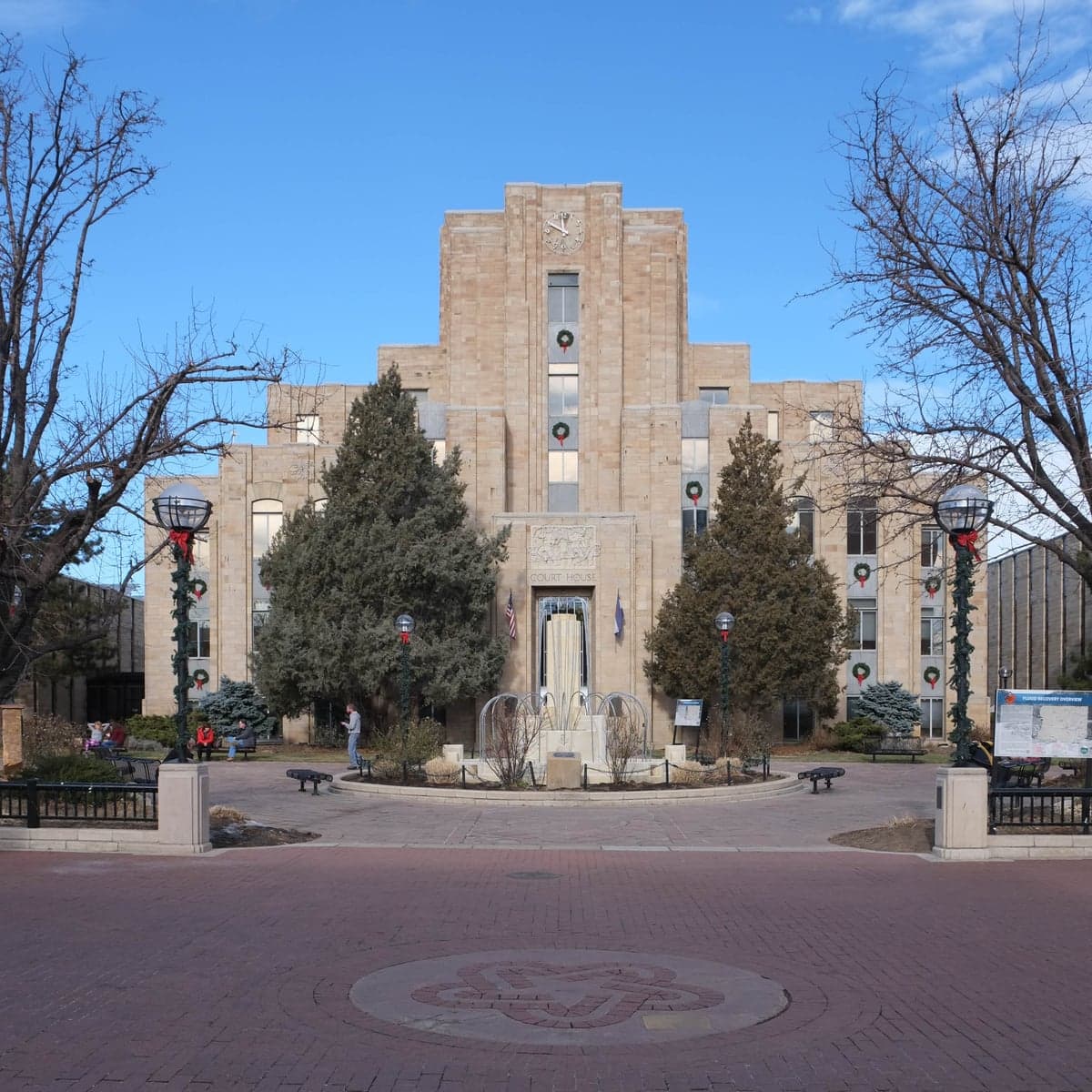
Photo: Wikipedia
Political ClimatePolitical Climate in Boulder County
Showing district-level results — no local-only data available.
Local Political AnalysisPolitical Analysis of Boulder County
Boulder County is one of the most reliably Democratic strongholds in the entire Mountain West, carrying a Cook Partisan Voting Index (PVI) of D+20 — a full 14 points bluer than Colorado as a whole, which sits at D+6. This isn't a recent shift; the county has voted for the Democratic presidential candidate in every election since 2004, and by 2020, Joe Biden carried it with over 74% of the vote. The trajectory is steady, not radicalizing — the county has been deeply blue for two decades, and while the margins have widened slightly, the core political identity hasn't flipped. What's more interesting is the variation within the county: the city of Boulder itself is the epicenter, routinely hitting 80%+ Democratic, while towns like Longmont and Lyons are more moderate (closer to 60-65% Democratic). On the flip side, the rural eastern plains around Niwot and the far western mountain communities near Nederland and Ward lean heavily progressive, but pockets of red do exist — particularly in the unincorporated areas east of Longmont and around the town of Erie, where precincts can swing 50-50 or even slightly Republican in local races.
How it compares
Compared to the rest of Colorado, Boulder County is an outlier. The state as a whole is a classic swing state that has trended blue in presidential years (D+6 PVI), but it still contains deep-red rural counties like El Paso (Colorado Springs) and Weld (Greeley) that vote +20 to +30 Republican. Boulder County's D+20 PVI is more akin to the bluest parts of the Denver metro area, like Denver County itself (D+28) or San Miguel County (Telluride, D+19). What sets Boulder apart is the intensity of its liberalism: it's not just Democratic, it's progressive on nearly every issue — from land-use restrictions and environmental regulations to housing policy and social programs. In contrast, Colorado's D+6 statewide PVI reflects a more balanced mix: you've got purple suburbs like Arapahoe and Jefferson counties, plus a strong libertarian streak in rural areas that votes Republican but opposes federal overreach. So while a Boulder County resident might see the state as frustratingly moderate, a resident of Colorado Springs would see Boulder as an entirely different political universe.
What this means for residents
For liberal residents, the political climate means their values are reflected in nearly every level of local government — from the county commission to the school board to city councils. Policies like strict growth boundaries, renewable energy mandates, and strong tenant protections are the norm. For conservative residents, it can feel isolating. There's no Republican elected official at the county level, and conservative viewpoints are often marginalized in public discourse. That said, the eastern parts of the county — particularly around Erie and Dacono — offer more political breathing room, with lower taxes and fewer land-use restrictions. The practical effect is that housing costs are significantly higher in Boulder city proper (median home price over $900,000) compared to Longmont (around $550,000), partly driven by the political preference for slow growth and open space preservation. Both sides agree on one thing: the county's politics are deeply entrenched, and major shifts are unlikely in the near term.
Culturally, Boulder County's political identity is inseparable from its environmental ethos. The county was one of the first in the nation to ban fracking within its borders, and it maintains some of the strictest building codes for energy efficiency in the state. This creates a distinct policy landscape: you'll find robust public transit, extensive bike infrastructure, and a strong local food movement — but also higher sales taxes and more regulatory hurdles for businesses. For newcomers, the key takeaway is that Boulder County isn't just a blue dot on a map; it's a place where political values actively shape daily life, from what you can build on your property to how you get around town. If you're looking for a politically moderate or conservative environment, you'd be better off in Weld County or even parts of Jefferson County. But if you want a community where progressive policies are the baseline, Boulder County delivers — for better or worse.

State Political ClimatePolitical Climate in Colorado
State Political AnalysisPolitical Environment in the State
Colorado has shifted from a quintessential purple state to a solidly Democratic-leaning one over the past two decades, now carrying a Cook Partisan Voting Index of D+6. The dominant coalition is a blend of suburban moderates, young transplants, and a growing Latino electorate, concentrated along the Front Range. While the state voted for Democratic presidential candidates by comfortable margins in 2020 and 2024, the trajectory has been a steady leftward drift since 2004, when it was still a true toss-up. For a conservative relocator, this means the state’s statewide offices and congressional delegation are firmly in Democratic hands, but local control varies dramatically depending on where you land.
Urban vs. rural divide
The political map of Colorado is a story of two worlds. The Denver metro area—including Denver proper, Aurora, and the inner-ring suburbs of Lakewood and Boulder—is the engine of Democratic dominance, delivering margins of 70% or higher in recent presidential elections. Boulder County is the bluest of the blue, with a Democratic vote share exceeding 75%. In contrast, the Eastern Plains, the Western Slope, and the San Luis Valley lean heavily Republican. El Paso County, home to Colorado Springs, is the state’s largest reliably red county, voting Republican by double digits in 2024. However, even there, the margins have shrunk as the city’s tech and military-adjacent population diversifies. The suburban counties that once decided elections—Jefferson County (west of Denver) and Arapahoe County (southeast of Denver)—have flipped decisively blue since 2016, driven by college-educated voters moving in from out of state. The rural-urban split is stark: you can drive 30 minutes from downtown Denver and find precincts where Trump won 70% of the vote, but those precincts are shrinking in population relative to the growing metro.
Policy environment
Colorado’s policy environment reflects its Democratic lean, but with a pragmatic, Western twist. The state income tax is a flat 4.4%, one of the lowest among blue states, and property taxes are moderate, though they vary by county. There is no state sales tax on groceries or prescription drugs. The regulatory posture is generally business-friendly for tech and renewable energy, but stricter than neighboring states like Wyoming or Utah on environmental and labor rules. Education policy is dominated by the state’s 1992 Taxpayer’s Bill of Rights (TABOR), which limits revenue growth and requires voter approval for tax increases—a legacy of conservative influence that still constrains spending. School choice is robust, with charter schools and open enrollment widely available. Healthcare is a mixed bag: the state expanded Medicaid under the Affordable Care Act, and the state-run Connect for Health Colorado exchange is active, but premiums remain above the national average. Election laws are among the most accessible in the country—universal mail-in ballots are standard, same-day registration is available, and voter turnout consistently ranks in the top five nationally. For a conservative, the policy environment feels like a blend of fiscal restraint (thanks to TABOR) and social liberalism, with the latter increasingly dominating the agenda.
Recent policy direction
The recent legislative session (2023-2025) has accelerated Colorado’s leftward tilt on several fronts. On gun and self-defense law, the state passed a ban on so-called “assault weapons” in 2024, along with a 10-day waiting period for all firearm purchases and a raising of the minimum purchase age to 21. These laws were pushed through after the 2023 Club Q shooting in Colorado Springs. On parental and education rights, the state has moved in the opposite direction of many red states: a 2023 law prohibits school boards from banning books based on “controversial” content, and a 2024 law requires schools to adopt policies that affirm transgender students’ gender identities, including allowing them to use preferred names and pronouns without parental notification. On speech and privacy, Colorado has a strong data privacy law (the Colorado Privacy Act) that gives residents control over their personal data, but it also has a “disinformation” task force that has drawn criticism from free-speech advocates. Medical and bodily autonomy is fully protected: abortion is legal up to viability with no mandatory waiting period, and a 2023 law shields providers from out-of-state lawsuits. Property rights are generally respected, but a 2024 law expanded rent control options for local governments, a first in the state’s history. Taxation remains constrained by TABOR, but a 2023 ballot measure (Proposition HH) that would have allowed the state to keep more revenue was narrowly defeated, signaling voter resistance to tax hikes. Voting and ballot access remain among the easiest in the nation, with no voter ID requirement for mail ballots and automatic voter registration at the DMV.
Civil unrest & political movements
Colorado has seen its share of political flashpoints. The 2020 protests in Denver over George Floyd’s death were large and occasionally violent, leading to property damage and a lasting tension between the city’s progressive leadership and its police union. The state has a significant organized activist presence on both sides: the Colorado Democratic Socialists of America is active in Denver and Boulder, while conservative groups like the Colorado Republican Party and local “Moms for Liberty” chapters have mobilized around school board elections and parental rights. Immigration politics are a hot-button issue: Denver has been a sanctuary city since 2019, and the state has a “Safe Haven” law that limits local law enforcement cooperation with federal immigration authorities. In 2023, the arrival of thousands of migrants bused from Texas overwhelmed Denver’s shelter system, sparking a backlash even among some Democrats. Election integrity controversies have been relatively muted compared to states like Arizona or Georgia, but a 2022 audit of Dominion voting machines in Mesa County (Grand Junction) led to a criminal investigation of the county clerk, a prominent election denier. Secession rhetoric is limited to a fringe movement in Weld County (north of Denver) that has floated the idea of forming a new state called “North Colorado,” but it has no serious political traction. A new resident would notice the political divide most acutely in the suburbs: yard signs for progressive candidates are common in Littleton and Centennial, while Parker and Castle Rock (Douglas County) remain conservative strongholds with active GOP clubs.
Projection
Over the next 5-10 years, Colorado is likely to become more Democratic, not less. In-migration from California, Texas, and the Midwest continues to fuel growth in the Front Range, and these newcomers tend to be younger, more educated, and more liberal than the existing population. The rural counties will continue to lose population and political influence, while the Denver metro and its suburbs expand. The state’s Republican Party is struggling to find a message that appeals to suburban voters, and internal divisions between moderates and Trump-aligned factions show no signs of healing. However, TABOR remains a powerful check on tax increases, and any attempt to repeal or significantly modify it would face a tough fight. A conservative moving to Colorado now should expect that the state’s policy direction will continue to lean left on social issues, gun rights, and education, while fiscal policy remains relatively restrained. The wildcard is the cost of living: if housing prices continue to rise, a backlash against growth could fuel a more centrist or even conservative turn in local elections, particularly in suburban counties like Douglas and Weld.
For a new resident, the bottom line is that Colorado offers a high quality of life with a political environment that is increasingly inhospitable to traditional conservative values on social and cultural issues. If you’re a conservative who values low taxes, outdoor recreation, and a strong economy, you can still find a comfortable home in places like Colorado Springs, Parker, or Grand Junction, where local politics lean right. But you’ll be living in a state where the governor, the legislature, and the congressional delegation are all solidly Democratic, and where the policy direction is likely to continue moving left. The practical takeaway: choose your county carefully, and be prepared for a political landscape that is more purple at the local level than the statewide numbers suggest.
* Values derived from national, state, county, city and local statistics and may differ in a specific area. Last updated: 2026-06-08T18:37:48.000Z
Narrative content on this page is AI-generated and may contain mistakes. Verify any details that matter before acting on them.
ReloMaps may earn a commission from affiliate links at no extra cost to you.

