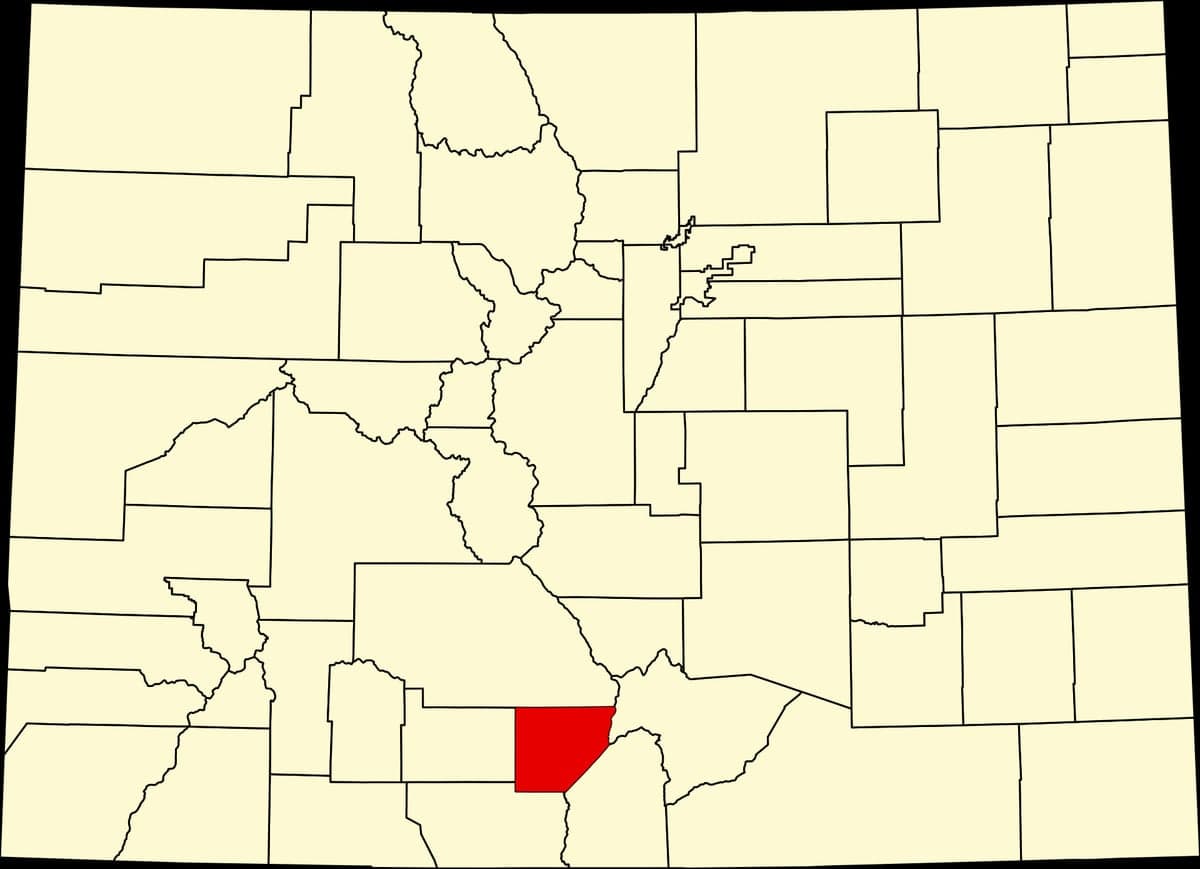
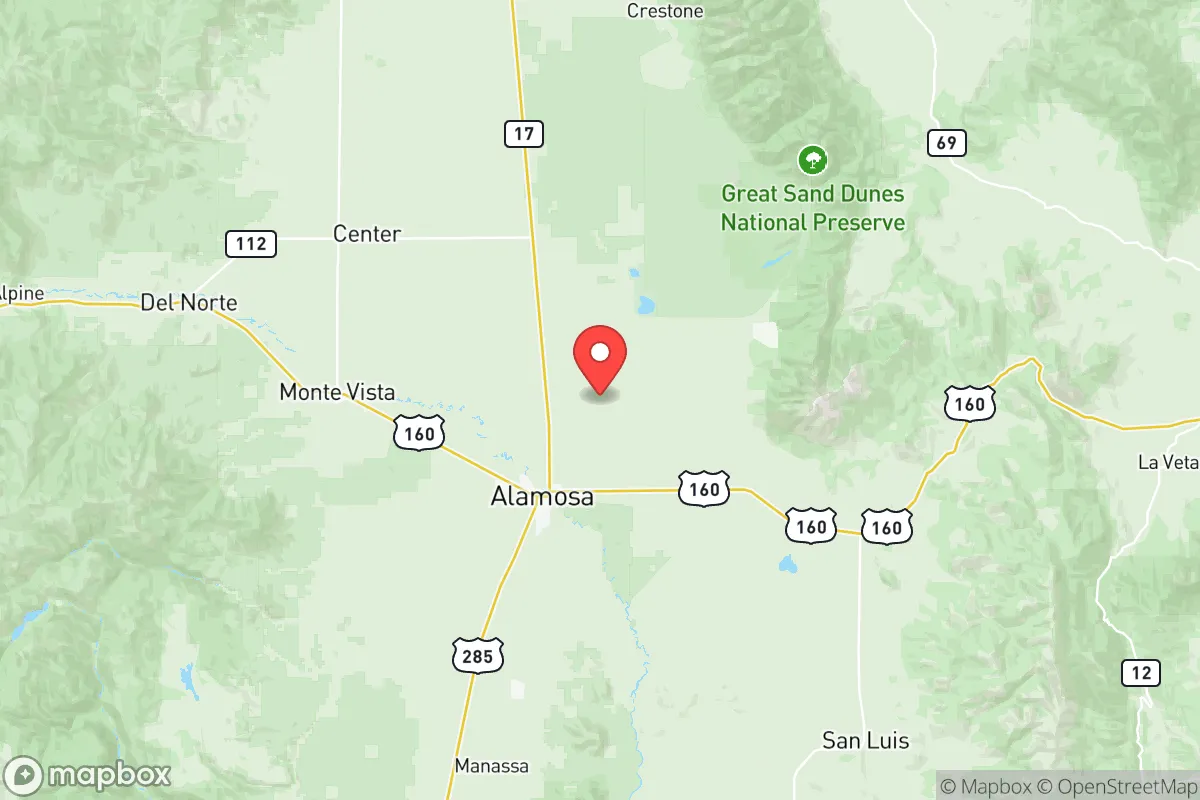
Photo: Wikipedia
Personal Sovereignty in Alamosa County
Viable for self-reliance. Generally workable, though some barriers may limit total independence.
What does Personal Sovereignty tell us?
Personal Sovereignty measures your capacity for self-reliance and independence with minimal government friction. Higher scores mean fewer barriers between you and the way you want to live... but it assumes you have the space you need and good neighbors.
What does this tell us?
Personal Sovereignty measures your capacity for self-reliance and independence with minimal government friction. Higher scores mean fewer barriers between you and the way you want to live... but it assumes you have the space you need and good neighbors.
State Policy
Energy independence: Net exporter (110% of energy produced in-state)
Personal Liberty
Homesteading

Personal Liberty Analysis
Alamosa County, Colorado, offers a notably high degree of personal sovereignty relative to the state’s Front Range urban centers, driven by a combination of low population density, a conservative-leaning local culture, and a regulatory environment that largely defers to individual choice. The county’s autonomy environment is shaped by its position in the San Luis Valley, a region where self-reliance is a practical necessity and where government oversight is generally lighter than in places like Denver or Boulder. For individuals and families prioritizing personal freedom, Alamosa County presents a landscape where the state’s progressive policies are often tempered by local enforcement and community norms, creating a distinct balance of rights and responsibilities.
Tax burden and regulatory posture in the San Luis Valley
Colorado’s state-level tax burden is moderate, with a flat income tax rate of 4.4% and a state sales tax of 2.9%, but Alamosa County adds its own local levies that keep the overall burden manageable. The county’s property tax rate is relatively low, averaging around 0.5% of assessed value, which is favorable compared to many other parts of the state. The regulatory posture in Alamosa County is generally light-touch, particularly in unincorporated areas like Mosca and Hooper, where zoning is minimal and building permits are less onerous than in the city of Alamosa itself. The city of Alamosa does enforce standard municipal codes, but the county’s overall approach is pragmatic, with fewer layers of bureaucracy for small businesses and landowners. This is a stark contrast to the regulatory density of Boulder County or the Denver metro area, making the San Luis Valley attractive for those seeking to minimize government entanglement in daily affairs.
Self-defense and gun law specifics in Alamosa County
Colorado is a “shall-issue” state for concealed carry permits, and Alamosa County’s sheriff’s office processes applications efficiently, with no local ordinances that restrict firearm ownership beyond state law. The county is home to a strong gun culture, with shooting ranges and sporting goods stores in Alamosa and Monte Vista serving a population that values the right to self-defense. Open carry is legal without a permit in Colorado, and Alamosa County has no local bans on magazine capacity or specific firearm types, unlike cities such as Denver or Boulder. The state’s red flag law (Extreme Risk Protection Orders) is on the books, but enforcement in Alamosa County is less aggressive than in urban jurisdictions, with local law enforcement often taking a more measured approach. For a reader prioritizing personal sovereignty, Alamosa County offers a permissive self-defense environment where the right to bear arms is widely respected and practiced.
Self-reliance and homesteading viability across the county
Homesteading and off-grid living are viable in Alamosa County, particularly in the rural areas outside the city limits. In unincorporated zones like San Luis and La Jara, lot sizes can be as large as several acres, with many parcels zoned for agricultural use, allowing for livestock, gardens, and alternative energy systems. The county’s building codes are less restrictive than those in Front Range counties, and off-grid solar and wind systems are common, though a building permit is still required for permanent structures. Water rights are a critical consideration—the San Luis Valley has a complex water management system, and new wells for domestic use are subject to state approval, which can be a hurdle. However, properties with existing water rights or access to acequias (community irrigation ditches) are available, particularly in the Costilla County border areas near San Luis. The city of Alamosa itself is more restrictive, with standard municipal zoning that limits livestock and requires connection to city utilities, but the surrounding county offers ample room for self-reliant living.
Personal liberties: parental rights, medical autonomy, speech, and property
Alamosa County reflects a community where personal liberties are generally respected, though state-level policies create some friction. Parental rights are strong in local school districts, with the Alamosa School District and the Sangre de Cristo School District in San Luis offering school choice and limited exposure to controversial curricula compared to urban districts. Medical autonomy is a mixed bag: Colorado has legalized recreational marijuana and has broad vaccine mandates for school attendance, but local enforcement in Alamosa County is less stringent, with many families opting for exemptions. Free speech is robust, with public forums and local media outlets like the Valley Courier providing platforms for diverse viewpoints. Property rights are well-protected, with no county-level rent control or restrictive land-use ordinances that infringe on owner decisions. The county’s small population and tight-knit communities mean that informal social contracts often carry more weight than formal regulations, fostering an environment where individual choices are generally tolerated as long as they don’t disrupt neighbors.
Overall, Alamosa County offers a level of personal sovereignty that is significantly higher than Colorado’s urban centers, though it operates within the framework of a state that leans progressive on certain issues. Compared to areas like Douglas County or El Paso County, which are more uniformly conservative, Alamosa County’s autonomy is tempered by its rural economics and water constraints, but it remains a strong choice for those seeking a balance of freedom and community. For a relocation-minded individual or family, the county’s light regulatory touch, gun-friendly culture, and homesteading potential make it a standout in the state, particularly in the unincorporated areas where self-reliance is not just a value but a way of life.

* Values derived from national, state, county, city and local statistics and may differ in a specific area. Last updated: 2026-07-10T08:40:33.000Z
Narrative content on this page is AI-generated and may contain mistakes. Verify any details that matter before acting on them.
ReloMaps may earn a commission from affiliate links at no extra cost to you.

