Photo: Wikipedia
Demographics of Alamosa County
Affluence Level in Alamosa County
A below-average socioeconomic profile. Incomes, home values, and educational attainment trail the U.S., with higher poverty and unemployment.
People of Alamosa County
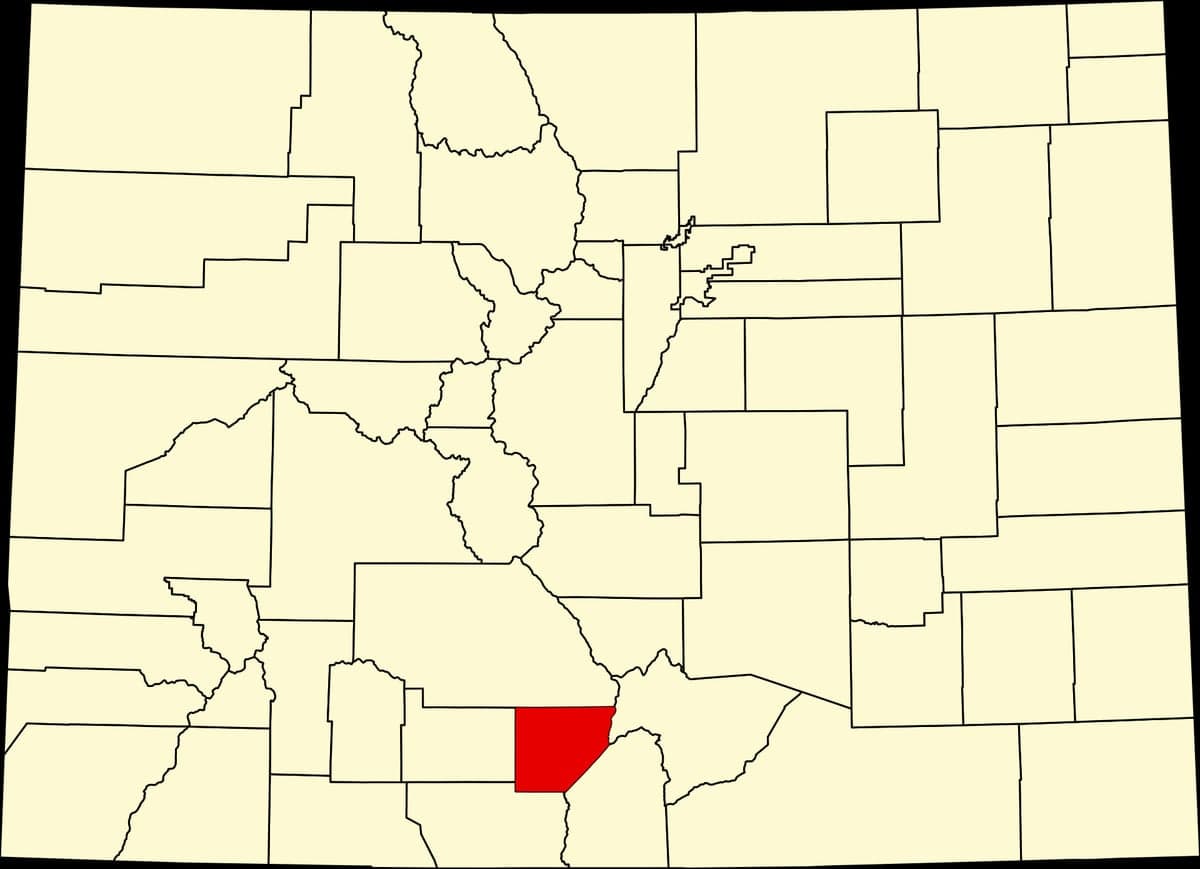
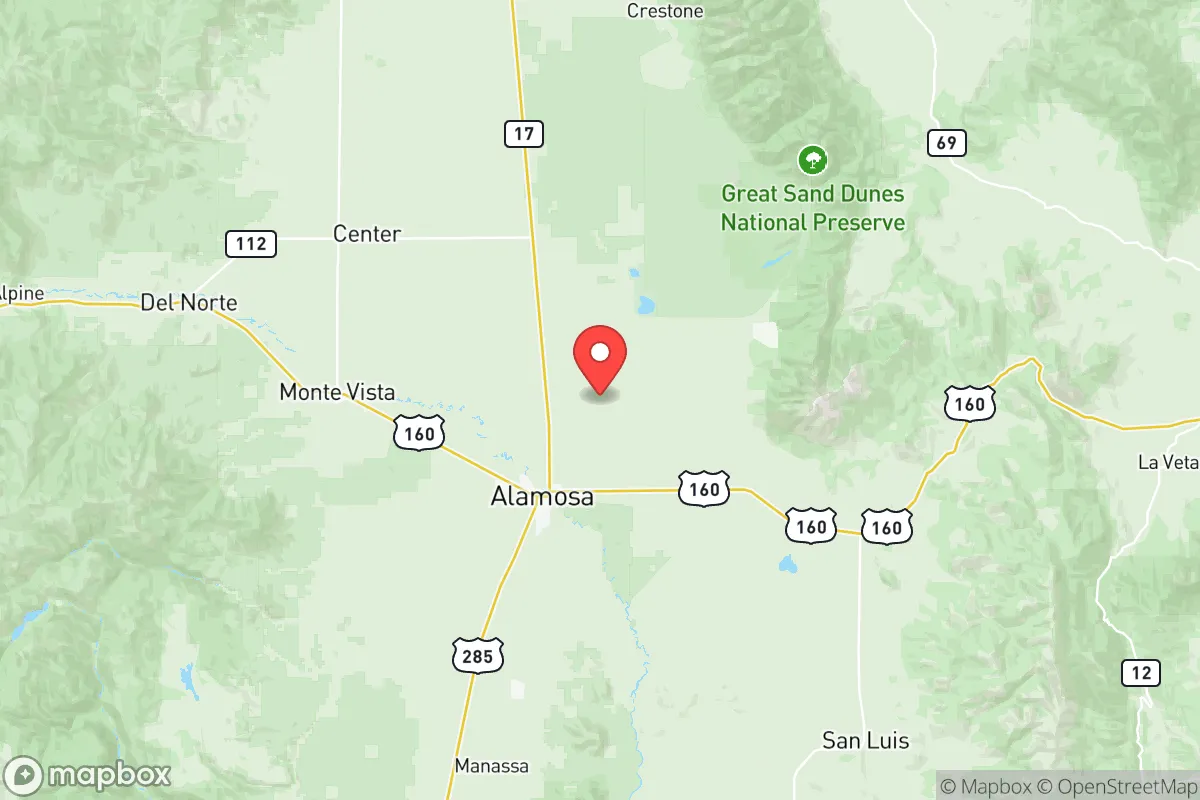
Alamosa County’s 16,515 residents form a nearly evenly split Hispanic (47.8%) and white (45.8%) community, a demographic balance forged by centuries of settlement in the San Luis Valley. The county remains one of Colorado’s most distinct cultural pockets, where Spanish land-grant history, railroad-era migration, and modern agricultural stability have created a tight-knit, family-oriented population with a foreign-born share of just 2.8%. This is a place where the past is still visible in the street grid of Alamosa (the county seat and only incorporated city) and in the small unincorporated settlements like Mosca, Hooper, and La Jara that dot the valley floor.
Settlement & growth (pre-1960)
Long before Anglo settlers arrived, the San Luis Valley was home to the Ute people, particularly the Capote and Mouache bands, who used the valley’s wetlands and bison herds for seasonal hunting. Spanish exploration began in the late 1500s, but permanent European settlement didn’t take hold until the mid-1800s. In 1851, the San Luis People’s Ditch was dug near the present-day town of San Luis (just south of Alamosa County in Costilla County), marking the first irrigation system in Colorado and drawing Hispanic settlers from New Mexico who were granted large land tracts under Mexican and later U.S. law.
Alamosa County itself was created in 1913 from parts of Conejos and Costilla counties, but its population center—the city of Alamosa—was founded in 1878 as a railroad town. The Denver & Rio Grande Railway arrived that year, making Alamosa a critical hub for moving agricultural goods and passengers through the valley. The railroad brought a wave of Anglo-American settlers from the Midwest and East Coast, many of them farmers and merchants drawn by cheap land and the promise of irrigated agriculture. By 1900, the county’s population had reached roughly 5,000, with Alamosa growing as a commercial center serving potato, barley, and alfalfa farms.
The early 20th century saw a second wave: Hispanic families from northern New Mexico and southern Colorado moved into the county as agricultural labor, settling in unincorporated communities like Mosca (north of Alamosa) and La Jara (southwest). These families often worked on large potato and grain operations, and many were descendants of the original Spanish land-grant settlers. The Dust Bowl and Great Depression of the 1930s pushed some Anglo farmers off the land, but the valley’s irrigation systems—fed by the Rio Grande—kept agriculture viable. By 1950, the county’s population had grown to about 10,000, with a roughly 60% white, 40% Hispanic composition.
World War II brought a small but notable influx of Japanese-American internees who were held at the Granada Relocation Center (Amache) in nearby Prowers County; a few stayed in the valley after the war, though their numbers were never large. The railroad remained the dominant employer through the 1950s, supplemented by Adams State College (founded in 1921 as a teachers’ college, now Adams State University), which drew faculty and students from across the region.
Modern era (post-1965)
The 1965 Hart-Cellar Act had a muted effect on Alamosa County compared to coastal urban areas. The foreign-born population today is just 2.8%, and most of that growth came from Mexican immigrants drawn to agricultural work in the 1970s and 1980s. These families settled primarily in Alamosa and the rural communities of Hooper and Mosca, where they formed stable, Spanish-speaking enclaves. Unlike many Colorado counties that saw a surge of Asian or Indian immigration after 1965, Alamosa’s East/Southeast Asian population remains at 0.4% and its Indian-subcontinent population at 0.0%—reflecting the county’s lack of tech or professional-service jobs that attract those groups.
The most significant demographic shift since 1965 has been the growth of the Hispanic share from roughly 40% in 1960 to 47.8% today, driven by higher birth rates and continued migration from New Mexico and Mexico. The white share has correspondingly declined from about 60% to 45.8%. This shift is most visible in Alamosa’s public schools, where Hispanic students now make up a majority. The Black population remains small at 1.7%, concentrated in Alamosa itself, largely tied to Adams State University’s modest recruitment of African-American student-athletes and faculty.
Domestic migration has been minimal. Alamosa County has not experienced the coastal flight or Sun Belt boom seen in Colorado’s Front Range. Instead, the county has seen a slow, steady out-migration of young adults seeking jobs in Denver, Colorado Springs, or Albuquerque, balanced by retirees and families returning to the valley for its lower cost of living and rural lifestyle. The county’s population has hovered between 15,000 and 17,000 since 1990, with no major suburbanization—the only incorporated place remains Alamosa, and unincorporated areas like Parma and Henry remain tiny crossroads.
The future
Alamosa County is projected to remain stable or grow very slowly, reaching perhaps 17,500 by 2040. The Hispanic share is likely to continue rising, potentially exceeding 50% within a decade, as the white population ages and younger Hispanic families have more children. The county’s college-educated share of 29.3% is below the Colorado average of about 42%, but Adams State University provides a steady anchor for educational attainment and cultural events. New communities are unlikely to form; growth will concentrate in Alamosa and along the U.S. 160 corridor, with rural areas like Mosca and Hooper remaining small and agricultural.
The county’s cultural identity is evolving from a historically Anglo-dominated railroad town to a majority-Hispanic, bilingual community where Spanish is increasingly heard in stores and schools. This shift has been largely peaceful, with little of the ethnic tension seen in faster-growing parts of Colorado. The biggest challenge ahead is economic: agriculture and the university are the mainstays, and without new industry or remote-work influx, the population will remain modest and family-oriented.
For someone moving in now, Alamosa County offers a stable, slow-paced, and culturally rooted community where Hispanic and Anglo traditions have blended over generations. It is not a place of rapid change or diversity in the urban sense, but rather a county where the population is becoming more Hispanic, more locally connected, and more reliant on the land and the university. New residents will find a place where neighbors know each other, the pace is unhurried, and the valley’s history is still being written in Spanish and English alike.

* Values derived from national, state, county, city and local statistics and may differ in a specific area. Last updated: 2026-07-10T08:40:33.000Z
Narrative content on this page is AI-generated and may contain mistakes. Verify any details that matter before acting on them.
ReloMaps may earn a commission from affiliate links at no extra cost to you.

