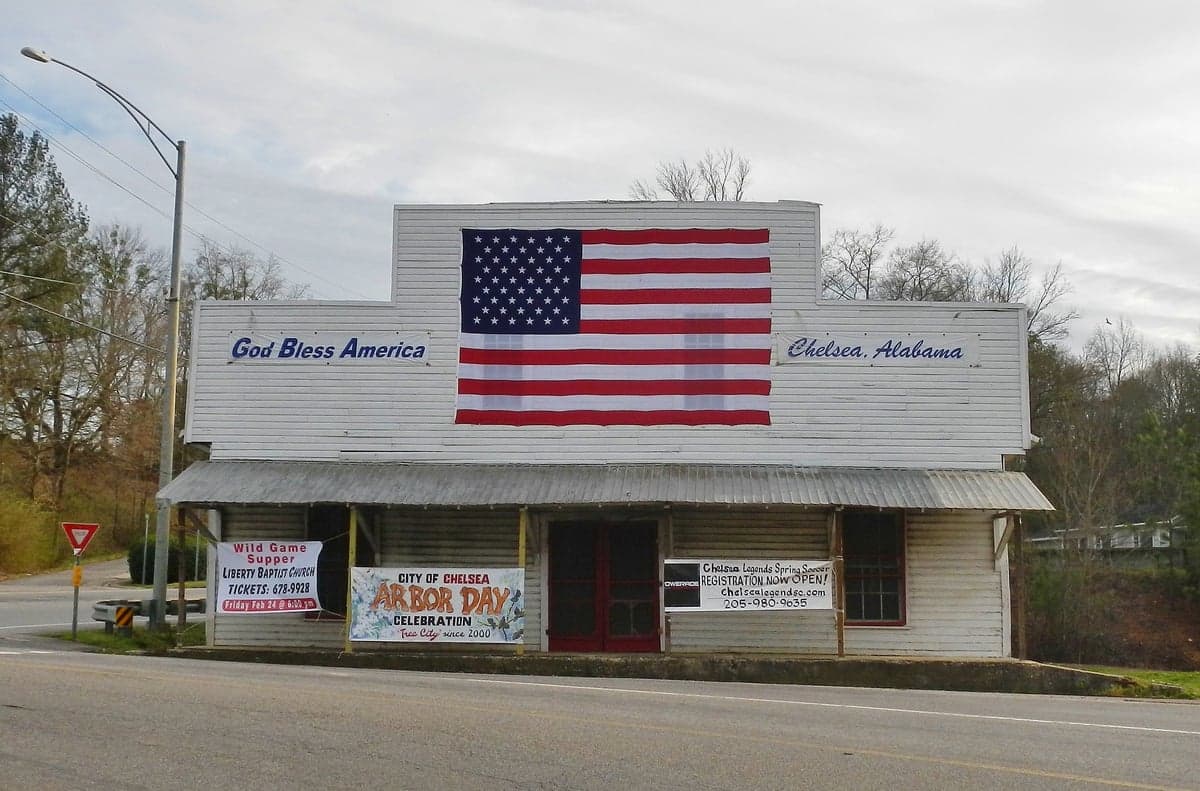
Photo: Wikipedia
Strategic Assessment of Chelsea, AL
Workable tactical position. Some exposure to population density or targets, but generally defensible in a crisis.
What does the Strategic Assessment tell us?
Our Strategic Assessment grades tactical survivability of an area. Major population centers, military targets, fallout zones, natural disasters, and border exposure all drive risk — lower exposure means a more defensible position in a crisis.
This is heavily inspired by Joel Skousen's Strategic Relocation book. Highly recommended you checkout the book ($)What does this tell us?
Our Strategic Assessment grades tactical survivability of an area. Major population centers, military targets, fallout zones, natural disasters, and border exposure all drive risk — lower exposure means a more defensible position in a crisis.
This is heavily inspired by Joel Skousen's Strategic Relocation book. Highly recommended you checkout the book ($)Strategic Pillars

Key Distances
Regional Safe Places
Below is our recommended "safe zones" in Alabama and the surrounding area based on our strategic heuristics. For most people, it's unrealistic to live in a “safe zone” full-time due to work, family or other personal reasons. They tend to be more rural. However, many of these areas are perfect for second homes and retreat properties that double as a vacation home or even a short-term rental.
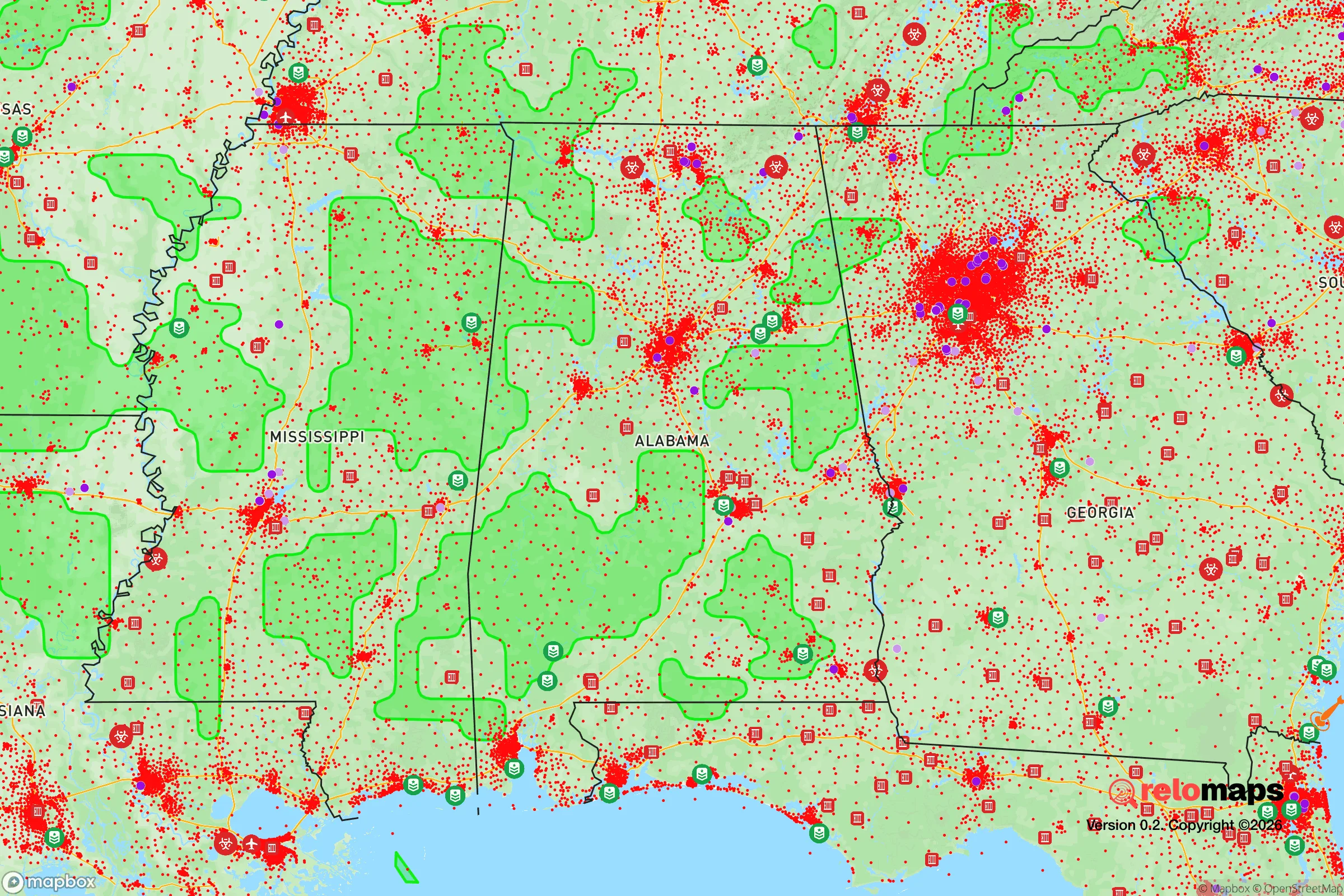
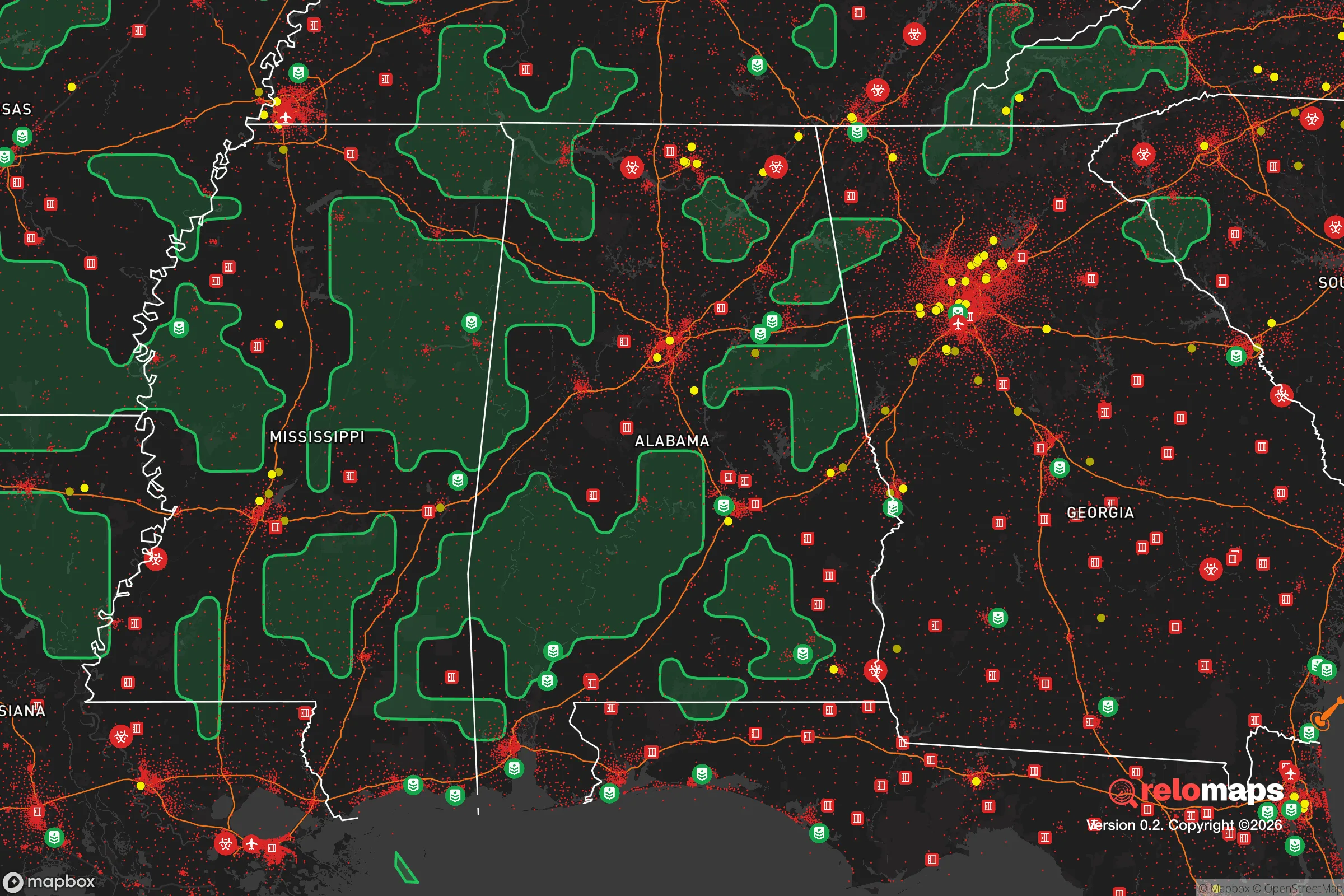


Important Note: For informational purposes only. This does not mean nothing bad ever happens in the green zones. Please use common sense. This is based on public data and modeled with AI. We tried to take a conservative approach but mistakes happen. We update this regularly as new information becomes available.
Solar Generator Recommendations
Backup power matters more here than in safer locations. We've picked three solar generators across budgets and capacity tiers — start with the budget unit if you only need a few essentials, or step up if you want to run a fridge and HVAC for days at a time.

Jackery Portable Power Station Explorer 300
Budget OptionPower on the Go: Weighing only 11 lbs, it's convenient to set up and store with book-sized foldable solar panels

BLUETTI Portable Power Station AC180
Designed for both indoor and outdoor scenarios, AC180 is highly capable as it has a robost capacity and continuous output power.

EF ECOFLOW DELTA Pro Ultra Power Station
Upgraded PickEcoFlow DELTA Pro Ultra is a whole-home energy system designed to grow with your family. Integrated with the Smart Home Panel 2, it scales to meet your evolving energy needs — keeping your home powered, intelligent, and secure through every stage of life.
We earn a commission, at no additional cost to you.
Strategic Assessment Analysis
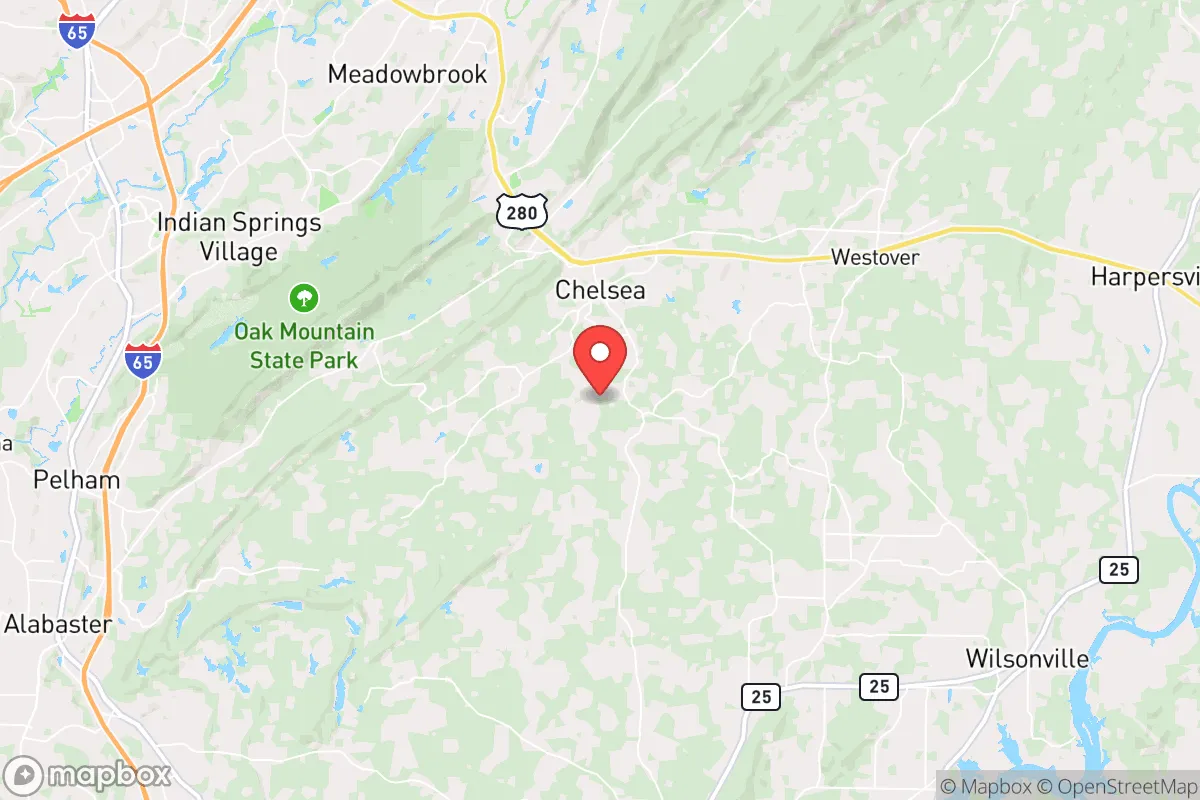
Chelsea, Alabama, occupies a strategic position in the state’s rapidly growing Shelby County corridor, offering a blend of small-town character and proximity to Birmingham that appeals to relocation-minded individuals and families. For those prioritizing disaster readiness and self-sufficiency, Chelsea presents a mixed picture: its location provides meaningful geographic buffers against certain risks while exposing residents to others, particularly those tied to its proximity to a major metropolitan area and associated infrastructure. The town’s resilience profile is shaped less by dramatic natural threats and more by the practical challenges of suburban growth, infrastructure strain, and the cascading effects of regional disruptions.
Geographic position and natural advantages for self-sufficiency
Chelsea sits roughly 25 miles southeast of downtown Birmingham, nestled in the rolling foothills of the Appalachian range. This placement offers several natural advantages. The area’s elevation—generally between 500 and 700 feet above sea level—provides a modest but meaningful buffer against the flash flooding that can plague lower-lying parts of central Alabama. The surrounding terrain is a mix of hardwood forest and pastureland, which supports wildlife populations and offers potential for small-scale hunting or foraging. The Coosa River basin lies to the east, but Chelsea itself is not situated in a designated floodplain, reducing the risk of catastrophic water damage during heavy rain events. The local geology, primarily limestone and sandstone, allows for relatively stable well water access, a key consideration for off-grid water planning. Summers are hot and humid, but the region’s average annual rainfall of about 54 inches means water catchment is a viable option for those willing to invest in cisterns or rain barrels. Winters are mild, with occasional ice storms posing the most significant weather-related disruption, typically lasting only a few days.
Risks, exposures, and proximity to fallout-relevant landmarks
The most significant resilience concern for Chelsea is its proximity to Birmingham, a city of roughly 200,000 within the metropolitan area of over 1.1 million people. In a major regional disruption—whether natural disaster, grid failure, or civil unrest—Chelsea sits directly in the path of potential evacuation traffic from the metro area. Interstate 65, the primary north-south artery, runs about 10 miles west of town, and US Highway 280, a notoriously congested corridor, passes through Chelsea itself. During a crisis, these routes could become impassable or dangerous. Additionally, Birmingham hosts several infrastructure assets that could become liabilities: the Birmingham-Shuttlesworth International Airport, major rail yards, and industrial facilities along the I-65 corridor. While Chelsea is not within the immediate blast or fallout zone of any known high-value target, it lies within a reasonable radius for secondary effects such as supply chain disruption, refugee movement, or electromagnetic pulse (EMP) impacts on the regional power grid. The nearby Logan Martin Dam, about 15 miles east, presents a low-probability but high-consequence failure risk, though its design and maintenance standards are robust. Tornado risk is real but not exceptional for Alabama; Shelby County averages about 2-3 tornado warnings per year, with direct hits being rare but not unheard of.
Practical resilience for a relocator: food, water, energy, and defensibility
For a relocator serious about self-sufficiency, Chelsea offers a mixed bag. Water access is a strong point: the area’s groundwater is generally potable with basic filtration, and many rural properties already have wells. The local utility, Chelsea Water Works, serves the town proper, but properties outside the municipal limits often rely on private wells, which is a resilience advantage. Food production potential is moderate. The growing season runs from April to October, and the soil in the area—primarily sandy loam over clay—can support gardens with amendment. Local ordinances are generally lenient regarding backyard chickens and small livestock, though homeowners’ associations in newer subdivisions may impose restrictions. The nearest major grocery distribution centers are in Birmingham, meaning a regional disruption could empty shelves within 48 hours. Energy resilience is a weak point. Chelsea is served by Alabama Power, which has a solid reliability record but is tied to the regional grid. Solar potential is decent—the area averages about 210 sunny days per year—but net metering policies are not particularly favorable for grid-tied systems. Off-grid solar with battery storage is feasible but requires significant upfront investment. Natural gas is available in parts of town, but propane is more common for rural heating and cooking. Defensibility is situational. The town’s layout—a mix of suburban subdivisions and rural acreage—means that properties on the outskirts offer better setback and natural cover than those in dense developments. The Shelby County Sheriff’s Office has a substation in Chelsea, and response times in the town proper are under 10 minutes; rural response times can stretch to 20-30 minutes. The local population is generally law-abiding, but the proximity to Birmingham means that property crime, particularly vehicle break-ins and package theft, is a recurring nuisance. The broader community is active in church and civic organizations, which can be a social resilience asset in a crisis, but there is no organized neighborhood watch or preparedness network of note.
The overall strategic picture for Chelsea is one of moderate resilience with clear trade-offs. Its geographic position offers genuine advantages in water access, elevation, and space for self-sufficiency, and the local climate supports year-round food production with effort. However, its proximity to Birmingham introduces risks that cannot be ignored: congestion, infrastructure dependency, and the potential for spillover effects from a major urban disruption. For a relocator who values a quiet, family-oriented community with room to breathe and a reasonable cost of living—median home prices in Chelsea hover around $400,000 as of 2026, well below national averages—the town is a solid choice. For someone whose primary concern is strategic depth and isolation from metropolitan fallout, the trade-offs may be too great. Chelsea is best understood as a suburban buffer zone: close enough to benefit from urban resources, far enough to offer some breathing room, but not remote enough to be truly self-contained in a prolonged crisis. The wise relocator will invest in well water, solar backup, and a strong garden before they need them, and will keep a close eye on the traffic on Highway 280.

* Values derived from national, state, county, city and local statistics and may differ in a specific area. Last updated: 2026-09-27T14:20:49.000Z
Narrative content on this page is AI-generated and may contain mistakes. Verify any details that matter before acting on them.
ReloMaps may earn a commission from affiliate links at no extra cost to you.

