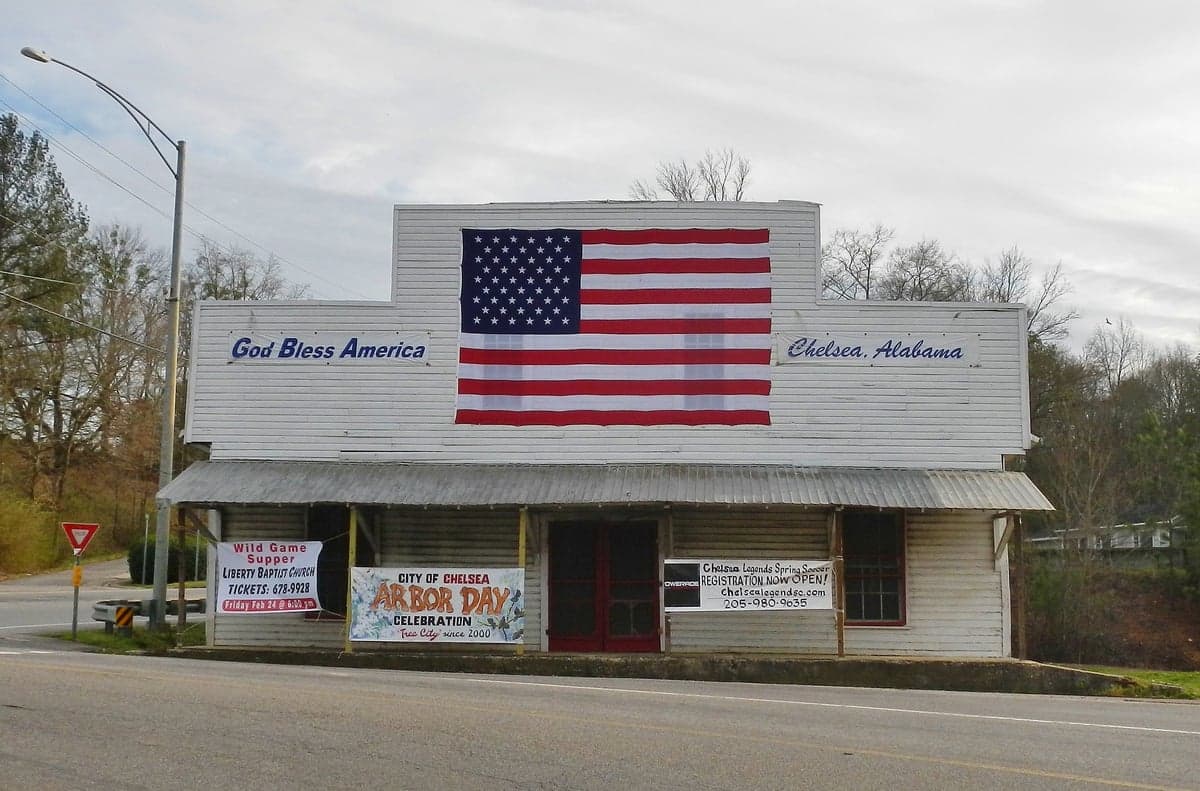
Photo: Wikipedia
Quality of Life in Chelsea, AL
A high quality of life with strong walkability, manageable living costs, healthy neighborhood signals, and solid amenity access.
What does Quality of Life tell us?
Quality of Life blends cost of living, nearby amenities, socioeconomic signals, and neighborhood character. City-level scores represent the whole municipality; individual neighborhoods can differ.
What does this tell us?
Quality of Life blends cost of living, nearby amenities, socioeconomic signals, and neighborhood character. City-level scores represent the whole municipality; individual neighborhoods can differ.
Cost of Living
23% above national average
The Real Cost of Living in Chelsea, AL for 2026
| Tier | Individual | Family (4) |
|---|---|---|
| Survival | $23k | $44k |
| Comfortable | $66k | $97k |
| Luxury | $145k+ | $224k+ |
| Elite (Top 5%) | $170k+ | $264k+ |
114%
The Area Signal
A metric tracking the socioeconomic signals of the area.
Hobbies
Explore the areaGroceries
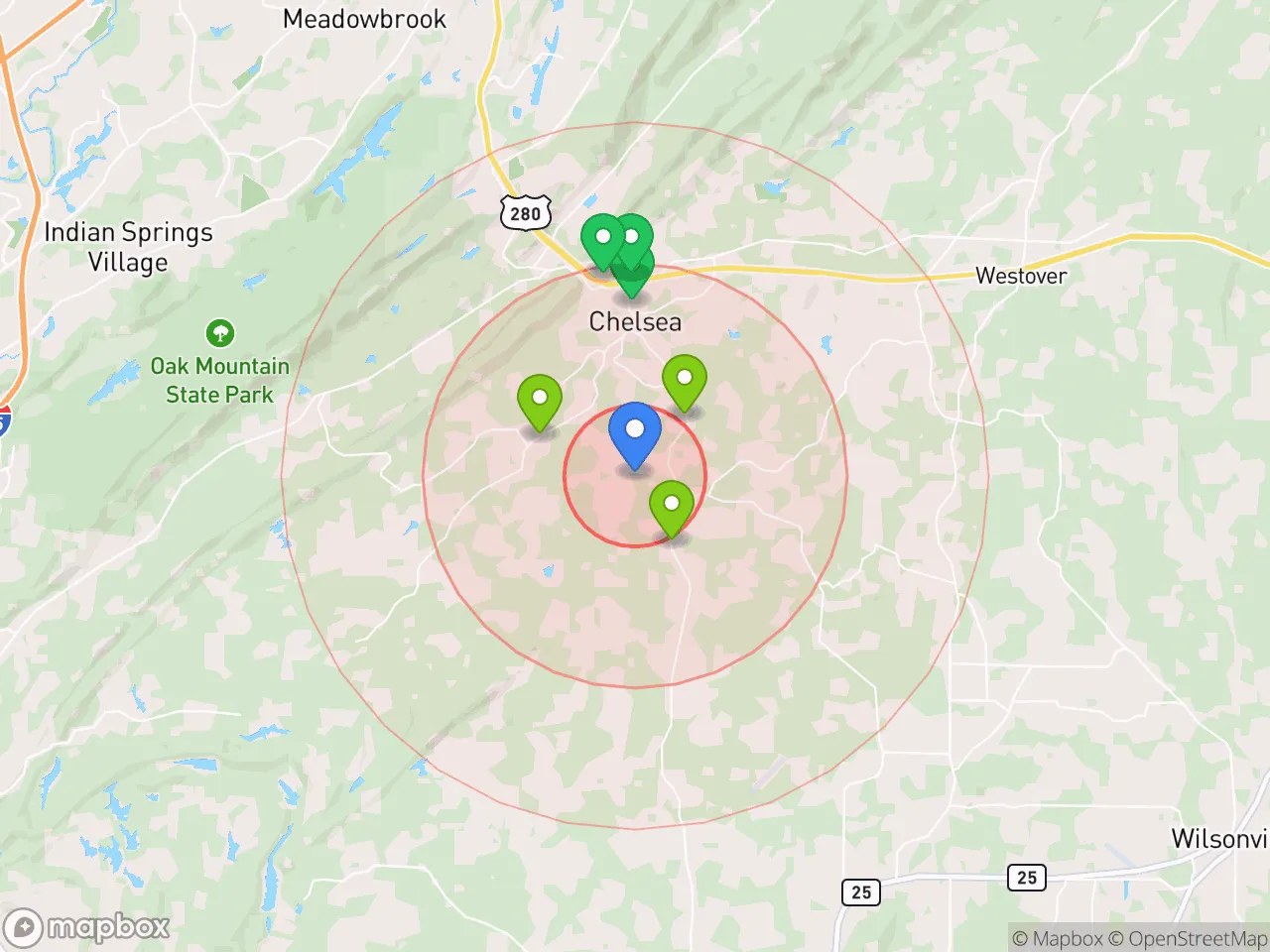
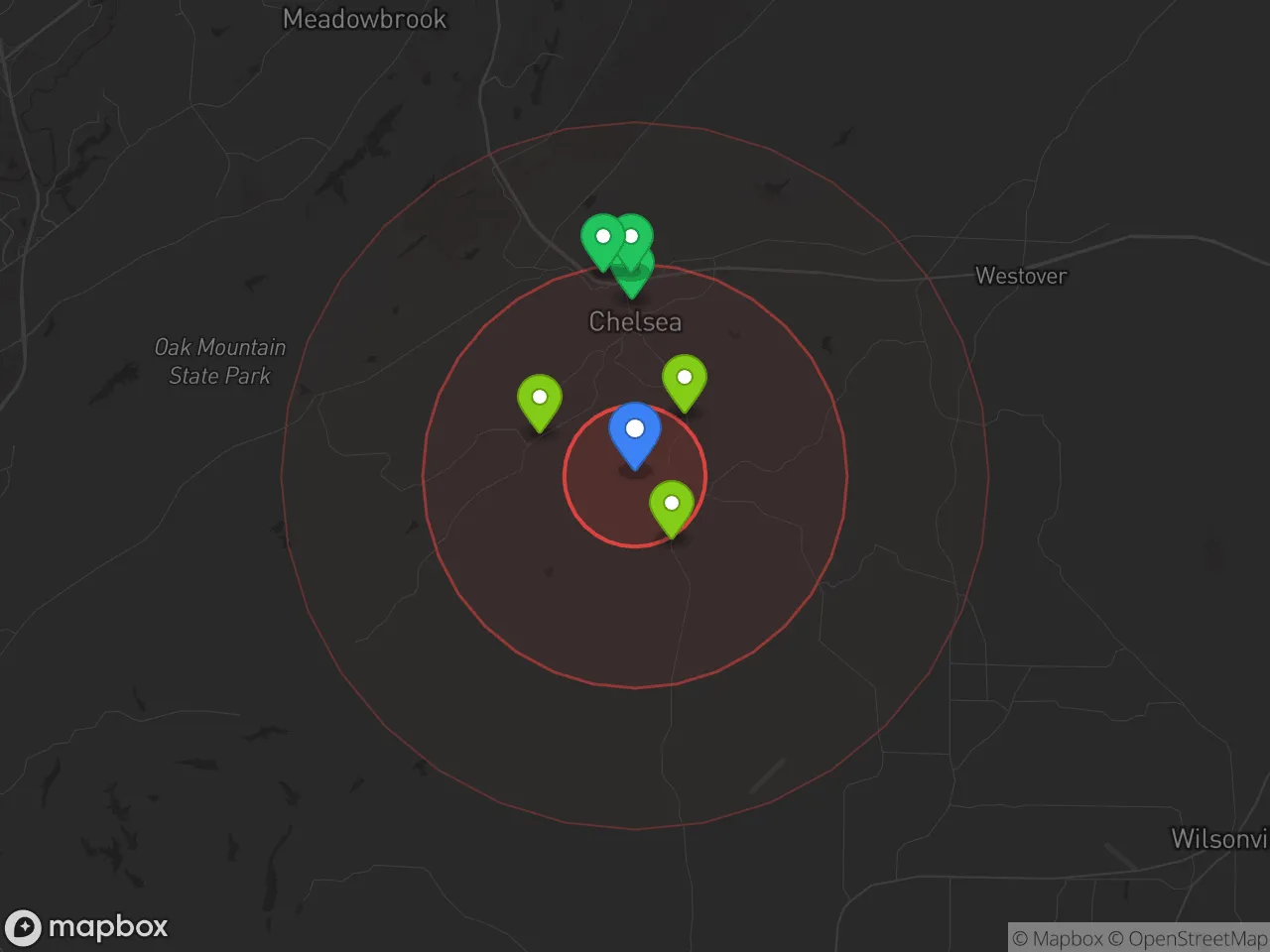
6 within 10 miles
Gas
20 within 10 miles
Hospital
16 within 20 miles
Airport
ATL — Hartsfield–Jackson Atlanta International
Post Office
USPS — Chelsea, AL
Critical Amenities
Quality-of-Life Analysis
Chelsea, Alabama, is an affluent, rapidly growing suburb of Birmingham that attracts families and professionals seeking a quieter, more spacious lifestyle without sacrificing access to a major metro. With a cost of living index of 123 (23% above the national average), the area is notably more expensive than the state average, yet it offers a distinct value proposition compared to Birmingham’s closer-in suburbs. The population skews heavily toward married couples with children, and the community is characterized by newer subdivisions, strong school loyalty, and a daily rhythm centered on family life and commuting.
Cost of living, housing, and how Chelsea compares to nearby suburbs
Chelsea’s housing market is the primary driver of its above-average cost of living. The median home value sits at $339,400, significantly higher than the Alabama median of roughly $200,000, while the median rent is $1,456 per month. This places Chelsea in a similar price tier to other high-demand Shelby County suburbs like Pelham and Alabaster, though Chelsea generally offers larger lots and newer construction for the price. The trade-off is a longer average commute of 34 minutes—one of the longest in the Birmingham metro—as most residents drive to jobs in Birmingham, Hoover, or the U.S. 280 corridor. Property taxes in Shelby County are moderate (around 0.4% of assessed value), which helps offset the higher home prices for buyers coming from high-tax states. For renters, the market is tight, with few apartment complexes and a heavy concentration of single-family rentals.
Schools, amenities, and what daily life feels like in Chelsea
Daily life in Chelsea revolves around the highly regarded Shelby County School System, particularly Chelsea High School and Chelsea Middle School, both of which consistently earn top ratings from Niche and GreatSchools. The town’s amenity hub is the Chelsea Community Center and Sports Complex, which hosts youth leagues and community events. Retail and dining are concentrated along U.S. Highway 280, with big-box stores, chain restaurants, and local spots like the Chelsea Coffee Company. For outdoor recreation, residents have quick access to the 2,500-acre Oak Mountain State Park in nearby Pelham, offering hiking, biking, and fishing. The area lacks a traditional downtown or walkable core; nearly all errands require a car, and the traffic on Highway 280 during peak hours is a common complaint. Grocery options are limited to a single Piggly Wiggly and a Walmart Supercenter, though more variety is available a 15-minute drive south in Columbiana.
Chelsea is best suited for families who prioritize top-rated public schools and a suburban, low-crime environment over urban convenience or walkability. The long commute and car-dependent layout are significant drawbacks for singles or empty-nesters, but for those seeking a newer home on a larger lot with strong community ties, Chelsea delivers a reliable quality of life. The area’s rapid growth—population nearly doubled between 2010 and 2020—means new subdivisions and commercial development are ongoing, which will likely keep home values appreciating but also increase traffic and strain on infrastructure. Professionals working in Birmingham’s U.S. 280 corridor or at major employers like the University of Alabama at Birmingham or Regions Financial will find Chelsea a practical, if time-consuming, choice.

Crime in Chelsea, AL
Crime rates similar to the national median for U.S. locations.
Violent CrimeViolent Crime Analysis
Property CrimeProperty Crime Analysis
Crime Analysis
Chelsea, Alabama, presents a mixed safety profile for prospective residents. The city's violent crime rate of 350.2 per 100,000 residents is notably higher than the national average, while its property crime rate of 1,490.1 per 100,000 also exceeds typical benchmarks. These figures place Chelsea in a cautionary position for those prioritizing low crime, particularly given its proximity to the Birmingham metro area, where broader regional crime trends and judicial policies can influence local conditions.
Crime in context
When compared to state and national averages, Chelsea's violent crime rate of 350.2 per 100,000 is roughly 1.5 times the national average of about 230 per 100,000 and aligns closely with Alabama's statewide rate of approximately 400 per 100,000. Property crime in Chelsea, at 1,490.1 per 100,000, is nearly 1.3 times the national average of around 1,150 per 100,000 and slightly above Alabama's statewide figure of about 1,400 per 100,000. These numbers indicate that while Chelsea is not among the most dangerous suburbs, it does not offer the low-crime sanctuary some homebuyers seek. The city's location within Shelby County, which has historically maintained more conservative law-and-order policies, provides some buffer, but the influence of progressive judicial trends in the broader Birmingham metro area—where district attorneys and judges may prioritize rehabilitation over incarceration—can still affect recidivism and street-level crime.
What residents experience
Residents of Chelsea report that property crime, particularly theft from vehicles and burglary, is the most common safety concern. The property crime rate of 1,490.1 per 100,000 translates to roughly 1 in 67 homes affected annually, a frequency that demands proactive measures like home security systems and neighborhood watch participation. Violent crime, while less frequent at 350.2 per 100,000 (about 1 in 285 residents per year), includes incidents of assault and robbery that can occur in commercial areas or near major roadways like US-280. The city's relatively small population (around 15,000) means that crime statistics can fluctuate year-to-year, but the overall trend suggests a community where vigilance is warranted, especially given the potential for progressive criminal justice policies in the region to reduce consequences for repeat offenders.
Neighborhood-level variation
Crime in Chelsea is not evenly distributed. Newer subdivisions on the city's western edge, such as those near Chelsea Park, tend to report lower incident rates due to higher property values and stronger homeowners' associations. Older neighborhoods closer to the downtown core and along the US-280 corridor see more property crime, likely due to easier access for transient offenders. The city's police department maintains a visible presence, but its resources are limited, meaning residents in outlying areas may experience longer response times. For those considering a move, focusing on neighborhoods with active community policing and secure entry points can mitigate risk, though the broader regional context of progressive justice policies remains a factor that could undermine local safety efforts over time.
* Values derived from national, state, county, city and local statistics and may differ in a specific area. Last updated: 2026-09-27T14:20:49.000Z
Narrative content on this page is AI-generated and may contain mistakes. Verify any details that matter before acting on them.
ReloMaps may earn a commission from affiliate links at no extra cost to you.

