Photo: Wikipedia
Political ClimatePolitical Climate in Challis, ID
District shown is the primary district for this city’s centroid. Cities may span multiple districts.
Local Political AnalysisPolitical Analysis of Challis, ID
Challis, Idaho, sits deep in a solidly conservative pocket, with the surrounding area carrying a Cook PVI of R+13 — reliably red but a notch cooler than the state's R+18 as a whole. Custer County has trended Republican for decades, and apart from a few outliers, that hasn't changed much. If anything, the last couple of cycles have seen a slight hardening of that lean as folks here push back against what they see as overreach from Boise and the feds. You won't find much hand-wringing over which way the wind is blowing; this is still a place where self-reliance and personal liberty come before any party label.
How it compares
Statewide, Idaho's R+18 makes it one of the reddest in the country. Challis is red but not quite that deep, largely because of a handful of old-timers and a few seasonal residents who lean slightly more moderate. That said, the difference is almost academic compared to the real contrast you see if you drive an hour south to Sun Valley or Ketchum in Blaine County. Those towns vote blue by a wide margin, and the cultural split is obvious — big federal land battles, stricter local ordinances, and a general acceptance of the kind of progressive social policies that would never fly here. Up in Challis, the conversation is about water rights, grazing permits, and keeping the federal government's nose out of local decisions. Over in Blaine County, it's about diversity initiatives and environmental lawsuits. The two worlds don't mix much, and most folks here prefer it that way.
What this means for residents
For anyone moving to Challis, the political climate translates directly into how the town runs. Permits are minimal, zoning is light, and the county sheriff is known for taking a strict stand against federal overreach — especially on land management issues. There's no city income tax, property taxes stay low, and the general attitude is "leave folks alone unless they cause trouble." The flip side is that if you're hoping for progressive leadership on climate or social justice, you'll be swimming against a very strong current. The school board, the city council, and even the hospital board are dominated by longtime locals who value stability and traditional family structures. Any move toward what they see as "outsider ideology" gets met with stiff opposition. That said, there's a live-and-let-live streak too — as long as you don't try to tell others how to live, you won't get much static.
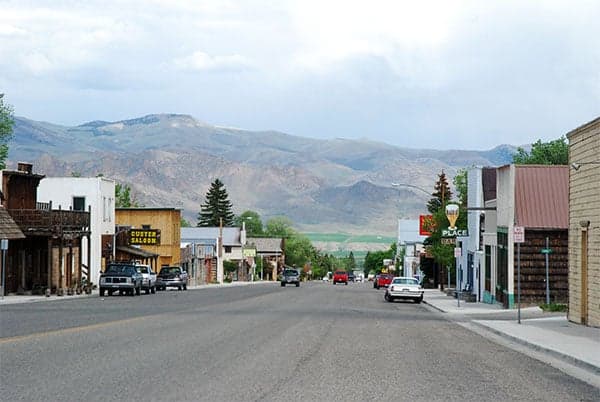
The biggest cultural distinction between Challis and the rest of Idaho is probably the town's fiercely independent streak. While Boise and the Treasure Valley have seen an influx of out-of-state transplants bringing more blue-leaning habits, Challis has stayed remarkably insulated. The local economy still runs on ranching, mining, and a bit of tourism — not tech hubs or college town cafes. You won't find a single traffic light, and people wave to each other on the main drag. That independence shows up in voting patterns, too: Custer County often picks the more libertarian-leaning Republican over the establishment pick. The concern I hear most often around here isn't about national politics — it's about whether the state will keep letting local communities decide their own fate, or start imposing one-size-fits-all rules from the capitol. For now, Challis is holding the line, and most residents plan to keep it that way. If you're looking for a place where personal freedom still means something and the government stays out of your business, you could do a lot worse.

State Political ClimatePolitical Climate in Idaho
State Political AnalysisPolitical Environment in the State
Idaho is one of the most reliably Republican states in the nation, with a Cook PVI of R+18, meaning it votes about 18 points more Republican than the national average. The state has been on a steady rightward trajectory for the past two decades, driven by a combination of native conservative culture and an influx of out-of-state migrants—many from California, Washington, and Oregon—who are specifically seeking lower taxes, less regulation, and a more traditional way of life. The dominant coalition is a blend of rural libertarians, Mormon conservatives in the southeast, and a growing number of evangelical and ex-urban families in the Treasure Valley, all united by a deep skepticism of federal overreach.
Urban vs. rural divide
The political map of Idaho is starkly divided between its few urban centers and the vast rural expanse. The Treasure Valley, anchored by Boise, Meridian, and Nampa, is the state's population engine and the only area where Democrats can be competitive. Boise itself has a noticeable progressive tilt, especially in its downtown core and near the university, but the surrounding suburbs—Meridian, Eagle, and Star—are heavily Republican and growing fast. Ada County (Boise) has trended slightly purple in recent cycles, but it still votes Republican by a comfortable margin. The real red wall is everywhere else. Canyon County (Nampa, Caldwell) is deeply conservative, and the rural counties—Lemhi, Boundary, Oneida—routinely deliver 80-90% of their votes to GOP candidates. The Idaho Panhandle, including Coeur d'Alene and Post Falls, has seen an influx of conservative refugees from Washington and California, making it even redder than it was a decade ago. The only other blue-ish pocket is Blaine County (Sun Valley), a wealthy resort area that votes reliably Democratic, but its population is tiny. In short, if you're outside the Boise metro or Sun Valley, you're in deep red territory.
Policy environment
Idaho's policy environment is a model of limited government, at least by modern American standards. The state has a flat income tax rate of 5.8%, which was cut from 6% in 2023, and there is a clear legislative appetite to reduce it further. Property taxes are relatively low, though they vary by county, and there is no state-level estate or inheritance tax. The regulatory climate is business-friendly, with a right-to-work law and minimal occupational licensing burdens compared to coastal states. Education policy is a major battleground: the state has expanded school choice through charter schools and a robust open enrollment law, but it has not yet passed a universal school voucher program, which remains a top priority for conservative activists. The legislature has also passed laws banning critical race theory and "divisive concepts" in public schools, and it requires parental notification for any curriculum involving sexuality or gender identity. On healthcare, Idaho has not expanded Medicaid under the Affordable Care Act, though voters passed a ballot initiative in 2018 to do so; the legislature has since imposed work requirements and other restrictions. Election laws are among the most secure in the nation: voter ID is required, same-day registration is not allowed, and the state has a strict ban on ballot harvesting. There is no mail-in voting unless you have a valid excuse. For a conservative moving from a blue state, the policy environment here feels like a breath of fresh air—but there is always pressure to go further.
Trajectory & freedom
Idaho is generally becoming more free, especially in terms of gun rights, parental rights, and tax policy. In 2023, the legislature passed a constitutional carry law, allowing any law-abiding adult to carry a concealed firearm without a permit. The same year, the Idaho Parental Rights Act was strengthened, giving parents explicit authority over their children's medical decisions and education. The state also passed a law banning nearly all abortions, with narrow exceptions for rape, incest, and the life of the mother. On the medical autonomy front, Idaho has been a leader in opposing COVID-19 mandates: the legislature banned vaccine passports and prohibited employers from requiring vaccines as a condition of employment. Property rights are well-protected, with strong eminent domain restrictions and a growing movement to limit homeowners' association (HOA) overreach. However, there are areas where freedom is being constrained. The state has a strict anti-drug policy, with no medical or recreational marijuana, and possession of even small amounts can lead to jail time. There is also a growing tension between local control and state preemption: the legislature has repeatedly overridden local ordinances on issues like mask mandates, gun restrictions, and land use, which some conservatives see as a necessary check on progressive city councils, but others view as a violation of local autonomy. Overall, the trajectory is toward more personal liberty, but the pace is slower than many activists would like.
Civil unrest & political movements
Idaho has a reputation for political stability, but it is not without its flashpoints. The most visible movement in recent years has been the anti-government and militia-adjacent activism in the Panhandle, particularly around Bonner County and Kootenai County. Groups like the Idaho Freedom Foundation and local chapters of the Oath Keepers have been active, though their influence has waned since the January 6th prosecutions. There have been sporadic protests at the state capitol over issues like abortion, gun rights, and COVID mandates, but they have been relatively small and peaceful compared to states like Oregon or Washington. Immigration politics are a growing concern: Idaho has seen a significant increase in migrant labor, particularly in agriculture and construction, and the legislature has passed laws requiring E-Verify for all employers and prohibiting sanctuary city policies. There have been no major election integrity controversies in Idaho; the state's voting system is widely trusted, though some activists continue to push for hand-counting of ballots. The most notable civil unrest in recent memory was the 2020 protests in Boise over the death of George Floyd, which saw some property damage and clashes with police, but they were quickly contained. For a new resident, the political atmosphere is generally calm and orderly, but you will hear plenty of talk about "federal overreach" and "state sovereignty" at any local coffee shop.
Projection
Over the next 5-10 years, Idaho will likely become even more conservative, but with a different flavor than the old-school rural libertarianism of the past. The in-migration from blue states is accelerating, and these newcomers are not moderates—they are often fleeing high taxes, crime, and progressive policies, and they want Idaho to stay red. This will put pressure on the legislature to cut taxes further, expand school choice, and resist any federal mandates on climate, energy, or social issues. The biggest wild card is the Boise metro area: as it grows, it could become a swing region, but the suburbs are filling up with conservative families, not progressive urbanites. The rural counties will remain deeply red, and the Panhandle will continue to be a hotbed of libertarian and constitutionalist sentiment. The main risk is that the state's rapid growth could strain infrastructure and lead to rising housing costs, which might eventually create a backlash against development and newcomers. But politically, Idaho is on a trajectory to become a model of conservative governance—low taxes, strong gun rights, parental control over education, and minimal government interference in daily life. If you're moving here now, expect to find a state that is even more aligned with your values in a decade.
For a new resident, the bottom line is this: Idaho offers a political environment where your rights are respected, your taxes are low, and your children's education is not subject to ideological experimentation. You will find a community of like-minded people who value self-reliance and personal responsibility. The trade-off is that you will also encounter a state that is still figuring out how to manage rapid growth, and you may need to be patient with infrastructure that hasn't kept pace. But if you are looking for a place where the government stays out of your life and your family's business, Idaho is one of the best bets in the country.
* Values derived from national, state, county, city and local statistics and may differ in a specific area. Last updated: 2026-06-01T23:49:26.000Z
Narrative content on this page is AI-generated and may contain mistakes. Verify any details that matter before acting on them.
ReloMaps may earn a commission from affiliate links at no extra cost to you.

