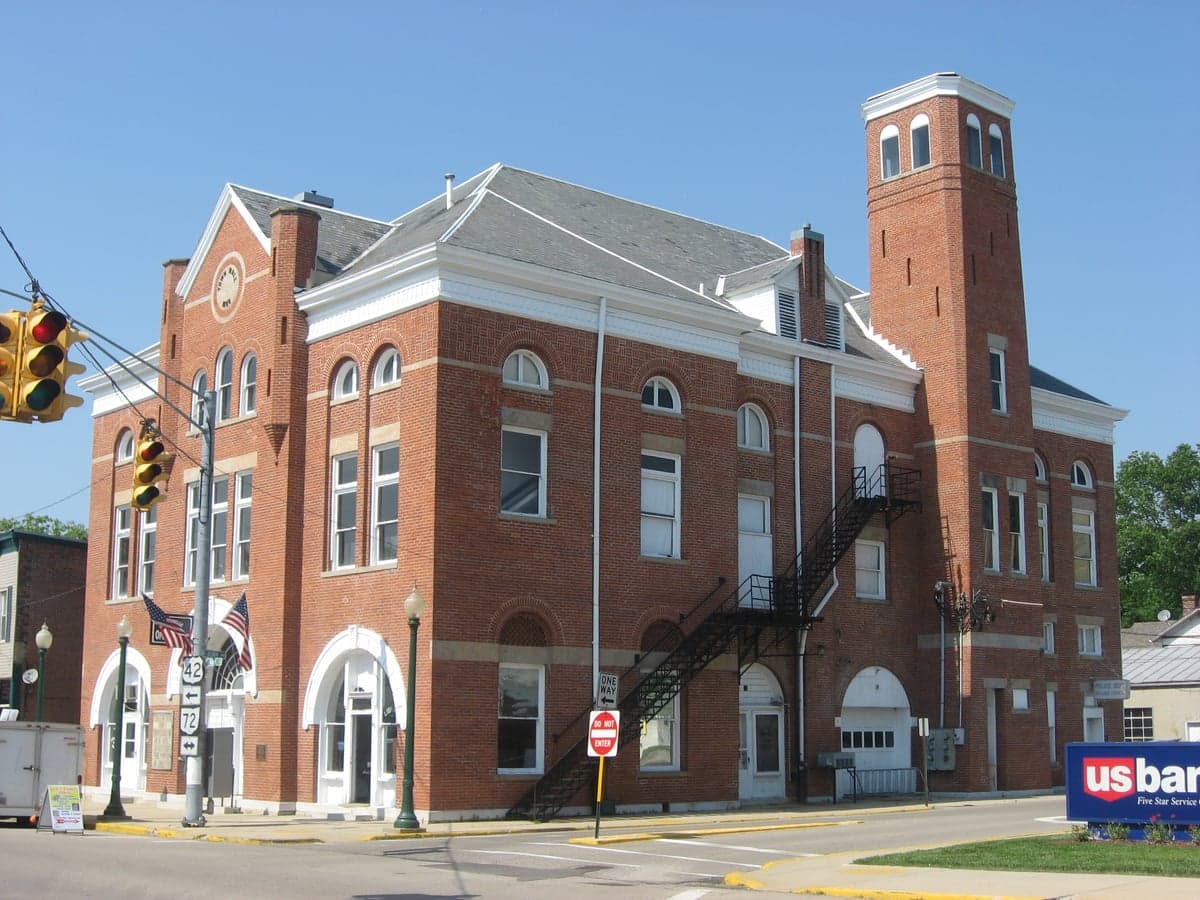
Photo: Wikipedia
Political ClimatePolitical Climate in Cedarville, OH
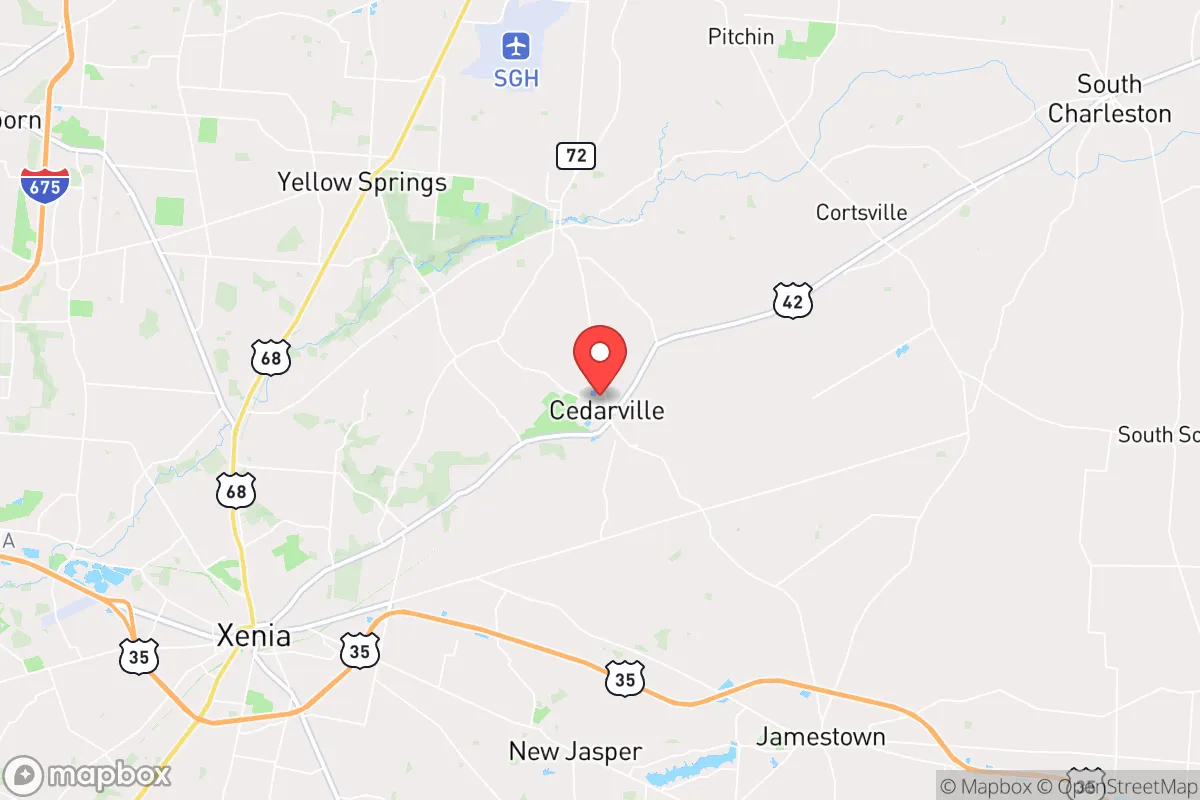
District shown is the primary district for this city’s centroid. Cities may span multiple districts.
Local Political AnalysisPolitical Analysis of Cedarville, OH
Cedarville, Ohio, sits in a reliably Republican area, but its political character is a bit more nuanced than the surrounding region. The town itself leans right, with a Cook PVI of R+3, meaning it votes about three points more Republican than the national average. However, this is actually less conservative than the state of Ohio as a whole, which carries a PVI of R+5. Over the past decade, Cedarville has held steady in its Republican lean, but the presence of Cedarville University—a private Christian institution—injects a distinct, socially conservative, and highly engaged voting bloc that can sometimes push local primaries further right than the county average. You won't see the same kind of dramatic swing you might in a fast-growing exurb; instead, it's a stable, predictable conservative base with a strong evangelical influence.
How it compares
When you compare Cedarville to the broader state of Ohio, the difference is subtle but real. Ohio's R+5 rating reflects a state that has shifted rightward in presidential elections, driven by rural and Appalachian counties. Cedarville's R+3, by contrast, is tempered by its location in Greene County, which includes the more moderate city of Xenia and the college town of Yellow Springs—a famously liberal enclave just 15 minutes away. Yellow Springs, with its artsy downtown and Antioch College, votes reliably Democratic, creating a stark political contrast that's rare in southwest Ohio. So while Cedarville is solidly red, it's not as deeply red as, say, rural Clinton County to the south. The local dynamic means that a Republican candidate in Cedarville can't take the base for granted; they have to appeal to the university's values-driven voters, while a Democrat would find little traction outside of a few scattered precincts near the campus.
What this means for residents
For conservative residents, Cedarville is a comfortable place to live. Local government, school board meetings, and community events generally reflect their values, and you'll find plenty of churches and conservative civic groups. The university's influence means that social issues like abortion and religious liberty are front and center in local discourse. For liberal residents, the reality is more isolating. You can find like-minded people in Yellow Springs or Dayton, but within Cedarville itself, openly progressive views are rare and can feel socially risky. The practical effect is that local elections are often decided in the Republican primary, so the general election is usually a formality. That said, the town's small size means that personal relationships can sometimes override partisan divides—neighbors help neighbors regardless of yard signs. The trajectory is toward a slight hardening of the conservative lean, as the university continues to grow and attract families who prioritize its mission.
Culturally, Cedarville stands apart from much of Ohio by its strong sense of community identity tied to the university. You'll see fewer "Trump 2024" flags than in rural areas, and more "Cedarville University" banners. The town's dry status (no alcohol sales) is a direct policy distinction that reflects its religious character, a rule that's been in place for decades and shows no sign of changing. This creates a unique atmosphere where the political climate isn't just about voting—it's woven into daily life, from the types of businesses that thrive to the conversations at the local coffee shop. For anyone moving here, understanding that this is a place where faith and politics are deeply intertwined is key to fitting in, whether you share those views or simply respect them.

State Political ClimatePolitical Climate in Ohio
State Political AnalysisPolitical Environment in the State
Ohio is a classic swing state that has shifted decisively rightward over the past decade, now carrying a Cook PVI of R+5. The state voted for Donald Trump by 8 points in both 2016 and 2020, and by a similar margin in 2024, cementing a Republican lean that was unthinkable as recently as 2012, when Barack Obama won it by 3 points. The dominant coalition is a mix of working-class voters in small cities and rural areas, suburban conservatives in the Cincinnati and Columbus exurbs, and a shrinking but still potent Democratic base anchored in the urban cores of Cleveland, Columbus, and Cincinnati. For a relocator, the practical reality is that Ohio is now a reliably red state in presidential elections, but with enough local Democratic strongholds to keep politics competitive at the state and local level.
Urban vs. rural divide
The political map of Ohio is a textbook study in the urban-rural split. The three major metros — Cleveland (Cuyahoga County), Columbus (Franklin County), and Cincinnati (Hamilton County) — are Democratic strongholds. Cuyahoga County gave Biden 66% in 2020, while Franklin County delivered 62%. Hamilton County, once a bellwether, has trended blue and gave Biden 56%. These three counties alone account for roughly 40% of the state’s vote. Outside those cores, the picture flips dramatically. The Appalachian counties in the southeast — places like Meigs, Vinton, and Monroe — vote Republican by 40-50 points. The rural northwest, including Van Wert and Mercer counties, is similarly deep red. The most telling shift is in the suburbs and exurbs. Delaware County, just north of Columbus, was a swing county in the 1990s but now votes Republican by 25 points. Warren County, north of Cincinnati, is one of the most Republican counties in the nation, voting +40 R. Meanwhile, Lake County in the northeast, a classic blue-collar swing county, has moved from Obama +6 in 2012 to Trump +12 in 2024, reflecting the broader realignment of working-class voters away from Democrats.
Policy environment
Ohio’s policy environment is solidly conservative but with some notable exceptions. The state has a flat income tax rate of 3.5% (down from 4.8% in 2020), with a phase-down to 2.75% by 2026. Sales tax is 5.75% at the state level, with local add-ons that can push it to 8% in cities like Cleveland. Property taxes are moderate, averaging about 1.5% of home value, but vary widely by district. The state is a right-to-work state in practice (though not by law), with a unionization rate of about 12%, down from 18% in 2000. Education policy is a battleground: Ohio has a robust school voucher program (the EdChoice system) that now covers most families, and charter schools are widespread. The state legislature passed a law in 2023 requiring schools to adopt policies on bathroom and locker room access based on biological sex. Election laws have tightened: voter ID is now required (photo ID only, effective 2023), absentee ballot drop boxes are limited to one per county, and early voting hours have been standardized. The state also passed a 2023 law banning most abortions after a fetal heartbeat is detected (roughly 6 weeks), though a 2024 ballot initiative enshrined abortion rights in the state constitution, creating a legal tension that is still being litigated.
Recent policy direction
The last three years have seen a flurry of legislation that signals where Ohio is headed. On gun rights, Ohio became a permitless carry state in 2022, allowing any adult who can legally possess a firearm to carry it concealed without a license. The state also passed a "stand your ground" law in 2021, removing the duty to retreat before using deadly force. On parental rights, a 2023 law requires schools to notify parents of any changes to a student’s health or well-being, including gender identity, and bans transgender girls from female sports. On speech, the state passed a law in 2024 prohibiting public universities from requiring diversity statements in hiring. On privacy and surveillance, Ohio has no comprehensive data privacy law, but a 2023 law restricts the use of facial recognition by law enforcement without a warrant. On medical autonomy, the 2024 abortion rights amendment (Issue 1) passed with 57% support, but the legislature has since passed a law requiring doctors to provide "life-saving care" to infants born alive after an abortion, and a 2023 law bans gender-affirming care for minors. On property rights, Ohio is a "Dillon’s Rule" state, meaning local governments have only the powers explicitly granted by the state, which has limited local rent control and zoning restrictions. On voting, the 2023 voter ID law and the reduction of early voting days have made Ohio one of the more restrictive states in the Midwest for ballot access, though same-day registration is still not allowed.
Civil unrest & political movements
Ohio has seen its share of political flashpoints. The 2020 protests in Columbus and Cleveland over George Floyd’s death were large but largely peaceful, though Columbus saw some property damage and looting. The state has a small but active "constitutional sheriff" movement in rural counties, with sheriffs in places like Butler County publicly refusing to enforce certain state gun laws. Immigration politics are relatively muted compared to border states, but a 2023 law requires local law enforcement to cooperate with federal immigration authorities, and several counties, including Warren and Butler, have declared themselves "Second Amendment sanctuaries." Election integrity remains a live issue: the 2020 election in Ohio was widely seen as smooth, but the 2023 voter ID law was passed in response to Republican concerns about fraud. There is no significant secession or nullification movement. The most visible political movement is the pro-life vs. abortion rights divide, which played out in the 2024 ballot initiative and continues to generate protests at the Statehouse. A new resident in a city like Cleveland will see occasional protests on both sides, but in a suburb like Dublin or Mason, politics is mostly a background issue.
Projection
Over the next 5-10 years, Ohio is likely to become more Republican, not less. The demographic trends are clear: the urban cores are losing population (Cleveland has shrunk by 20% since 2000), while the exurbs and rural areas are growing. In-migration is modest, with most new residents coming from other Midwest states, not from high-tax coastal states. The Republican legislature has been aggressive in drawing congressional and state legislative maps that favor them, and the state supreme court, now with a 4-3 Republican majority after 2024 elections, is unlikely to strike them down. The Democratic base is increasingly concentrated in Columbus, which is growing but not fast enough to offset losses elsewhere. A relocator moving to Ohio in 2026 should expect a state that is solidly red in statewide elections, with a conservative policy environment that continues to tighten on abortion, gun rights, and education. The wild card is the 2024 abortion rights amendment, which may create a persistent legal and political fight that could mobilize Democratic voters in the cities but is unlikely to flip the state back to purple.
For a new resident, the bottom line is that Ohio offers a conservative-leaning policy environment with low taxes, strong gun rights, and a business-friendly regulatory climate, but with enough urban diversity to avoid feeling like a monoculture. A conservative family will find the state comfortable and aligned with their values, especially in the exurbs of Cincinnati or Columbus. A liberal resident will find a welcoming community in the cities but will face a state government that is actively hostile to many of their priorities. The practical takeaway: Ohio is a good fit for someone who wants a low-cost, low-regulation state with a conservative tilt, but who also wants access to big-city amenities and a politically diverse environment. It is not a state for someone who wants a deep-blue policy environment or who is looking for a place where their vote will reliably be in the majority if they are a Democrat.
* Values derived from national, state, county, city and local statistics and may differ in a specific area. Last updated: 2026-08-19T02:05:25.000Z
Narrative content on this page is AI-generated and may contain mistakes. Verify any details that matter before acting on them.
ReloMaps may earn a commission from affiliate links at no extra cost to you.

