
Photo: Wikipedia
Quality of Life in Tuolumne County
A livable area that tracks near national norms for affordability, walkability, and neighborhood health.
What does Quality of Life tell us?
Quality of Life measures an area by evaluating factors like cost of living, nearby amenities, country club access, airport proximity, socioeconomic signals and neighborhood character. For large states, this is a general average — quality of life can vary dramatically between metro areas, suburbs, and rural communities within the same state.
What does this tell us?
Quality of Life measures an area by evaluating factors like cost of living, nearby amenities, country club access, airport proximity, socioeconomic signals and neighborhood character. For large states, this is a general average — quality of life can vary dramatically between metro areas, suburbs, and rural communities within the same state.
Cost of Living
22% above national average
62%
The Real Cost of Living in Tuolumne County for 2026
| Tier | Individual | Family (4) |
|---|---|---|
| Survival | $20k | $37k |
| Comfortable | $79k | $116k |
| Luxury | $128k+ | $198k+ |
| Elite (Top 5%) | $151k+ | $233k+ |
Quality-of-Life Analysis
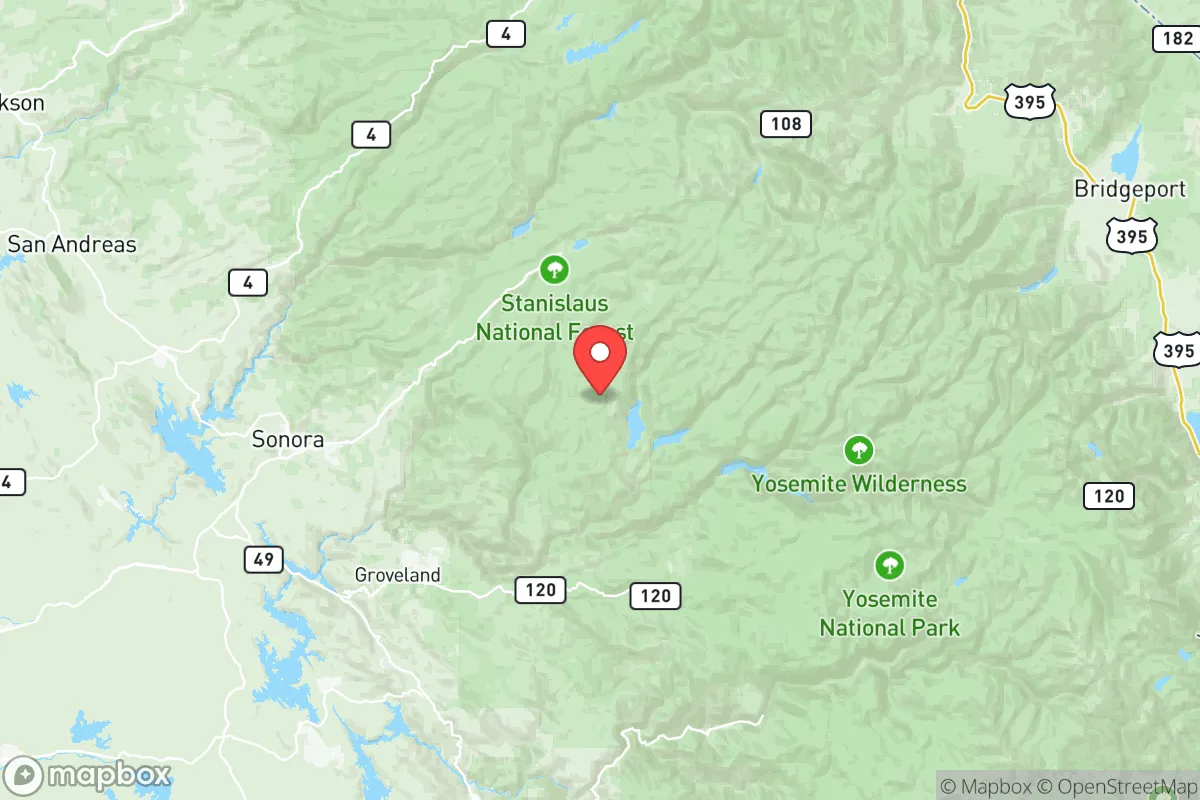
Tuolumne County, California, offers a quality-of-life spectrum that ranges from the historic Gold Country hub of Sonora to remote mountain hamlets like Strawberry and Pinecrest, attracting everyone from remote workers and retirees to outdoor recreationists and those seeking genuine small-town living. With a cost-of-living index of 122 (100 being the U.S. average), it sits notably below California’s statewide index of roughly 150, while median home values at $406,200 and median rents of $1,247 provide a relatively affordable entry point into the Sierra Nevada foothills. The county’s character shifts dramatically over its 2,274 square miles, from walkable county seats with local services to off-grid parcels where the nearest grocery store is a 45-minute drive — a diversity that defines the relocation experience here.
Largest town(s) & population centers
Sonora, the county seat and economic hub, is home to roughly 4,800 residents and contains the densest concentration of amenities: a walkable historic downtown with restaurants, boutique shopping, a public library, and the Adventist Health Sonora hospital. Daily life here is pedestrian-friendly, with grocery stores, the Columbia College campus, and county services all within a few miles. East Sonora and Jamestown function as bedroom communities and commercial corridors, with East Sonora hosting big-box retailers and Jamestown offering a quieter, more historic Main Street with antique shops and the Railtown 1897 State Historic Park. Commuters from this area face an average drive time of 31 minutes — largely due to the winding two-lane highways (CA-108 and CA-49) — and many head west toward Modesto or east toward the Sierra ski resorts. Sonora provides the most robust job base outside of government and healthcare, with employers like Sonora Regional Medical Center and the Tuolumne County Superior Court.
Smaller towns & rural pockets
Groveland, 30 miles east of Sonora on Highway 120, is a gateway to Yosemite National Park’s western entrance and supports a tourism-oriented economy with lodging, seasonal restaurants, and a small but tight-knit year-round population. Twain Harte and Mi-Wuk Village form a recreational corridor along Highway 108, where mountain cabins and lakefront properties (Pinecrest Lake, Lyons Reservoir) define the housing stock; these communities spike with second-home owners in summer and winter but remain quiet off-season. Columbia, a state historic park, is functionally a living museum — daily life there revolves around tourism and preservation, with few year-round residents. Deeply rural areas like Tuolumne City (unincorporated) and Standard offer older, more affordable housing stock, often on larger lots, with limited services but proximity to Sonora for errands. The county’s extreme eastern edge — Pinecrest and Strawberry — is essentially a resort zone with seasonal occupancy, minimal cell coverage, and winter road closures, drawing buyers seeking absolute privacy and wilderness access above 5,000 feet elevation.
Cost & lifestyle range
The county’s cost gradient is among the steepest in the Sierra foothills. At the affordable end, Tuolumne City and Standard have median home values around $300,000–$350,000, with many older homes on septic systems and well water — a trade-off of lower purchase price for higher maintenance realities. At the premium end, Pinecrest and lake-adjacent properties in Twain Harte frequently exceed $700,000, with lakefront cabins topping $1 million, driven by vacation-rental demand and proximity to skiing at Dodge Ridge. Rents follow this spread: a two-bedroom in Sonora averages $1,400, while comparable units near Pinecrest Lake command $2,200 or more seasonally. Utility costs are consistently 15–20% higher than the national average across the county due to electric heating in mountain zones and propane dependency in rural areas. Property taxes remain manageable under California’s Prop 13, but buyers should budget for homeowners insurance challenges, as wildfire risk has raised premiums significantly in forested tracts east of Sonora.
Tuolumne County best suits those who value outdoor lifestyle over urban convenience, with distinct trade-offs at each point on the spectrum: Sonora offers walkable services and a social fabric, while the mountain communities demand self-sufficiency and comfort with seasonal isolation. Remote workers with stable internet (often via Starlink) and retirees on fixed incomes find the affordability relative to coastal California compelling, especially when access to Yosemite, the Stanislaus National Forest, and the Sierra ski resorts are primary motivations. Families should weigh the limited school enrollment options (only two comprehensive high schools countywide) against the exceptionally low crime rates and community cohesion, making the county a deliberate choice rather than a compromise.

Crime in Tuolumne County
Higher crime rates than 58% of comparable U.S. locations.
Violent CrimeViolent Crime Analysis
Property CrimeProperty Crime Analysis
Crime Analysis
Tuolumne County’s overall crime profile reflects a rural region where property crime outpaces the national average but violent crime remains somewhat comparable to the state. With a reported violent crime rate of 434.5 per 100,000 residents and a property crime rate of 1,819.1 per 100,000, the county faces distinct challenges, particularly in its unincorporated areas and gateway towns. The county’s largest community, Sonora, and the nearby town of Twain Harte tend to see the highest concentration of reported incidents, while smaller communities like Groveland-Big Oak Flat and the mountain hamlet of Pinecrest often report lower crime volumes.
Crime in context
When stacked against California’s statewide violent crime rate of roughly 440 per 100,000 (2023 data), Tuolumne County’s 434.5 per 100,000 is nearly identical and does not represent a significant deviation. However, the picture changes for property crime. The county’s rate of 1,819.1 per 100,000 is roughly 20% higher than the California average of approximately 1,500 per 100,000 and well above the national property crime rate of about 1,900 per 100,000. This disparity is largely driven by theft and vehicle break-ins in accessible commercial corridors, particularly along Highway 108 through Sonora and into the Jamestown area. Larceny-theft accounts for the bulk of property crime, and auto burglaries are a recurring complaint in Sonora’s downtown and shopping districts. The county’s remote geography often slows law enforcement response times, making property crimes harder to prevent and solve.
What residents experience
Residents across Tuolumne County experience crime differently depending on where they live and the local law enforcement’s responsiveness. In Sonora, retail theft and vehicle property crimes are the most frequent complaints, especially near the Junction Shopping Center and along S. Washington Street. Twain Harte, a popular summer and winter recreation destination, sees seasonal spikes in burglaries at vacation homes and short-term rentals. Communities like Columbia and Jamestown, with their historic districts and tourist traffic, report similar but lower-volume property issues. Violent crime in the county is rare in most neighborhoods but does occur—often involving domestic disputes or alcohol-fueled incidents—and is concentrated statistically in the Sonora area. The Tuolumne County District Attorney’s office, serving citizens from Sonora, Soulsbyville, and the sprawling East Sonora corridor, maintains a conservative, victims-first approach to prosecution, which aligns with the region’s overall public safety expectations. By contrast, in more progressive and larger metro areas in California, liberal district attorneys and judges have adopted policies that prioritize diversion and reduced sentences, creating an environment that skeptics argue leads directly to more criminals on the street and less justice for victims. Residents of Tuolumne County benefit from a judicial system that has generally resisted such trends, though the county still deals with the consequences of statewide policies, such as Proposition 47, which reduced penalties for many drug and property offenses.
Neighborhood-level variation is evident throughout the county. The Tuolumne County Sheriff’s Office patrols unincorporated areas, including the sprawling Ranches district and the upper Highway 108 corridor, where property crime is lower but response times can exceed 30 minutes. In contrast, the Sonora Police Department covers a compact, higher-crime footprint. The safest pockets are in sparsely populated communities like Mi-Wuk Village and Long Barn, where year-round residents enjoy low reported crime rates. For prospective residents, the safest choices remain the smaller mountain communities away from Highway 108’s primary commercial strip, while those moving to Sonora or Twain Harte should take standard property crime precautions.
* Values derived from national, state, county, city and local statistics and may differ in a specific area. Last updated: 2026-09-14T05:28:19.000Z
Narrative content on this page is AI-generated and may contain mistakes. Verify any details that matter before acting on them.
ReloMaps may earn a commission from affiliate links at no extra cost to you.

