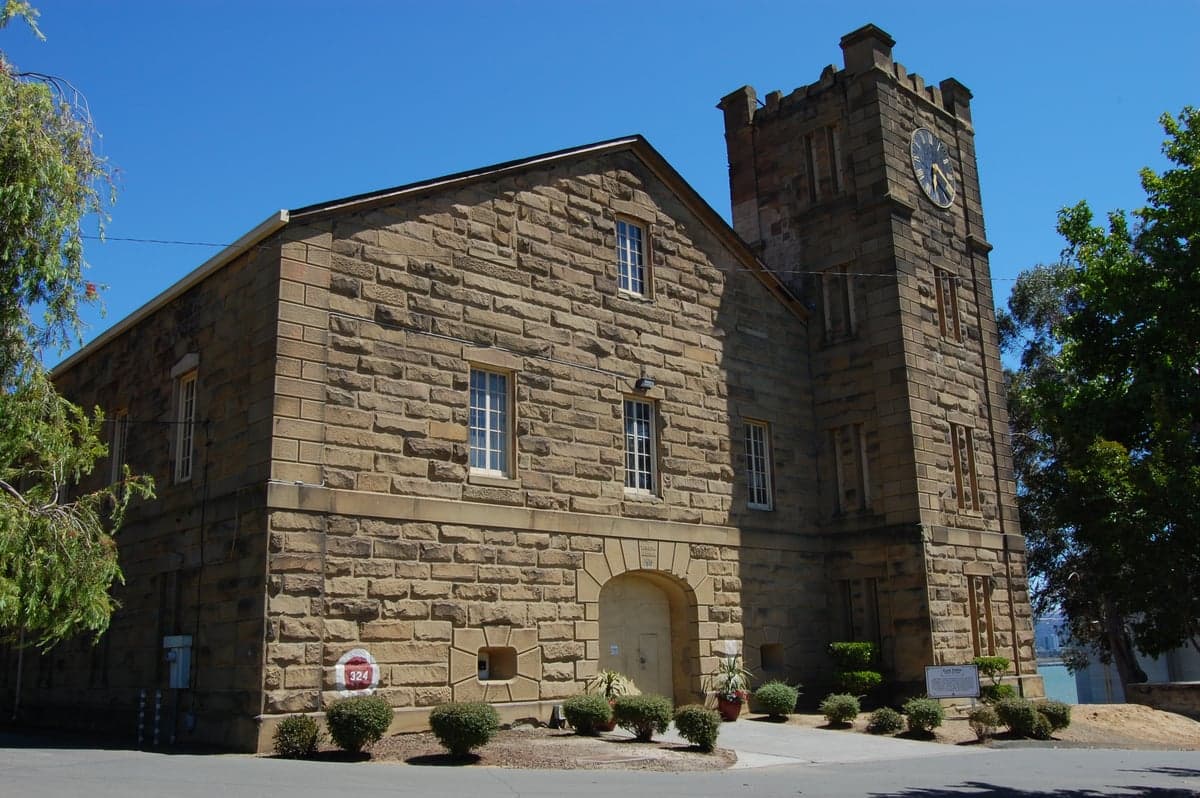
Photo: Wikipedia
Political ClimatePolitical Climate in Solano County
Showing county-level results — no local-only data available.
Lean and PVI are calculated from this county’s 2020 and 2024 presidential results, Cook-style.
Political rankings in California
- Most Conservative Cities in California
- Most Liberal Cities in California
- Best Conservative-Leaning Towns on the West Coast
- Affordable Small Towns for Conservatives
- Most Affordable Liberal-Leaning Small Towns in the U.S.
- Safest Liberal-Leaning Cities in the U.S.
- Most Conservative Counties in California
- Most Liberal Counties in California
Local Political AnalysisPolitical Analysis of Solano County
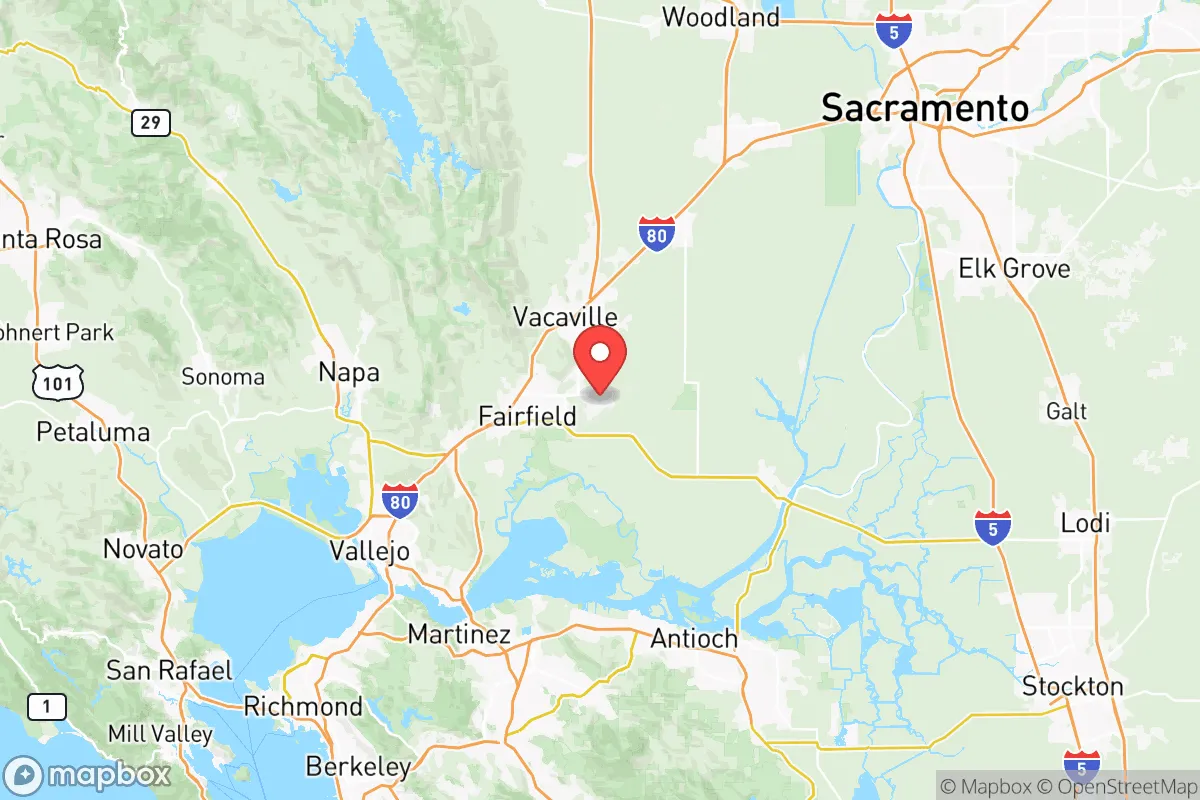
Solano County is a genuine political bellwether in California, carrying a Cook PVI of D+13 that makes it significantly more competitive than the deep-blue strongholds to its west and south. While the county has voted Democratic in every presidential election since 2008, the margins are often tighter than the statewide average, and local races frequently hinge on a few thousand votes. The real story here is the stark internal divide: the urbanized, commuter-heavy southern cities lean heavily blue, while the rural, agricultural northern half of the county remains a reliable redoubt for conservative voters.
How it compares
Compared to the rest of California, Solano County is a moderate outlier. The state as a whole has a Cook PVI of D+13, but that number masks the fact that many coastal counties are D+20 or higher. Solano’s D+13 is actually more conservative than the state average when you look at actual voting behavior. In the 2022 gubernatorial election, Gavin Newsom won Solano by about 11 points, while he carried the state by nearly 20. The county’s swing precincts are concentrated in the central corridor: Vacaville and Fairfield are the true battlegrounds, where precincts can flip between parties from one election to the next. Vallejo is the Democratic anchor, routinely delivering 70%+ margins for Democrats, while Dixon and Rio Vista are the GOP strongholds, often voting 55-60% Republican. Benicia is a fascinating microcosm—a liberal-leaning town with a strong independent streak that sometimes breaks for moderate Republicans in local races.
What this means for residents
For conservative residents, Solano County offers a rare sense of political breathing room in California. You can find Republican elected officials at the city council level in Dixon and Rio Vista, and the county’s Board of Supervisors has a conservative majority that has pushed back on state housing mandates and sanctuary policies. The downside is that state-level policies—like high gas taxes, strict environmental regulations, and progressive education mandates—still apply, and local GOP candidates often struggle to win countywide office. For liberal residents, the county is a place where your vote truly counts. A Democratic candidate for Congress or state assembly can’t take Solano for granted the way they might in San Francisco; they have to campaign in Vacaville and Fairfield, which keeps them more moderate. The trade-off is that progressive policy ideas—like rent control expansions or defunding police—face an uphill battle at the county level, even in Vallejo.
The cultural and policy distinctions are most visible in land use and public safety. Solano County has been a flashpoint for the state’s housing crisis, with conservative supervisors blocking large-scale developments in unincorporated areas while cities like Vallejo and Fairfield approve dense housing projects. The county also has a higher-than-average law enforcement presence per capita, and the sheriff’s office operates a controversial immigration detention facility in Dixon that has drawn protests from liberal activists. Meanwhile, the county’s agricultural preserve policies—which protect farmland from development—enjoy broad bipartisan support, a rare point of unity. Looking ahead, the county’s political trajectory is slowly shifting left as more Bay Area commuters move into Vallejo and Benicia, but the rural north and the swing towns of Vacaville and Fairfield ensure that Solano will remain one of California’s most politically competitive counties for the foreseeable future.

State Political ClimatePolitical Climate in California
State Political AnalysisPolitical Environment in the State
California is a deeply blue state where Democrats hold every statewide office, supermajorities in both legislative chambers, and a 2-to-1 voter registration advantage over Republicans. Over the past 20 years, the state has shifted from a competitive purple battleground—it voted for George W. Bush in 2004—to a solidly Democratic stronghold, with the GOP last winning a statewide race in 2006. That said, the state is far from monolithic: roughly 35% of voters are registered Republicans or independents, and many rural and inland areas vote as red as any county in Texas or Idaho. For a conservative relocator, the practical reality is that you’ll be living under progressive state government but may find like-minded neighbors in specific regions.
Urban vs. rural divide
The political map of California is a tale of two states. The coastal metros—Los Angeles, San Francisco, San Diego, and Oakland—drive the state’s blue lean, delivering massive Democratic margins. In 2020, Los Angeles County alone gave Joe Biden over 3 million votes, more than the entire population of 20 states. Meanwhile, the Central Valley and inland mountain regions are reliably red: Bakersfield, Fresno, Redding, and El Centro routinely vote Republican by double digits. The Inland Empire (Riverside and San Bernardino counties) has become a key swing region, trending blue in presidential years but still electing local GOP officials. A notable outlier is Orange County, once a conservative bastion that flipped blue in 2018 and 2020, though its northern suburbs like Yorba Linda and Huntington Beach remain GOP strongholds. For a conservative family, the practical takeaway is that you can find a red community in places like Bakersfield, Clovis, or Temecula, but you’ll still be subject to state-level policies you may disagree with.
Policy environment
California’s policy environment is defined by high taxes, heavy regulation, and progressive social legislation. The state has the highest income tax rate in the nation (13.3% for top earners), a state sales tax averaging 8.85%, and some of the highest gas taxes in the country—currently about 68 cents per gallon. Property taxes are capped at 1% of assessed value under Proposition 13, but reassessment upon sale can still sting. On the regulatory side, California has the nation’s strictest environmental laws (California Environmental Quality Act, or CEQA), which can delay housing and infrastructure projects for years. Education policy is dominated by the California Teachers Association, with per-pupil spending around $15,000 but middling outcomes. Healthcare is heavily regulated, with the state running its own insurance exchange (Covered California) and expanding Medi-Cal to all low-income adults regardless of immigration status. Election laws are among the most liberal: universal mail-in voting, same-day registration, and no-excuse absentee ballots are standard. For a conservative, the policy environment means higher costs and less local control, but also robust public services and infrastructure.
Recent policy direction
Over the past five years, California has accelerated its progressive agenda. On gun rights, the state passed SB 2 (2023), which bans carrying firearms in most public places, and AB 1594 (2022), which allows the state to sue gun manufacturers. On parental and education rights, AB 1955 (2024) prohibits school districts from requiring parental notification when a child changes their gender identity. On speech, the state has enacted AB 587 (2022), requiring social media platforms to disclose their content moderation policies, which critics call a backdoor censorship tool. Privacy and surveillance: the California Privacy Rights Act (2020) gives residents broad control over their personal data, but the state also expanded police surveillance powers under AB 481 (2021). Medical and bodily autonomy: California has codified abortion rights (Prop 1, 2022) and protects gender-affirming care for minors. Property rights: the state has tightened rent control under AB 1482 (2019) and is considering a statewide rent cap. Taxation: Prop 19 (2020) limited property tax breaks for inherited homes, raising revenue for fire prevention. Voting access: AB 37 (2021) made mail-in ballots permanent. For a relocator, the direction is clear: the state is moving further left on nearly every front, with no sign of reversal.
Civil unrest & political movements
California has a long history of political activism, from the 1960s Free Speech Movement at Berkeley to the 2020 George Floyd protests that saw widespread property damage in Los Angeles and San Francisco. Today, the most visible movements are on the left: Black Lives Matter, environmental groups like Sunrise Movement, and immigrant rights organizations regularly hold large rallies. On the right, the California Republican Party is a minority voice, but grassroots groups like the California Freedom Coalition and Moms for Liberty have chapters in conservative suburbs. Immigration politics are a flashpoint: California is a sanctuary state under SB 54 (2017), which limits local law enforcement cooperation with federal immigration authorities. Secession rhetoric—the "Calexit" movement—peaked in 2016-2017 but has since fizzled, with no serious ballot initiative gaining traction. Election integrity controversies are less intense than in swing states, though some rural counties (e.g., Shasta County) have seen disputes over voting machines and hand-counting. For a new resident, the most visible sign of political tension is likely the homelessness crisis in major cities, which has become a proxy for debates over housing, mental health, and public safety.
Projection
Over the next 5-10 years, California’s political trajectory is likely to remain firmly blue, but with growing internal friction. Demographic trends—an aging white population, a growing Latino electorate, and continued in-migration from Asia and Latin America—favor Democrats. However, the state is losing domestic migrants to Texas, Arizona, and Nevada, many of whom are moderate or conservative-leaning. This "brain drain" could accelerate if housing costs remain high and quality of life declines in coastal cities. The 2026 gubernatorial race will be a key test: if a moderate Democrat like Gavin Newsom’s successor wins, the state may moderate slightly on economic issues. But on social and cultural policy, expect continued leftward movement, especially on climate, LGBTQ+ rights, and criminal justice reform. For a conservative moving in now, the realistic expectation is that you’ll be living under a one-party state for the foreseeable future, but you can find community in red enclaves and may see some local pushback on issues like school curriculum and housing policy.
For a new resident, the bottom line is that California offers unmatched economic opportunity, natural beauty, and cultural diversity, but at the cost of high taxes, heavy regulation, and a political environment that can feel hostile to conservative values. If you’re a conservative family, you’ll want to target specific regions—Bakersfield, Clovis, Temecula, or El Centro—where your vote will matter locally and you’ll find like-minded neighbors. You’ll also need to budget for higher living costs and navigate state policies on guns, education, and taxes that may conflict with your beliefs. But if you can afford it and find the right community, California remains a place where you can build a good life, even if you don’t agree with the politics of Sacramento.
* Values derived from national, state, county, city and local statistics and may differ in a specific area. Last updated: 2026-11-21T00:35:28.000Z
Narrative content on this page is AI-generated and may contain mistakes. Verify any details that matter before acting on them.
ReloMaps may earn a commission from affiliate links at no extra cost to you.

