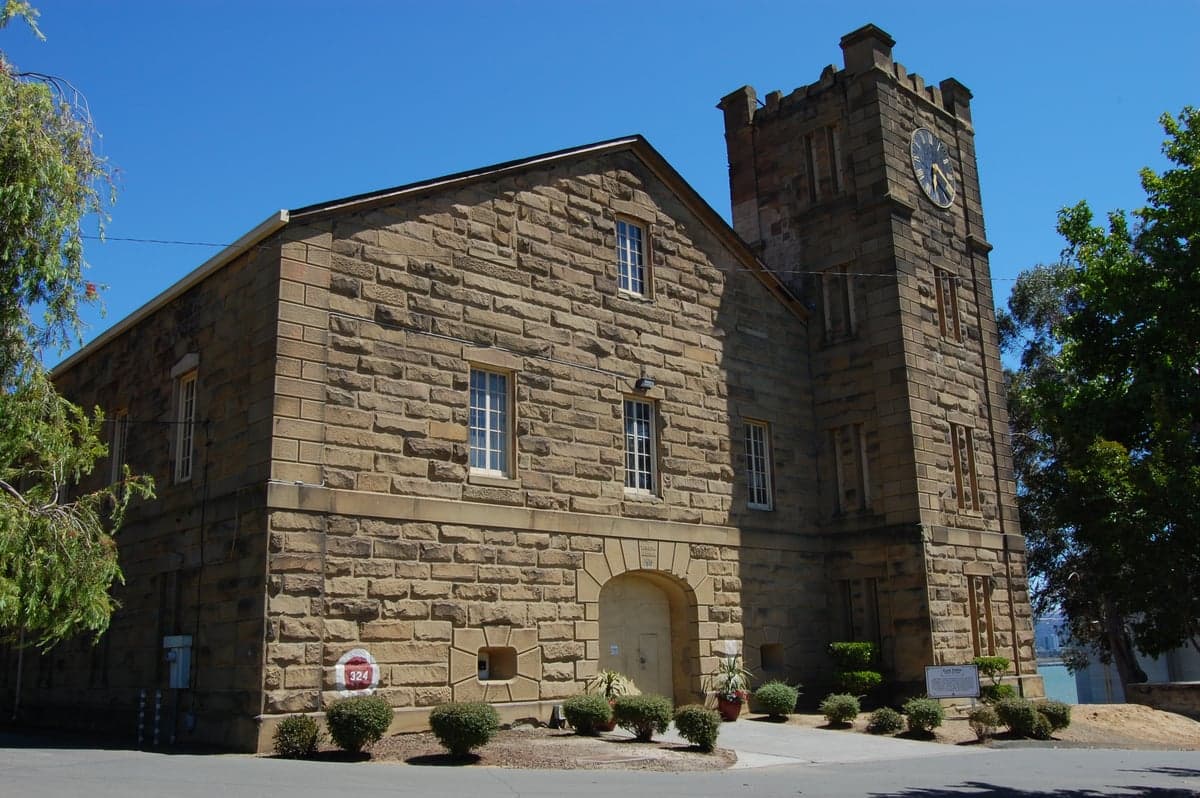
Photo: Wikipedia
Demographics of Solano County
Affluence Level in Solano County
A middle-class area roughly in line with national averages across income, home values, education, and employment.
People of Solano County
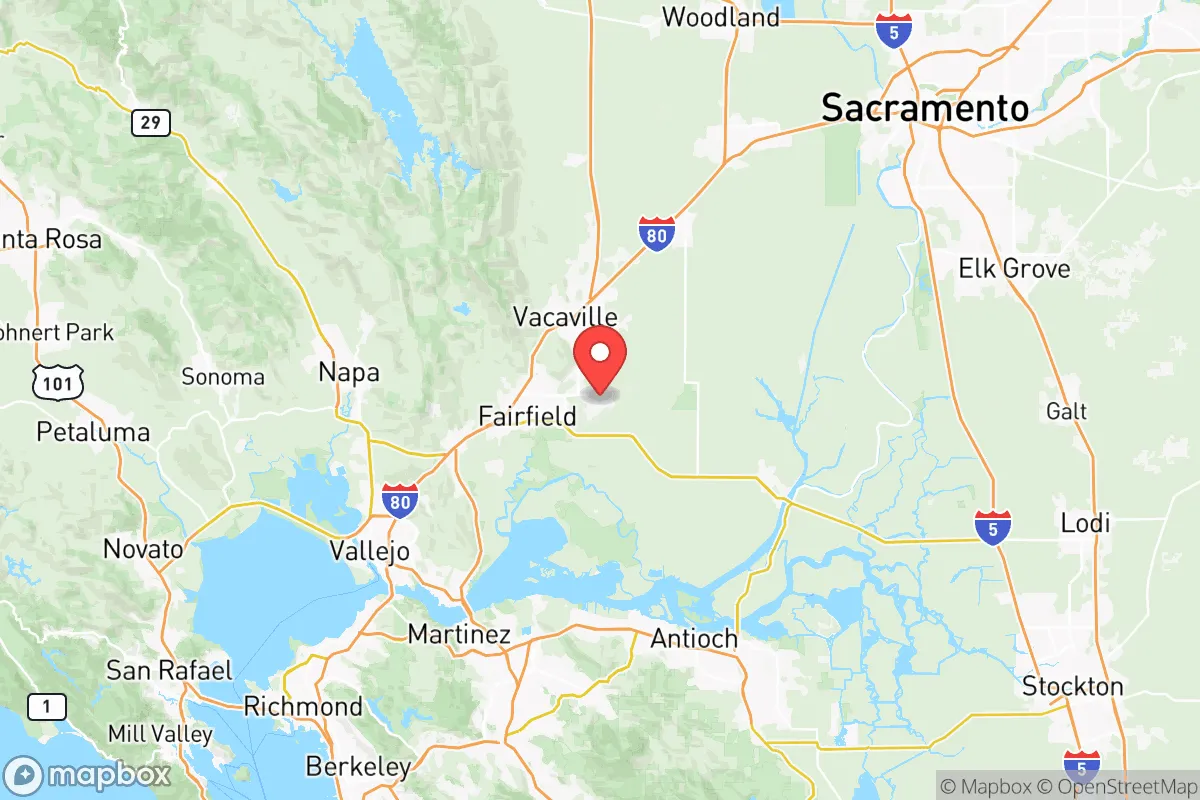
Solano County today is a population of 450,824 defined by its remarkable ethnic diversity and its position as a more affordable, family-oriented alternative to the San Francisco Bay Area it borders. With a population that is 34.3% White, 29.0% Hispanic, 14.4% East/Southeast Asian, 12.6% Black, and 1.2% Indian (subcontinent), the county has one of the most balanced racial and ethnic compositions in Northern California. Its identity is shaped by a mix of historic agricultural roots, a strong military presence at Travis Air Force Base, and a growing commuter population drawn to cities like Fairfield, Vallejo, and Vacaville for their relative affordability and access to jobs in the greater Bay Area.
Settlement & growth (pre-1960)
Before European contact, the region was home to the Patwin people, a branch of the Wintun-speaking tribes who lived in villages along the Sacramento River and Suisun Bay. Their presence is still marked by place names like Suisun City and the Patwin Elementary School in Vacaville. Spanish colonization arrived in the late 1700s, with Mission San Francisco Solano (founded in 1823 in what is now Sonoma) exerting influence over the area, though the county itself was named after the mission. Mexican land grants, such as Rancho Suisun and Rancho Los Putos, established the first large-scale ranching operations in the 1840s, attracting a small number of Mexican and Spanish settlers.
The American period began in earnest after the 1848 Treaty of Guadalupe Hidalgo and the California Gold Rush. The first major wave of American settlers were Anglo-Americans from the Midwest and Upper South, drawn by the promise of fertile farmland. By the 1850s, the county seat was established in Fairfield, named after a Connecticut judge, and the city of Benicia briefly served as the state capital (1853-1854). The arrival of the transcontinental railroad in the 1860s and 1870s spurred the growth of Vallejo as a major port and shipbuilding center, and Vacaville as an agricultural hub for fruit and nut orchards. A significant wave of Italian and Portuguese immigrants arrived in the late 19th and early 20th centuries, working in the dairy farms and vineyards that dotted the county, with many settling in the rural areas around Dixon and Rio Vista.
The Dust Bowl era of the 1930s brought a smaller but notable wave of white migrants from Oklahoma, Arkansas, and Texas, who found work in the region's expanding agricultural sector. The single most transformative event for Solano County's population was the establishment of Travis Air Force Base in 1942 near Fairfield. During World War II and the Cold War, the base brought thousands of military personnel and their families from across the United States, creating a transient but economically vital population. This military presence, combined with the Mare Island Naval Shipyard in Vallejo (established 1854), gave the county a distinctly blue-collar, patriotic, and racially integrated character long before the broader Civil Rights era.
Modern era (post-1965)
The 1965 Hart-Cellar Immigration Act, combined with the closure of Mare Island Naval Shipyard in 1996 and the continued growth of Travis AFB, fundamentally reshaped Solano County's demographics. The most dramatic shift has been the growth of the Hispanic population, which rose from a small minority to 29.0% of the county's population. This wave, beginning in the 1970s and accelerating through the 1990s, was driven by Mexican and Central American immigrants seeking agricultural work in the county's remaining orchards and processing plants, as well as construction and service jobs in the growing suburbs. The Hispanic community is now concentrated in Vallejo, Fairfield, and the southern parts of Vacaville, where vibrant commercial corridors and Catholic parishes serve as cultural anchors.
The East/Southeast Asian population, now 14.4% of the total, grew rapidly after 1965, particularly among Filipino and Vietnamese communities. Many Filipinos arrived as a result of military connections—serving in the U.S. Navy and later settling near Mare Island and Travis AFB. Vietnamese refugees, arriving after 1975, were drawn to the same areas, establishing a notable presence in Vallejo, which now has one of the largest Filipino communities per capita in the continental United States. A smaller but significant wave of Chinese and Korean immigrants has also settled in the county, particularly in the more affluent neighborhoods of Benicia and eastern Fairfield.
The Black population, at 12.6%, is a legacy of both the Great Migration (1940s-1970s) and military service. African American families moved to Solano County for jobs at Mare Island and Travis AFB, creating a stable middle-class community in Vallejo and Fairfield. The Indian (subcontinent) population, at 1.2%, is a more recent arrival, largely consisting of professionals in healthcare and technology who have settled in the newer subdivisions of Vacaville and Fairfield since the 2000s. Domestic migration from the more expensive Bay Area counties—particularly San Francisco, Alameda, and Contra Costa—has been a major driver of growth since the 1990s. These newcomers, often white and Asian professionals, are drawn by lower home prices and larger lots, reshaping the character of cities like Vacaville and Benicia into commuter suburbs.
The future
Solano County is projected to become more diverse and more suburban over the next 10-20 years. The white population share, already a plurality at 34.3%, is expected to continue its gradual decline as the Hispanic and East/Southeast Asian populations grow through both immigration and higher birth rates. The county's foreign-born population, currently 8.6%, is likely to rise as new immigrants—particularly from the Philippines, Mexico, and India—are drawn to the area's relatively affordable housing and job opportunities in healthcare, logistics, and the service sector. The college-educated share, at 28.4%, is also expected to increase as more Bay Area professionals relocate to the county, though it will likely remain below the Bay Area average.
New residential development is concentrating in the eastern and northern parts of the county, particularly around Vacaville and Dixon, where master-planned communities are attracting families. The proposed California Forever project, a controversial plan to build a new city on the county's rural eastern plains, could dramatically accelerate this trend if approved, potentially adding tens of thousands of new residents. Culturally, the county is evolving from its blue-collar, military-rooted identity into a more diverse, commuter-oriented region. The political character, historically moderate with a slight conservative lean, is shifting as new arrivals bring more progressive Bay Area sensibilities, particularly in Vallejo and Benicia, while Fairfield and Vacaville retain a more centrist-to-conservative character.
For someone moving to Solano County now, the region offers a rare combination in California: genuine ethnic diversity, a strong sense of community in its individual cities, and housing prices that, while rising, remain significantly lower than in the core Bay Area. The population is becoming more educated, more suburban, and more connected to the broader regional economy, but it retains a distinct, grounded identity shaped by its agricultural and military heritage. It is a place where a Filipino Navy veteran, a Mexican farmworker's grandchild, a white commuter from San Francisco, and a Black family with roots in the Great Migration all share the same school districts and grocery stores—a working model of multiethnic, middle-class California.

* Values derived from national, state, county, city and local statistics and may differ in a specific area. Last updated: 2026-11-21T00:35:28.000Z
Narrative content on this page is AI-generated and may contain mistakes. Verify any details that matter before acting on them.
ReloMaps may earn a commission from affiliate links at no extra cost to you.

